

 Italiano
 Deutsch





There are no more items in your cart
SKU:
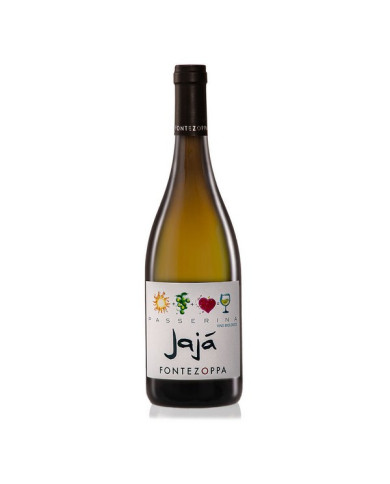
17016
Brand:
Fontezoppa
Pleasant freshness accompanied by a sensation of peach, broom flowers and jasmine.
€13.18
SKU:
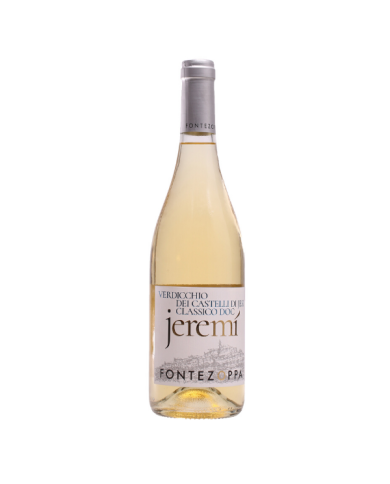
17015
Brand:
Fontezoppa
Crystalline straw yellow.
Fine and delicate nose with hints of white flowers together with fruitiness of banana, pineapple and citrus.
€13.18
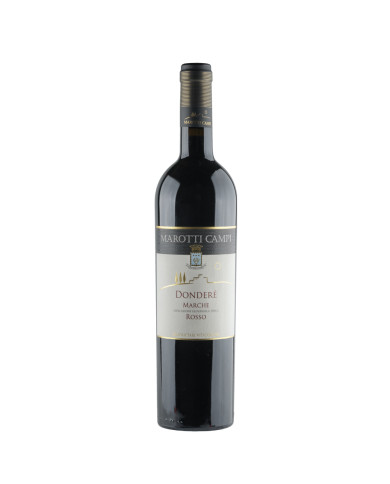
SKU:
16135
Brand:
Marotti Campi
Rose petal colour. On the nose small red fruits and aromatic herbs, thyme, basil and rosemary. Fresh, savory in the mouth, notes of medlar and a pleasantly dry finish. Serve at about 16° with seafood first courses, fried fish, stewed fish or as an aperitif.
€16.91
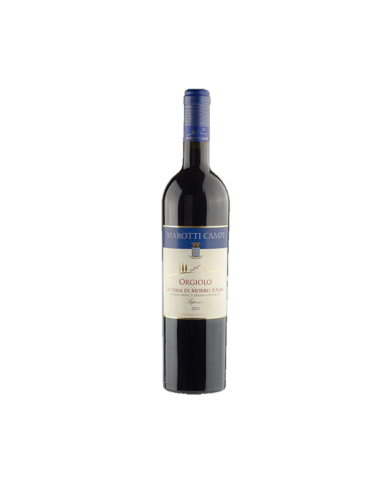
SKU:
16134
Brand:
Marotti Campi
Lacrima is a very particular vine, grown only in the terroir surrounding the municipality of Morro d'Alba. It is said that even Frederick Barbarossa appreciated it in the distant 1167 AD, when he settled in these territories to attack nearby Ancona. A strongly rooted grape, which the Marotti Campi company likes to decline in two versions: in particular this Lacrima Superiore DOC "Orgiolo" stands out for its precious olfactory bouquet, which, combined with an extremely pleasant drink, makes this bottle truly remarkable.
€30.74
SKU:
16133
Brand:
Marotti Campi
Intense ruby red color. Aromas of blackberry and undergrowth, black pepper, licorice, cloves, balsamic notes. Structured on the palate, fruity and spicy, dry with soft tannins and persistent with a clean finish. Serve at about 18 ° with grilled meats, game, aged cheeses.
€19.95
SKU:
16132
Brand:
Marotti Campi
Intense ruby red color with violet reflections. Characteristic aromas of rose, blackberry, pink pepper and juniper berries with an elegant touch of oriental spices. Fruity and spicy on the palate, with soft and persistent tannins with a clean finish. Serve at approximately 18 ° with elaborate first courses, duck breast, turkey, roast lamb, pork and rabbit.
€15.20
SKU:
16131
Brand:
Marotti Campi
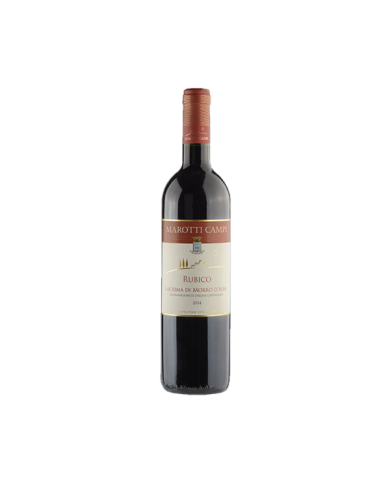
Intense ruby red color with violet reflections. Characteristic aromas of rose, violet, myrtle and cinnamon. Fresh and fruity on the palate, dry and velvety with balsamic notes, medium-bodied and good acidity, pleasantly tannic. Serve at about 18 ° with elaborate first courses, roasted white meats, cold cuts, grilled or fish soups.
€8.72
SKU:
16130
Brand:
Marotti Campi
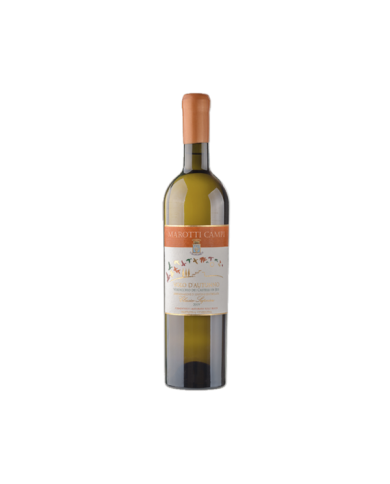
Straw yellow in color with greenish reflections. On the nose hints of Mediterranean, cedar and boxwood. Pleasantly dry and material on the palate with a long finish of ancient citrus. Best to drink between 14 ° C and 16 ° C.
€25.62
SKU:
16129
Brand:
Marotti Campi
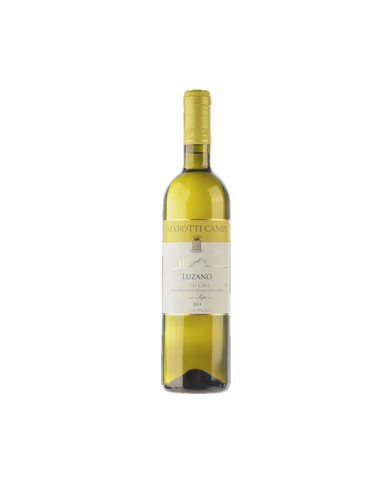
Straw yellow in color with greenish reflections. Aromas of acacia, broom, field flowers and chamomile with typical notes of bitter almond. Dry, savory, mineral, with fruity notes of green apple and a pleasantly almondy finish. Serve at about 14 ° C as an aperitif, pasta or rice first courses, fish, white meats.
€9.39
SKU:
16128
Brand:
Marotti Campi
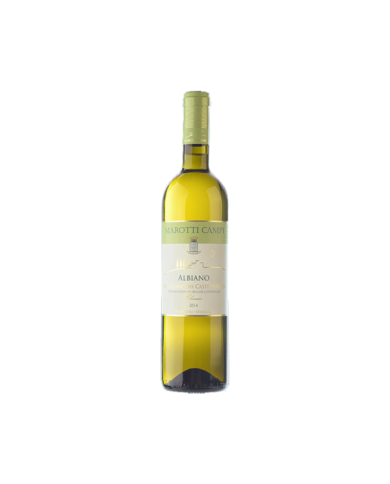
Bright straw yellow color with greenish reflections. Aromas of yellow flowers, peach, green apple and jasmine, with diffused minerality. Dry, savory, fresh, fruity and highly drinkable. Serve at about 14 ° C as an aperitif, pasta or rice first courses, seafood, fish, green salads.
€7.00
SKU:
15634
Brand:
Oasi degli Angeli
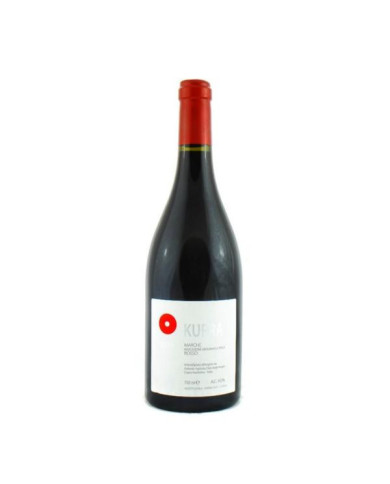
Kupra by Oasi degli Angeli is perhaps the most famous red wine from the Marche region, a pearl of excellence.
Unique, unrepeatable, super-awarded wine, the fruit of a territory that has been ignored for many years.
€270.11
SKU:
15633
Brand:
Oasi degli Angeli
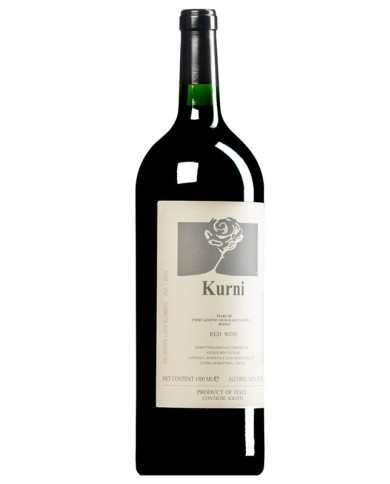
The Kurni wine of Oasi degli Angeli is born in vineyards located in the valley of the Sant'Egidio stream, in the municipality of Cupra Marittima, the winery's flagship wine, where everything has been focused on a management of the vineyards compatible with the pure needs of a territory poor in soil characteristics.
€311.01
SKU:
15632
Brand:
Oasi degli Angeli
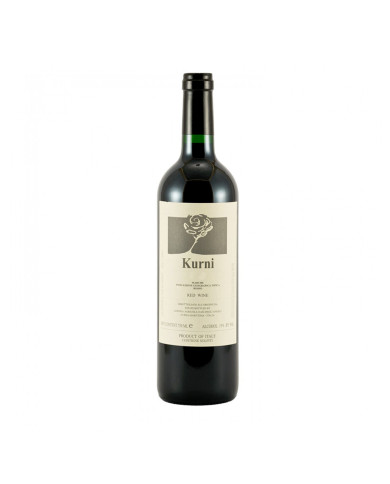
The Kurni wine of Oasi degli Angeli is born in vineyards located in the valley of the Sant'Egidio stream, in the municipality of Cupra Marittima, the winery's flagship wine, where everything has been focused on a management of the vineyards compatible with the pure needs of a territory poor in soil characteristics.
€150.99
SKU:
15500
Brand:
Tenuta Cocci Grifoni
Aged in oak barrels, it is fruity with ripe plums, blackberries and morello cherries in alcohol. Gently spiced, it recalls pink pepper berries and rosemary accompanied by notes of violet days. It is recommended to serve at 18°C.
SKU:
15497
Brand:
Tenuta Cocci Grifoni
Fruity with crunchy plums and bramble berries, floral with cyclamen. It is recommended to serve at 18°C.
€10.31
SKU:
15495
Brand:
Tenuta Cocci Grifoni
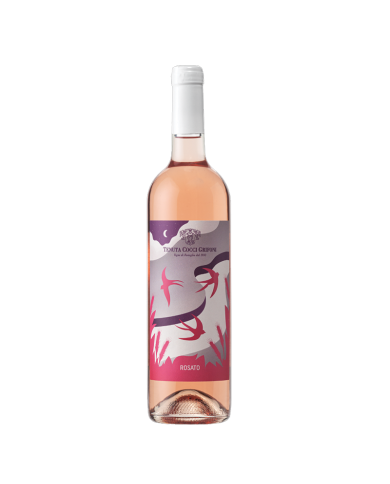
Fruity with wild strawberries and raspberries, floral with white petals. It is recommended to serve at 10°C.
SKU:
15494
Brand:
Tenuta Cocci Grifoni
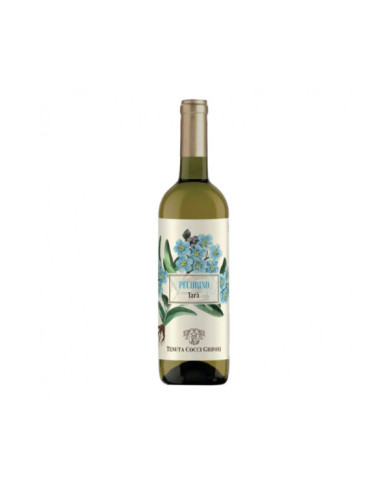
Floral wisteria, with hints of apples and lychees. It is recommended to serve at 10°C.
€8.85
SKU:
15493
Brand:
Tenuta Cocci Grifoni
Fruity of ripe pear, floral of broom with a fresh hint of pink grapefruit. It is recommended to serve at 10°C.
€10.94
SKU:
15006
Brand:
Tenuta Cocci Grifoni
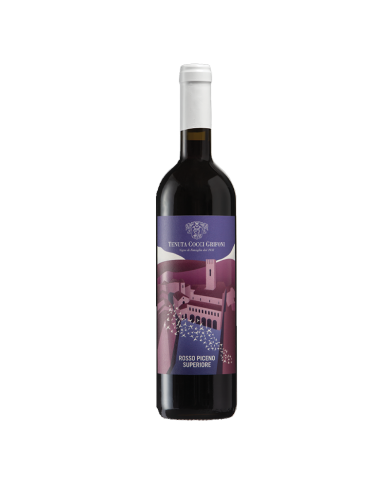
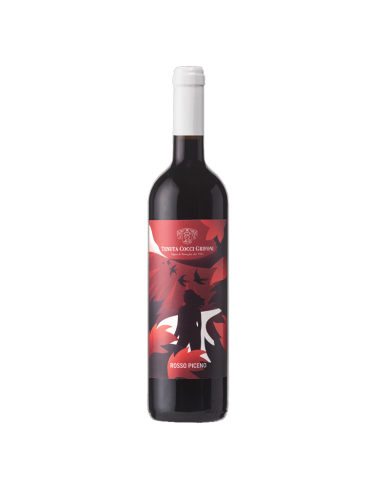
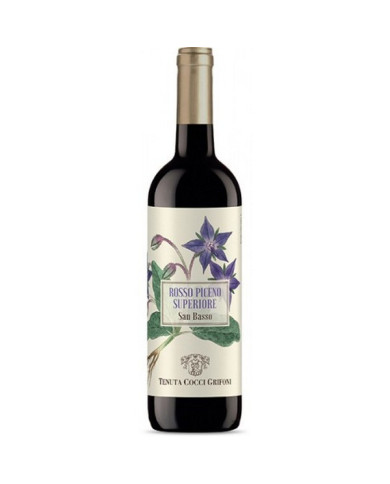
Rosso Piceno Superiore is born from a decidedly limited area. These are the years in which, every time we return home after having travelled, known and studied other realities, we begin to look around us with the eyes of those who finally begin to see again. Perhaps we needed a little homesickness, perhaps we needed not to feel the sense of protection of the places of which we know every detail.
And we go back, like children, to observe our hills with exploratory eyes, surprising ourselves with the beauty of the landscapes to which time had accustomed us. Sour cherries in alcohol, violets, fresh notes of rosemary in a wine which, in faithfully describing the territory, however wants to show its most fascinating, engaging and exciting side.
€12.32
SKU:
15004
Brand:
Tenuta Cocci Grifoni
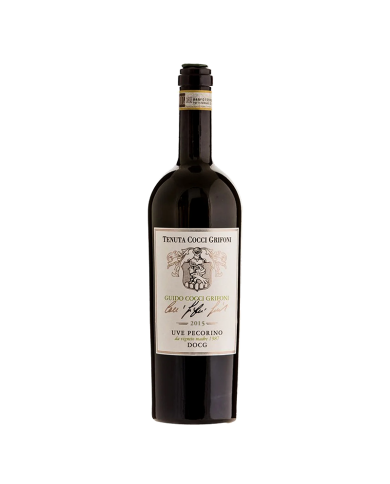
Our first hectare, the one from which the history of Pecorino began. The first parent of Colle Vecchio is today dedicated to Guido Cocci Grifoni and to the bottle that bears his name. It is our most recent version of Pecorino, a wine made in a few numbered specimens, in memory of who, where and when. And not to praise or glorify the past, but to photograph a moment of our past that has become present and future. Using descriptors today, for a wine that will have a life of more than ten years, seems almost out of place. Only a few notes therefore, to give a reference, a trace of his first, very young expressions. Among our whites it is certainly the fullest, the most saline, the most present and the softest. It opens with notes of ripe apple and then moves on to intense and fleshy yellow flowers. The aromatic herbs come forward decisively, accompanying a fascinating scent of star anise.
€26.23
SKU:
15002
Brand:
Tenuta Cocci Grifoni
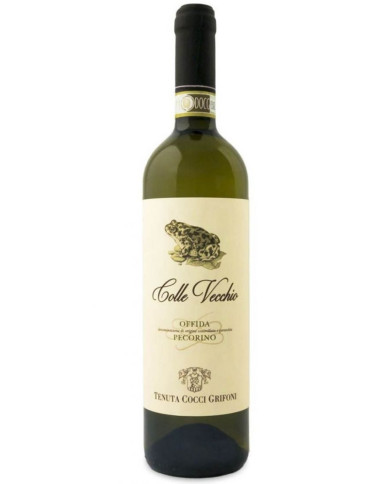
A milestone of our hills brought to light thanks to the adventurous spirit of Guido Cocci Grifoni. Some wonder who took over the lead. We in the winemaking choices, he in the expression of his nature. Neither one nor the other. We have listened to and explored his intentions for years, respecting and supporting his nature and his inclinations so that he became what he wanted to be. And today it is a dry, intrepid wine with impactful acidity, full and soft. Fruity of ripe pear, it turns to floral notes of lily of the valley and broom and then returns to fruit, this time tropical, such as mango. The freshness is manifested with accents of lemon grass and sage to be enjoyed for years.
€15.01
SKU:
15001
Brand:
Tenuta Cocci Grifoni
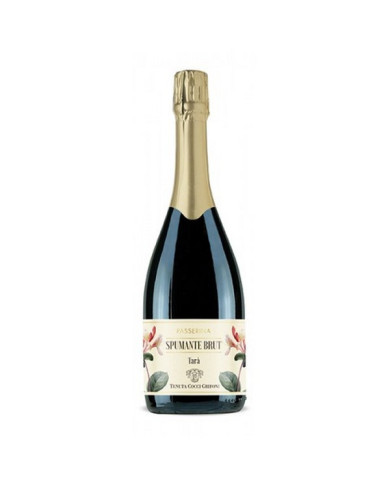
And we too walk the path of the Martinotti Method. Because it is a piece of all-Italian history, because a glass of bubbles induces an immediate smile, because the Passerina vine benefits from the second fermentation in an autoclave which amplifies its wheel of perfumes, maintaining its freshness and salinity. Passerina Brut carries with it an imaginary made of joy and celebrations. With this spirit we vinify it in the hope that, once in your glasses, it will be as much a source of happiness for you as it is for us to produce it.
An explosion of wild flowers, hints of cedar, tasty snuff-box peaches and crunchy white cherries. The perlage is subtle and the sweetness imperceptible for a decisive sip that tells the story of the territory.
€14.88
SKU:
15000
Brand:
Tenuta Cocci Grifoni
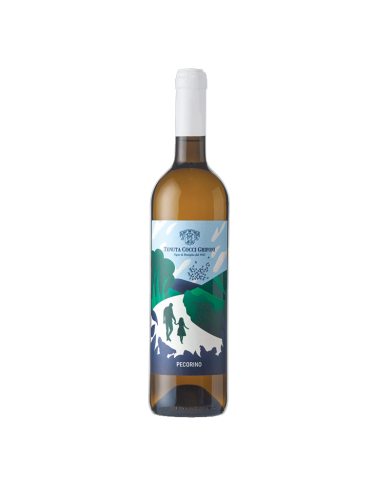
Falerio Pecorino tells a story that comes from the past. A blend that, in our bottle, sees Trebbiano refine the power of Pecorino for a glass suitable for the most carefree moments of the day, including those at the table. Pear-fruity, it moves to floral sensations that bring back jasmine, then returning to the fruit with green notes of kiwi and round sensations of passion fruit. The sincere and pounding sip of Pecorino relaxes on the memories of wild flowers typical of the Trebbiano that accompanies it in this bottle.
€11.04
SKU:
14999
Brand:
Tenuta Cocci Grifoni
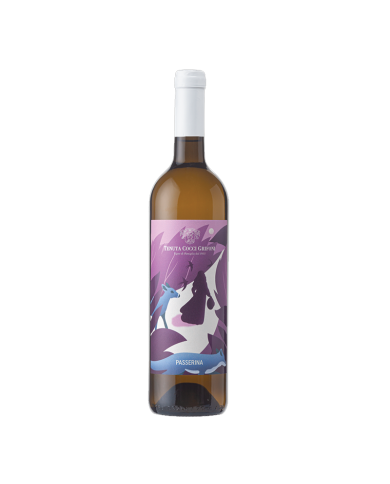
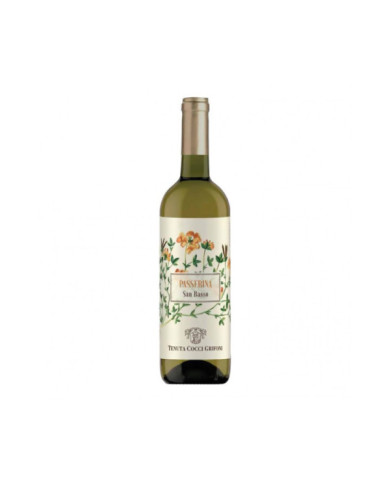
Known for its generosity in producing fruit, Passerina has always quenched the thirst of a large number of people. Today we know its needs and we know how to make it express its effective potential. Indeed, it is capable of describing a floral bouquet of rare freshness. We offer it in its still version, from the grapes of the Tenuta San Basso, full of May flowers and rounded off by ripe fruit. The opening is citrusy of cedar, but linden flowers and very fresh chamomile appear shortly after. This last perfume is repeated harvest after harvest, giving a recognizable trait to our Passerina, evidently defined by our land. The sip swells with ripe yellow plum and pink apple, giving fullness to the very fresh character of this wine.
€10.37
Marche Wine Denominations: A Complete Guide
If you're a wine lover and enjoy discovering new flavors and products, you can't miss the Marche wine appellation . This region, located in central Italy, is famous for its production of fine wines, characterized by intense flavors and typical Italian tradition.
In this article, we'll explore the various denominations of Marche wines, their characteristics, and how to best taste them. You'll also discover the secrets behind their production and the best places to find them.
Introduction to the wine denominations of the Marche region
Marche is a highly productive wine region, thanks to its geographical location and favorable climate. The region's typical grape varieties are Verdicchio, Montepulciano, and Vernaccia Nera, but the region also produces other grape varieties.
The denomination of the wines of the Marche is divided into four main categories:
DOC
The Controlled Designation of Origin (DOC) designation refers to a specific type of wine production, which must follow precise rules to obtain recognition. In the Marche region, there are eight DOC designations:
- Verdicchio dei Castelli di Jesi : one of the most famous white wines of the Marche region, made from Verdicchio grapes. It has a straw yellow color and a fresh, fruity flavor.
- Verdicchio di Matelica : Another white wine made from Verdicchio grapes, but produced in the Matelica area. It has a drier flavor and higher acidity than Verdicchio dei Castelli di Jesi.
- Bianchello del Metauro : a white wine made from Biancame and Trebbiano grapes. It has a dry taste and a delicate aroma.
- Lacrima di Morro d'Alba : a red wine made from Lacrima grapes. It has a smooth taste and an intense aroma.
- Rosso Piceno : A red wine made from Montepulciano and Sangiovese grapes. It has a fruity, tannic flavor.
- Rosso Piceno Superiore : a more refined version of Rosso Piceno, which must be aged for at least two years before being sold.
- Conero : A red wine made from Montepulciano grapes, produced in the Monte Conero area. It has a full-bodied, tannic flavor.
- Offida : a DOCG designation for Rosso Piceno Superiore and Pecorino, a white wine made from the grapes of the same name.
DOCG
The Controlled and Guaranteed Designation of Origin (DOCG) is the highest expression of quality for Italian wines. In the Marche region, there are two DOCG designations:
- Verdicchio di Matelica Riserva : An aged version of Verdicchio di Matelica, it must be aged for at least two years before being released. It has an intense flavor and greater complexity than Verdicchio di Matelica.
- Rosso Conero Riserva : an aged version of Conero, which must be aged for at least three years before being released. It has an intense and complex flavor, with notes of berries and spices.
IGT
Typical geographical indications (IGT) refer to wines produced in a specific geographical area, but do not follow the precise rules of the DOC or DOCG designations. In the Marche region, there are two IGTs:
- Marche : an IGT that covers the entire Marche region, used for wines produced outside the DOC or DOCG designations.
- Rubicone : an IGT covering an area near the Rubicone River, used for wines produced with non-traditional grapes.
The secrets behind the production of Marche wines
The production of wines in the Marche region is characterized by a strong focus on quality and tradition. Local farmers use sustainable cultivation techniques and comply with environmental regulations.
Furthermore, the production of Marche wines uses innovative techniques, such as the use of modern machinery for winemaking and temperature control during fermentation.
How to best taste Marche wines
To fully appreciate the wines of the Marche region, it's important to follow the tasting process. First, you should observe the wine's color, aroma, and taste. Next, you can appreciate its flavor and texture.
It's important to taste the wines of the Marche region accompanied by traditional local foods, such as cheeses, cured meats, and fish.
The best places to find Marche wines
Marche wines can be found in Italy's finest restaurants and fine wine shops. However, to fully appreciate the local produce, it's recommended to visit the region's wineries and participate in tastings organized by local producers.
There are many famous wineries in Le Marche, each with its own history and unique wine production. Some of the most famous wineries in Le Marche include:
Umani Ronchi: Founded in 1957, this winery produces some of the most famous wines in the Marche region, including Verdicchio dei Castelli di Jesi and Rosso Conero.
- Velenosi Vini – Ascoli Piceno Winery: Wine is an art capable of inspiring dreams. Inspired by the desire to create harmony between flavor and color, the Velenosi Winery was founded in 1984. Ercole and Angela Velenosi,
Fazi Battaglia: Located in the Matelica area, this winery produces fine wines such as Verdicchio di Matelica and Pecorino.
La Monacesca: This winery specializes in the production of Verdicchio di Matelica Riserva, one of the most prized white wines in the Marche region.
Moroder: Located in the Jesi area, this winery produces white wines such as Verdicchio dei Castelli di Jesi and Verdicchio di Matelica, as well as red wines such as Rosso Piceno.
Saladini Pilastri: This winery produces high-quality wines such as Rosso Piceno Superiore and Pecorino.
Of course, these aren't the only wineries in the Marche region producing fine wines. There are many other wineries in the region worth discovering and appreciating for their production of fine, high-quality wines.
Map
The Marche wine appellation represents one of the most highly regarded Italian wine regions in the world. Thanks to its focus on quality and tradition, the Marche region offers a wide range of fine wines, characterized by intense flavors and typical Italian tradition.
FAQs
What are the DOC denominations of the Marche region?
There are eight DOC denominations in the Marche region: Verdicchio dei Castelli di Jesi, Verdicchio di Matelica, Bianchello del Metauro, Lacrima di Morro d'Alba, Rosso Piceno, Rosso Piceno Superiore, Conero and Offida.
What are the DOCG denominations of the Marche?
The DOCG denominations of the Marche are Verdicchio di Matelica Riserva and Rosso Conero Riserva.
What are the typical grape varieties of the Marche region?
The typical grape varieties of the Marche are Verdicchio, Montepulciano and Vernaccia Nera.
Where can I find wines from the Marche region?
Marche wines can be found in Italy's finest restaurants and fine wine shops. However, it's recommended to visit the region's wineries to fully appreciate the local production.
What foods go well with Marche wines?
The wines of the Marche region pair well with traditional local foods, such as cheeses, cured meats, and fish.
We hope this comprehensive guide to the Marche wine appellation has provided you with the information you need to discover this region's wine production. Taste the wines of the Marche and be captivated by their intense flavors and distinctive Italian tradition.