

 Italiano
 Deutsch










There are no more items in your cart
SKU:
13701
Brand:
Cantina Tramin
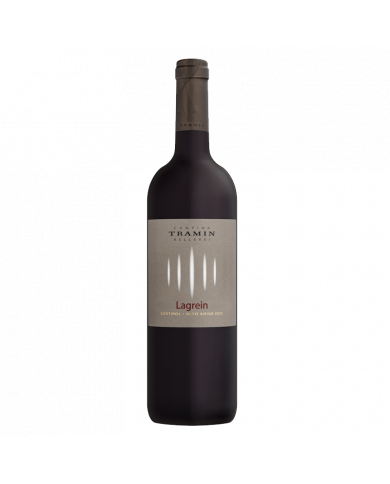
A long winter postponed the awakening of the vine to early April. A drop in temperatures after budding also delayed flowering. Subsequently, the weather remained capricious with a hot June and a humid July which laid the ideal foundations for the start of the maturation. August showed its best side with sunny weeks and exceptionally low night temperatures. Despite some brief downpours at the end of September/beginning of October, the harvest, which began with a delay of approx. ten days than usual and characterized by clearly lower than average volumes, it was marked by numerous warm days and increasingly colder nights.
SKU:
13613
Brand:
Azienda Agricola Zeni
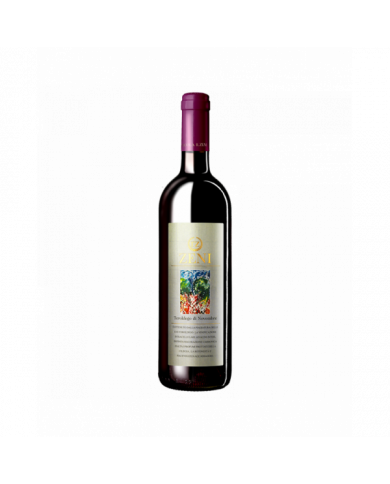
Intense ruby red colour. The nose is fragrant with an overflowing fruitiness of ripe cherries. On the palate it is warm and intriguing, with a pleasant sensation of softness. Serving temperature 12°-14°C.
SKU:
13264
Brand:
LETRARI
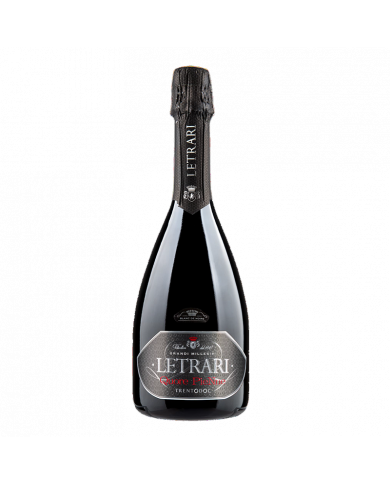
Bright in its golden color, it has an immediate aromatic profile that is somewhat turgid, with notes of plum, but also quince, tea and a vague reminiscence of ginger.
€63.12
€23.20
€33.31
€28.31
SKU:
13179
Brand:
Azienda Agricola Zeni
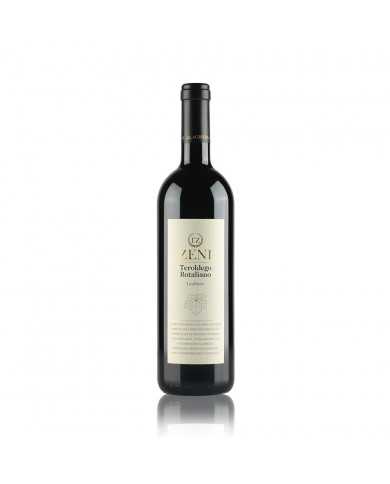
Teroldego Rotaliano or 'Tiroler Gold' from a probable interpretation of the idiom 'Tiroler Gold' The rulers of Austria, during their regency in Trentino, considered this wine excellent both for its deep, intense colour, raspberry and blackberry fragrance and for its full, rounded flavour, rightly acid and free of tannins: precisely Tiroler Gold.
€35.01
SKU:
13178
Brand:
Azienda Agricola Zeni
€13.00
€11.05
Sauvignon Bianco on Esseoquattro rootstock (V. Berlandieri x V.Riparia)
€13.00
€11.05
€33.31
SKU:
13073
Brand:
Ferrari
Ferrari Trento Steel Stopper Cap for Sparkling Wine Bottles is a comfortable hermetic sealing system, a quality accessory, useful and original as a gift idea. The Stopper is original Ferrari Trento!
SKU:
13072
Brand:
Ferrari
Intense yellow with golden reflections, with a very fine and persistent perlage. The nose reveals an intense bouquet of particular finesse, with hints of almond blossom and rennet apple, slightly spiced with a hint of bread crust. On the palate it is seductive and elegant, with a very long velvety sensation in which there is a light fruity note of ripe apple, pleasant hints of yeast and sweet almond and a nuanced aromatic base typical of chardonnay.
SKU:
13071
Brand:
Ferrari
€45.90
€41.31
Intense yellow with golden reflections, with a very fine and persistent perlage. The nose reveals an intense bouquet of particular finesse, with hints of almond blossom and rennet apple, slightly spiced with a hint of bread crust. On the palate it is seductive and elegant, with a very long velvety sensation in which there is a light fruity note of ripe apple, pleasant hints of yeast and sweet almond and a nuanced aromatic base typical of chardonnay.
€45.90
€41.31
SKU:
13069
Brand:
Ferrari
€122.90
€110.61
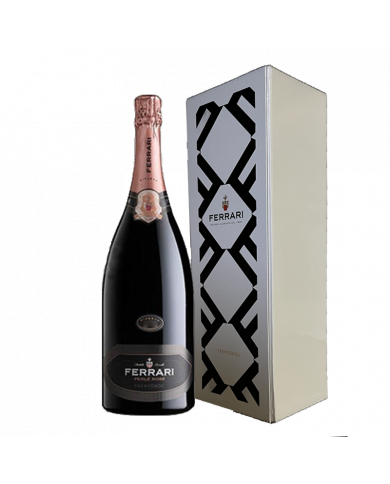
The Trento DOC Perlé Rosé Riserva from the Ferrari winery is a great Rosé Millesimato obtained from a blend of Pinot Nero (80%) vinified in rosé and Chardonnay (20%) whose maturation on the lees lasts 5 years before being bottled for a further rest period.
€122.90
€110.61
SKU:
13068
Brand:
Ferrari
€80.00
€72.00
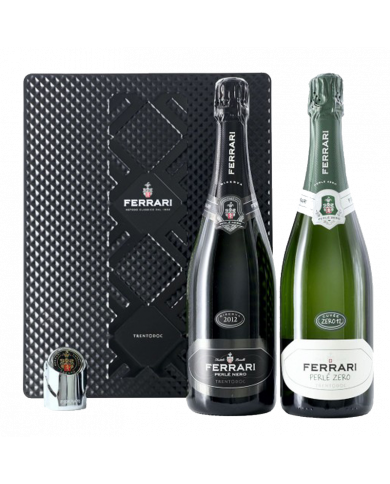
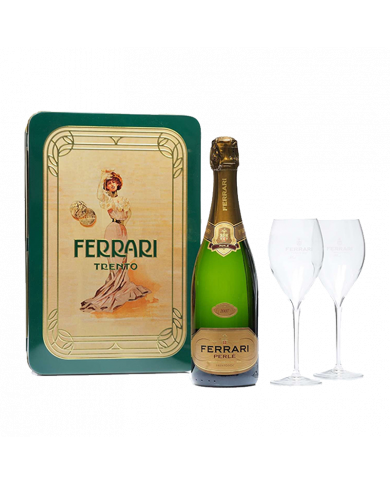
2 fantastic Ferrari sparkling wines in this beautiful gift box. The Trento DOC Perlé Rosé Riserva from the Ferrari winery is a great Rosé Millesimato obtained from a blend of Pinot Noir (80%) vinified in rosé and Chardonnay (20%) whose maturation on the lees lasts 5 years before being bottled for a further rest period.
€80.00
€72.00
SKU:
13067
Brand:
Ferrari
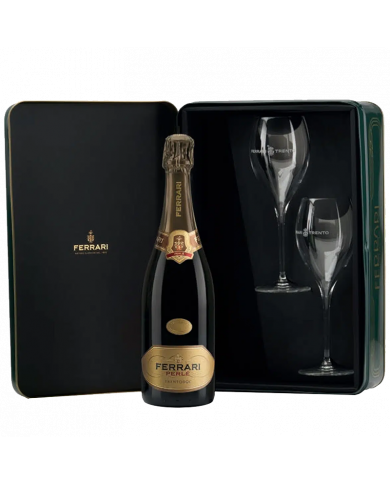
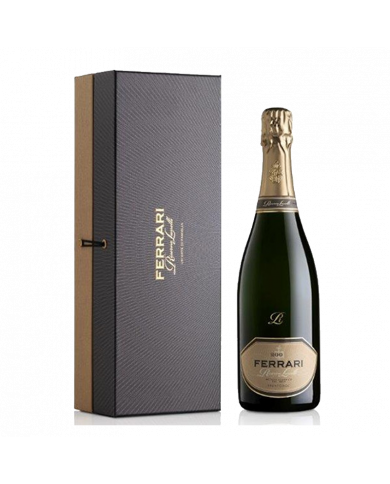
A vintage of extraordinary structure, a fascinating synthesis of innovation and tradition. It is the natural complement to the house's collection of labels: an elegance to which the wooden elevation confers an intriguing richness and harmonic complexity. In the reducing crystal of the flute, the vintage Chardonnay grapes, which have become gold in the sun of the clives, elegantly chase each other in a joyful dance of perfumes, softly caressed by yeasts for many years and made intriguing by the rigor of the wood.
€102.90
SKU:
13066
Brand:
Ferrari
€290.00
€261.00
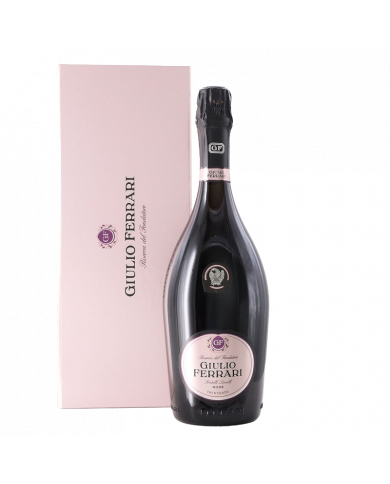
Giulio Ferrari Riserva del Fondatore Rosè 2009 is the fourth vintage released on the market of this special Riserva, already an icon of Italian rosé bubbles. The "pink" version of the legendary Giulio Ferrari Riserva del Fondatore shares the elegance and finesse given by the aging of over ten years on the lees, adding the character of the mountain Pinot Noir, which transforms Giulio Ferrari Rosé into a Trentodoc seductive, a perfect synthesis of the two grape varieties that symbolize Trentino viticulture.
€290.00
€261.00
SKU:
13065
Brand:
Ferrari
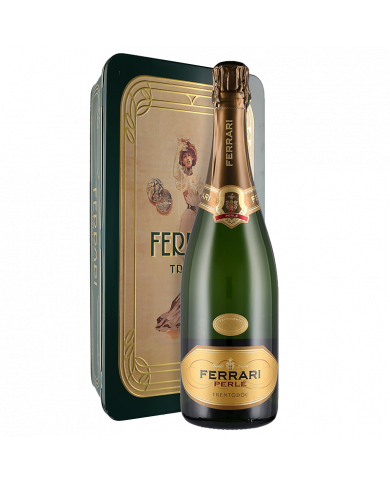
Intense yellow with golden reflections, with a very fine and persistent perlage. The nose reveals an intense bouquet of particular finesse, with hints of almond blossom and rennet apple, slightly spiced with a hint of bread crust. On the palate it is seductive and elegant, with a very long velvety sensation in which there is a light fruity note of ripe apple, pleasant hints of yeast and sweet almond and a nuanced aromatic base typical of chardonnay.
€67.88
SKU:
11941
Brand:
Lagertal
€18.00
€12.60
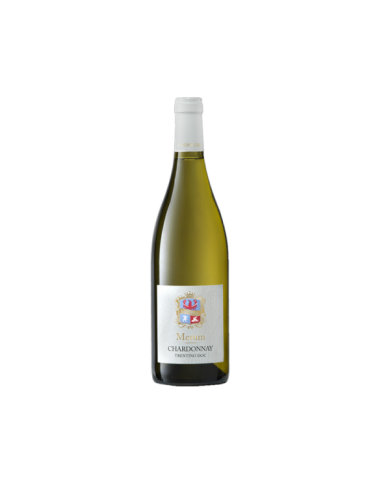
Merum is a wine that embodies the attitude of a territory that has been dedicated to viticulture for centuries and the ability of our oenologists to extract its characteristics in the best possible way, transforming it into a great wine with the Trentino DOC denomination. The bouquet is complex, the color is straw yellow, we recommend it in combination with foods with a delicate flavor.
A “pure” Chardonnay, just like its name.
€18.00
€12.60
SKU:
11747
Brand:
Lagertal
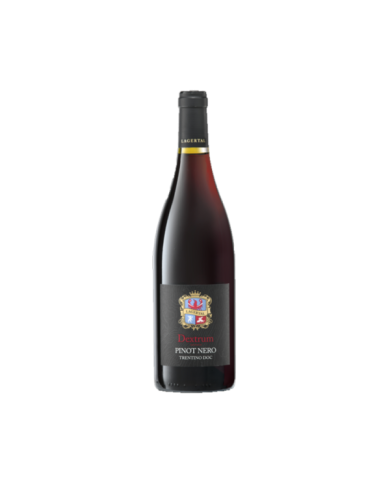
Of all the red grape varieties in the world, Pinot Noir is considered the most noble and elegant and at the same time the most difficult to interpret, the one that places the winemaker and the consumer in the face of perhaps the most complex tasting. The term Pinot derives from the French and translated literally means "pine cone", a name attributed due to the shape of the bunch of this grape, with very attached berries and an elongated shape, typical of pine cones.
€20.00
SKU:
11746
Brand:
Lagertal
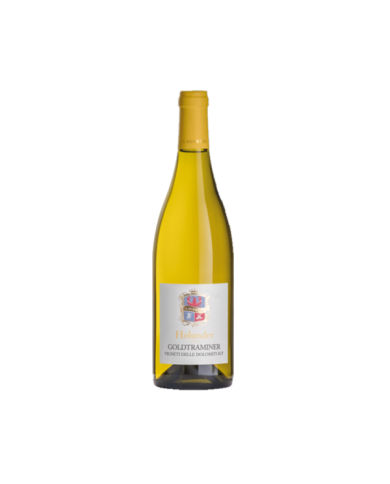
It has gold in its name - Gold - and the powerful charge of a modern wine - Traminer - decidedly "irreverent", because it is the fruit of an absolutely innovative vine, obtained from the crossing of Traminer vine flowers with those of Tuscan Trebbiano. A new variety created in the mid-1950s by Rebo Rigotti, geneticist from Trentino, one of the most brilliant international viticultural researchers. Precious vines, rare precisely because they are destined for targeted harvests and an equally particular wine. Like the one that ripens on the basaltic slope of Reviano, the sunny side of the Destra Adige, above Isera (Trento). The care in cultivation and vinification is maximum in order to offer an absolutely original, curious and yet intriguing wine. Gold in its sunny, brilliant color, with almost iridescent luminous reflections. The nose will win you over for the amalgam of fragrances embellished with a myriad of floral notes that recall candied fruit, acacia, citrus of mandarin and elder flowers, which surround the cultivation area in a fragrant embrace. On the palate it comes with fresh vigor, without neglecting the elegance of velvet, recalling round flavors of quince and crunchy apricots, with a never cloying sweetness and a decidedly rare gustatory persistence.
Holunder - a Goldtraminer that stands out for its versatility: to be enjoyed while still young - for immediate sensations - or to be rediscovered after some proper aging in the cellar, for unforgettable pleasures.
SKU:
11413
Brand:
Tolloy
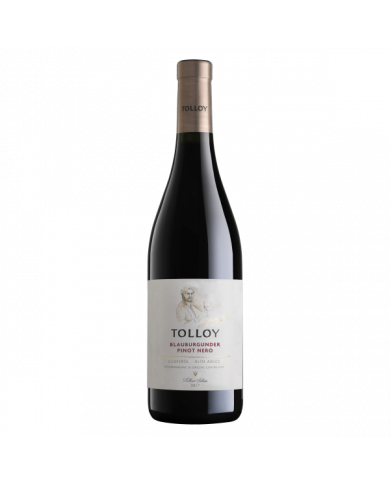
Produced only with grapes from its own vineyards grown in Alto Adige on the hill of Pochi, a hamlet of Salorno. Traditional red vinification at controlled temperature around 25°C with frequent pumping over, punching down and partial aging in small oak barrels for about 10 months.
€16.47
SKU:
11412
Brand:
Tolloy
€15.43
€10.80
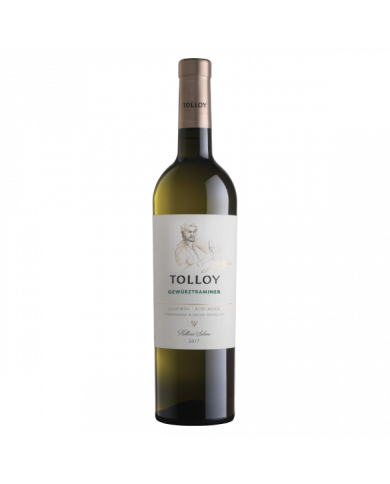
Produced only with grapes from our vineyards grown in Alto Adige on the medium hill in Pochi di Salorno. It is characterized by small bunches with pinkish berries tending towards bronze. With a distinctly aromatic taste, it is distinguished by the typical varietal aromas, softness and balance. White vinification with cold maceration and fermentation at 18-20 °C.
€15.43
€10.80
SKU:
11411
Brand:
Tolloy
€13.21
€9.25
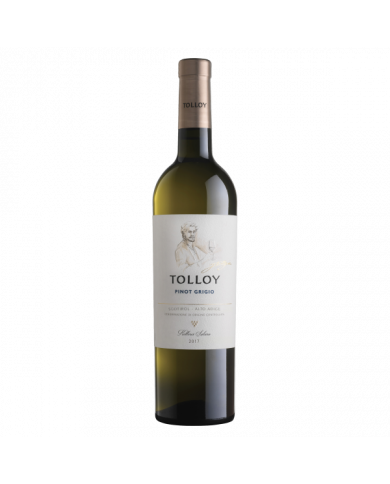
Produced only with grapes from its own vineyards grown in South Tyrol in the valley floor and on the low hills. 100% Pinot Gris with traditional vinification in white at a controlled temperature around 18-20°C.
€13.21
€9.25
SKU:
11409
Brand:
Tolloy
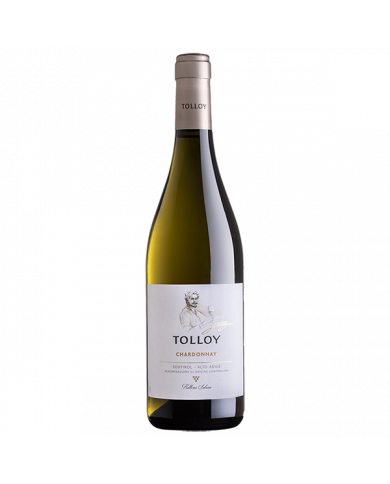
Chardonnay is one of the international grape varieties that best adapts to the environmental and climatic characteristics of Alto Adige. Here it manages to express all its aromatic potential. The particular location of the vineyards, between 200 and 500 meters above sea level, gives this wine a wide range of scents and aromas and the strong temperature range allows the wonderful acidity and freshness to be preserved. The grapes are harvested by hand around mid-September and subjected to traditional vinification with brief contact on the skins to increase the extraction of the varietal aromas characteristic of the grape. Subsequently the must is subjected to fermentation at low temperature
€13.24
SKU:
11407
Brand:
Terre del Noce
In the sunny Piana Rotaliana, along the banks of the Noce, fertile soils and favorable microclimates give rise to refined and fragrant grapes, from which Terre del Noce is born. Produced only with grapes from its own vineyards along the Adige Valley.
€18.18
Discover the excellent wines of Trentino-Alto Adige: A journey through the region's precious traditions!
Located in the northeastern corner of Italy, Trentino-Alto Adige is known for its unique winemaking excellence. The region is renowned for its fine wines, ranging from sweet whites to full-bodied reds, and for its precious winemaking traditions that have developed over the centuries. Whether you're a wine enthusiast or a tourist looking for a unique experience, exploring Trentino-Alto Adige 's excellent wineries is definitely an activity not to be missed.
The history and winemaking traditions of Trentino-Alto Adige
Trentino-Alto Adige's winemaking traditions date back to the times of the Roman Empire, when this region was an important wine producer and trader. Today, the region remains an important producer of fine wines, thanks to its diverse climates, quality soils, and long history of winemaking.
Over the centuries, the winemaking traditions of Trentino-Alto Adige have been influenced by various peoples who colonized the region, such as the Celts, Lombards, and Byzantines. Most of the wines produced in the region have been influenced in some way by these peoples, and the winemaking traditions of Trentino-Alto Adige have remained intact ever since.
The main grape varieties of Trentino-Alto Adige
Trentino-Alto Adige is rich in local grape varieties, each with its own unique characteristics and flavors. The most commonly grown varieties in the region are Müller-Thurgau, Pinot Blanc, Gewürztraminer, Lagrein, Pinot Noir, and Schiava. Each of these varietals produces a unique wine, characterized by notes of fruit, spice, herbs, and honey.
Trentino-Alto Adige is also known for its sweet wines, such as Schiava, a slightly sweet red wine, and Gewürztraminer, a sweet white wine with notes of exotic fruit. These wines are ideal paired with cheese, cured meats, and fish dishes.
How to visit the wineries of Trentino-Alto Adige
If you're interested in visiting the wineries of Trentino-Alto Adige, there are many ways to do so. You can join an organized tour, where an expert guide will accompany you to discover the region's excellent wines. Alternatively, you can always organize an independent visit to the region's wineries, tasting fine wines and soaking up the unique atmosphere of Trentino-Alto Adige.
An experience not to be missed
Exploring the excellent wines of Trentino-Alto Adige is a unique experience. The region is rich in history, culture, and winemaking traditions that have been passed down from generation to generation. Take the time to visit the wineries and taste the region's fine wines: it will be an unforgettable experience!
Wines of Trentino-Alto Adige
Trentino-Alto Adige is a region in northern Italy known for its mountainous landscapes, castles, and fine wines. Some of Italy's most renowned wines are produced here, thanks to the region's geographical location and unique climate. In this article, we'll explore the wines of Trentino-Alto Adige , their characteristics, and interesting facts.
Trentino-Alto Adige borders Austria and Switzerland and is divided into two autonomous provinces: Trento and Bolzano. The mountainous region extends from the Alps to the Austrian border. The climate is influenced by northerly winds and the surrounding valleys, creating a unique environment for wine production.
History of wine production in Trentino-Alto Adige
Wine production in Trentino-Alto Adige dates back to Roman times, when the first vineyards were cultivated in the area. Over the centuries, wine production has been influenced by many different cultures, including German and Austrian. This has led to the production of a variety of unique wines, which have earned an international reputation.
Characteristics of Trentino-Alto Adige wines
The wines of Trentino-Alto Adige are known for their elegance, lively acidity, and balance. The grape varieties grown in the region are primarily white, such as Pinot Bianco, Chardonnay, Sauvignon Blanc, Gewürztraminer, and Müller-Thurgau. However, red grapes, such as Schiava, Lagrein, and Teroldego, are also very popular.
The best wines of Trentino-Alto Adige
One of the most famous wines of Trentino-Alto Adige is Pinot Grigio, a dry white wine with a fresh, fruity flavor. Gewürztraminer is another fine white wine, with spicy notes and an intense aroma. Among the red wines, Teroldego Rotaliano is one of the finest. It is a red wine with an intense flavor and a deep ruby color.
Wine production in Trentino-Alto Adige
Winemaking in Trentino-Alto Adige is a very careful and meticulous process. The region boasts numerous wineries, both large and small, that work passionately to produce the finest wines. Many of these wineries are family-run and employ traditional production techniques.
The soils and climatic conditions
The Trentino-Alto Adige region is characterized by an alpine climate, with cool summers and cold winters. The soils are primarily rocky and rich in minerals, which favors the production of high-quality wines. Furthermore, the surrounding valleys create microclimates that influence the ripening of the grapes and the flavor of the wines.
The designations of origin of Trentino-Alto Adige wines
The wines of Trentino-Alto Adige are protected by several designations of origin, including Trento DOC , Alto Adige DOC, and Südtirol DOC. These designations guarantee the quality and origin of the wines and are an important promotional tool for the region.
Food and wine pairing
Trentino-Alto Adige wines pair perfectly with local cuisine, which is influenced by Austrian and Italian traditions. White wines pair well with fish dishes, fresh cheeses, and vegetable-based pasta dishes. Red wines pair well with red meat, wild boar, and game dishes.
Interesting facts about Trentino-Alto Adige wines
The wines of Trentino-Alto Adige are full of interesting curiosities. For example, Moscato Rosa, a sweet and aromatic wine, is produced only in certain areas of the region. Furthermore, Gewürztraminer is a highly aromatic wine, with notes of exotic fruit and spices, which pair well with Asian cuisine.
The wines of Trentino-Alto Adige represent a precious heritage for Italy. The region offers a wide variety of fine wines, thanks to its geographical location and unique climate. Wine production is a meticulous and painstaking process, involving many family-run wineries. Trentino-Alto Adige wines pair perfectly with local cuisine and are an excellent choice for those who want to discover the region's authentic flavors.
FAQ
What are the main grape varieties grown in Trentino-Alto Adige?
The main grape varieties grown in Trentino-Alto Adige are Pinot Bianco, Chardonnay, Sauvignon Blanc, Gewürztraminer and Müller-Thurgau.
What are the best red wines from Trentino-Alto Adige?
The best red wines of Trentino-Alto Adige are Teroldego Rotaliano, Schiava and Lagrein.
What are the designations of origin for Trentino-Alto Adige wines?
The designations of origin for the wines of Trentino-Alto Adige are Trento DOC , Alto Adige DOC and Südtirol DOC.
How do Trentino-Alto Adige wines pair with food?
White wines pair well with fish dishes, fresh cheeses and vegetable-based first courses, while red wines pair well with red meat, wild boar and game dishes.
What are some interesting facts about Trentino-Alto Adige wines?
There are many interesting facts about the wines of Trentino-Alto Adige, for example, Moscato Rosa is only produced in certain areas of the region, while Gewürztraminer pairs well with Asian cuisine thanks to its spicy notes.