

 Italiano
 Deutsch














There are no more items in your cart
SKU:
13111
Brand:
Fattoria Felsina
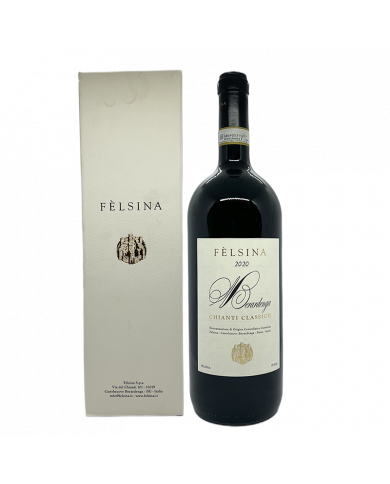
The vineyards are located in Castelnuovo Berardenga, in the south-eastern part of the Chianti Classico production area, north-east of Siena.
€240.83
SKU:
13110
Brand:
Fattoria Felsina
The vineyards are located in Castelnuovo Berardenga, in the south-eastern part of the Chianti Classico production area, north-east of Siena.
€66.90
SKU:
13109
Brand:
Fattoria Felsina
The vineyards are located in Castelnuovo Berardenga, in the south-eastern part of the Chianti Classico production area, north-east of Siena.
€62.59
SKU:
13108
Brand:
Fattoria Felsina
Chianti Classico constitutes the company's production base. The vineyards are located in Castelnuovo Berardenga, in the south-eastern part of the Chianti Classico production area, north-east of Siena.
€157.34
SKU:
13107
Brand:
Fattoria Felsina
Chianti Classico constitutes the company's production base. The vineyards are located in Castelnuovo Berardenga, in the south-eastern part of the Chianti Classico production area, north-east of Siena.
€61.92
SKU:
13106
Brand:
Fattoria Felsina
Chianti Classico constitutes the company's production base. The vineyards are located in Castelnuovo Berardenga, in the south-eastern part of the Chianti Classico production area, north-east of Siena.
€47.91
SKU:
13093
Brand:
Mccalin
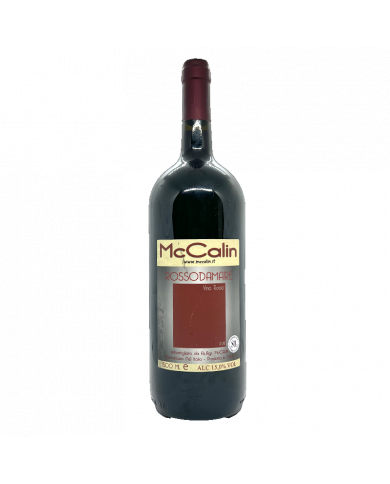
McCalin offers a very tannic red wine rich in acidity notes, which goes well with dishes based on red meat, game and sauces with long and complex preparations.
€59.78
SKU:
13088
Brand:
Fontefico
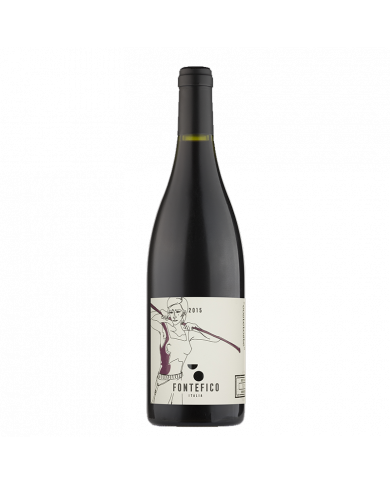
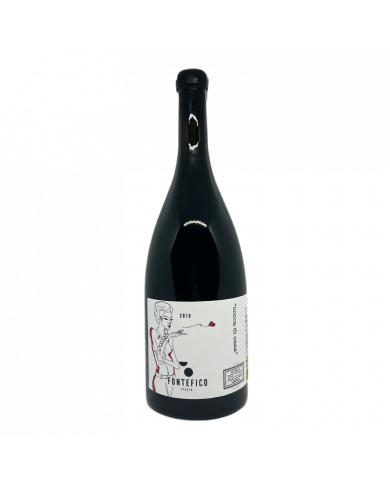
The “costetoste”, the only Aglianico in Abruzzo, comes from our Le Coste vineyard: a very steep terrain completely exposed to the South. Extreme agronomic conditions for an equally extreme wine. Fierce tannins and exposed muscles make it an uncompromising red. You love it or you hate it. But it's easier to love him ...
€75.00
SKU:
13087
Brand:
Fontefico
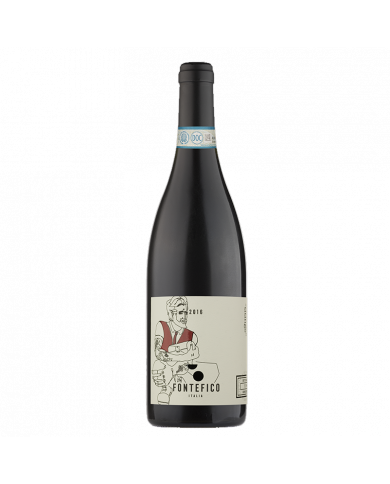
This Riserva comes from the oldest vineyard in Fontefico, planted in 1970. The "titinge" is the fruit of our passion for authentic wine, an intense and elegant Montepulciano d'Abruzzo, with an incredible charge of colour. Its taste “tingles” your heart.
€75.00
SKU:
13086
Brand:
Fontefico
Montepulciano is the main grape of our region, the vine we love the most, the wine that, round and round, we drink with greater pleasure and in any circumstance. Montepulciano is our privileged grape, the one we pamper the most, it is Fontefico's “house cocca”.
€45.00
SKU:
13085
Brand:
Fontefico
Cerasuolo d'Abruzzo is a unique wine of its kind, because it brings with it all the color and taste of the grape from which it comes. To those who ask us why we do not conform to the fashion of a more discreet and characterless rosé, we answer: I was crazy! This is Fontefico's “fossimatto”.
€45.00
€76.90
SKU:
13069
Brand:
Ferrari
€122.90
€110.61
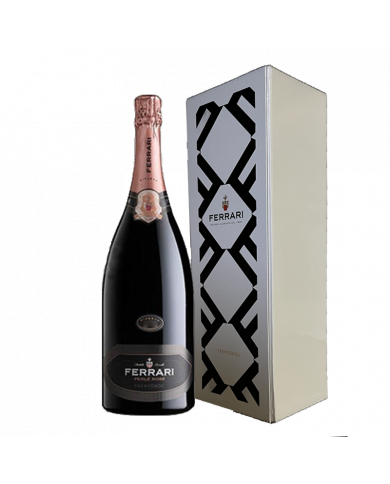
The Trento DOC Perlé Rosé Riserva from the Ferrari winery is a great Rosé Millesimato obtained from a blend of Pinot Nero (80%) vinified in rosé and Chardonnay (20%) whose maturation on the lees lasts 5 years before being bottled for a further rest period.
€122.90
€110.61
€75.81
SKU:
13032
Brand:
Argiolas
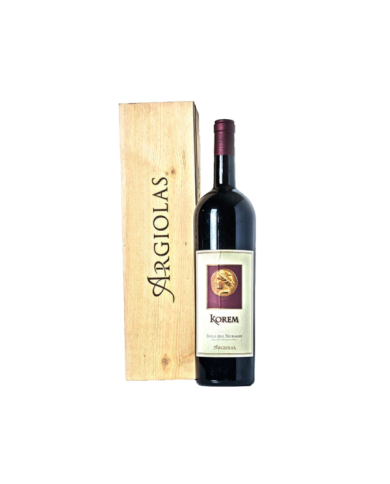
The Korem Magnum proposed by the famous Argiolas winery, an important family-run production company in southern Sardinia, is an Isola dei Nuraghi Typical Geographical Indication wine. A product of considerable interest, for a label that is a real pride of Sardinian oenology. This red is produced from the blend of Carignano, Bovale Sardo and Cannonau grapes, fruit of native varieties grown at 300 meters above sea level, on a medium-textured soil with the presence of clay and limestone.
€111.02
€95.86
SKU:
13010
Brand:
Scacciadiavoli
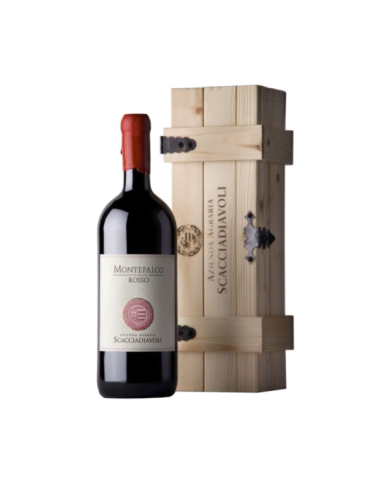
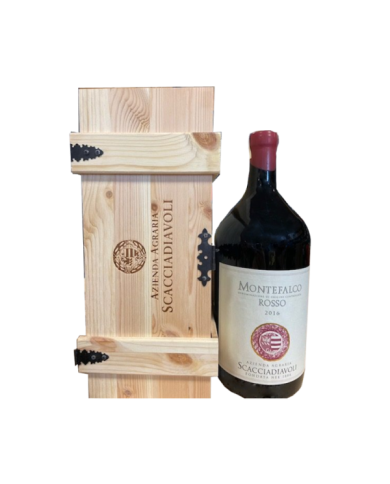
Wine of excellent workmanship. Intense ruby red color, ample, elegant perfume with hints of cherry, soft and voluminous flavor. In the ancient tradition of the territory of Montefalco, after selecting the grapes for the production of Montefalco Sagrantino, all the other red varieties were harvested for the composition of a fresher and easy-to-match wine. Scacciadiavoli takes inspiration from this tradition and perfects it by adding that touch that makes this wine even more lovable.
€40.16
SKU:
13009
Brand:
Scacciadiavoli
Wine of excellent workmanship. Intense ruby red color, ample, elegant perfume with hints of cherry, soft and voluminous flavor. In the ancient tradition of the territory of Montefalco, after selecting the grapes for the production of Montefalco Sagrantino, all the other red varieties were harvested for the composition of a fresher and easy-to-match wine. Scacciadiavoli takes inspiration from this tradition and perfects it by adding that touch that makes this wine even more lovable.
€66.61
SKU:
13005
Brand:
Fattoria le Pupille
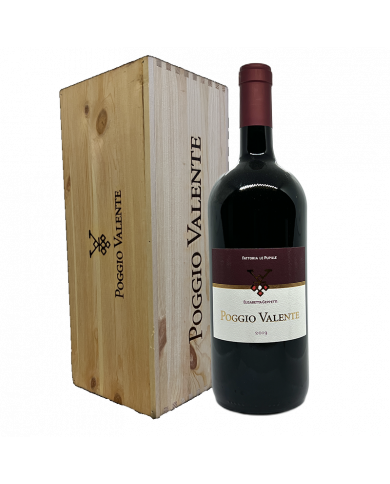
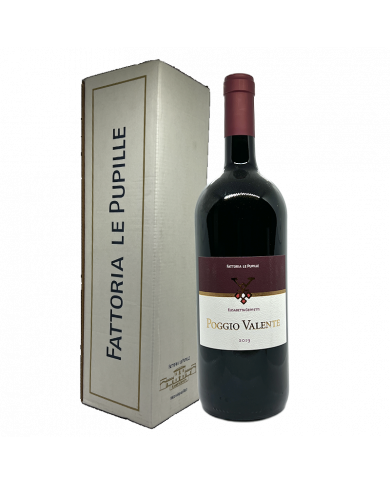
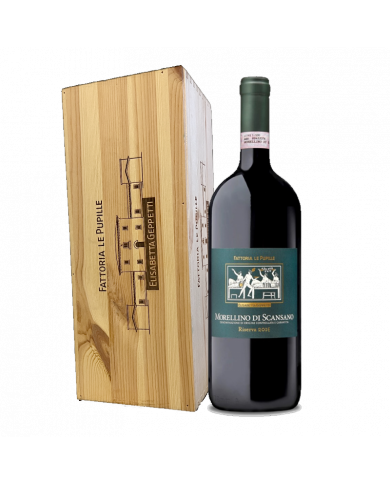
Compact ruby red. The bouquet reveals the fragrance of red roses, black cherry, blood orange and blackberry. Followed by juniper berries, dried flowers, Tuscan cigars and undergrowth. The tannins are dense and silky which develop on a fresh and savory base. Persistent finish on blackcurrant echoes.
€162.26
SKU:
13004
Brand:
Fattoria le Pupille
Compact ruby red. The bouquet reveals the fragrance of red roses, black cherry, blood orange and blackberry. Followed by juniper berries, dried flowers, Tuscan cigars and undergrowth. The tannins are dense and silky which develop on a fresh and savory base. Persistent finish on blackcurrant echoes.
€72.59
SKU:
12998
Brand:
Fattoria le Pupille
Dark ruby red. The aromas let emerge hints of ripe berries, blood orange, maraschino cherries and aromatic herbs; fades into tones of licorice, black peppercorns and dark chocolate. The taste is full, enveloping and vigorous, with a very fine tannic texture. Persistent finish on flavors of rhubarb and myrtle.
€98.77
€30.20
€25.62
SKU:
12952
Brand:
Tenuta Antonini
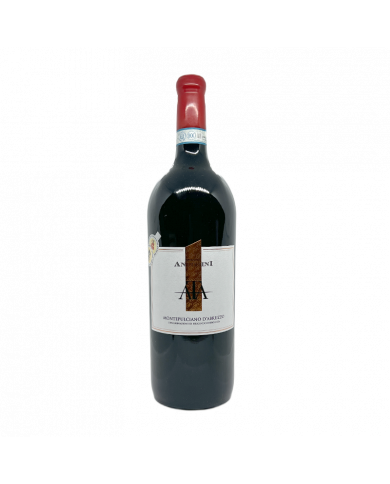
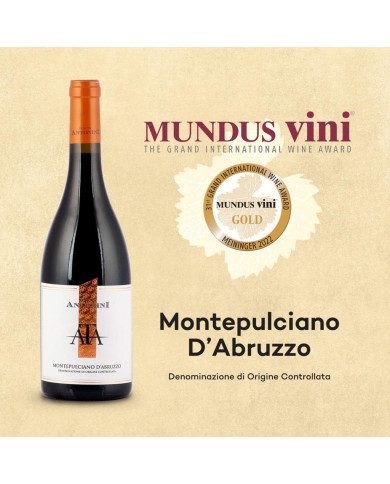
Red is the color of passion. Strong, energetic, charged, exciting: our Montepulciano d'Abruzzo is exactly like that, enveloping and full-bodied. Each sip encourages the discovery of its sensorial complexity, but also to let oneself be pervaded by positive sensations and share them with those around us.
€27.90
SKU:
12105
Brand:
Cantina Marchesi Antinori
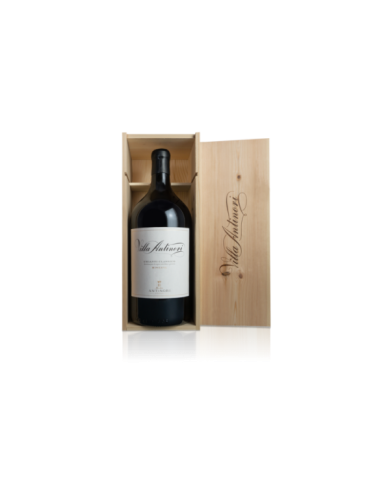
A magnificent wine envied by the whole world, a creation that only Antinori could obtain, the Chianti Classico Riserva, signed "Villa Antinori " is a true masterpiece of central Tuscany. We offer it in 3-liter format in its magnificent silk-screened wooden case. A perfect product for a gift or for an important dinner, destined to withstand even long aging, it is truly a wine not to be missed.
SKU:
12103
Brand:
Cantina Marchesi Antinori
La Braccesca extends over 508 hectares where the ancient farm of the Bracci counts once stood, hence the name of the estate and its coat of arms: an arm covered with armor holding a sword. The total area of the vineyards is 340 hectares divided into two parts: the first, of 366 hectares of which 237 are planted with vineyards, is located on the border between the municipality of Montepulciano and that of Cortona. The other plot, 142 hectares of which 103 are vineyards, extends as far as Montepulciano between three of the most renowned sub-areas for the production of great red wines: Cervognano, Santa Pia and Gracciano. The first vintage of La Braccesca Vino Nobile di Montepulciano DOCG was 1990.
€39.92
SKU:
12101
Brand:
Cantina Marchesi Antinori
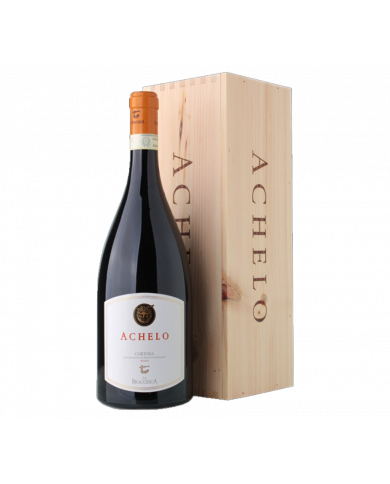
Cortona Syrah Achelo La Braccesca dei Marchesi Antinori was born in the homonymous estate, located on the Sienese hills. It is produced exclusively with Syrah grapes, harvested in mid-September. Fermentation takes place in stainless steel tanks at a controlled temperature of 28 ° C for 10 days. Subsequently the wine partially ages in barriques and steel tanks for about 7 months, before being bottled.
€32.28
SKU:
12100
Brand:
Santa Cristina
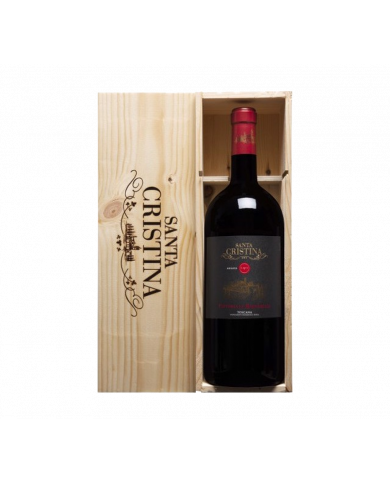
Fattoria Le Maestrelle has a ruby red color with violet reflections. The nose is intense and complex, the notes of vanilla and coffee stand out well in harmony with the typical aromas of mint and cocoa of Merlot and the sensations of red fruit characteristic of Sangiovese and Syrah. On the palate it is balanced, tasty, soft and with a complex finish that recalls the olfactory notes.
€23.90
SKU:
12099
Brand:
Cantina Marchesi Antinori
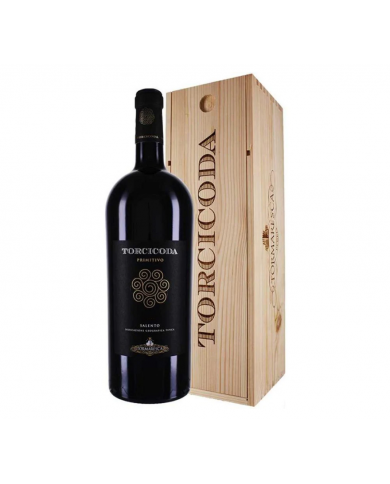
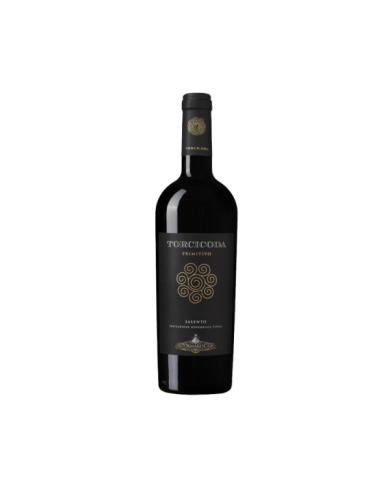
Torcicoda di Tormaresca is a full-bodied, full and intense Primitivo, with clear aromas of berries, noble woods and coffee. The taste is consistent with the smell and reveals a good persistence. It is aged for 10 months in French and Hungarian oak barrels
€40.82
SKU:
12098
Brand:
Cantina Marchesi Antinori
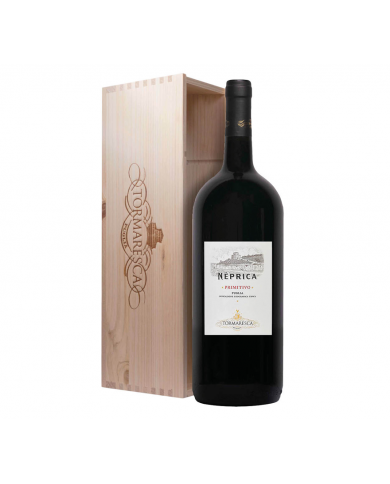
Primitivo Neprica by Tormaresca Antinori is a puliese red wine from the province of Brindisi, aged in steel for about 8 months to maintain a fragrant and fruity sensorial profile. It has an intense ruby red color, furrowed by purple reflections, and releases notes of black cherries, small fresh and candied red fruits and licorice aromas to the nose, revealing a soft, round sip with evolved tannins, awakened by a balanced freshness .
€24.90
SKU:
12094
Brand:
Cantina Marchesi Antinori
ensational, enveloping, powerful and rustic, but at the same time capable of telling the story of the Salento area. The Sun, the beneficial influence of the sea and the wind. The classification is the classic one, Negroamaro IGT. Produced with 100% pure Negr or amaro grapes, conscientiously selected in the Maìme estate in S. Pietro Vernotico in Brindisi, where they are still raised as they once did in these areas, using the sapling and spurred cordon system.
€61.00
SKU:
12093
Brand:
Cantina Marchesi Antinori
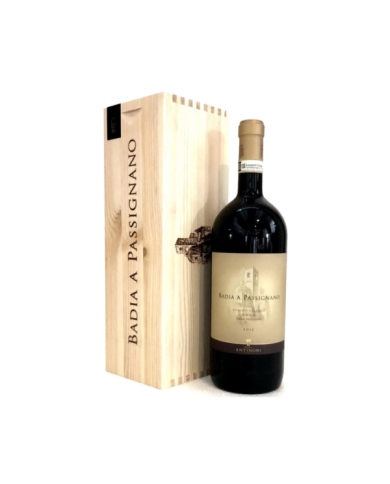
Red wine of great impact with a bright color of intense hue. The nose is rich and concentrated with a fruity aroma well preserved in intensity and sweetness, where you feel the contact with the balanced and well-dosed wood. In the mouth it is enveloping, soft and round with a present but silky tannin. The characteristic acidic structure makes Badia a Passignano 2007 a pleasant wine of undoubted longevity, suitable for a long stay in the bottle.
€98.21
SKU:
12090
Brand:
Tenuta De Melis
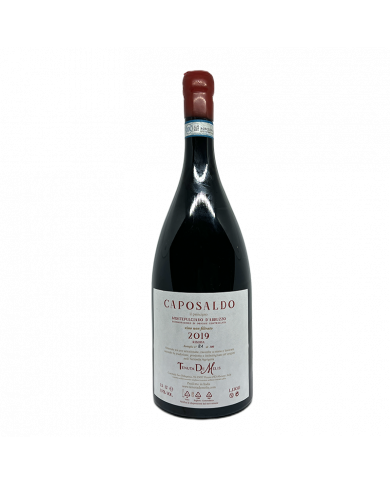
Ruby red with light violet reflections in the glass, it presents itself to the nose with evident notes of ripe red fruit, jam and evident spiciness. Rich and satisfying on the palate, it combines an important body with a balanced flavor and tannic texture.
€38.94
SKU:
12082
Brand:
Fattoria Felsina
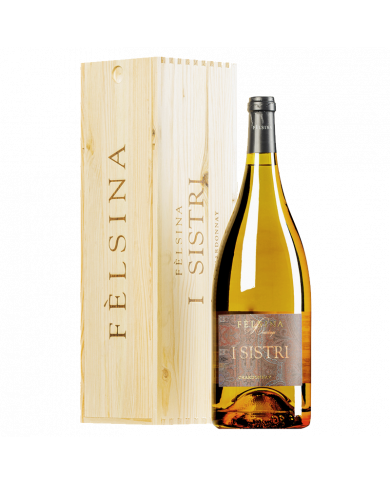
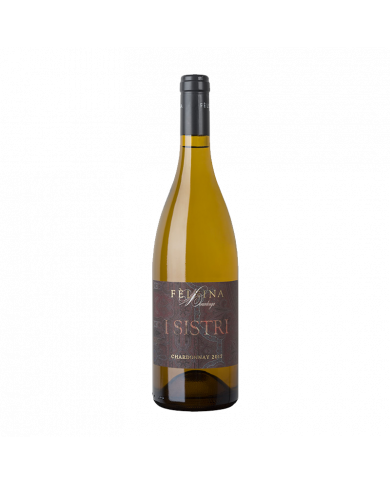
The history of Chardonnay di Fèlsina began in the eighties, from grafts of French clones in the vineyards owned by the nearby Tenuta di Farnetella.
€46.12
€39.20
SKU:
12077
Brand:
Fattoria Felsina
The grapes come from the Rancia Piccola and Poggiolo vineyards, the former also called del Maestro Raro, adjacent and with characteristics similar to that of Rancia.
€128.10
SKU:
12073
Brand:
Tocco
The wine has a deep ruby red color with an intense aroma and fruity aromas, with notes of ripe red fruit as well as tertiary hints of green pepper, coffee, licorice and nutmeg. The warm, full-bodied, soft, tannic and long-lasting aromatic flavor is a real delight for the palate. To best enhance all its organoleptic characteristics, it is recommended to taste it in company and with grilled or braised red meats, cured meats and aged and flavored cheeses.
€67.49
Large format wines are a popular choice for special occasions and among wine collectors. They come in a variety of sizes and offer a variety of advantages over standard bottles. In this article, we'll explore everything you need to know about large format wines, from their benefits to storage and purchasing.
The advantages of large format wines
Large format wines offer numerous advantages over standard bottles. First, most wines in large formats age better than standard bottles. This is because the amount of oxygen entering the bottle is lower than in standard bottles. Furthermore, the larger capacity of wine in a single container means that temperature fluctuations are less significant, reducing the risk of damage to the wine.
Secondly, large format wines are an ideal choice for special occasions. A large bottle quickly becomes the center of attention and impresses guests. Furthermore, a single large bottle is much easier to manage than many smaller ones. For example, if you're hosting a dinner for a large group, you can use several large bottles to facilitate service.
Large format wine sizes
Large format wines are available in different sizes, each with a specific name:
Magnum : 1.5 litres, equal to two standard bottles
Jeroboam : 3 liters, equal to four standard bottles
Rehoboam : 4.5 liters, equal to six standard bottles
Methuselah : 6 liters, equal to eight standard bottles
Salmanazar : 9 liters, equal to twelve standard bottles
Balthazar : 12 liters, equal to sixteen standard bottles
Nebuchadnezzar : 15 litres, equal to twenty standard bottles
Storage of large format wines
Storing large-format wines is an important aspect to consider. Because these bottles are larger than standard bottles, storage can be more complicated. Most cellars don't have shelves or space suitable for large bottles, so planning ahead is essential.
Additionally, large bottles may take longer to adjust to the ambient temperature in which they are stored. To avoid temperature fluctuations, it's important to store large bottles in a cool, dry place.
Purchase of large format wines
Buying large format wines can be an excellent choice for wine collectors and for special occasions. However, it's important to pay attention to the bottles' origin. Large bottles can be more susceptible to counterfeiting than standard bottles, so it's important to buy from reputable and trustworthy sellers.
What are large format wines?
Large format wine bottles are larger than the standard 750ml bottle. There are numerous larger wine bottle sizes, including the Magnum (1.5 liters), the Double Magnum (3 liters), the Jeroboam (4.5 liters), the Rehoboam (4.5 liters), the Methuselah (6 liters), the Salmanazar (9 liters), the Balthazar (12 liters), and the Nebuchadnezzar (15 liters).
Why choose large-format wines?
There are many reasons to choose a larger bottle of wine over the traditional 750 ml bottles. First, wine in larger formats is more stable than standard bottles, thanks to the greater volume of wine in the bottle and the smaller amount of air coming into contact with the wine.
Secondly, wines in large formats develop more slowly, meaning they can be stored for a longer period without undergoing any alteration. Furthermore, these wines have greater harmony and balance than standard bottles, thanks to the greater contact surface between the wine and the cork.
Finally, wines in large formats are ideal for special occasions, such as weddings, anniversaries, birthdays, or corporate events, because they have a greater visual impact and can satisfy the palates of a greater number of people.
How to choose a large format wine?
Choosing a large-format wine depends on the type of wine and your personal needs. Generally, the wines best suited to larger formats are those that require a longer aging period, such as structured red wines, complex white wines, or sweet dessert wines.
Furthermore, it's important to choose a high-quality wine, because the larger the quantity of wine in the bottle, the greater the chance of defects appearing. It's therefore important to purchase wines in large formats from reputable retailers who offer guarantees regarding the wine's quality and shelf life.
Finally, it's important to consider the number of people attending the event to choose the right bottle size. For example, a Magnum bottle (1.5 liters) is enough for about 10 people, while a Balthazar bottle (12 liters) can satisfy up to 100 people.
In conclusion, large format wines are an excellent choice for special occasions and for wine collectors, thanks to their greater stability, their ability to evolve more slowly, and their ability to please the palates of a larger number of people.