

 Italiano
 Deutsch






There are no more items in your cart
€13.37
€11.63
SKU:
19873
Brand:
Donnafugata
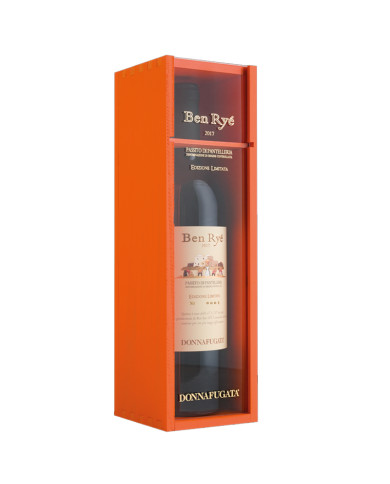
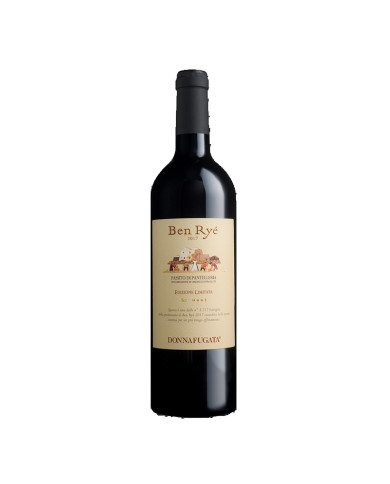
Ben Ryé Donnafugata is one of the most famous Sicilian passito wines in Italy and in the world, which has become a paradigm of Passito di Pantelleria. Its name in Arabic means "daughter of the wind", an epithet attributed to this Mediterranean island, struck by winds that blow on the bunches of grapes and on the crops, bringing with them intense and very characteristic aromas , the same ones we find in wine. The image that decorates the label is created by the designer Nicola Vitale and illustrates the work and effort of the winemakers in this area, illuminated by intense sunlight, with the 'dammuso', a typical architecture of the island in the background.
€190.90
SKU:
19836
Brand:
Planeta
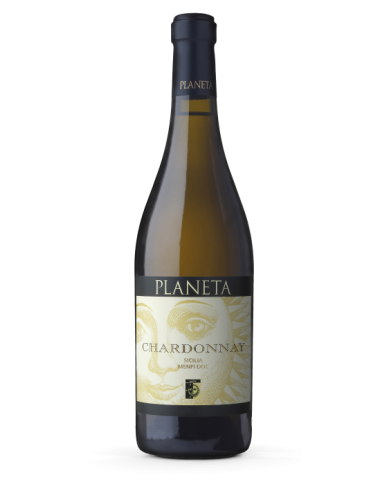
Un vino che è diventato l’immagine del cambiamento della Sicilia del vino. Nasce dal desiderio di riuscire a competere con il mondo nella produzione di questo vitigno così nobile e diffuso. Dopo una lunga strada iniziata nel 1985, piena di sorprese e di successi, oggi lo Chardonnay Planeta è un’icona per la Sicilia intera.
Le vigne di Ulmo e Maroccoli, coltivate secondo i criteri della sostenibilità e del biologico, sono uniche per posizione e per terroir. La fermentazione e l’affinamento in legni francesi, attenta e precisa, ci consegna un vino unico per grazia e potenza.
SKU:
19792
Brand:
Donnafugata
Chiarandà del Merlo 1999 è un vino di personalità ed eleganza, che riesce ad unire potenza e soavità. Profumi di frutta gialla matura, sovrana la mela gialla, e poi note di pesca e vaniglia dolce fuse al burro di arachidi. Al gusto mostra rotondità e sfericità avvolgenti. Vino dall’importante struttura che risulta perfettamente bilanciata da acidità e sapidità.
€9.08
SKU:
19713
Brand:
Feudo Arancio
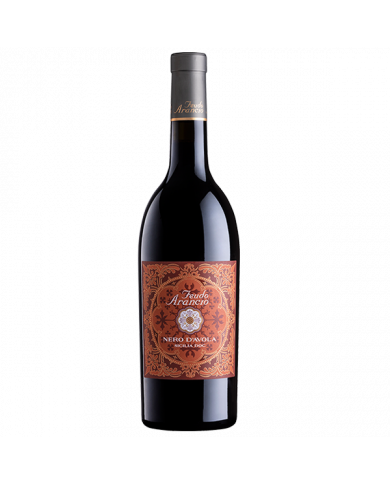
Prince of the enological renaissance of Sicily, Nero d'Avola is a native vine of great value. Initially widespread in the Syracuse area, it is now extended to all the wine-growing areas of the island. It is a medium-early variety that ripens around the first week of September and requires low-clayey soils and is sensitive to excessive drought and exposure to the sun. The type of training used is espalier, with an average planting density of 4,500 plants per hectare. Harvesting of the grapes at perfect aromatic and polyphenolic maturation, destemming and alcoholic fermentation with the skins for 6-8 days at 22-24°C, malolactic fermentation with selected bacteria, maturation for 6 months in French oak barriques.
€11.90
SKU:
19712
Brand:
Feudo Arancio
€11.19
€10.07
This wine, 100% Frappato, expresses the nobility and richness of one of the oldest Sicilian vines. Frappato is among the southernmost red berried varieties in Europe. Its historic enographic site is Vittoria, the youngest city in the Ragusa area lying in the lower Ibleo plain. This vine is suitable for the production of red wines with low coloring intensity, typical of a young red wine.
€11.19
€10.07
SKU:
19711
Brand:
Feudo Arancio
€11.18
€10.06
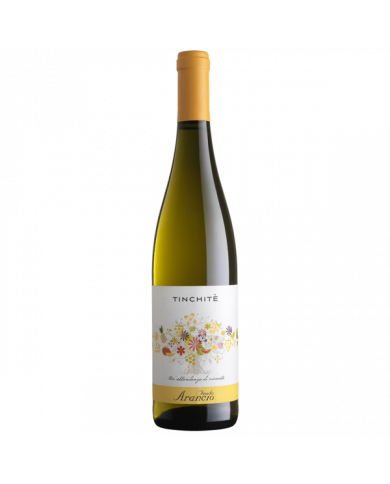
Tinchitè: an abundance of liveliness. Wine obtained from Grillo grapes grown in our wineries located in the south-east of Sicily, in the province of Ragusa, and in the west, in the province of Agrigento, where the different environmental conditions allow us to obtain grapes with different aromatic styles. In fact, if on the one hand the proximity to the sea of the vineyards cultivated at the Ragusa company and the loose and warm soils allow for more fruity and fragrant wines to be obtained, on the other, the more clayey and fertile soils of the company located near Agrigento they give the grapes more concentration, ripeness, richness and volume. From the union of these two different styles of wine, the richness and fruitiness of our slightly sparkling wine is born.
€11.18
€10.06
€13.24
€13.24
€15.41
SKU:
19519
Brand:
Cummo
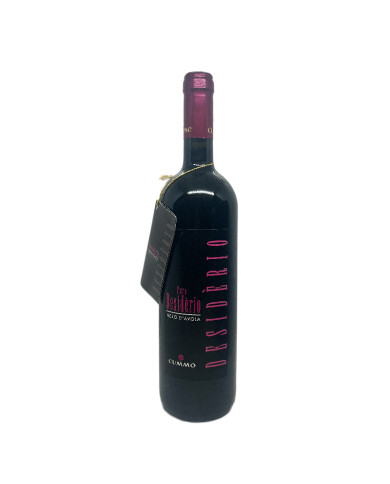
IGT terre siciliane dal colore rosso intenso con riflessi violacei e bouquet etereo, ampio, intenso con sentori fruttati. Ideale se abbinato ad arrosti, carni alla griglia, selvaggina, formaggi di media stagionatura.
€29.90
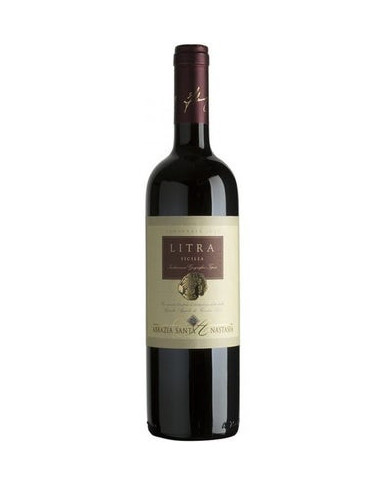
SKU:
19518
Brand:
Abbazia Santa Anastasia
Vino rosso Biodinamico
Cabernet Sauvignon in purezza, di un territorio che lo rende unico e indimenticabile.
La sua grande personalità, si esprime in un racconto olfattivo che non smette mai di stupirci ad ogni assaggio.
SKU:
19494
Brand:
Marco De Bartoli
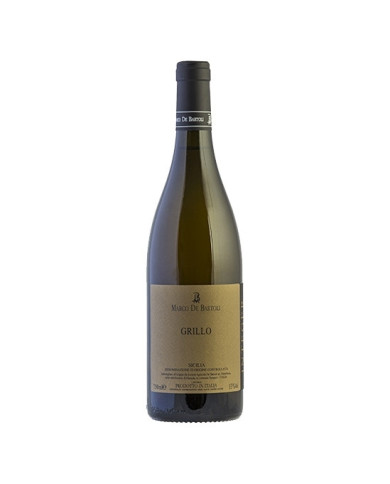
il Grillo nella sua espressione più giovane, fragrante, vivace, il frutto di un territorio che non smette mai di stupire.
€15.30
SKU:
19493
Brand:
Marco De Bartoli
Integer Zibibbo del famoso produttore siciliano Marco De Bartoli è un vino con integrità.
€31.50
SKU:
19492
Brand:
Marco De Bartoli
Il Grillo “Integer” di De Bartoli è un vino bianco intenso e anticonvenzionale, prodotto nel pieno rispetto di rigorose pratiche tradizionaliste, limitando l’intervento dell’uomo e le forzature, riducendo al minimo qualsiasi trattamento chimico, fisico e meccanico.
€31.50
SKU:
19491
Brand:
Marco De Bartoli
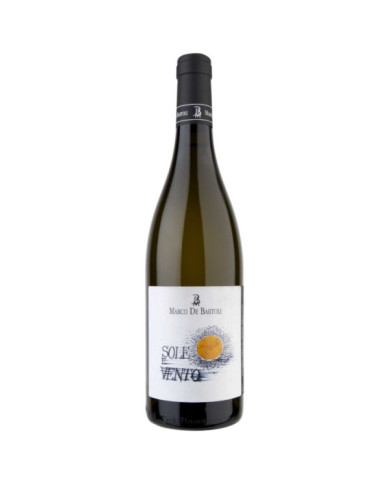
Il Sicilia Bianco Sole e Vento della Cantina Marco de Bartoli nasce da uve Grillo coltivate in vigneti situati nel comune di Samperi, nel cuore della Sicilia Occidentale, e con uve Zibibbo coltivate in vigneti collcati nel cuore dell'isola di Pantelleria.
€16.99
SKU:
19490
Brand:
Marco De Bartoli
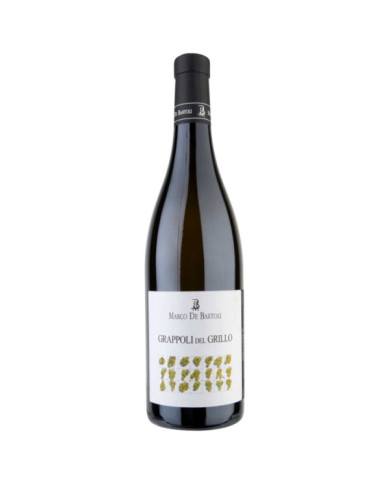
Il Grillo Grappoli del Grillo della Cantina Marco de Bartoli nasce in vigneti situati nel comune di Samperi, nel cuore della Sicilia Occidentale.
€27.90
SKU:
19489
Brand:
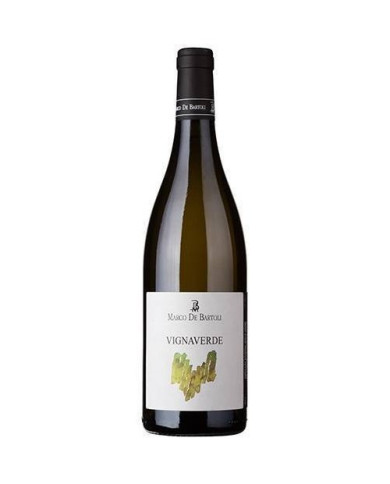
Marco De Bartoli
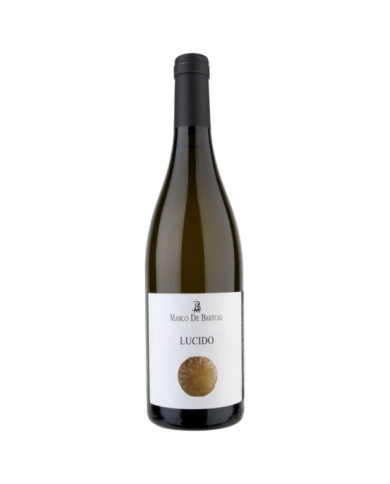
il Sicilia Catarratto Lucido della Cantina Marco de Bartoli nasce in vigneti situati nel comune di Samperi, nel cuore della Sicilia Occidentale.
€14.80
€8.20
€29.04
€18.67
€20.15
Discover the Secrets of Sicilian Wines: A Journey Through Southern Italy's Winemaking Tradition
Sicily is one of Italy's richest regions, both for its history and its winemaking tradition. Sicilian wines are among the most appreciated in the world and are renowned for their quality. In this article, we'll discover the secrets of these delicacies and how to best enjoy them.
Sicilian Wines: An Ancient and Rich History
The tradition of winemaking in Sicily dates back to the Greco-Roman period, when the island was rich in native grape varieties. Over the centuries, Sicilian wine production has remained central to the region's culture and economy. Today, Sicilian wines are renowned worldwide for their unique quality.
Sicilian Wines: Varieties and Characteristics
Sicilian wines come in numerous varieties. The most famous are Nero d'Avola, Nerello Mascalese, Frappato, and Grecanico. These wines are characterized by a great aromatic complexity: hints of red fruits, spices, flowers, and vanilla. Nero d'Avola is an intense, full-bodied red wine, while Nerello Mascalese is lighter and fruitier. Frappato is a light, aromatic rosé, while Grecanico is a fresh, fruity white wine.
How to choose the right wine
Choosing the right wine depends on personal preference and the occasion. For example, if you want to drink a high-quality red wine, then you should opt for a Nero d'Avola. If you want a lighter, fruitier wine, you can choose a Nerello Mascalese. For a white wine, Grecanico is an excellent choice.
How to serve a Sicilian wine
To fully enjoy a Sicilian wine, serve it at a temperature of 18-20°C. Red wines are best served in fairly large glasses with a wider base and a narrower top. White wines, on the other hand, are best served in smaller glasses with a narrower base and a wider top.
The right match
Each wine has its own ideal pairing. For example, Nero d'Avola is a very versatile wine and pairs well with meat dishes, such as grilled steak. Nerello Mascalese, on the other hand, pairs better with fish or vegetable dishes. Frappato is a wine that pairs well with lighter dishes, such as a mixed salad. Grecanico is a wine that pairs well with fish or vegetable dishes.
5 tips for Sicilian wines
1. Choose a quality wine. Sicily is rich in excellent wines, so choose a product from a reliable producer.
2. Taste more wines. Taste several Sicilian wines to find out which one you like best.
3. Store your wine well. Store Sicilian wines in a cool, dry place away from heat sources.
4. Choose the right pairing. Pair Sicilian wines with the right dishes for a unique tasting experience.
5. Don't be shy. Don't hesitate to drink Sicilian wine and experiment with new varieties.
Discovering the secrets of Sicilian wines is a unique experience. Sicily is one of Italy's richest regions, and Sicilian wines are among the finest in the world. In this article, we've explored the history of these wines, their characteristics, how to choose and serve a Sicilian wine, and how to pair it with the right dishes. By following these tips, you'll be able to fully enjoy these delicacies and discover the secrets of Sicilian wines.
Sicilian Wine Denomination
Sicily is a region renowned worldwide for its wine production. Thanks to its Mediterranean climate, volcanic activity, and rich soil, the island produces some of the world's most prized wines. In this article, we'll explore Sicily's main wine appellations, their grape varieties, and their sensory characteristics, to discover the excellence of Sicilian winemaking.
Introduction to wine production in Sicily
Wine production in Sicily has ancient roots, dating back to the times of the Greeks and Romans. The region boasts a wide variety of terrain, from the volcanoes of Mount Etna and the Aeolian Islands to the inland hills, which allow for the cultivation of numerous native and international grape varieties. Thanks to the use of innovative techniques and a focus on quality, Sicilian wine production is constantly growing, offering the market high-quality wines capable of satisfying every palate.
The main denominations of Sicilian wines
Sicilian wine designations are divided into four main categories: Controlled Designation of Origin (DOC), Controlled and Guaranteed Designation of Origin (DOCG), Typical Geographical Indication (IGT), and Table Wines. Let's look at the characteristics of each in detail.
Controlled Designation of Origin (DOC)
The Controlled Designation of Origin (DOC) is a quality label awarded to wines that meet specific production criteria. Sicily has 23 DOCs, including Cerasuolo di Vittoria, Moscato di Pantelleria, and Etna Rosso.
Vittoria Cherry
Cerasuolo di Vittoria is a red wine produced in the southeastern part of the island, in the province of Ragusa. It is made with Nero d'Avola and Frappato grapes, in varying percentages, and has a deep ruby red color, a fruity aroma, and a dry, smooth flavor. It pairs perfectly with red meats, cured meats, and aged cheeses.
Moscato di Pantelleria
Moscato di Pantelleria is a sweet wine produced on the island of Pantelleria, located southwest of Sicily. The wine is made from the Moscato di Alessandria grape, locally known as Zibibbo, and has a deep golden yellow color, a rich, aromatic aroma, and a sweet, mellow flavor. It pairs perfectly with sweets and desserts.
Etna Red
Etna Rosso is a red wine produced on the slopes of Mount Etna, Europe's highest active volcano. This wine is made primarily from the native Nerello Mascalese grape, which grows on volcanic soils at high altitudes.
What is the most famous wine in Sicily?
A: Sicily's most famous wine is Etna Rosso, a red wine produced on the slopes of Mount Etna.
Controlled and Guaranteed Designation of Origin (DOCG)
The Controlled and Guaranteed Designation of Origin (DOCG) is the highest expression of Italian wine quality. Sicily has only one DOCG, Cerasuolo di Vittoria. This dry red wine is produced in the Vittoria area, in the province of Ragusa, with varying percentages of Nero d'Avola and Frappato grapes. The wine has a ruby red color, a fruity aroma, and a smooth, persistent flavor. It pairs perfectly with red meats, cured meats, and aged cheeses.
Typical Geographical Indication (IGT)
The Indicazione Geografica Tipica (IGT) designates wines produced in a specific geographical area and possessing certain distinctive characteristics. In Sicily, there are four IGTs: Terre Siciliane, Salina, Val di Mazara, and Alcamo. IGT wines can be made with international grape varieties, such as Chardonnay, Cabernet Sauvignon, and Merlot, as well as native varieties.
Table Wines
Table wines are wines produced in Sicily that do not fall into the DOC, DOCG, or IGT categories. Despite this, many of them are of the highest quality, produced with native grapes and using artisanal methods. Among the best-known are Nero d'Avola and Grillo.
Sicily is a region with a long winemaking tradition, renowned worldwide for the quality of its wines. Thanks to its volcanoes, Mediterranean climate, and diverse soils, the island produces exceptionally high-quality wines, capable of satisfying every palate. From DOC to IGT, from white to red, Sicilian wine production is a true oenological excellence.
FAQ
What are the native grape varieties of Sicily?
Among the main native grape varieties of Sicily are Nero d'Avola, Frappato, Inzolia, Grillo and Zibibbo.
How many DOC wines are there in Sicily?
In Sicily there are 23 DOC wines.
What are the main pairings for Sicilian wines?
Sicilian red wines pair perfectly with red meats, cured meats, and mature cheeses, while white wines are ideal with fish dishes, seafood, and fresh cheeses.
What is the difference between DOC and DOCG?
The main difference between DOC and DOCG is that the DOCG guarantees a higher quality of wine, with even more stringent production criteria and more frequent inspections.
What are the best-known wines of Sicily?
Among the best-known wines of Sicily are Etna Rosso, Cerasuolo di Vittoria, Nero d'Avola, and Grillo.