

 Italiano
 Deutsch










There are no more items in your cart
SKU:
15733
Brand:
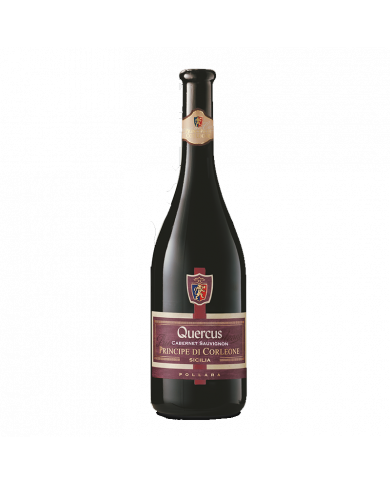
Principe di Corleone
Among the first pure Cabernet Sauvignon produced in Sicily. For his personality and originality he has been awarded many times over the years. Expresses the territory from which it comes: Corleone. With a purplish-red colour, it has a complex and persistent aroma, reminiscent of blackcurrant fruits and spices.
€17.28
€33.79
€15.10
SKU:
15685
Brand:
Dei Principi di Spadafora
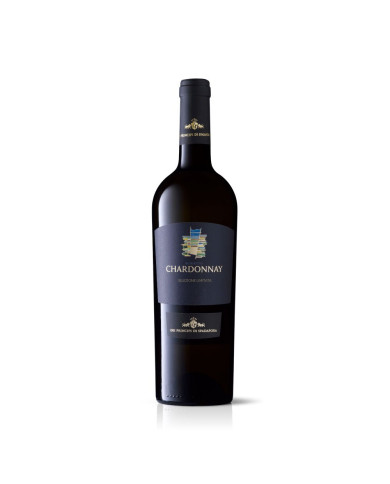
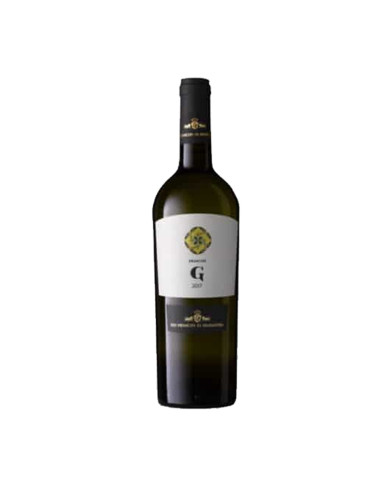
White wine produced in Sicily with Chardonnay grapes, golden yellow in color with intense and complex bread crust aromas, spices are felt on the palate with a rich and savory aftertaste.
€23.42
SKU:
15684
Brand:
Dei Principi di Spadafora
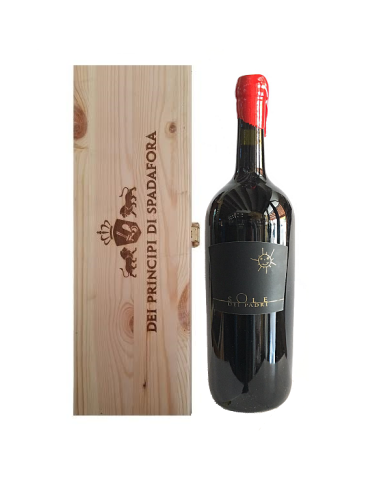
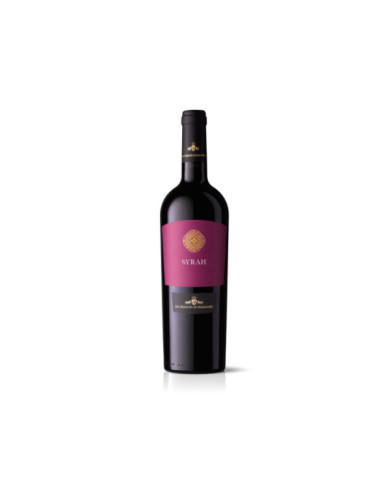
Il Sole dei Padri "Dei Principi di Spadafora" is a pure Syrah perhaps something more than 100%, an organic red wine that comes from a single vineyard, 400 meters above sea level. Production 7,000 bottles. This Syrah is the offspring of the previous one, even if it has now surpassed it in importance.
€154.82
SKU:
15682
Brand:
Dei Principi di Spadafora
Siriki – Syrah is the expression of the work in the vineyard, the attention to the land and the care of every single passage in the cellar, which allows us to add less and less sulfur to the wines up to its total absence”. Without added sulphites, spontaneous fermentation, unfiltered.
€37.09
SKU:
15680
Brand:
Dei Principi di Spadafora
The Schietto Nero d'Avola IGP Sicilia “Dei Principi di Spadafora” is a red, still and dry wine, vinified with Nero d'Avola grapes. This wine is vinified in cement vats, aged in large barrels for one year and at least six months in the bottle. Lo Schietto is the closing of the circle, at least for now.
€24.40
SKU:
15676
Brand:
Dei Principi di Spadafora
It is a fresh and elegant wine, with a superior structure to the white Don Pietro, included in the Don Pietro line. 7,000 bottles come out.
€16.96
€15.26
SKU:
15674
Brand:
Dei Principi di Spadafora
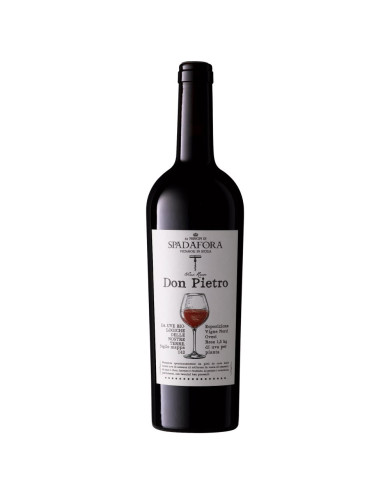
Don Pietro is a Sicilian red organic wine, produced with Cabernet Sauvignon, Merlot, Nero d'Avola grapes. The wine shows an intense ruby red color and nuances of garnet red, little transparency.
€15.62
SKU:
15673
Brand:
Dei Principi di Spadafora
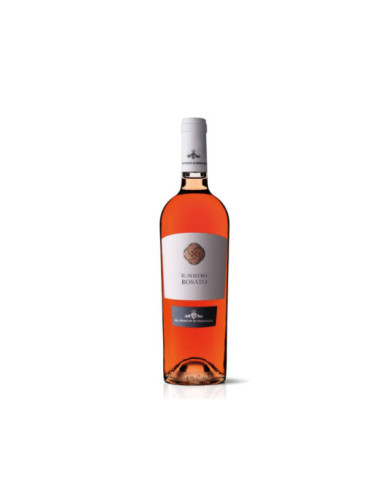
From 100% Nero d'Avola. Fruity and aromatic rosé wine, balanced tannins and the right structure. Cellar: Dei Principi di Spadafora.
€14.27
SKU:
15672
Brand:
Dei Principi di Spadafora
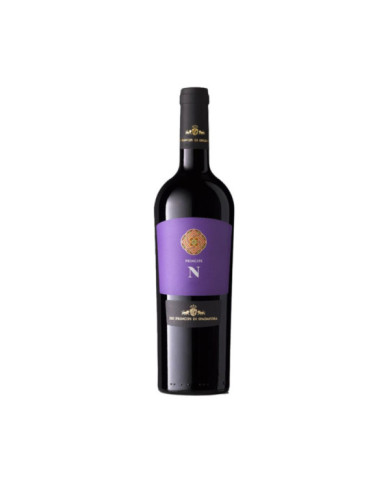
Still and dry red wine, vinified with 100% Nero d'Avola grapes, with a pleasant scent of wild berries with pleasant vegetal sensations, a long aromatic persistence and soft tannins.
€15.10
SKU:
15671
Brand:
Dei Principi di Spadafora
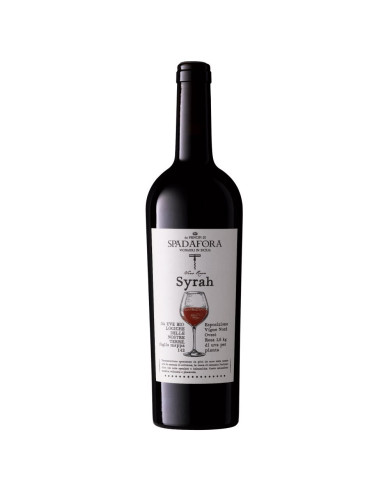
Red Syrah IGP dei Principi di Spadafora is obtained from Syrah grapes harvested manually in mid-September and cultivated in Monreale, on sandy clayey soils facing north-west, at an altitude of 250 meters above mare.Fermenta level. It ferments spontaneously from pied de cuve of grapes in the absence of sulfur dioxide in cement tanks and macerated for up to 8 days at a controlled temperature. Aged 1 year in concrete tanks and 6 months in bottle.
€12.08
SKU:
15670
Brand:
Dei Principi di Spadafora
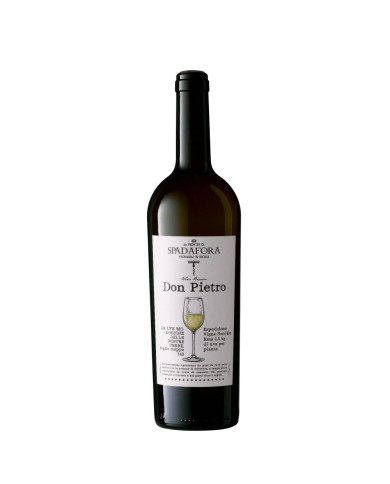
From a blend of Grillo and Cataratto grapes, vinified at different times and which wines are assembled in November.
It is part of the Don Pietro line, created to evoke the history of the family; a line that uses wines with many personal implications that Francesco Spadafora dedicates to his father who has just passed away to thank him for having given him a splendid land to produce grapes.
I think of the white Don Pietro as a small reserve compared to the bottle of Catarratto. The Catarratto used is extra glossy, a fact that certainly gives greater elegance; the Grillo is vinified in two different moments to ensure that there is greater acidity and, at a later time, a greater structure, considering the size of the Grillo bunch; moreover, a strict selection is made on the plan.
€15.37
SKU:
15669
Brand:
Dei Principi di Spadafora
From Catarratto grapes comes a savory, fresh and light white wine, but with character. Its name recalls the Spanish origins of the Spadafora family; it is the most produced wine and is produced with a commitment equal to that which the company puts into the production of more expensive wines. The straw yellow colour, the scent of white fruit, the savory and fresh taste make it a simple and linear wine, which should be drunk within two years, to be combined with fish first courses and seafood appetizers. It should be served very cool in order to enhance its immediate drinkability.
€12.00
SKU:
15600
Brand:
Castellare di Castellina
Chardonnay and viognier blended at 50%. The first wine of Gurra di Mare with vineyards as far as the beach of Porto Palo (Menfi), the ideal terroir for the two international vines.
€21.74
SKU:
15588
Brand:
Feudi del Pisciotto
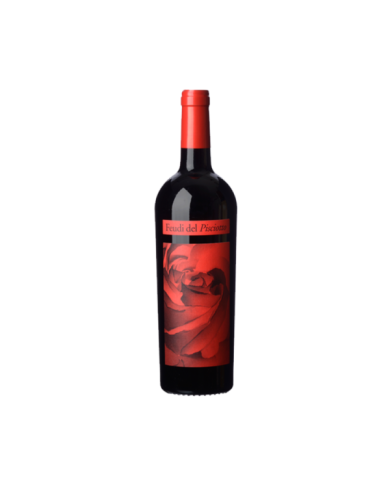
It comes from one of the first vineyards planted. A Merlot that expresses all the potential and the character of this vine which is excellently expressed in the Sicilian terroire. Of great structure and power without lacking in great elegance. Vinification: in steel. Aging: in 50% new and 50% second passage barriques.
€18.79
SKU:
15448
Brand:
Martinez
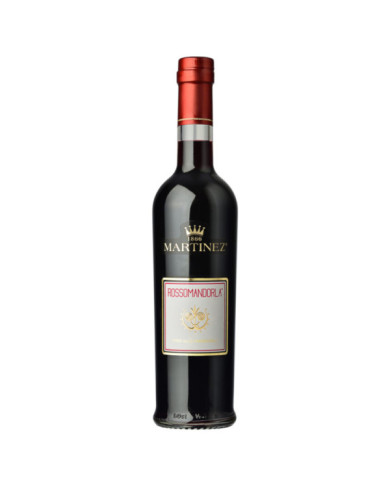
RossoMandorla is the last born among the Martinez flavored products, the result of the union of two typical Sicilian flavours: Nero D'Avola wine and almonds. This combination gives life to a sweet dessert wine, with a deep red color typical of the vine of which it is a child, intense and persistent on the nose and in the mouth. In RossoMandorla the characteristic notes of Nero D'Avola wine, which are best expressed thanks to a long maceration process, are sweetened with the intense flavor of the aroma of bitter almonds. The processing is then completed with a small addition of alcohol.
€11.96
SKU:
15435
Brand:
Martinez
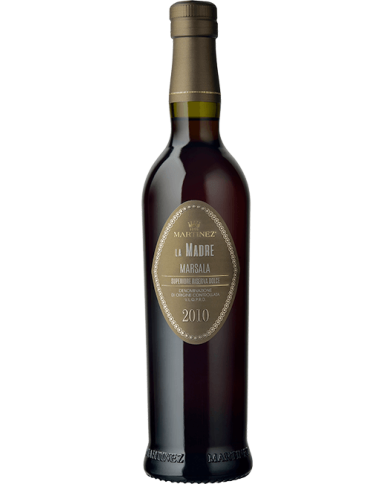
Dedicated to grandmother Tanina, mother of 5 children, a generous and sweet woman but at the same time authoritative and decisive as Marsala La Madre presents itself: warm and enveloping in its amber colour, disruptive on the nose, sweet but never cloying in the mouth. In the Concia which is the phase in the production process in which the type of Marsala to be obtained is defined, the Mistella was added to the DOC base wine from Grillo grapes which gives it sweetness, cooked must and alcohol to then start the aging in oak barrels.
€23.40
SKU:
15433
Brand:
Martinez
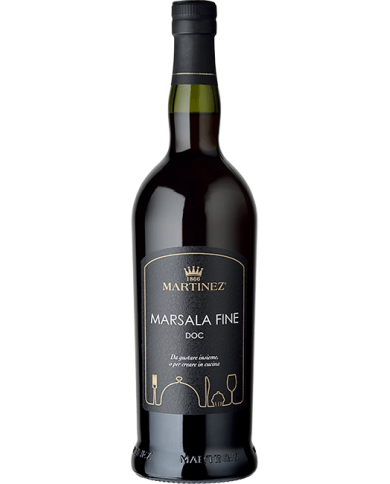
€13.01
Marsala Fine DOC is the youngest in the Marsala wine family. In fact, as per the production disciplinary, it is aged for only one year and for this reason it is intended for use in the kitchen, where it is an inevitable ingredient in various sweet and savory dishes due to the unique aroma it brings.
€13.01
SKU:
15430
Brand:
Martinez
The Marsala Superiore Dolce bears the name of the Garibaldi because it is told both the type and the same preferred when he landed in Marsala to make the unification of Italy. With a residual sugar of 11%, it is the sweetest of the Marsala Martinez and probably for this reason it is the most loved by the female public. During the Concia which is the phase in the production process in which the type of Marsala to be obtained is defined, alcohol, Mistella and cooked must are added to the wine which gives it an intense amber colour. The aging process then begins in rivore barrels in which the wine is in contact with the air for many years, developing the characteristic oxidative bouquet.
€15.60
SKU:
15429
Brand:
Martinez
Menhir is a liqueur sweet wine, with a small addition of alcohol, son of the island of Pantelleria. It is obtained from the Zibibbo variety which contains everything this splendid island contains: sun, volcanic earth, warm African winds. The grapes, after being dried in the sun, are left to macerate in the must during the entire fermentation which is blocked with a small addition of alcohol.
€24.90
SKU:
15428
Brand:
Martinez
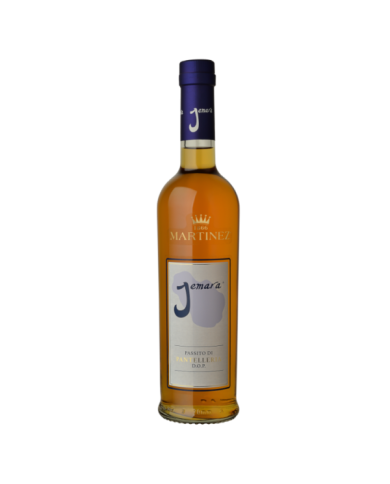
Jemara is a natural passito, with no added alcohol, son of the island of Pantelleria, where the entire production process is developed up to bottling, as required by the Production Regulations. It is obtained from the Zibibbo variety which contains everything this splendid island contains: sun, volcanic earth, warm African winds. The grapes, after being dried in the sun, are left to macerate in the must throughout the fermentation process, giving it unmistakable sweet and honeyed notes.
€40.19
SKU:
15427
Brand:
Martinez
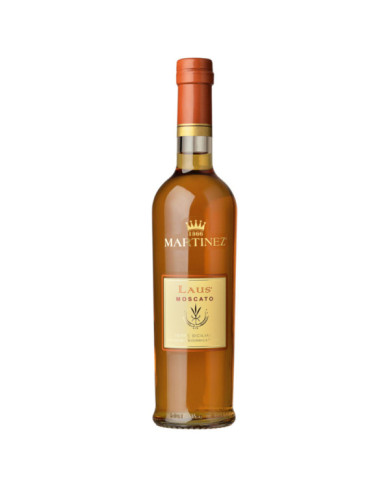
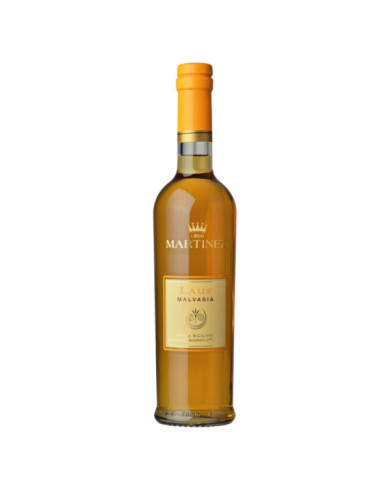
The LAUS range contains three elite sweet liqueur wines, with persistent and intoxicating aromas, the result of a long production tradition that has always been oriented towards enhancing the flavors and aromas of the grapes left to ripen in the very hot Sicilian sun.
€14.30
SKU:
15426
Brand:
Martinez
The LAUS range contains three elite sweet liqueur wines, with persistent and intoxicating aromas, the result of a long production tradition that has always been oriented towards enhancing the flavors and aromas of the grapes left to ripen in the very hot Sicilian sun.
€11.22
Discover the Secrets of Sicilian Wines: A Journey Through Southern Italy's Winemaking Tradition
Sicily is one of Italy's richest regions, both for its history and its winemaking tradition. Sicilian wines are among the most appreciated in the world and are renowned for their quality. In this article, we'll discover the secrets of these delicacies and how to best enjoy them.
Sicilian Wines: An Ancient and Rich History
The tradition of winemaking in Sicily dates back to the Greco-Roman period, when the island was rich in native grape varieties. Over the centuries, Sicilian wine production has remained central to the region's culture and economy. Today, Sicilian wines are renowned worldwide for their unique quality.
Sicilian Wines: Varieties and Characteristics
Sicilian wines come in numerous varieties. The most famous are Nero d'Avola, Nerello Mascalese, Frappato, and Grecanico. These wines are characterized by a great aromatic complexity: hints of red fruits, spices, flowers, and vanilla. Nero d'Avola is an intense, full-bodied red wine, while Nerello Mascalese is lighter and fruitier. Frappato is a light, aromatic rosé, while Grecanico is a fresh, fruity white wine.
How to choose the right wine
Choosing the right wine depends on personal preference and the occasion. For example, if you want to drink a high-quality red wine, then you should opt for a Nero d'Avola. If you want a lighter, fruitier wine, you can choose a Nerello Mascalese. For a white wine, Grecanico is an excellent choice.
How to serve a Sicilian wine
To fully enjoy a Sicilian wine, serve it at a temperature of 18-20°C. Red wines are best served in fairly large glasses with a wider base and a narrower top. White wines, on the other hand, are best served in smaller glasses with a narrower base and a wider top.
The right match
Each wine has its own ideal pairing. For example, Nero d'Avola is a very versatile wine and pairs well with meat dishes, such as grilled steak. Nerello Mascalese, on the other hand, pairs better with fish or vegetable dishes. Frappato is a wine that pairs well with lighter dishes, such as a mixed salad. Grecanico is a wine that pairs well with fish or vegetable dishes.
5 tips for Sicilian wines
1. Choose a quality wine. Sicily is rich in excellent wines, so choose a product from a reliable producer.
2. Taste more wines. Taste several Sicilian wines to find out which one you like best.
3. Store your wine well. Store Sicilian wines in a cool, dry place away from heat sources.
4. Choose the right pairing. Pair Sicilian wines with the right dishes for a unique tasting experience.
5. Don't be shy. Don't hesitate to drink Sicilian wine and experiment with new varieties.
Discovering the secrets of Sicilian wines is a unique experience. Sicily is one of Italy's richest regions, and Sicilian wines are among the finest in the world. In this article, we've explored the history of these wines, their characteristics, how to choose and serve a Sicilian wine, and how to pair it with the right dishes. By following these tips, you'll be able to fully enjoy these delicacies and discover the secrets of Sicilian wines.
Sicilian Wine Denomination
Sicily is a region renowned worldwide for its wine production. Thanks to its Mediterranean climate, volcanic activity, and rich soil, the island produces some of the world's most prized wines. In this article, we'll explore Sicily's main wine appellations, their grape varieties, and their sensory characteristics, to discover the excellence of Sicilian winemaking.
Introduction to wine production in Sicily
Wine production in Sicily has ancient roots, dating back to the times of the Greeks and Romans. The region boasts a wide variety of terrain, from the volcanoes of Mount Etna and the Aeolian Islands to the inland hills, which allow for the cultivation of numerous native and international grape varieties. Thanks to the use of innovative techniques and a focus on quality, Sicilian wine production is constantly growing, offering the market high-quality wines capable of satisfying every palate.
The main denominations of Sicilian wines
Sicilian wine designations are divided into four main categories: Controlled Designation of Origin (DOC), Controlled and Guaranteed Designation of Origin (DOCG), Typical Geographical Indication (IGT), and Table Wines. Let's look at the characteristics of each in detail.
Controlled Designation of Origin (DOC)
The Controlled Designation of Origin (DOC) is a quality label awarded to wines that meet specific production criteria. Sicily has 23 DOCs, including Cerasuolo di Vittoria, Moscato di Pantelleria, and Etna Rosso.
Vittoria Cherry
Cerasuolo di Vittoria is a red wine produced in the southeastern part of the island, in the province of Ragusa. It is made with Nero d'Avola and Frappato grapes, in varying percentages, and has a deep ruby red color, a fruity aroma, and a dry, smooth flavor. It pairs perfectly with red meats, cured meats, and aged cheeses.
Moscato di Pantelleria
Moscato di Pantelleria is a sweet wine produced on the island of Pantelleria, located southwest of Sicily. The wine is made from the Moscato di Alessandria grape, locally known as Zibibbo, and has a deep golden yellow color, a rich, aromatic aroma, and a sweet, mellow flavor. It pairs perfectly with sweets and desserts.
Etna Red
Etna Rosso is a red wine produced on the slopes of Mount Etna, Europe's highest active volcano. This wine is made primarily from the native Nerello Mascalese grape, which grows on volcanic soils at high altitudes.
What is the most famous wine in Sicily?
A: Sicily's most famous wine is Etna Rosso, a red wine produced on the slopes of Mount Etna.
Controlled and Guaranteed Designation of Origin (DOCG)
The Controlled and Guaranteed Designation of Origin (DOCG) is the highest expression of Italian wine quality. Sicily has only one DOCG, Cerasuolo di Vittoria. This dry red wine is produced in the Vittoria area, in the province of Ragusa, with varying percentages of Nero d'Avola and Frappato grapes. The wine has a ruby red color, a fruity aroma, and a smooth, persistent flavor. It pairs perfectly with red meats, cured meats, and aged cheeses.
Typical Geographical Indication (IGT)
The Indicazione Geografica Tipica (IGT) designates wines produced in a specific geographical area and possessing certain distinctive characteristics. In Sicily, there are four IGTs: Terre Siciliane, Salina, Val di Mazara, and Alcamo. IGT wines can be made with international grape varieties, such as Chardonnay, Cabernet Sauvignon, and Merlot, as well as native varieties.
Table Wines
Table wines are wines produced in Sicily that do not fall into the DOC, DOCG, or IGT categories. Despite this, many of them are of the highest quality, produced with native grapes and using artisanal methods. Among the best-known are Nero d'Avola and Grillo.
Sicily is a region with a long winemaking tradition, renowned worldwide for the quality of its wines. Thanks to its volcanoes, Mediterranean climate, and diverse soils, the island produces exceptionally high-quality wines, capable of satisfying every palate. From DOC to IGT, from white to red, Sicilian wine production is a true oenological excellence.
FAQ
What are the native grape varieties of Sicily?
Among the main native grape varieties of Sicily are Nero d'Avola, Frappato, Inzolia, Grillo and Zibibbo.
How many DOC wines are there in Sicily?
In Sicily there are 23 DOC wines.
What are the main pairings for Sicilian wines?
Sicilian red wines pair perfectly with red meats, cured meats, and mature cheeses, while white wines are ideal with fish dishes, seafood, and fresh cheeses.
What is the difference between DOC and DOCG?
The main difference between DOC and DOCG is that the DOCG guarantees a higher quality of wine, with even more stringent production criteria and more frequent inspections.
What are the best-known wines of Sicily?
Among the best-known wines of Sicily are Etna Rosso, Cerasuolo di Vittoria, Nero d'Avola, and Grillo.