

 Italiano
 Deutsch







There are no more items in your cart
SKU:
15547
Brand:
Monchiero Carbone
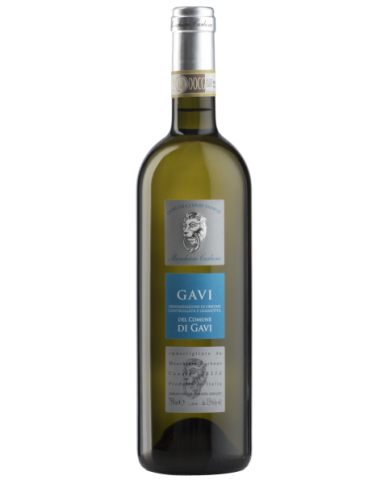
From the firm belief that a good producer can only best enhance the characteristics of the fruit that the earth has given him, Gavi di Monchiero Carbone is born, one of the most integral and upright Cortese that it is currently possible to meet in the territory of the Municipality of Gavi. Vinified and aged in steel only, the result is an elegant white, extremely clean in aromas, intense in taste that enhances everything that nature has created, in line with the tradition and culture of the area.
Straw yellow and crystalline to the eye, it is presented in the glass with a beautiful aromatic richness and a fine bouquet, marked by persistent notes of white flowers, lily of the valley, almond and grapefruit, which gives us a remarkable persistence. On the palate it reveals a light and snappy body, with all the well-balanced components and a fresh and pleasant acid note leading a sip that reveals a savory and typically bitterish finish.
Satisfying and particularly versatile in combinations. When there is fish at the table, but also white meats and poultry, it is a Gavi with which you can never go wrong.
€14.15
SKU:
15546
Brand:
Monchiero Carbone
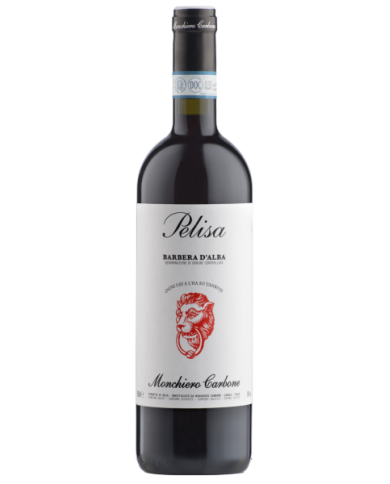
Definitely the most widespread and cultivated vine in Piedmont since the end of the 19th century, Barbera has also spread to the Alba area, adapting well to the environment thanks to its rusticity. Respecting tradition, without giving in to fashions and without erasing its peculiarities, Monchiero Carbone's Barbera d'Alba DOC 2017 is a wine capable of simultaneously narrating the grape variety, the vintage, the territory and all the dynamism of its typology. After the harvest, the vinification continues for about 15 days to then begin a short period of aging: 70% in stainless steel containers and the remaining 30% in oak, for a period of one year. The result is a red that expresses itself with depth and momentum in the glass, for a product that can be drunk willingly and to be fully enjoyed without thinking too much about it.
In the glass it has a beautiful intense red imbued with vivacity. The nose expresses its fruity fragrance without hesitation with clear sensations of black cherry and cherries, followed by pleasantly free-range notes of wet earth. On the palate it is medium-bodied, with an attack of lively freshness, which opens up to a juicy fruit, accompanied by light tannins and a finish of good persistence.
Throughout the meal and, given its versatility and its fresh and fruity vein, it is the ideal companion to mixed grills, especially pork chop and sausage.
€13.05
SKU:
15545
Brand:
Monchiero Carbone
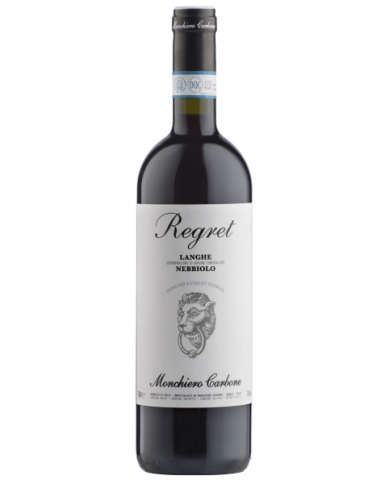
Smooth and fresh, immediate and pleasant, but at the same time never predictable and never banal: it is the "Regret", the Langhe DOC branded Monchiero Carbone that comes from Nebbiolo grapes which, for their fragrance and structure, are ideal for the production of a wine that can fully express, from the first year, the characteristics of this great vine. The grapes destined for the production of "Regret" are fermented with the classic Piedmontese technique which involves maceration on the skins for at least 15 days. After racking, the wine is placed in barriques, where malolactic fermentation takes place and where it rests for a maturation period of about six months. A red that certainly does not leave one indifferent, capable of giving voice, like few others, to the true essence of its native territory.
It opens to the eye with a not very intense and young ruby hue. It reveals great olfactory finesse, a perfect synthesis between the varietal notes of raspberry and wild strawberries together with the typical floral scents. On the palate it is medium-bodied, giving us a harmonious, fresh and tasty sip, with a well-integrated and highly refined tannic texture. It closes with good persistence and with a good range of aromatic sensations.
The tannic finesse of this Nebbiolo goes well with rich and tasty dishes, such as fresh pasta seasoned with meat sauces and grilled or roasted red meats.
€15.49
SKU:
15544
Brand:
Monchiero Carbone
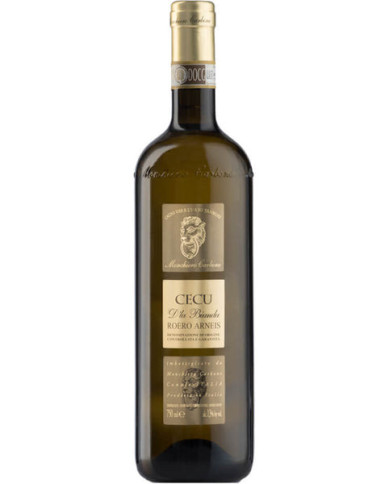
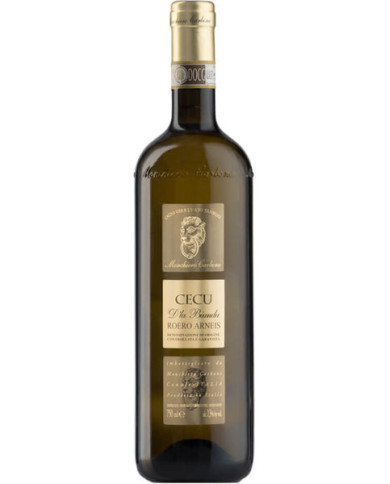
Arneis, an exclusive vine of the steep Roero hills, is, together with Nebbiolo, the architect of the fame of our territory. To enhance the prestige that this vine deserves, an exclusive selection of Roero Arneis has been created since 2004, with the clear intention of offering a further opportunity to fully appreciate the characteristics and potential of this great vine.
The grapes come from two single vineyards selected for their sandy terroir and high altitude: from the soft, sandy soils of the Tanone cru, in the municipality of Vezza d'Alba, and from the Renesio Incisa cru in Canale, on the famous hill which gave the birthplace of the Arneis grape towards the end of the 15th century. In fact, it is said that this white grape differentiated itself in Renesio, initially called "White Nebbiolo" due to the shape of the bunch and the size of the berries similar to Nebbiolo.
In the glass it is a brilliant straw yellow color. The nose is distinguished by its intense bouquet of tropical fruits in which the aromas of pineapple and white currant stand out. The entrance on the palate is rather marked by a splendid gustatory freshness which gradually shows its true powerful and enveloping character.
A fine white that accompanies the meal well but which in combination with fish and shellfish dishes, white meat and not too seasoned cheeses gives its best. Its rich and persistent finish that ends with the triumph of sapidity makes it a quality bottle that is always very welcome and able to seduce all palates.
€17.20
SKU:
15543
Brand:
Monchiero Carbone
Arneis, an exclusive vine of the steep Roero hills, is, together with Nebbiolo, the architect of the fame of our territory. To enhance the prestige that this vine deserves, an exclusive selection of Roero Arneis has been created since 2004, with the clear intention of offering a further opportunity to fully appreciate the characteristics and potential of this great vine.
The grapes come from two single vineyards selected for their sandy terroir and high altitude: from the soft, sandy soils of the Tanone cru, in the municipality of Vezza d'Alba, and from the Renesio Incisa cru in Canale, on the famous hill which gave the birthplace of the Arneis grape towards the end of the 15th century. In fact, it is said that this white grape differentiated itself in Renesio, initially called "White Nebbiolo" due to the shape of the bunch and the size of the berries similar to Nebbiolo.
In the glass it is a brilliant straw yellow color. The nose is distinguished by its intense bouquet of tropical fruits in which the aromas of pineapple and white currant stand out. The entrance on the palate is rather marked by a splendid gustatory freshness which gradually shows its true powerful and enveloping character.
A fine white that accompanies the meal well but which in combination with fish and shellfish dishes, white meat and not too seasoned cheeses gives its best. Its rich and persistent finish that ends with the triumph of sapidity makes it a quality bottle that is always very welcome and able to seduce all palates.
€45.38
SKU:
15542
Brand:
Monchiero Carbone
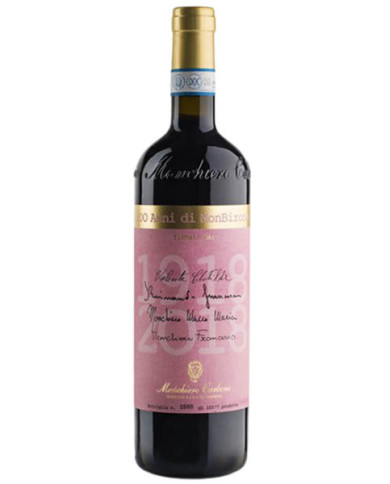
From the Mombirone cru, one of the hills surrounding the town of Canale. the family wine tradition was born, since in 1918 the great-grandmother Clotilde bought the first small plot, already then planted with Barbera vines, where the excellent results of the vine on the clay-limestone soils of this hill had long been recognized. It is here that, after more than a century, the best Barbera grapes are born, with which the family wanted to give life to an exceptional Grand Cru worthy of celebrating a special anniversary: the 100th harvest of Barbera d'Alba MonBirone. Numbered bottles, for a total production of this vintage equal to 10577. The grape harvest normally takes place in the first week of October, after pressing the alcoholic fermentation begins, carried out in the traditional way and lasting 15/20 days. After racking, the wine is placed in 225-litre wooden barrels where malolactic fermentation and refinement will take place, which can last between 15 and 20 months. After being bottled, the wine rests for about 6 months in the underground cellars before being put on the market. A deep wine with an intense ruby red color, with violet hues. On the nose it offers a rich and broad aroma, ranging from intense aromas of undergrowth, cocoa and spices, to sweet fruity notes of red fruits and plums, offering a sensational riot on the nose. The entrance to the palate immediately shows great power and a complex structure; it is the alcohol that ensures an initial softness, then balanced by the acidity, thus giving lightness to the fruity pulp. The finish is long and persistent, and offers a pleasant sense of freshness and good harmony between fruity and woody sensations. Its important alcohol content and good acidity recommend its combination with meats prepared with long cooking and medium-aged cheeses; a superb red that will give quality and sensory journeys to your palates.
€65.00
SKU:
15330
Brand:
Giulia Negri
We are at Morra, Serradenari, on soils from the Messinian period with a sandy loam texture with a strong presence of calcareous marl. At about 480m with a south-west exposure, the pure Nebbiolo grapes are vinified with spontaneous fermentation in truncated cone-shaped vats, macerating for about 40 days. The wine then ages for 30 months in 25-hectolitre Slavonian oak barrels.
€86.13
SKU:
15329
Brand:
Giulia Negri
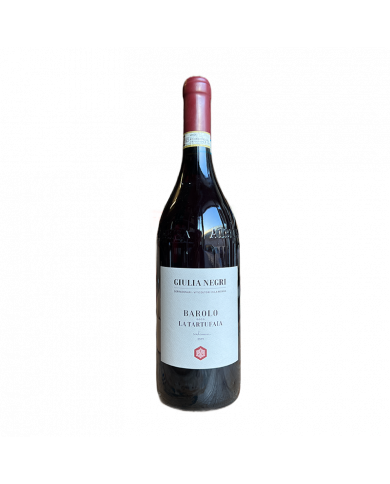
Giulia Negri 's Barolo "La Tartufaia" is the producer's personal vision of the "La Morra" area who skilfully transforms the Nebbiolo grapes into an important and elegant red wine, with a deep and fine taste. On the nose the aromas are of red fruit, berries with notes of tobacco and licorice. On the palate it is full-bodied, enveloping with silky tannins and earthy and bloody sensations that close the sip.
€70.76
SKU:
15225
Brand:
Gianni Doglia
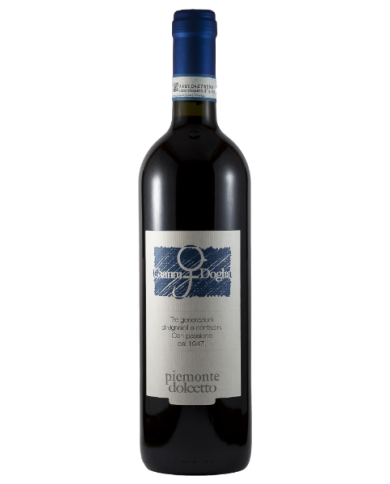
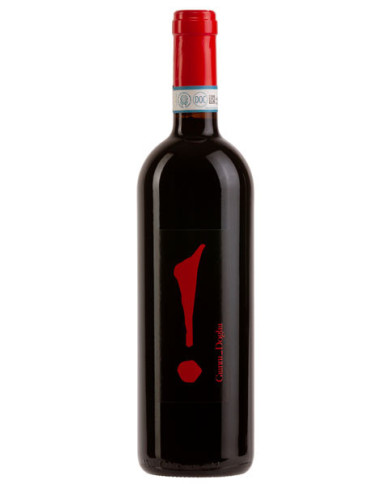
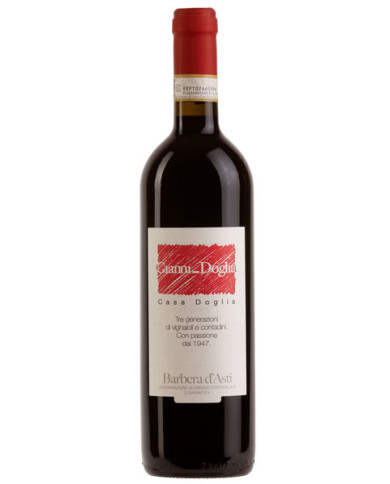
Wine suitable for the whole meal, in particular it goes well with cured meats and hams, appetizers and first courses, fresh or medium-aged hard cheeses. The grapes are harvested manually in the vineyard and carefully deposited in boxes for transport to the cellar, pressed and fermented at a controlled temperature with a maceration of about 10 days. At the end of fermentation, the wine is left to clarify by static decantation until the end of winter. It will then rest in steel tanks until spring when it will be bottled: after about a month of aging in the bottle it will be ready to be drunk.
€12.08
SKU:
15224
Brand:
Gianni Doglia
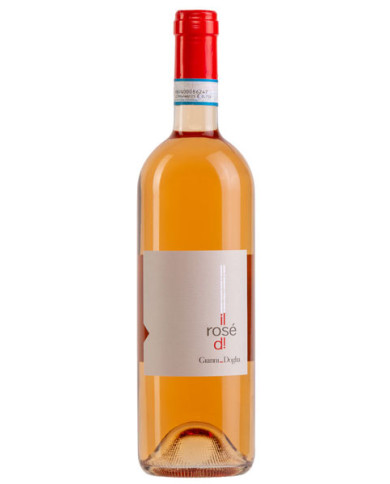
Particularly suitable as an aperitif or with summer appetizers, first courses, delicate fish. The grapes are harvested manually in the vineyard and carefully placed in boxes for transport to the cellar. They are pressed immediately, left for 5 hours with the skins and then fermented at a controlled temperature of around 15°C without the aid of selected yeasts. At the end of the fermentation process, the wine is left to clarify with static settling until the end of winter. It remains in stainless steel vats until spring, when it will be bottled: after about 1 month of aging in the bottle, it will be ready to drink.
€12.08
SKU:
15223
Brand:
Gianni Doglia
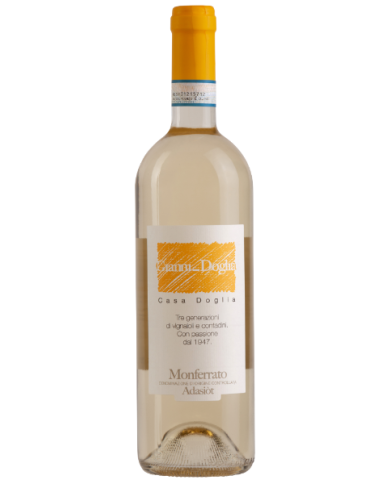
Aperitif wine and throughout the meal, it goes very well with appetizers, fish dishes and white meat main courses. The grapes are harvested manually in the vineyard and carefully deposited in boxes for transport to the cellar. It is then immediately pressed and left to ferment at a controlled temperature of about 15°, without the aid of selected yeasts. At the end of the fermentation the wine rests on the fine lees for 30/50 days; subsequently it is left to clarify by static settling until the end of winter. It will then rest in steel tanks until spring when it will be bottled: after about a month of aging in the bottle it will be ready to be drunk.
€12.08
SKU:
15222
Brand:
Gianni Doglia
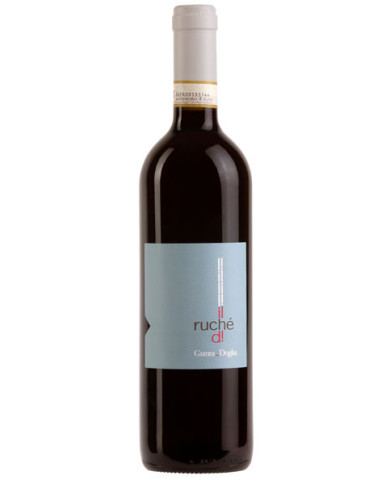
Warm, elegant, round. Light tannin in the month. Great aromatic persistence. The grapes are harvested manually in the vineyard and carefully placed in boxes for transport to the cellar, pressed and then fermented at a controlled temperature with a maceration of about 10-12 days. At the end of the fermentation process, the wine is left to clarify with static settling until the end of winter. It remains in stainless steel vats until the end of summer, when it will be bottled: after about 6 months of aging in the bottle, it will be ready to drink.
€18.80
SKU:
15221
Brand:
Gianni Doglia
Important wine indicated for second courses of red meat or game. Excellent companion for an after dinner with friends. The grapes are harvested manually in the vineyard and carefully deposited in boxes for transport to the cellar, pressed and fermented at a controlled temperature with a maceration of about 8-10 days. Upon racking, the wine is placed in barriques where it rested for 24 months. The wine thus obtained was further refined for about 6 months in steel tanks before finally being bottled; the bottles, after a rest of about 6 months in the cellar at a temperature of 18° C to complete the refinement, are ready for marketing.
€31.96
SKU:
15220
Brand:
Gianni Doglia
Meditation wine, ideal in combination with aged cheeses and excellent at any time of the day or at the end of a meal as a digestive. The grapes are harvested and selected manually in the vineyard and carefully deposited in boxes for transport to the cellar. Here begins careful drying for a period of two months on wooden racks, in a dry and well-ventilated place. The withered bunches are pressed and subsequently the must obtained is left to ferment in steel tanks at a controlled temperature for about a month. At the end of the fermentation the wine rests in stainless steel tanks for about a year. Subsequently the wine is bottled and after a rest of about 6 months in the cellar at 18°C to complete the refinement in the bottle, it will be ready to be drunk.
€20.01
SKU:
15219
Brand:
Gianni Doglia
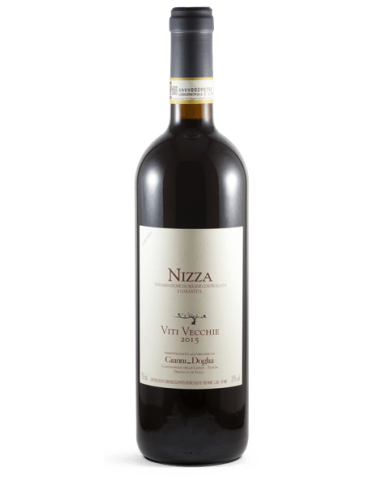
The grapes come from a plot of about one hectare located in the municipality of Nizza Monferrato, whose vines reach an average age of 50 years and represent the maximum selection of Barbera. Wine indicated for main courses of red meat, game or well-aged cheeses, structured, round with a harmonious balance between freshness and softness. The grapes are harvested manually and carefully stored in boxes for transport to the cellar, pressed and fermented at a controlled temperature with a maceration of about 15 days. After racking, the wine ages in small wooden barrels for about 18-24 months. The wine is then left to rest for about 6 months in a steel tank. At this point it is possible to proceed with the bottling. After further refinement in the bottle for at least 6 months in the cellar at a temperature of 20°C,
€30.45
SKU:
15218
Brand:
Gianni Doglia
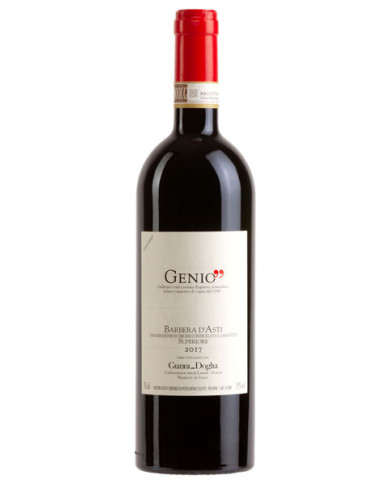
Enveloping, warm and round taste. Excellent persistence and harmony, the result of an elegant balance from a decisive freshness to a good body. The grapes are harvested manually in the vineyard and are carefully placed in boxes for transport to the cellar, pressed and then fermented at a controlled temperature with a maceration of about 15 days. After racking, it is aged in small wooden barrels for 18-24 months. The wine is then left to rest for about 6 months in stainless steel vats. At this point it can be bottled. After further aging in the bottle for at least 6 months in the cellar at a temperature of 20°C, the wine is finally ready to drink.
SKU:
15217
Brand:
Gianni Doglia
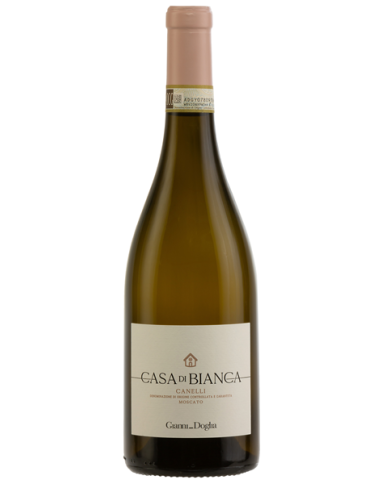
The grapes that come from a small plot known as "Casa di Bianca", located in the hamlet of Annunziata di Castagnole delle Lanze, represent the maximum selection of the Moscato vine from our lands. The Moscato Casa di Bianca grapes are carefully selected in the vineyard during the harvest (which takes place exclusively by hand), after being carefully pressed; the flower must is the result and is elaborated with the Martinotti Method in an autoclave, where it will rest on its lees for at least six months.
€19.03
SKU:
15216
Brand:
Gianni Doglia
Warm and rich taste of extraordinary balance, it has important but never excessive structure and body. Good persistence and excellent harmony. Perfect with first courses, red meats and medium-aged cheeses. The grapes are harvested manually in the vineyard and carefully placed in boxes for transport to the cellar, pressed and then fermented at a controlled temperature with a maceration of about 8 - 10 days. At the end of the fermentation process, the wine is left to clarify with static settling until the end of winter. It remains in stainless steel vats until spring when it will be bottled: after about 1 month of aging in the bottle it will be ready to drink.
€13.54
SKU:
15215
Brand:
Gianni Doglia
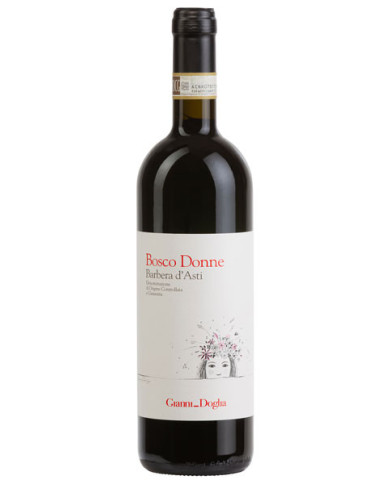
Barbera ''Bosco donne'' is easy to combine because it accompanies almost all traditional Piedmontese dishes with sincere ease: in particular raw meat, agnolotti del plin seasoned with roast meat filling sauces and cooked veal braised in Barbera wine. The grapes are harvested manually in the vineyard and carefully placed in boxes for transport to the cellar, pressed and then fermented at a controlled temperature with a maceration of about 8 days. At the end of the fermentation process, the wine is left to clarify with static settling until the end of winter. It remains in stainless steel vats until the end of summer, when it will be bottled: after about 6 months of aging in the bottle, it will be ready to drink.
€14.88
SKU:
15214
Brand:
Gianni Doglia
Moscato d'Asti is an excellent dessert wine that goes well with dry pastries and fruit cakes; moreover, thanks to the moderate alcohol content, it is a pleasant thirst-quenching drink in the summer. The combination with cured meats and cheeses is more provocative; a provocation that will amaze you! To preserve all the fragrance of the fruit in the wine, it is necessary to adopt a particular harvesting and vinification technique. In fact the grapes, coming from the company's own vineyards, are harvested manually in the vineyard and carefully placed in boxes for transport to the cellar; here they are delicately pressed and the must obtained is kept in cooling vats (-1.5° C) until the moment of vinification in an autoclave. Fermentation takes place at a controlled temperature and with the help of selected yeasts until 5% alcohol is reached. Subsequently the wine will be filtered and bottled. The result is a lively wine with strong and intense varietal characters.
€13.88
SKU:
15213
Brand:
Gianni Doglia
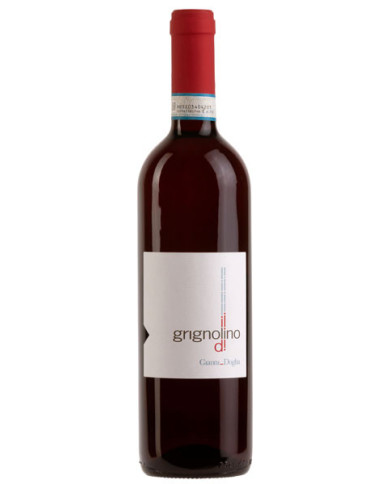
Particularly suitable as an aperitif or with summer appetizers, first courses. It will amaze you with fried fish. The grapes are harvested manually in the vineyard and carefully placed in boxes for transport to the cellar. Subsequently they are pressed and fermented at a controlled temperature of about 18°C with a maceration of about 2/3 days with frequent pumping over. Subsequently the Grignolino is drawn off and the fermentation is finished "in white", ie without skins and seeds, always maintaining a temperature of 18° C. At the end of the fermentation the wine is left to clarify with static settling until the end of winter. It remains in stainless steel vats until spring, when it will be bottled: after about 1 month of aging in the bottle, it will be ready to drink.
€12.61
SKU:
15212
Brand:
Gianni Doglia
Slightly sparkling, its slight effervescence enhances the freshness and flavor making it highly drinkable. Its great pleasantness goes wonderfully with cured meats, soups and boiled meats. The grapes are harvested manually in the vineyard and carefully placed in boxes for transport to the cellar, pressed and then fermented at a controlled temperature with a maceration of about 8 - 10 days. At the end of the fermentation process, the wine is left to clarify with static settling until the end of winter. It remains in stainless steel vats until spring when it will be ready for the sparkling process in the autoclave and for bottling: after about 1 month of aging in the bottle it will be ready to drink.
€10.98
SKU:
15211
Brand:
Gianni Doglia
Moscato d'Asti is an excellent dessert wine that goes well with dry pastries and fruit cakes; moreover, thanks to the moderate alcohol content, it is a pleasant thirst-quenching drink in the summer. The combination with cured meats and cheeses is more provocative; a provocation that will amaze you! To preserve all the fragrance of the fruit in the wine, it is necessary to adopt a particular harvesting and vinification technique. In fact the grapes, coming from the company's own vineyards, are harvested manually in the vineyard and carefully placed in boxes for transport to the cellar; here they are delicately pressed and the must obtained is kept in cooling vats (-1.5° C) until the moment of vinification in an autoclave. Fermentation takes place at a controlled temperature and with the help of selected yeasts until 5% alcohol is reached. Subsequently the wine will be filtered and bottled. The result is a lively wine with strong and intense varietal characters.
€33.92
SKU:
15158
Brand:
Follador
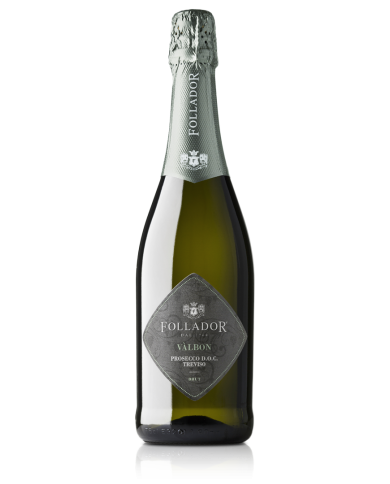
VÀLBON: A name that refers to our characteristic hilly landscape dotted with vineyards and charming villages.
Hints of flowers, apple, pear and citrus fruits, which are found in the mouth giving sensations of flavor and freshness. Fine and persistent bubble. Pale straw yellow color with greenish reflections. Ideal for a refreshing aperitif or with appetizers, first courses and dishes based on fish, vegetables and white meats.
€14.31
Discover the magic of Piedmont wines: savor the taste of tradition!
Piedmont is one of Italy's most renowned regions for producing excellent wines. Piedmont's winemaking tradition has developed over the centuries, and the region's wines are appreciated worldwide.
The origins of Piedmont wine
Piedmont wine has ancient origins. The region, located in northwestern Italy, enjoys a temperate climate that lends itself to the production of quality wines. The first documents mentioning Piedmont wines date back to the Middle Ages, when the region's princes invited their guests to taste their wines.
The wine styles of Piedmont
Piedmont's wine styles are highly diverse. The most well-known are the red wines Barolo and Barbaresco, both made from Nebbiolo, a grape native to the region. Piedmont's red wines are generally fuller-bodied, with complex aromas ranging from berries to spices, and have good acidity that makes them suitable for aging.
In addition to red wines, Piedmont is also famous for its white wines, such as Gavi and Arneis . These wines are lighter and have fewer tannins than red wines, but are just as tasty.
What are the most famous Piedmontese wines?
Piedmont wines are appreciated worldwide and are considered among the finest in Italy. Among the best-known are Barolo, Barbaresco, Gavi, Arneis , Dolcetto, and Barbera. These wines have been appreciated by generations of wine lovers and are a must-try for anyone who wants to discover Piedmont's winemaking tradition.
How to best savor Piedmont wines
Piedmont wines are meant to be savored slowly. Tasting should be done in a quiet environment and using glasses suitable for wine tasting. Serving temperature is crucial to getting the most out of the wine: white wines should be served chilled (8-10ºC), while red wines should be served warmer (16-18ºC).
To fully appreciate Piedmont wines, it's important to understand the flavors and aromas of each wine. You should try to identify the aromas and flavors of each wine, such as berries, spices, herbs, and earthy notes. This will help you better understand how wines pair with foods and how to choose the most suitable wines for a given occasion.
Taste tradition with Piedmont wines
Tasting Piedmont wines is a unique experience. It will allow you to discover the flavors and aromas of a thousand-year-old winemaking tradition that has made Piedmont one of the world's most renowned regions for quality wine production.
Choose a Piedmont wine and savor all the magic and flavor of tradition!
Piedmont Wine Denomination: A Journey into the World of Wine
Piedmont is a region located in northwest Italy, stretching from the Alps to the Po River. This region is renowned for its natural beauty, culture, history, and, above all, its high-quality wine production. In this guide, you'll discover everything you need to know about Piedmont's wine appellation, from grape varieties to the main wines produced and their characteristics.
Introduction to the denomination of Piedmont wines
The Piedmont wine denomination is a classification system based on its origin, the grape variety used, and the production methods. There are three levels of Piedmont wine designation: DOCG (Controlled and Guaranteed Designation of Origin), DOC (Controlled Designation of Origin), and IGT (Typical Geographical Indication).
IGT
The IGT (Italian Geographical Indication) is the lowest denomination and covers the entire Piedmont region. This designation allows producers to use grapes from other regions and experiment with new winemaking techniques. IGT wines can have very different characteristics, depending on the grape variety and the techniques used.
DOC
The DOC designation is reserved for wines produced in specific areas of Piedmont and that meet specific production criteria. These wines must be made with a specific grape variety, must be aged for a specific period, and must meet specific production criteria.
DOCG
The DOCG designation is the highest in the Piedmont wine appellation hierarchy. This designation is reserved for wines that represent the best of Piedmont and have an international reputation. DOCG wines are produced in specific areas of Piedmont, using specific grape varieties and following rigorous production criteria.
The grape varieties of Piedmont
Piedmont is famous for its wide variety of native grapes, some of which are used to produce some of the world's finest wines. Here are some of Piedmont's most important grape varieties:
Nebbiolo
Nebbiolo is Piedmont's most important grape variety and is used to produce some of the region's most famous wines, such as Barolo and Barbaresco. This grape variety is known for its fruity flavor and tannic character.
Barbera
Barbera is the second most important grape variety in Piedmont and is used to produce highly regarded red wines, such as Barbera d'Alba and Barbera d'Asti.
The main wines of Piedmont
Piedmont is famous for producing some of the world's finest wines, renowned for their unique flavors and distinctive characteristics. Here are the region's main wines:
Barolo
Barolo is the king of Piedmont wines and is produced with Nebbiolo grapes grown in the hills of the Barolo municipality. This wine is renowned for its complex, fruity flavor, its tannic character, and its intense ruby red color. Barolo is aged in wooden barrels for a minimum of three years and has an alcohol content of approximately 13%.
Barbaresco
Barbaresco is another great Piedmont red wine made from Nebbiolo grapes. This wine has a similar flavor to Barolo, but is a bit softer and lighter. Barbaresco is aged for at least two years and has an alcohol content of approximately 13%.
Barbera d'Alba
Barbera d'Alba is a red wine made from Barbera grapes grown in the Langhe region. This wine has a fruity flavor and an alcohol content of approximately 12.5%. Barbera d'Alba is aged for at least one year in wooden barrels.
Moscato d'Asti
Moscato d'Asti is a sweet white wine made from Moscato Bianco grapes grown in the Langhe area. This wine has a fruity, fresh flavor and is perfect as an aperitif or dessert. Moscato d'Asti has an alcohol content of approximately 5%.
Piedmont is a major winemaking region, producing some of the world's finest wines. The DOCG, DOC, and IGT designations represent a wine classification system that guarantees the quality and provenance of products. Each grape variety has its own distinctive characteristics, giving Piedmont wines their unique flavor and distinctive qualities. If you're a wine enthusiast, a visit to Piedmont's wineries is an experience not to be missed.
Frequently Asked Questions
What are the most important grape varieties of Piedmont?
The most important grape varieties of Piedmont are Nebbiolo, Barbera and Moscato Bianco.
What is the most famous wine from Piedmont?
The most famous wine of Piedmont is Barolo.
What does the DOCG designation mean?
The DOCG designation stands for Controlled and Guaranteed Designation of Origin and is the highest in the hierarchy of Piedmont wine denominations.
What are the main production areas of Piedmont wines?
The main production areas of Piedmont wines are the Langhe