

 Italiano
 Deutsch































There are no more items in your cart
SKU:
16504
Brand:
Nicolis
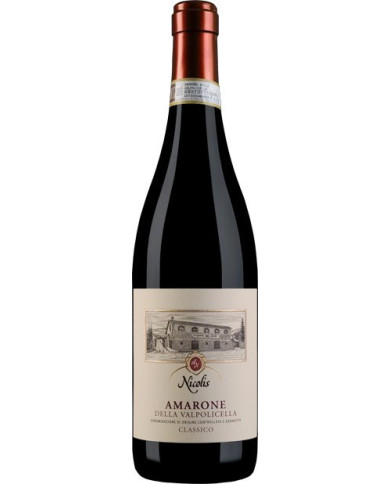
Deep dark ruby red that gradually turns towards garnet. Powerful and aristocratic nose made of ripe fruit, jam, sensations of cocoa, walnut husk, tobacco and leather. A powerful yet gentle and elegant full-bodied wine, very noble in roundness, complex and with an unmistakable flavor played on the balance between volume and softness, warmth and freshness, austerity and richness.
€217.40
SKU:
16503
Brand:
Nicolis
Deep dark ruby red that gradually turns towards garnet. Powerful and aristocratic nose made of ripe fruit, jam, sensations of cocoa, walnut husk, tobacco and leather. A powerful yet gentle and elegant full-bodied wine, very noble in roundness, complex and with an unmistakable flavor played on the balance between volume and softness, warmth and freshness, austerity and richness.
€263.52
SKU:
16502
Brand:
Nicolis
Deep dark ruby red that gradually turns towards garnet. Powerful and aristocratic nose made of ripe fruit, jam, sensations of cocoa, walnut husk, tobacco and leather. A powerful yet gentle and elegant full-bodied wine, very noble in roundness, complex and with an unmistakable flavor played on the balance between volume and softness, warmth and freshness, austerity and richness.
€151.52
SKU:
16501
Brand:
Nicolis
Deep dark ruby red that gradually turns towards garnet. Powerful and aristocratic nose made of ripe fruit, jam, sensations of cocoa, walnut husk, tobacco and leather. A powerful yet gentle and elegant full-bodied wine, very noble in roundness, complex and with an unmistakable flavor played on the balance between volume and softness, warmth and freshness, austerity and richness.
€283.28
SKU:
16500
Brand:
Nicolis
Deep dark ruby red that gradually turns towards garnet. Powerful and aristocratic nose made of ripe fruit, jam, sensations of cocoa, walnut husk, tobacco and leather. A powerful yet gentle and elegant full-bodied wine, very noble in roundness, complex and with an unmistakable flavor played on the balance between volume and softness, warmth and freshness, austerity and richness.
€96.87
SKU:
16499
Brand:
Nicolis
Deep dark ruby red that gradually turns towards garnet. Powerful and aristocratic nose made of ripe fruit, jam, sensations of cocoa, walnut husk, tobacco and leather. A powerful yet gentle and elegant full-bodied wine, very noble in roundness, complex and with an unmistakable flavor played on the balance between volume and softness, warmth and freshness, austerity and richness.
€160.80
SKU:
16498
Brand:
Nicolis
Deep dark ruby red that gradually turns towards garnet. Powerful and aristocratic nose made of ripe fruit, jam, sensations of cocoa, walnut husk, tobacco and leather. A powerful yet gentle and elegant full-bodied wine, very noble in roundness, complex and with an unmistakable flavor played on the balance between volume and softness, warmth and freshness, austerity and richness.
€131.76
SKU:
16485
Brand:
Valter Bera
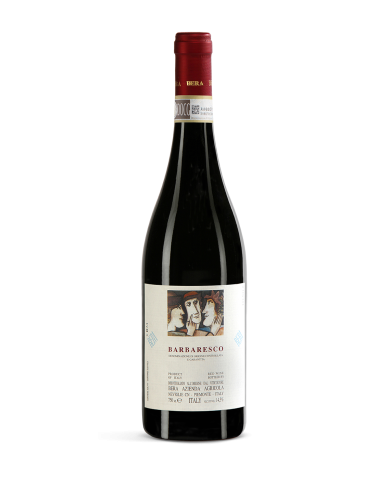
This version of Barbaresco Bera takes its name from the Serraboella hill, located in the Municipality of Neive, particularly suited to the production of noble, elegant, long-lived wines. It has a bright ruby color with orange hues, the flavor is robust and full, with spicy sensations. An excellent Barbaresco, complete and characteristic, which lends itself to accompany important dishes based on meat and game. Thanks to its longevity, it can also become a collector's item, which will be able to give us strong emotions even after twenty-five years!
€67.22
SKU:
16484
Brand:
Valter Bera
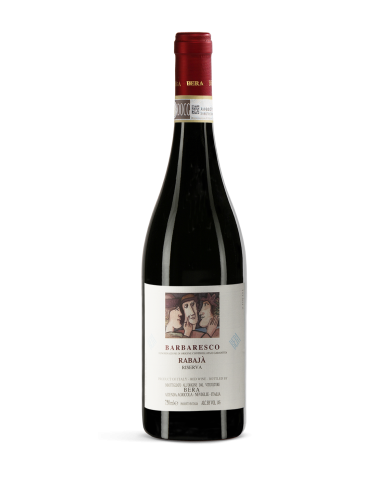
Wine of great nobility, austere, elegant, frank, obtained from Nebbiolo grapes from vineyards owned by the prestigious cru Rabaja in Barbaresco.
€89.55
SKU:
16482
Brand:
Valter Bera
Elegant, austere, of great nobility; this wine made from Nebbiolo grapes has a garnet red color with orange reflections. In the glass it releases ethereal and spicy aromas, with light notes of vanilla and dried flowers, while in the mouth it is generous, of great harmony and persistence. It goes well with red meats, game and aged cheeses.
€53.31
SKU:
16476
Brand:
Valter Bera
The grapes for this aromatic wine, of a delicate straw yellow color and with a complex, elegant and musky bouquet, ripen in vineyards well exposed to the sun, from south to south-west and bring sweetness, sapidity and a very long aromatic persistence into the glass which recalls the flavors and the aromas of ripe grapes.
It goes ideally with desserts and in particular with creams, fruit tarts and small pastries.
€28.30
SKU:
16474
Brand:
Valter Bera
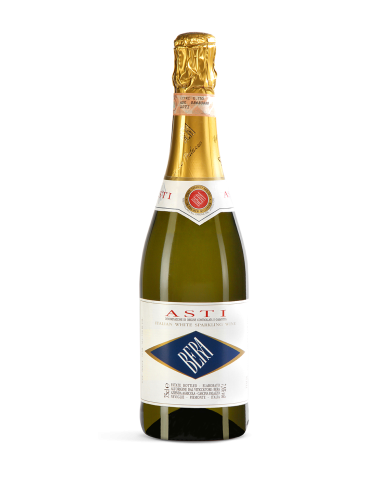
The grapes to produce this Asti sparkling wine with finely aromatic characteristics are obtained from vineyards planted with Moscato bianco, on soil rich in limestone. The continuous "perlage", the persistent foam, prelude to the broad and intense bouquet reminiscent of orange blossom and sage. The sweet and inviting taste is attenuated by a stimulating acidity. Ideal with dessert, party wine, as an aperitif and for any other occasion to remember.
€28.30
SKU:
16466
Brand:
Maso Martis
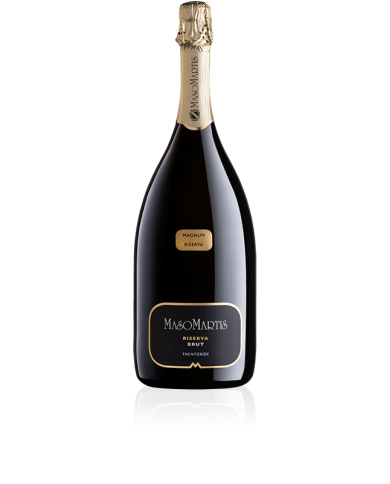
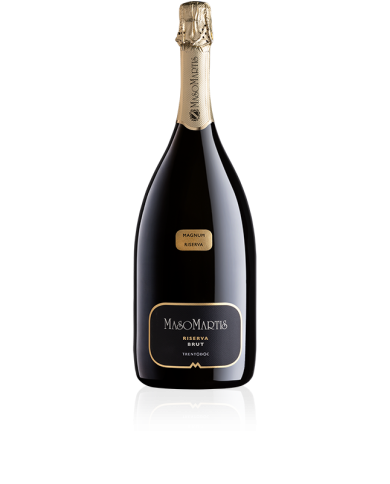
An oenological masterpiece from carefully selected grapes, aged on the lees for at least four years in order to enhance its body, aromas and preciousness.
€89.55
SKU:
16465
Brand:
Maso Martis
An oenological masterpiece from carefully selected grapes, aged on the lees for at least four years in order to enhance its body, aromas and preciousness.
€90.89
SKU:
16462
Brand:
Maso Martis
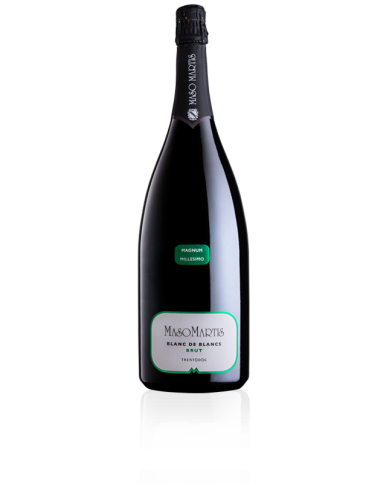
A classic method with an intense body and aromas, a slight hint of yeast, versatile, elegant, for all meeting occasions.
€59.29
SKU:
16461
Brand:
Maso Martis
An oenological masterpiece from carefully selected grapes, aged on the lees for at least four years in order to enhance its body, aromas and preciousness.
€258.88
SKU:
16460
Brand:
Maso Martis
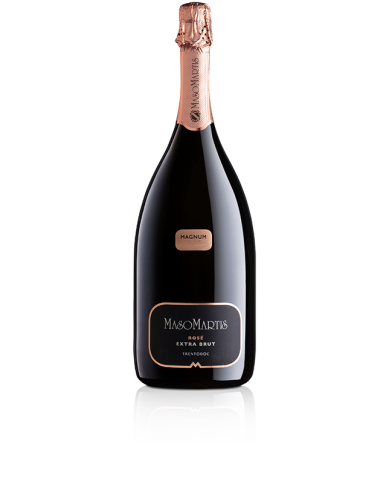
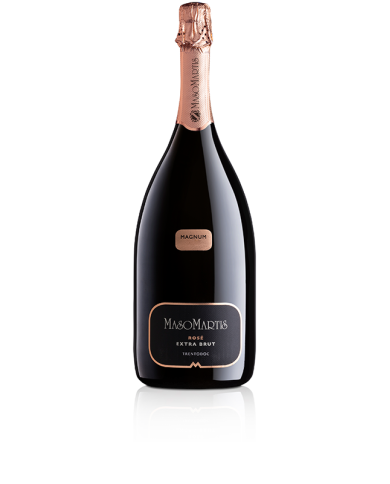
The Trento Spumante Rosé Extra Brut from the Maso Martis family winery is a velvety mountain wine suitable for any convivial occasion. It is made with 100% Pinot Noir grapes and aged for 36 months on its lees. The delicate rosé color and the fine and persistent perlage recall the aromas of small red berried fruit, raspberries, wild strawberries, currants and wild flowers such as violets, with hints of yeast emerging on the finish. The sip is fresh, mineral, refined, elegant, with a long and balanced finish.
€70.76
SKU:
16457
Brand:
Maso Martis
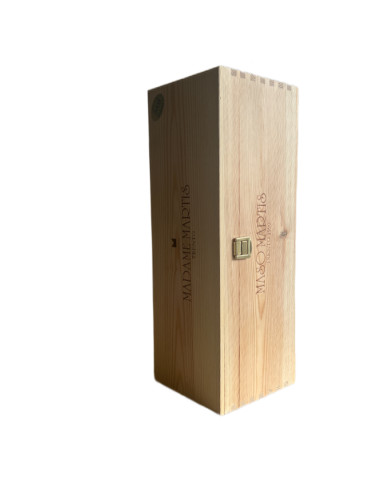
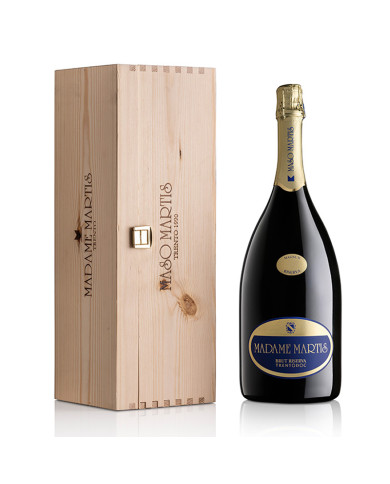
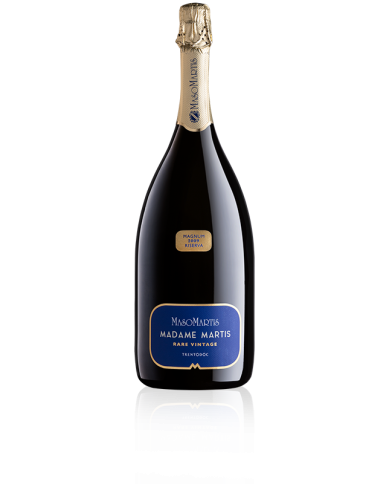
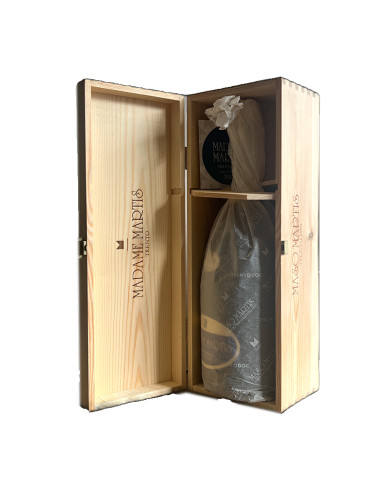
There are only 100 bottles of this exceptional 2009 vintage classic method, which the company wanted to produce with its own best grapes, combining the elegance of Pinot Noir with the fragrance of Chardonnay and the softness of Meunier. "Madame Martis" is the successful synthesis of the precious elements that have always characterized the harmonious and decisive style of Maso Martis sparkling wines.
SKU:
16452
Brand:
Maso Martis
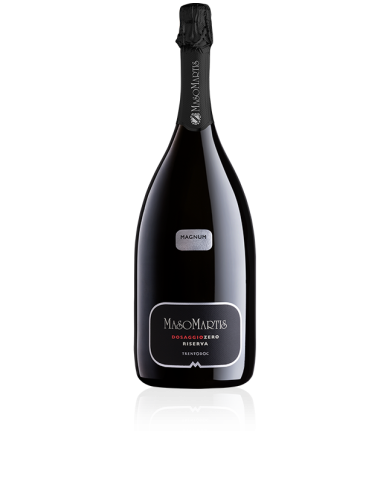
DosaggioZero is a classic method with no residual sugar, with an intense body and aromas, mineral, with a robust and decisive character. One of the first pas dosè classic method produced in Trentino.
€85.03
SKU:
16450
Brand:
Antonelli San Marco
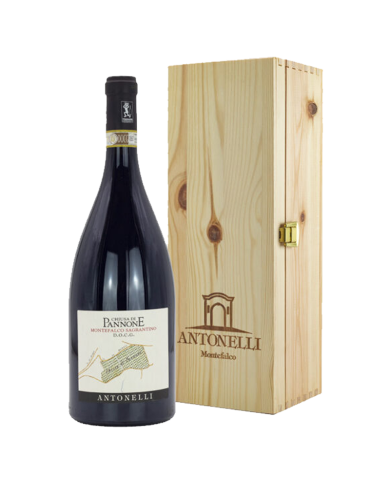
By "closed" was meant a circumscribed olive grove often delimited by stone walls. Chiusa di Pannone was also the same, while today it is the single vineyard used exclusively for the homonymous wine.
€92.23
SKU:
16423
Brand:
Domenico Clerico
Since 1981 Arte has symbolized our desire to experiment; the curiosity to look for new and unexplored paths, without ever forgetting where we come from. This is how Art is born, from the balance between two so different but complementary varieties. Structure and character from Nebbiolo, softness and elegance from Barbera.
€94.11
SKU:
16413
Brand:
Pacherhof
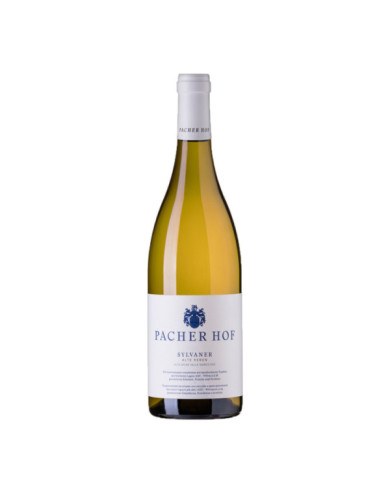
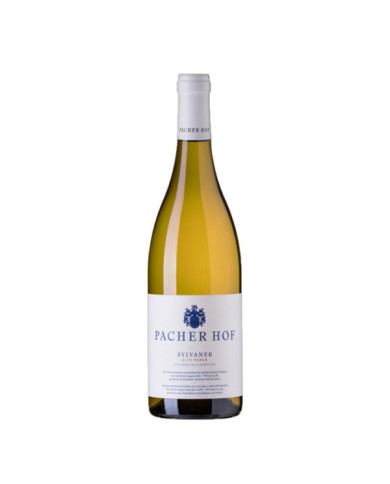
The Sylvaner Riserva "Alte Reben" by Pacherhof is a white wine with a high taste-olfactory profile, born from old vines located at an altitude of 650 meters in the Valle Isarco. It has clear and seductive aromas of white fruit and freshly picked flowers, with very light nuances of sweet spices. The sip is fine, fruity, fresh, intense and mineral
€76.01
SKU:
16411
Brand:
Pacherhof
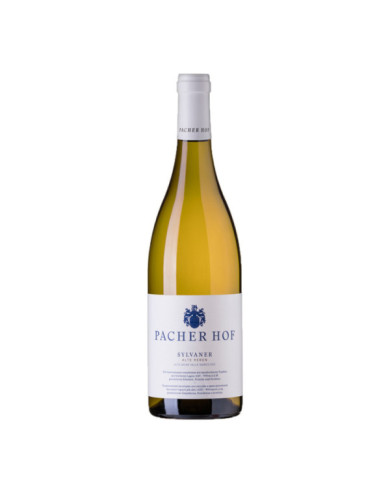
The Sylvaner Riserva "Alte Reben" by Pacherhof is a white wine with a high taste-olfactory profile, born from old vines located at an altitude of 650 meters in the Valle Isarco. It has clear and seductive aromas of white fruit and freshly picked flowers, with very light nuances of sweet spices. The sip is fine, fruity, fresh, intense and mineral
€76.01
SKU:
16410
Brand:
Pacherhof
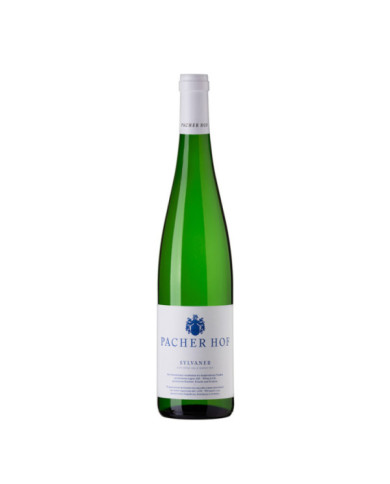
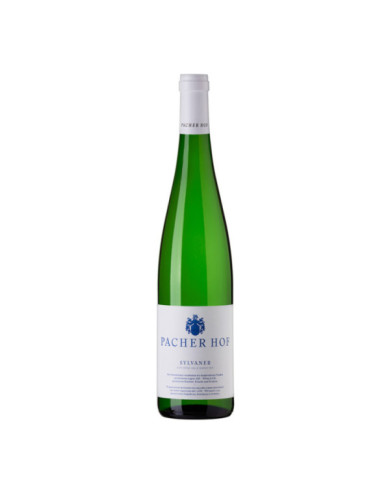
Pacherhof's Sylvaner is a semi-aromatic white wine of medium body and good freshness, aged for a few months in large barrels. It has a fine and delicate bouquet of freshly mown hay, herbs, fruit and white flowers. On the palate it is clear, mineral, fresh and fruity, with a nice persistence
SKU:
16409
Brand:
Pacherhof
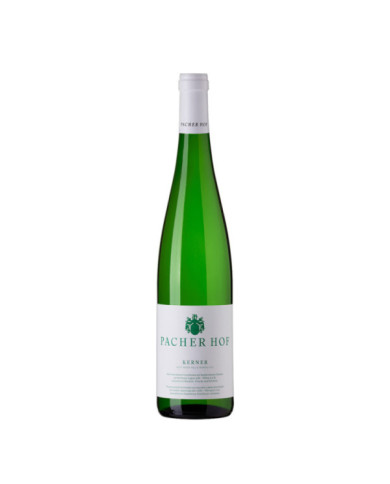
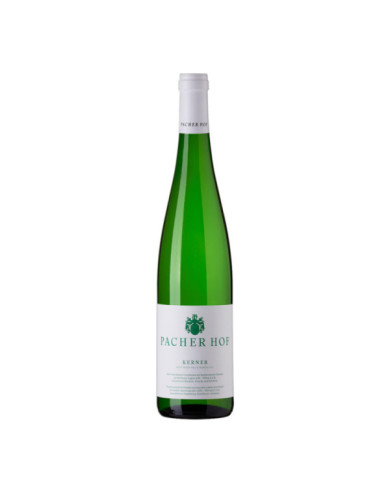
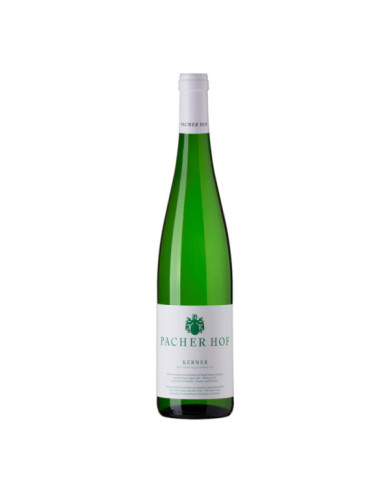
Pacherhof's Kerner is a clean, precise and vertical wine, with a fresh and light personality, not without tension and aromatic richness. Aromas of citrus fruits, exotic fruit and sweet spices involve the sense of smell while the sip reveals character, softness and great expressive power
€56.36
SKU:
16408
Brand:
Pacherhof
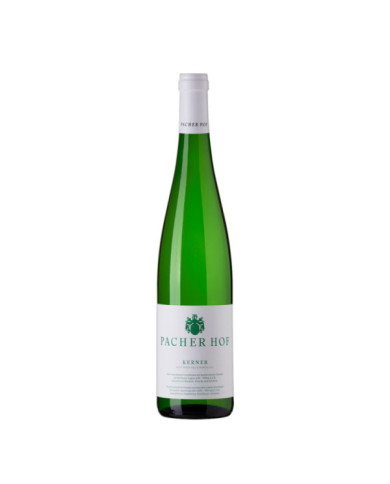
Pacherhof's Kerner is a clean, precise and vertical wine, with a fresh and light personality, not without tension and aromatic richness. Aromas of citrus fruits, exotic fruit and sweet spices involve the sense of smell while the sip reveals character, softness and great expressive power
€56.36
SKU:
16407
Brand:
Pacherhof
Pacherhof's Kerner is a clean, precise and vertical wine, with a fresh and light personality, not without tension and aromatic richness. Aromas of citrus fruits, exotic fruit and sweet spices involve the sense of smell while the sip reveals character, softness and great expressive power
€56.36
SKU:
16403
Brand:
Le Marchesine
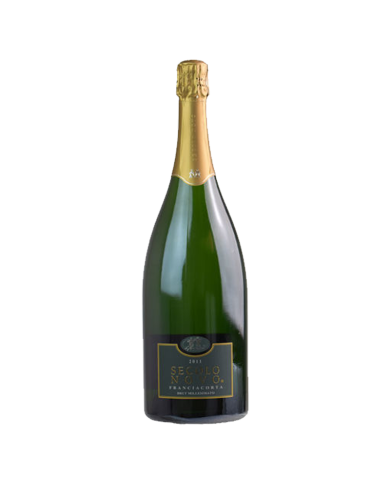
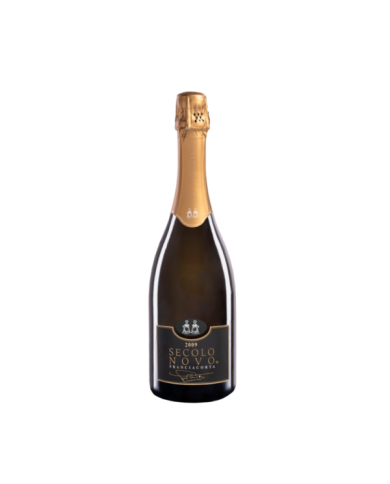
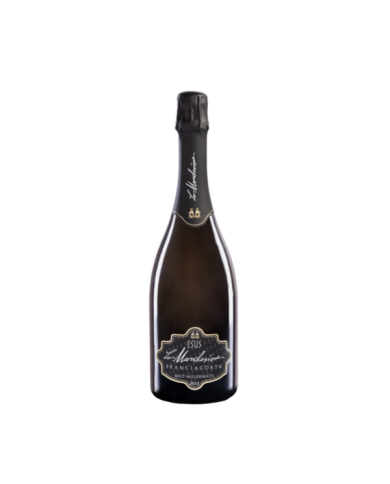
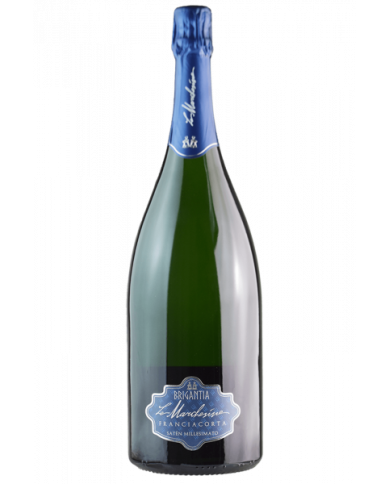
It is from a vineyard on the La Santissima di Cussago hill, one of the most suitable areas of Franciacorta, that the only chardonnay grapes that lead to the "Secolo Novo" come. The Franciacorta DOCG Brut "Secolo Novo" by Le Marchesine is a sparkling wine of unmistakable class, elegant and relaxed, whose permanence on the lees lasts for 3 years.
€93.57
SKU:
16402
Brand:
Le Marchesine
In appearance, the wine has a brilliant straw yellow color, with a fine and persistent perlage. The scent on the nose, an initial impact of bread crust and yeasts opens up to a composed and elegant olfactory profile. The taste has rich notes of exotic fruits, elderflower and white chocolate are the perfect introduction to a fresh, clean, round taste. It closes very long on light hints of ginger.
€167.38
SKU:
16396
Brand:
Le Marchesine
Floral, mineral, fruity and spicy bouquet. Structured and at the same time elegant in the mouth, with an incredible persistence. Franciacorta Brut Secolo Novo Giovanni Biatta comes from clonal selections of Chardonnay grapes. Harvested by hand in small crates, must obtained from the natural pressing of the grapes (at zero pressure, also known as autopressurage). Controlled fermentation in purity at 17° – 19° with indigenous yeasts in order to keep the flavor and aromas of Franciacorta intact. Maturation in stainless steel tanks. In the months of March and April the passage into the bottle for the second fermentation takes place. The bottles are stacked in refining rooms at controlled temperatures (12° – 14°) for at least 54 months. After this period, the Franciacorta Brut DOCG Giovanni Biatta takes on its characteristics of aroma and flavor and with a very fine perlage. We then move on to the final phase of remuage, dégorgement and clothing for the shipment.
€293.78
SKU:
16394
Brand:
Le Marchesine
It is a classic cuvée obtained from Pinot bianco, Pinot nero and Chardonnay grapes harvested by hand in small baskets and vinified within 2 – 3 hours of harvesting. The must obtained ferments for a few days in steel tanks at a controlled temperature (17° – 18°) in order to maintain and preserve the best aromas and flavours. The second fermentation takes place in rooms at a constant temperature, slowly in order to favor the development of minute bubbles. The product has a fragrant scent reminiscent of Acacia flowers and small red berried fruits (raspberry); soft, fresh and lively flavor that rightly lingers in the mouth.
€15.86
SKU:
16392
Brand:
Le Marchesine
It is a classic cuvée obtained from Pinot bianco, Pinot nero and Chardonnay grapes harvested by hand in small baskets and vinified within 2 – 3 hours of harvesting. The must obtained ferments for a few days in steel tanks at a controlled temperature (17° – 18°) in order to maintain and preserve the best aromas and flavours. The second fermentation takes place in rooms at a constant temperature, slowly in order to favor the development of minute bubbles. The product has a fragrant scent reminiscent of acacia flowers, linden and even toasted bread; soft, fresh and lively flavor that rightly lingers in the mouth. The suggested serving temperature is between 8° and 10°.
€45.51
SKU:
16391
Brand:
Le Marchesine
Franciacorta Brut DOCG Nodens comes from clonal selections of Pinot Noir grapes.
Harvested by hand in small crates, very slow and soft pressing of the whole bunches. Fermentation without contact with the skins controlled in purity at 17° - 19° with indigenous yeasts in order to keep the flavor and aromas of Franciacorta intact.
Maturation in stainless steel tanks. In the months of March and April the passage into the bottle for the second fermentation takes place.
The bottles are stacked in refining rooms at controlled temperatures (12° – 14°) for at least 36 months. After this period, Franciacorta Brut DOCG Millesimato takes on its characteristics of aroma and flavor and with a very fine perlage. We then move on to the final phase of remuage, dégorgement and clothing for the shipment.
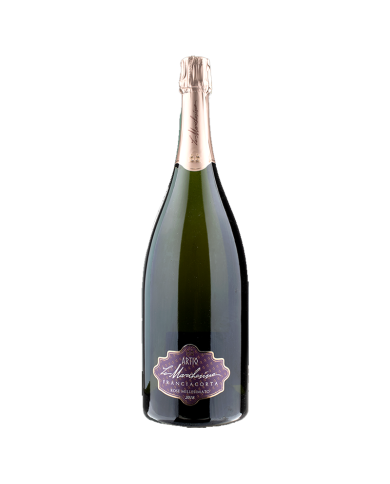
Very fine and persistent perlage. Bouquet of red fruits, raspberry and blackberry; mineral, with hints of chocolate. In the mouth lively and structured, long and persistent. Pale pink color with coppery reflections.
€72.47
SKU:
16388
Brand:
Le Marchesine
Strong yellow color with greenish reflections. Very fine and persistent perlage. Fine and complex aroma. Dry, dry taste with acidulous vein and characteristic nerve, elegant and full-bodied.
Franciacorta Brut comes from clonal selections of Chardonnay, Pinot bianco and Pinot nero grapes. Harvested by hand in small crates, very slow and soft pressing of the whole bunches. Controlled fermentation at 17° – 19° with indigenous yeasts in order to keep the flavor and aromas of Franciacorta intact. Maturation in stainless steel tanks. In the months of March and April, the wine is transferred to the bottle for the second fermentation. The bottles are stacked in refining rooms at controlled temperatures (12° – 14°) for at least 25 months. After this period, Franciacorta Brut takes on its characteristics of aroma and flavor and with a very fine perlage. We then move on to the final phase of remuage, dégorgement and clothing for the shipment.
€50.87
SKU:
16387
Brand:
Le Marchesine
When it arrives on the palate it makes a clean sweep, it is full, powerful, but not intrusive, it expresses great salinity and freshness, the persistence is very pronounced, in the finish of excellent elegance it takes up the toasted and processed nuts characters that the nose has exalted.
€72.47
SKU:
16384
Brand:
Le Marchesine
Straw yellow in colour. The nose brings back notes of sponge cake, butter and biscuits to anticipate fresher tones of cedar and lime, with hints of pineapple and peach. On the palate it is creamy, enveloping and typical for the type, crossed by a lively sapid-acid fusion that underlines a rare pleasantness, with a long aromatic finish.
Pairing:
Excellent with grilled mackerel fillet, stuffed squid, stewed cod but also for a glamorous aperitif!
€63.81
SKU:
16382
Brand:
Le Marchesine
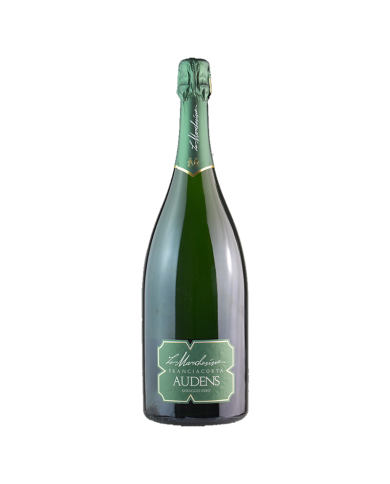
Straw yellow color with golden reflections with a very fine perlage and excellent persistence.
Aromatic, intense, with an evolved bouquet with notes of toasting and yeast. Complex to the taste, it reveals a good structure and a nice acidity. Very persistent.
Franciacorta Audens Dosaggio Zero comes from clonal selections of Chardonnay, Pinot Blanc and Pinot Noir grapes.
Harvested by hand in small crates, very slow and soft pressing of the whole bunches.
Controlled fermentation at 17° – 19° with indigenous yeasts. Maturation in stainless steel tanks.
In the months of March and April, the bottle is transferred for the second fermentation which lasts for at least 25 months.
€50.87
SKU:
16380
Brand:
Le Marchesine
At first nose you can clearly perceive the maceration, the red grapes clearly express plum, cherry, wild black fruits such as blueberry and mulberry; the typical vegetable and spicy characters come out, the barks and musky tones, it closes with fresher and citrus characters.
€63.81
SKU:
16351
Brand:
Montagner
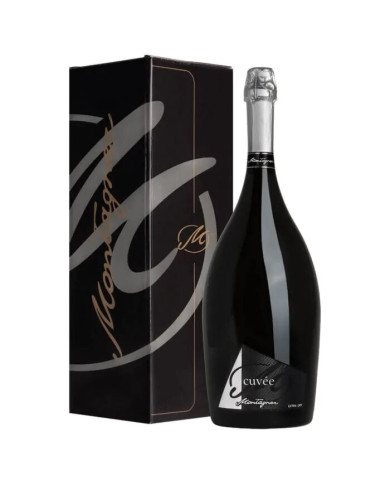
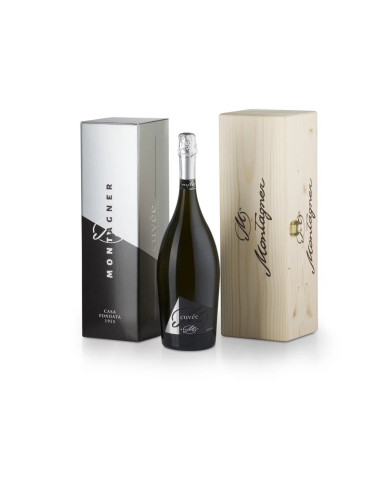
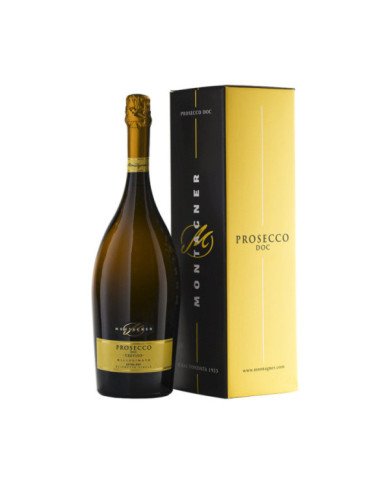
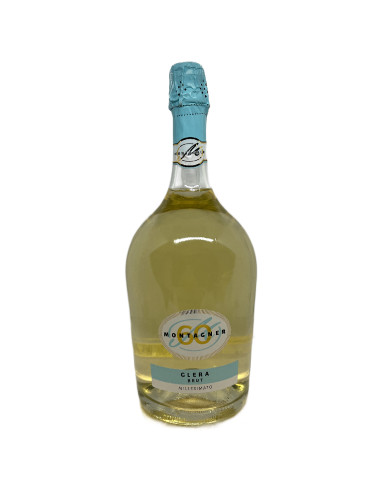
Classic aperitif wine, which also goes well with the whole meal, especially with fish-based dishes. Light straw yellow in colour, it has a fresh, slightly fruity aroma of apple, with hints of fresh bread crust. It is a sparkling wine with an inviting, dry, discreet and elegant flavour. In the Magnum format it is ideal for the festive table or for a nice gift idea, undemanding but with great effect.
€90.89
SKU:
16349
Brand:
Montagner
Classic aperitif wine, which also goes well with the whole meal, especially with fish-based dishes. Light straw yellow in colour, it has a fresh, slightly fruity aroma of apple, with hints of fresh bread crust. It is a sparkling wine with an inviting, dry, discreet and elegant flavour. In the Magnum format it is ideal for the festive table or for a nice gift idea, undemanding but with great effect.
€17.93
SKU:
16338
Brand:
Montagner
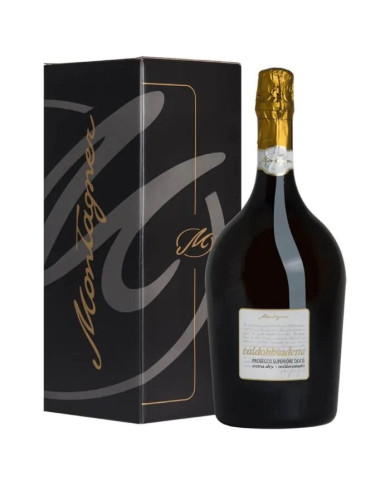
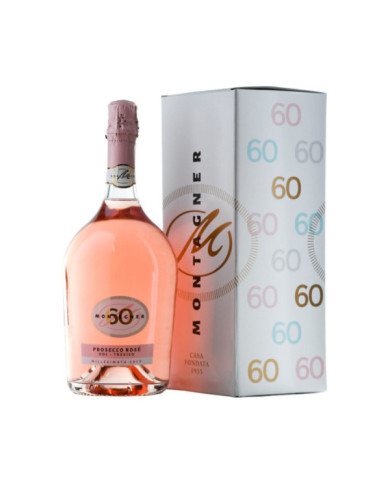
The Prosecco produced in Conegliano Valdobbiadene received the DOCG in 2009, recognition of superior quality in every stage of processing and production. The "band" that affixes a numbered seal to each bottle makes it possible to trace the history of the wine and of each individual bottle. This sparkling wine with a fine perlage, a fruity aroma and a sapid and lively taste should be served at a temperature of 6-8 degrees. The Magnum packaging is beautiful, to give as a gift or to uncork on happy occasions.
€34.89
SKU:
16337
Brand:
Montagner
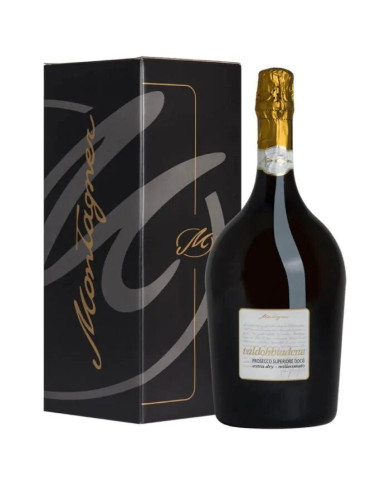
The Prosecco produced in Conegliano Valdobbiadene received the DOCG in 2009, recognition of superior quality in every stage of processing and production. The "band" that affixes a numbered seal to each bottle makes it possible to trace the history of the wine and of each individual bottle. This sparkling wine with a fine perlage, a fruity aroma and a sapid and lively taste should be served at a temperature of 6-8 degrees. The Magnum packaging is beautiful, to give as a gift or to uncork on happy occasions.
€112.00
SKU:
16334
Brand:
Montagner
Golden yellow colored sparkling wine with fine and brilliant perlage, elegant aroma of vanilla, crusty bread and wild flowers. Dry, savory and fruity flavor with hints of apple and ripe peach.
€29.04
€100.16
SKU:
16326
Brand:
Montagner
In the 1950s, during the reconstruction following the Second World War, Egidio Montagner wanted to commit himself to the creation of his own cellar, in which to produce quality wines. Over the years, the sons of the founder and later his grandchildren contributed to the construction of what is today one of the most prestigious wineries in Motta di Livenza. The refinement of grape processing techniques and the attention to technological innovations applied to the wine sector are determining factors in the affirmation and success of the wines, liqueurs and distillates produced by "Montagner Vini e Spumanti".
€30.26
SKU:
16324
Brand:
Montagner
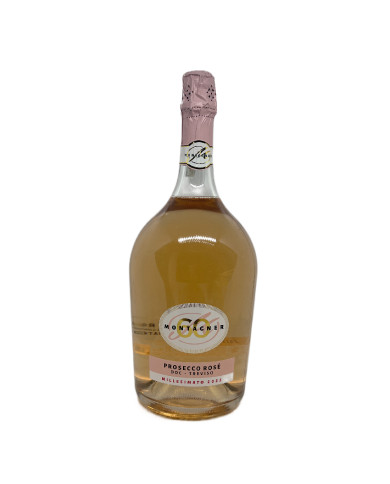
Sparkling wine with a fine and persistent perlage, pale pink colour, complex aromatic bouquet with hints of raspberry and strawberry. Delicate taste reminiscent of apple, white peach, citrus fruits and wild strawberries.
€26.60
SKU:
16322
Brand:
Montagner
Sparkling wine of pale straw yellow color with greenish reflections, minute and persistent perlage. Fruity and floral bouquet with delicate hints of apple; dry, fresh and dry flavour.
€27.29
SKU:
16297
Brand:
Lunae Bosoni
From an organoleptic point of view, this exceptional Ligurian wine has a color that goes from an intense straw yellow with light golden reflections to a slightly more intense yellow with amber reflections, visible above all in the more refined versions. The bouquet is elegant with clear hints of wild flowers, aromatic herbs, spices, ripe fruit and honey. Wide and enveloping, it gives a pleasant sensation of freshness already to the nose. The taste on the palate is rightly sapid, harmonious, persistent. A wine of great substance, elegant and with a good tannic structure.
€56.49
SKU:
16271
Brand:
Massolino
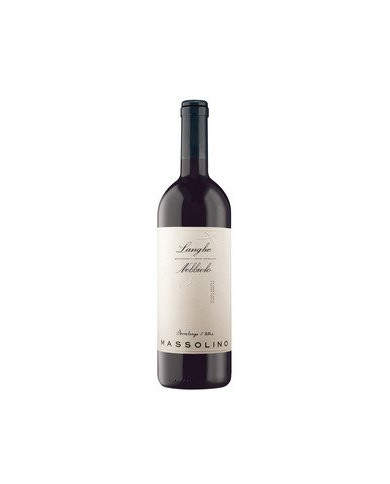
Langhe DOC Nebbiolo represents an immediate, pleasant and rounded expression of the Nebbiolo variety. The grapes used come from vineyards located in various municipalities of the Langhe.
€37.30
SKU:
16242
Brand:
Massolino
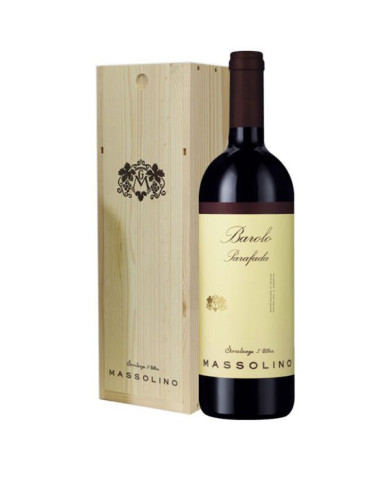
Massolino's Barolo "Parafada" comes from vines that are more than 50 years old from the Parafada di Serralunga cru and ages for 30 months in cask. The bouquet is floral, spicy, deep and very elegant. On the palate it is warm and soft, very harmonious and balanced, with a very long persistence
€152.26
SKU:
16236
Brand:
Massolino
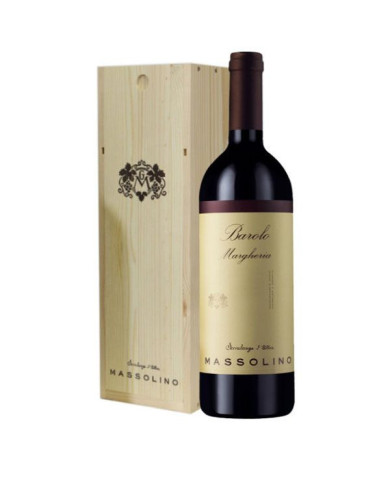
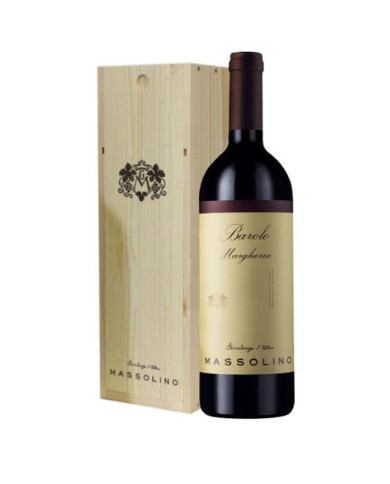
Margheria is a small cru in the municipality of Serralunga d'Alba where a slightly sandier soil gives more delicate and refined wines. Massolino has for years been one of the greatest interpreters of this vineyard through a traditional style Barolo, with a long aging of 30 months in large Slavonian oak barrels and a year in the bottle. Barolo Margheria Massolino is an austere and structured wine, with a bouquet that focuses on floral and spicy notes and then veering towards balsamic and mentholated scents. On the palate it is warm and persuasive, with a marked freshness that integrates well with silky tannins. An important wine that embodies the entire history of its land of origin and best expresses its qualities when accompanied by rich dishes, such as roasted red meat or stewed game. Also excellent on medium and long-aged cheeses. To drink today and try again in 15 years
€149.90
SKU:
16235
Brand:
Massolino
Margheria is a small cru in the municipality of Serralunga d'Alba where a slightly sandier soil gives more delicate and refined wines. Massolino has for years been one of the greatest interpreters of this vineyard through a traditional style Barolo, with a long aging of 30 months in large Slavonian oak barrels and a year in the bottle. Barolo Margheria Massolino is an austere and structured wine, with a bouquet that focuses on floral and spicy notes and then veering towards balsamic and mentholated scents. On the palate it is warm and persuasive, with a marked freshness that integrates well with silky tannins. An important wine that embodies the entire history of its land of origin and best expresses its qualities when accompanied by rich dishes, such as roasted red meat or stewed game. Also excellent on medium and long-aged cheeses. To drink today and try again in 15 years
€190.32
SKU:
16234
Brand:
Massolino
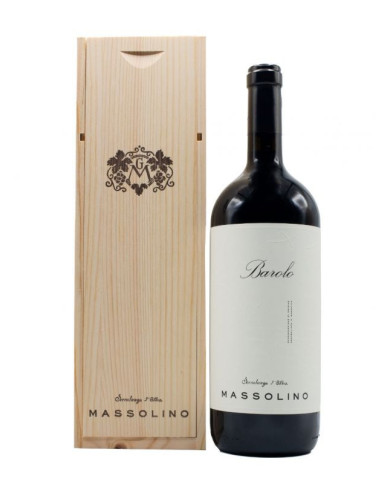
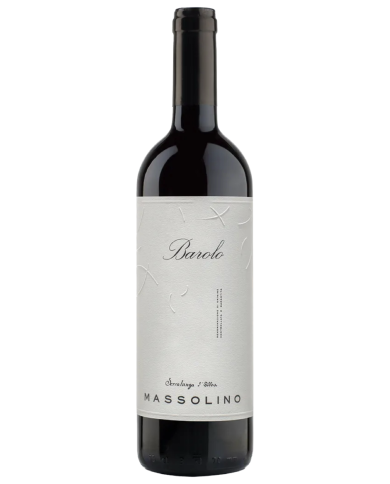
Barolo Massolino represents the synthesis of the different characteristics that each terroir offers. The company has always favored the traditional aging in large Slavonian oak barrels to maintain a purer and more pure identity. Wide and variable range of perfumes, surprising expressive evolution over time.
€84.72
SKU:
16233
Brand:
Massolino
Barolo Massolino represents the synthesis of the different characteristics that each terroir offers. The company has always favored the traditional aging in large Slavonian oak barrels to maintain a purer and more pure identity. Wide and variable range of perfumes, surprising expressive evolution over time.
€69.27
SKU:
16202
Brand:
Jean Noel Haton
Fine perlage. Color Straw yellow. Perfume Bouquet with fruity and floral aromas, accompanied by notes of crusty bread. Flavor On the palate the wine is fresh and balanced.
€84.77
SKU:
16198
Brand:
Pacherhof
The Sylvaner Riserva "Alte Reben" by Pacherhof is a white wine with a high taste-olfactory profile, born from old vines located at an altitude of 650 meters in the Valle Isarco. It has clear and seductive aromas of white fruit and freshly picked flowers, with very light nuances of sweet spices. The sip is fine, fruity, fresh, intense and mineral
€63.81
SKU:
16196
Brand:
Pacherhof
Pacherhof's Sylvaner is a semi-aromatic white wine of medium body and good freshness, aged for a few months in large barrels. It has a fine and delicate bouquet of freshly mown hay, herbs, fruit and white flowers. On the palate it is clear, mineral, fresh and fruity, with a nice persistence
€47.82
SKU:
16194
Brand:
Pacherhof
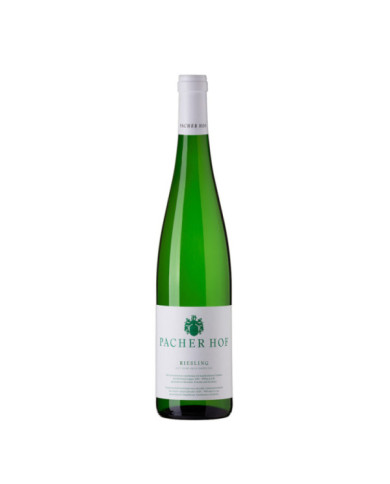
Pacherhof Riesling is an elegant and crystalline white wine from Alto Adige, born from vineyards located at an altitude of 650 meters. It gives off hints of yellow fruit and fresh apple and on the palate it reveals freshness, good intensity and excellent persistence
SKU:
16189
Brand:
Pacherhof
Pacherhof's Kerner is a clean, precise and vertical wine, with a fresh and light personality, not without tension and aromatic richness. Aromas of citrus fruits, exotic fruit and sweet spices involve the sense of smell while the sip reveals character, softness and great expressive power
€47.82
SKU:
16172
Brand:
Marsuret
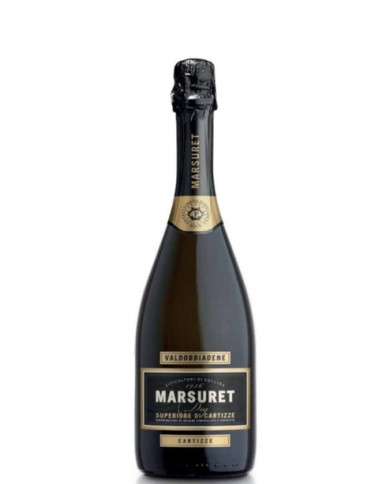
From our vineyards in the heart of the small e
famous hill called “Cartizze”.
Intense and delicate bouquet of flowers and fruit
ripe. Taste sweet, silky, harmonious and
pleasantly aromatic. Ideal with desserts
and truly splendid on all occasions
important. An elegant and refined pleasure.
€44.53
SKU:
16168
Brand:
Marsuret
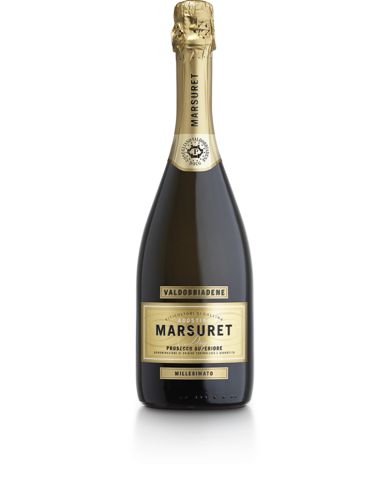
Valdobbiadene DOCG Superiore Brut 'San Boldo' Marsuret is a fresh and elegant Prosecco. At sight it appears of a brilliant pale straw color with a fine and persistent perlage. The complex scent is conferred by notes of Golden apple and wild flowers. On the palate it is intense and pleasant to drink. Sparkling wine according to the Charmat Method.
€129.93
SKU:
16167
Brand:
Marsuret
Valdobbiadene DOCG Superiore Brut 'San Boldo' Marsuret is a fresh and elegant Prosecco. At sight it appears of a brilliant pale straw color with a fine and persistent perlage. The complex scent is conferred by notes of Golden apple and wild flowers. On the palate it is intense and pleasant to drink. Sparkling wine according to the Charmat Method.
€25.99
SKU:
16161
Brand:
Marsuret
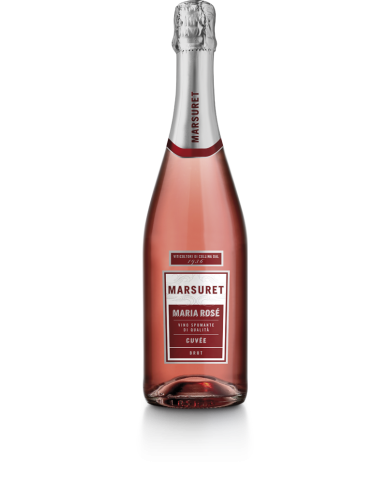
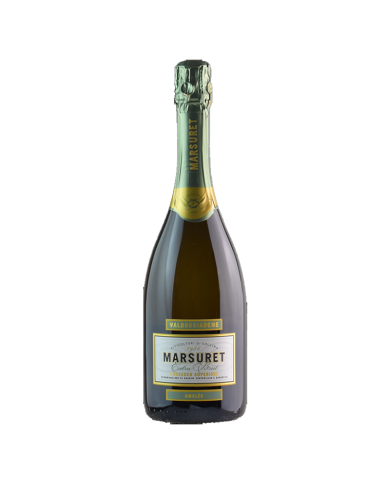
Refined brut sparkling wine with a charm
light pink colour. The scent is intense,
the complex, fragrant and lively bouquet.
Young and lively, it evokes aromas of red fruits
and ripe fruit, full and deep. The taste
it is pleasant and elegant, full, velvety,
soft, with pleasant body. Subtle perlage
and persistent.
€24.52
SKU:
16160
Brand:
Marsuret
From our most protected vineyards, where
the particular inclination of the hill
guarantees the grapes full sun for a long time,
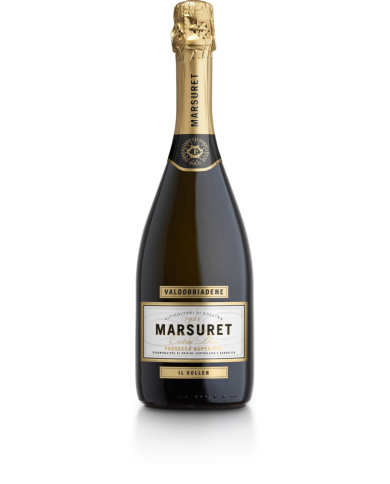
here is the Valdobbiadene DOCG “Soller”: one
sparkling wine with a fresh and delicate aroma.
Hints of ripe fruit. Preponderant the
apple. Inviting, full, aromatic and edible flavour
elegant with good structure. Fine perlage
and persistent
€25.99
SKU:
16156
Brand:
Marsuret
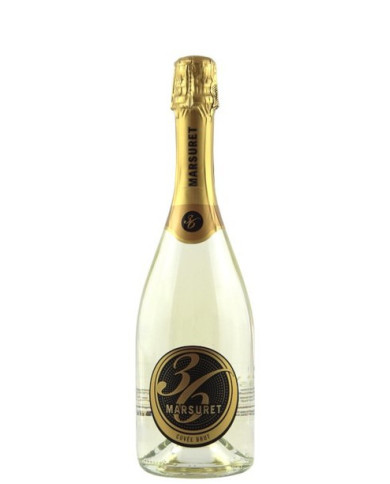
The Cuvée "36" Brut from the Marsuret cellar is a fresh sparkling wine with a pale straw color and a fine and persistent perlage. Notes of citrus fruits, pears and fresh apples emerge on the nose. In the mouth it is creamy and dense with a persistent finish.
€16.23
SKU:
16154
Brand:
Marsuret
From 100% Glera grapes grown in vineyards located between 200 and 300 meters above sea level. After a soft pressing, the wine ferments in steel and is left in contact with the noble lees for 5 months. The refermentation in autoclave in compliance with the Charmat method requires aging on the lees for at least 60 days before bottling. Sparkling wine with a fresh and delicate aroma, hints of ripe fruit, predominantly apple. Inviting, full, aromatic and elegant flavor with good structure. Fine and persistent perlage.
€25.99
SKU:
16152
Brand:
Marsuret
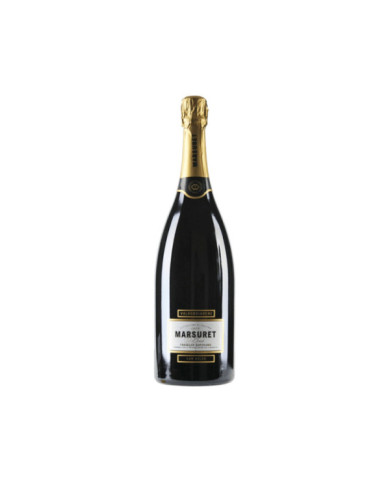
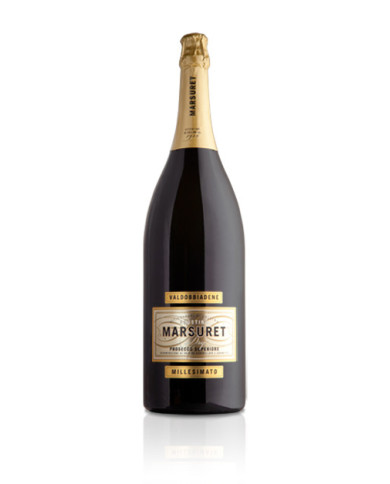
Important and ideal sparkling wine in every
occasion obtained from our grapes of high
hills chosen with great care and attention.
The scent is intense and elegant. Rich in
hints the fruity expression conquers with
pleasantness. The taste is elegant, fresh, savory
and at the same time soft and aromatic.
Lively and persistent perlage.
€129.93
SKU:
16151
Brand:
Marsuret
Important and ideal sparkling wine in every
occasion obtained from our grapes of high
hills chosen with great care and attention.
The scent is intense and elegant. Rich in
hints the fruity expression conquers with
pleasantness. The taste is elegant, fresh, savory
and at the same time soft and aromatic.
Lively and persistent perlage.
€28.91
SKU:
16134
Brand:
Marotti Campi
Lacrima is a very particular vine, grown only in the terroir surrounding the municipality of Morro d'Alba. It is said that even Frederick Barbarossa appreciated it in the distant 1167 AD, when he settled in these territories to attack nearby Ancona. A strongly rooted grape, which the Marotti Campi company likes to decline in two versions: in particular this Lacrima Superiore DOC "Orgiolo" stands out for its precious olfactory bouquet, which, combined with an extremely pleasant drink, makes this bottle truly remarkable.
€30.74
SKU:
16115
Brand:
Ventolaio
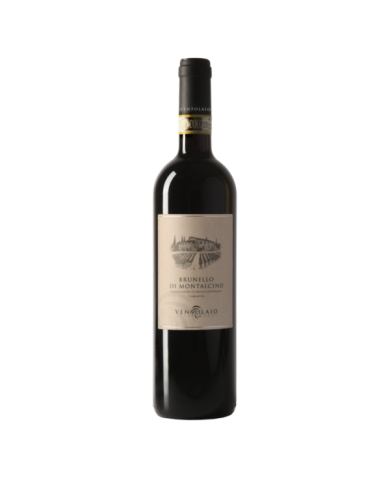
Grapes: SANGIOVESE 100% Altitude: about 400 meters slm sea level Training system: Spurred cordon Soil: Galestro Vinification: In steel tanks with controlled fermentation temperature, maceration on the skins for 20/30 days. Refinement: About 48 months in French or Slavonian oak barrels with an average capacity of 30 hl
€93.21
SKU:
16113
Brand:
Foss Marai
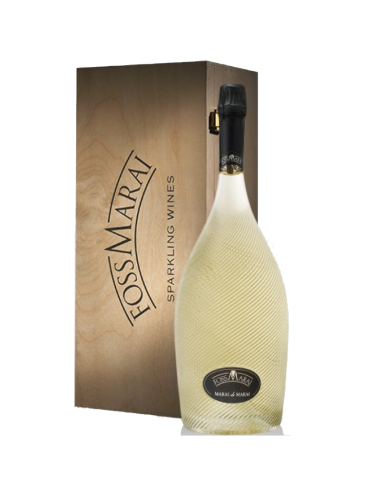
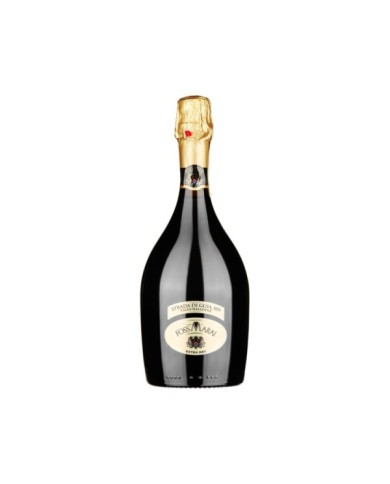
Straw yellow, with a rather fine perlage. On the nose it expresses fragrant aromas of white pulp fruit, on the palate it is fresh, very soft, full. A rich and pleasant taste, whose closure stands out for its cleanliness. Excellent as an aperitif, it goes well with light appetizers. Excellent on typical vegetarian dishes.
€74.86
SKU:
16112
Brand:
Foss Marai
Straw yellow, with a rather fine perlage. On the nose it expresses fragrant aromas of white pulp fruit, on the palate it is fresh, very soft, full. A rich and pleasant taste, whose closure stands out for its cleanliness. Excellent as an aperitif, it goes well with light appetizers. Excellent on typical vegetarian dishes.
€25.75
SKU:
16109
Brand:
Foss Marai
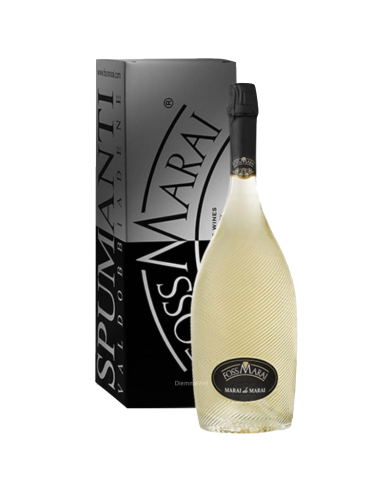
Straw yellow, with a rather fine perlage. The nose reveals fragrant aromas of acacia and apple. Captivating aromas, which open to a well-balanced taste between freshness and residual sugar. It closes with a finish of excellent persistence. Also as an aperitif, it goes well with delicate fish and white meat dishes.
€29.44
SKU:
16024
Brand:
Sutto
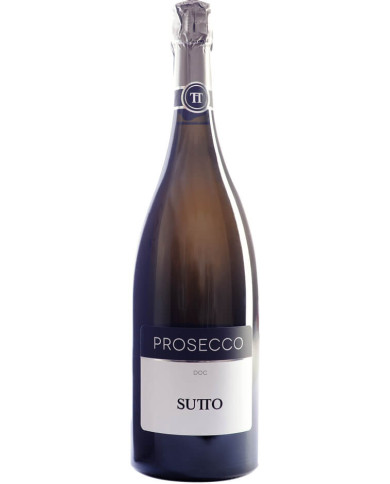
The Magnum size of Prosecco Millesimato Extra Dry from the Sutto winery is the right choice for an informal toast or to celebrate an important event.
Straw yellow color with slight greenish reflections. The nose is inebriated by floral aromas and nuances of fresh fruit. On the palate it is full, fresh and very soft.
A bubble with a fine and persistent perlage, the ideal companion for aperitifs or in combination with fish-based dishes and first courses with delicate sauces. A glass that is not excessively dry, with the right effervescence and a finish supported by a stimulating acid vein that make it a must for convivial meetings.
€29.40
SKU:
15987
Brand:
Terra dei Re
Mighty and powerful in all its manifestations, yet at the same time very soft, pulpy enveloping. The spices dress it in chlorophyllous and vanilla balm, without its rich endogenous aromatic component, its own pulpy fruit, being even partially overwhelmed by said expansion of aromas. No, here the sweetness of currants is combined with a creamy mentholated persuasion of spices, with a softness and an olfactory clarity of superior oenological class.
Wine has always been the inspiration and source of great masterpieces.
It is contemporary to see the surface of a glass bottle as an artistic support, which amplifies the value of the product thanks to its aesthetic message.
The Divinus label, created in collaboration with the artist Cristina Vitan, aims to enhance the contrast between the power and the enveloping softness of the AGLIANICO del vulture. The exaltation of the female body is the central theme of the artist's works who, challenging the classic canons of art, transform the artistic language into a provocative visual show.
In wine, as in art, we are struck by the chromatic intensity, the nuances, the luminosity, the way it rotates in the glass.
€98.58
SKU:
15983
Brand:
Terra dei Re
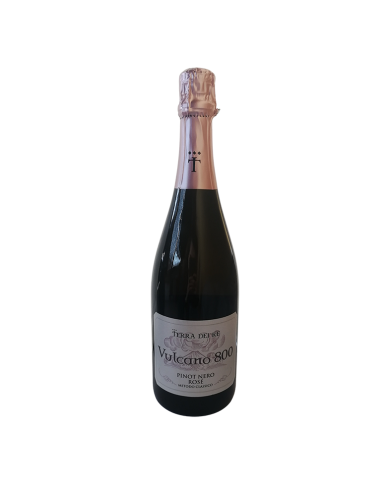
First flower, from soft pressing and short maceration
on the skins. Light, delicate and sharp to the taste. Seducer
of senses, intense and fresh like the early morning rose.
The sense of smell surrenders to the hollyhock while the rose sparkles
canine, slight scent of hibiscus. Fragrant and lively taste,
intense reference to the pulp of strawberry and red currant.
The Pinot Noir grapes are harvested at the first sign of ripening, when acidity and sugar content are in balance. Our sparkling wine has a good acid component and a low alcohol content.
To obtain a very light rosé colour, we reduce contact with the skins to a very short duration.
The processes of the classic method are articulated, the long times of maturation of the wine favor elegance and complexity.
€70.15
SKU:
15910
Brand:
Tiezzi
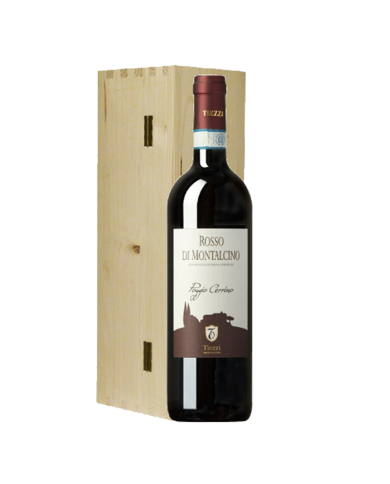
Wine obtained from Sangiovese grapes, exclusively from the vineyards of the "Soccorso" farm unit near the church of the Madonna del Soccorso, patroness of the inhabitants of Montalcino.
€110.12
SKU:
15909
Brand:
Tiezzi
Wine obtained from Sangiovese grapes, exclusively from the vineyards of the "Soccorso" farm unit near the church of the Madonna del Soccorso, patroness of the inhabitants of Montalcino.
€110.12
SKU:
15908
Brand:
Tiezzi
Wine obtained from Sangiovese grapes, exclusively from the vineyards of the "Soccorso" farm unit near the church of the Madonna del Soccorso, patroness of the inhabitants of Montalcino.
SKU:
15907
Brand:
Tiezzi
Wine obtained from Sangiovese grapes, exclusively from the vineyards of the "Soccorso" farm unit near the church of the Madonna del Soccorso, patroness of the inhabitants of Montalcino.
€110.12
SKU:
15906
Brand:
Tiezzi
Wine obtained from Sangiovese grapes, exclusively from the vineyards of the "Soccorso" farm unit near the church of the Madonna del Soccorso, patroness of the inhabitants of Montalcino.
SKU:
15892
Brand:
Tiezzi
€105.16
The Brunello di Montalcino wine is produced with traditional methods; naturally stabilized; upon bottling it is not filtered
SKU:
15780
Brand:
San Giusto a Rentennano
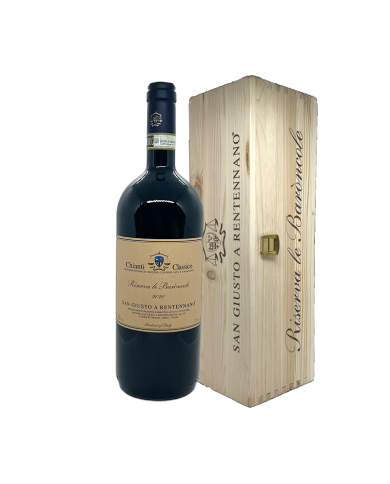
The Chianti Classico Riserva "Le Baroncole" expresses the richness and beauty of the Tuscan land. Refines for 16-20 months in oak barrels and casks and is enriched with vanilla nuances, in addition to the already present fruity and spicy aromas typical of the type. The taste is balanced, complex and deep, supported by a nice tannic texture and a pleasant savory tip
€85.00
SKU:
15757
Brand:
Roxan
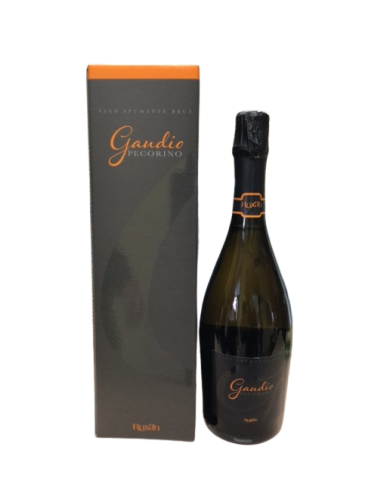
It is a brut sparkling wine with a wide and persistent froth, fine and continuous perlage, a light straw color. The aroma is intense and balanced finesse. The full flavor expresses the typicality of the production area.
€18.12
SKU:
15725
Brand:
Cantina Fratelli Pardi
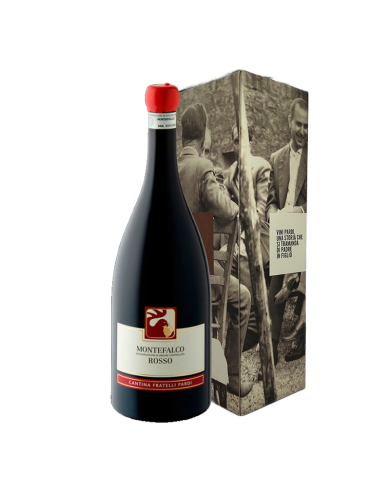
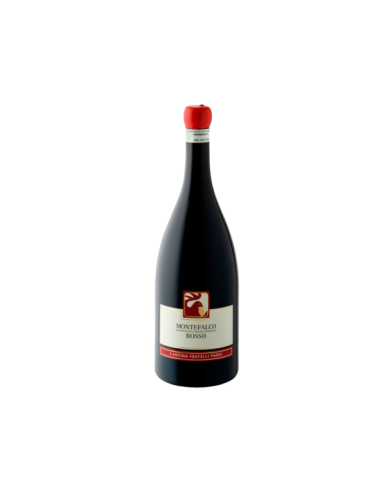
It dresses the glass in a beautiful deep ruby red. The nose is first set on dark fruit in jam and in alcohol, such as currants, black cherries and plums, then followed by intense references to green pepper, cocoa, rhubarb, licorice and chinotto. The mouth is extremely consistent with the nose, and is powerful but well managed in the tannic texture, warm, with excellent body and long persistence.
€22.61
SKU:
15716
Brand:
Fattoria La Rivolta
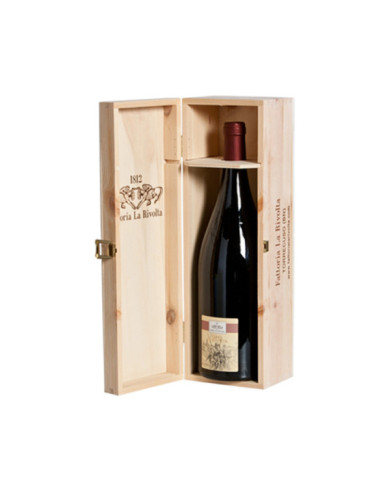
The magic of Taburno lives on in the wines from Fattoria La Rivolta, a production reality strongly linked to the territory, which with this Riserva DOCG expresses all the beauty of the Benevento area. An Aglianico with an important sip, endowed with a linear structure where each element is in perfect harmony. The grapes ferment in steel for 20-25 days at a controlled temperature of 27 °C, and then refine first in barriques for 18 months and then, after bottling, for another 18 months in glass. “Terre di Rivolta”: to be appreciated down to the last drop!
€94.43
SKU:
15700
Brand:
4 Quattro Valli
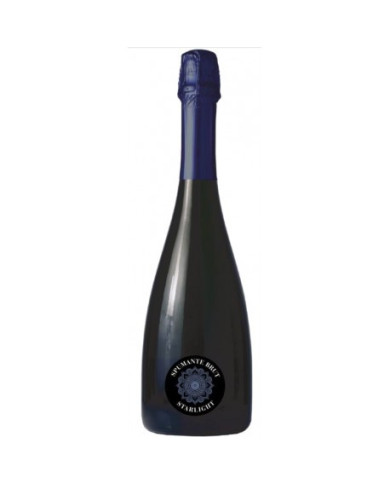
Spumante Brut Starlight 4 Valli Love for the land and passion for wine is the constant that has always accompanied the generations of the Ferrari & Perini families. A sensitivity that comes from afar, which brings with it ancient and immutable values, such as respect for nature, constancy, the hard work that our predecessors employed to allow us to carry on the beautiful profession of the winemaker up to the present day. The most important moment of the company's development is the birth of Cantine 4 Valli, in 1952. The choice placed at the base of our philosophy, also referred to in the name, consists in the ability to best represent the typicality of the Colli Piacentini wines. In fact, the Cantine 4 Valli transform their own grapes and grapes purchased only and exclusively in the vineyards of the Piacenza hills. It is a real service center to which a series of companies distributed throughout the Piacenza area belong.
€21.90
SKU:
15684
Brand:
Dei Principi di Spadafora
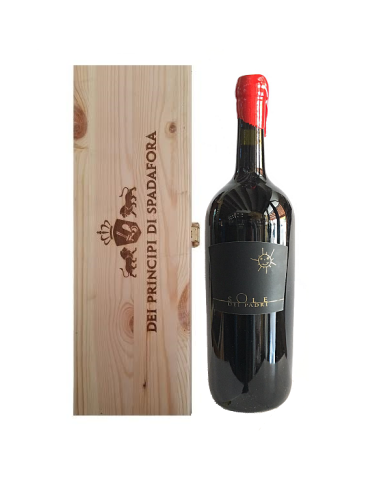
Il Sole dei Padri "Dei Principi di Spadafora" is a pure Syrah perhaps something more than 100%, an organic red wine that comes from a single vineyard, 400 meters above sea level. Production 7,000 bottles. This Syrah is the offspring of the previous one, even if it has now surpassed it in importance.
€154.82
SKU:
15660
Brand:
Ploner
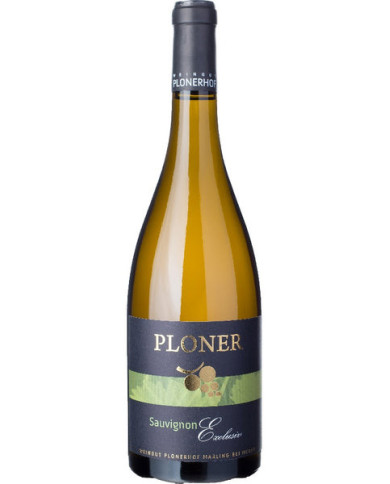
Grape variety Trebbiano Vinification White fermentation in steel. Fermentation takes place spontaneously without the addition of selected yeasts. it is decanted. The decanted must is ready for the alcoholic fermentation which is carried out at 16°C for 10/12 days. Colour: Intense yellow. Bouquet: very persistent with marked hints of yellow-fleshed fruit, mainly Williams pears. Taste: In the mouth it is intense and persistent. Strong minerality and important sapidity, given above all by the proximity of the vineyards to the sea.
€81.29
SKU:
15659
Brand:
Ploner
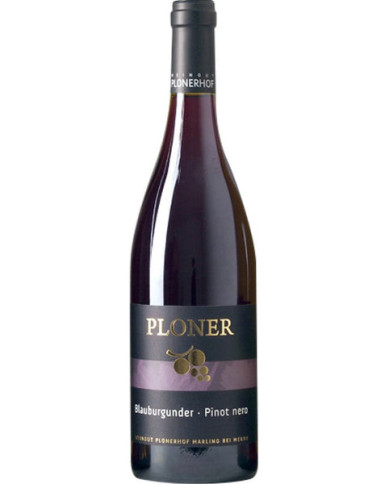
Fascinating red wine with delicate, soft fruitiness, fine aromas of wild berries, red cherries and strawberry nuances, supported by sweet tannins. Pleasant aftertaste and end of long persistence. Each glass leaves a convincing and unforgettable impression.
€50.63
SKU:
15633
Brand:
Oasi degli Angeli
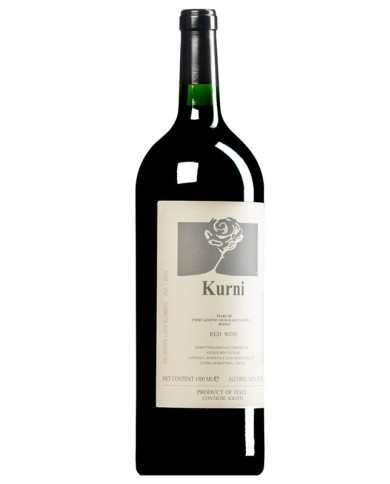
The Kurni wine of Oasi degli Angeli is born in vineyards located in the valley of the Sant'Egidio stream, in the municipality of Cupra Marittima, the winery's flagship wine, where everything has been focused on a management of the vineyards compatible with the pure needs of a territory poor in soil characteristics.
€311.01
SKU:
15603
Brand:
Moretti Omero
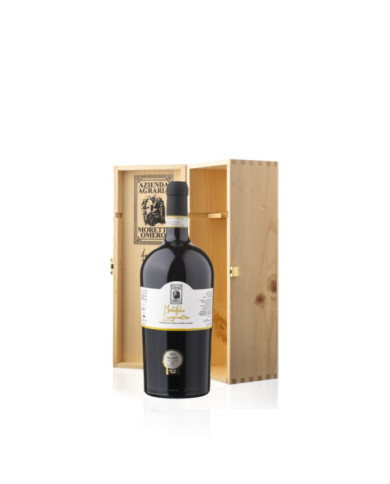
Vibrant ruby red. Small red fruits on the nose, including the typical hint of blackberries. Balsamic hints. Elegant and powerful. Persistent finish with returns of berries and spices. Fermentation 15 days. Maceration 20 days on the skins. Contact with fine lees for 6 months. Batonnage.
€114.90
SKU:
15579
Brand:
Castellare di Castellina
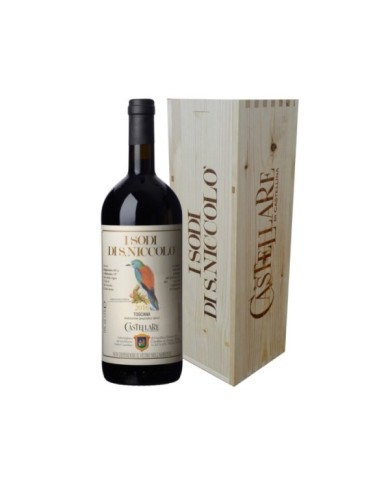
Intense ruby red with garnet reflections. The nose expresses richness and intensity thanks to beautiful fruity and slightly spicy, balsamic and floral notes. On the palate it is centered, juicy, fine and complete. It closes with a vibrant and persistent finish. Throughout the meal, it goes well with salami and meats rich in flavor, tasty and aromatic cheeses.
€222.35
SKU:
15535
Brand:
Stefano Amerighi
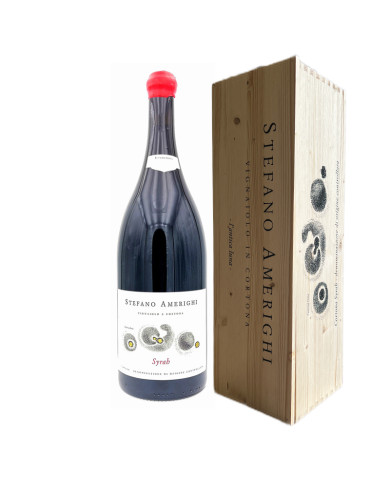
This Syrah is Stefano Amerighi 's representative wine, the result of his work and his idea. A broad idea that goes from the soil to the plant to the balance of nature.
€179.90
SKU:
15534
Brand:
Stefano Amerighi
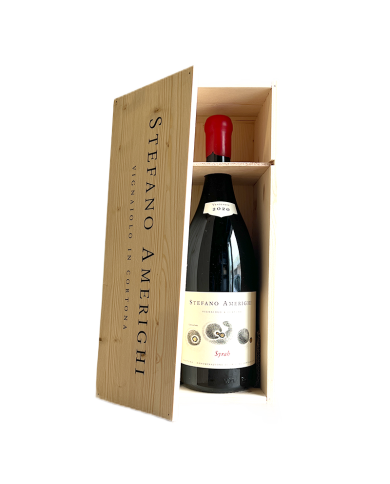
This Syrah is Stefano Amerighi 's representative wine, the result of his work and his idea. A broad idea that goes from the soil to the plant to the balance of nature.
€84.90
SKU:
15527
Brand:
Avignonesi
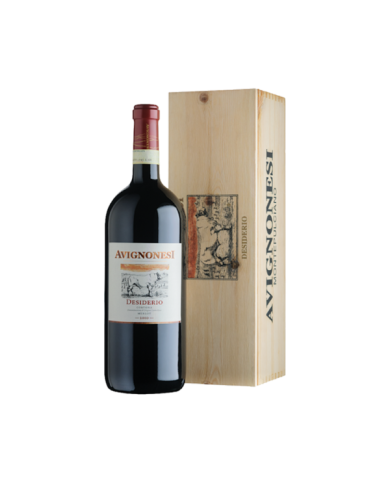
With a warm and sensual character, full of fruity notes and sweet spices, Desiderio 2016 goes perfectly with savory dishes, such as roast lamb, aged cheeses and game. Intense ruby red in color, this wine reveals an inviting bouquet of black cherries and blackberries with notes of eucalyptus and fresh mint, underlined by elegant sensors of roses and sandalwood. Well structured and very persistent, in the mouth it is enveloping and caressing, characterized by fruity notes and fine-grained tannins.
€125.00
SKU:
15509
Brand:
Francesco Massetti
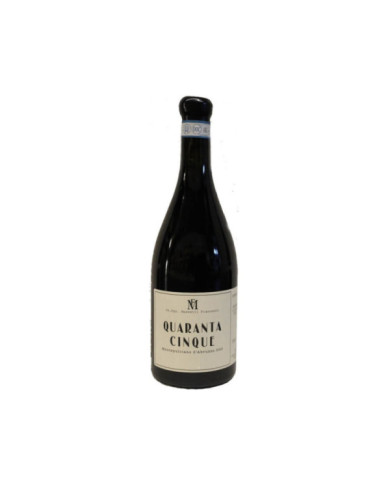
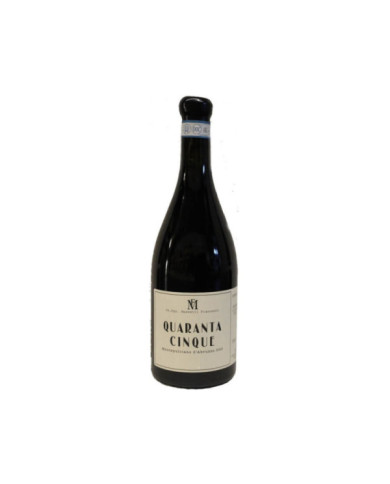
Francesco Massetti's Montepulciano d'Abruzzo Quarantacinque 2019 is a representative wine of the new generation of good winemakers, on the nose ripe aromas, red fruit, Mediterranean herbs, in the mouth Francesco's decisive hand refers to the power of the vine which is balanced with a good drink that still recalls the food.
€159.21
SKU:
15508
Brand:
Francesco Massetti
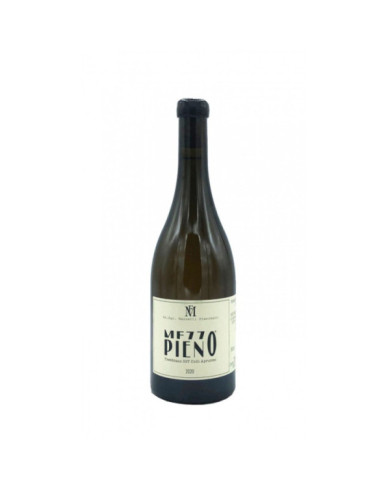
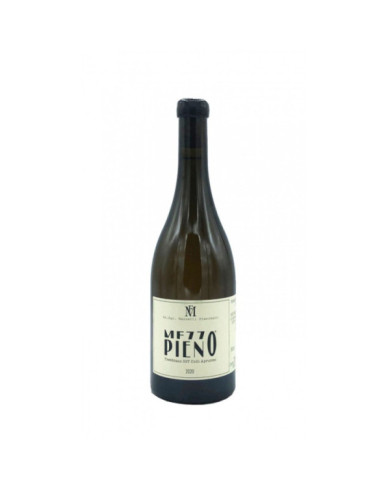
Francesco Massetti's Trebbiano offers the nose aromas of apple, white peach and puffs of hay as well as Mediterranean herbs, in the mouth it has a beautiful structure, freshness and saltiness with a good persistence, time will make this wine more complex, which is already very popular today .
€103.46
SKU:
15507
Brand:
Francesco Massetti
Francesco Massetti's Montepulciano d'Abruzzo Quarantacinque 2019 is a representative wine of the new generation of good winemakers, on the nose ripe aromas, red fruit, Mediterranean herbs, in the mouth Francesco's decisive hand refers to the power of the vine which is balanced with a good drink that still recalls the food.
€86.62
SKU:
15506
Brand:
Francesco Massetti
Francesco Massetti's Trebbiano offers the nose aromas of apple, white peach and puffs of hay as well as Mediterranean herbs, in the mouth it has a beautiful structure, freshness and saltiness with a good persistence, time will make this wine more complex, which is already very popular today .
€61.49
SKU:
15488
Brand:
Valle Martello
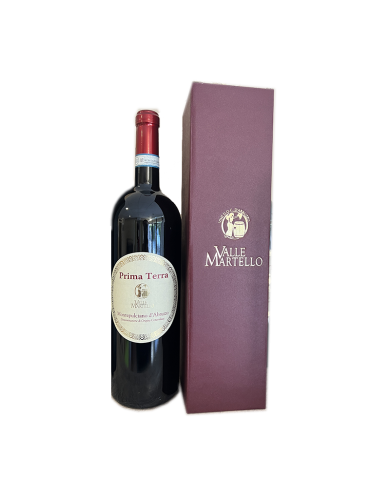
Prima Terra is a wine obtained from Montepulciano grapes grown in an ancient vineyard of the Masci family, the former, as anticipated by its name. Aged first in large wooden barrels, it then rests in the bottle for at least a year. It has an intense ruby red color. On the nose it expresses strong jam aromas and on the palate a pleasant softness obtained from a delicate aging.
€45.98
SKU:
15487
Brand:
Valle Martello
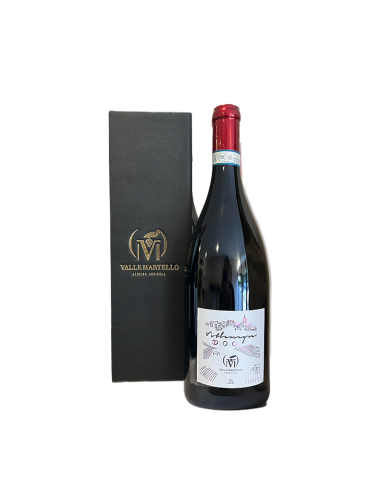
Villamagna DOC is the result of the project to enhance our wine area. It comes from a late harvest with manual harvesting of the selected grapes. Ruby red in color with purple reflections, the nose expresses intense aromas of red fruit, especially black cherry. In the mouth it fills the palate with its soft and velvety taste. Balanced and harmonious, it is a wine that goes well with Mediterranean cuisine, main courses of meats, salami, aged cheeses.
€33.18
SKU:
15486
Brand:
Piandimare
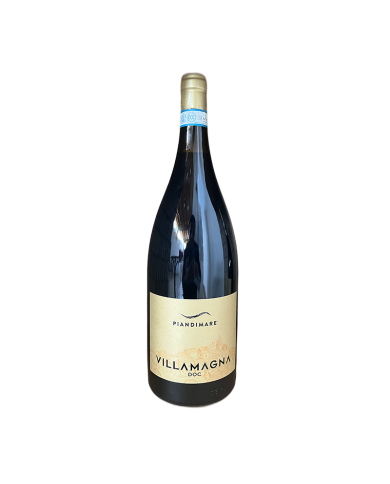
It is with the arrival of the new Villamagna Doc that Cantina Piandimare expands the line of its Montepulciano d'Abruzzo from the Piandimare massale selection with a further red that wants to be the umpteenth praise to the territory and the demonstration of the potential in terms of structure and aging. through the work done by the winery with only the grapes coming from the Val di Foro, in particular from those of the territory limited to the small, but growing interest, Doc Abruzzo Villamagna.
€33.65
SKU:
15309
Brand:
Nativ
Important red wine whose vines are grown on volcanic soil on the hills of Taurasi. The name of our wine derives from the place where horses were once said to graze in the wild, and where the remains of the ancient hermitage of S. Quirico can still be found. A wine so precious as to dress it with a work of art by the contemporary painter Moreno Bondi.
€48.99
SKU:
15211
Brand:
Gianni Doglia
Moscato d'Asti is an excellent dessert wine that goes well with dry pastries and fruit cakes; moreover, thanks to the moderate alcohol content, it is a pleasant thirst-quenching drink in the summer. The combination with cured meats and cheeses is more provocative; a provocation that will amaze you! To preserve all the fragrance of the fruit in the wine, it is necessary to adopt a particular harvesting and vinification technique. In fact the grapes, coming from the company's own vineyards, are harvested manually in the vineyard and carefully placed in boxes for transport to the cellar; here they are delicately pressed and the must obtained is kept in cooling vats (-1.5° C) until the moment of vinification in an autoclave. Fermentation takes place at a controlled temperature and with the help of selected yeasts until 5% alcohol is reached. Subsequently the wine will be filtered and bottled. The result is a lively wine with strong and intense varietal characters.
€33.92
SKU:
15207
Brand:
Enrico Gatti
Obtained from the soft pressing of grapes
Chardonnay and a Pinot Noir from
vineyards located in the foothills area.
The vinification takes place in steel tanks.
Permanence on the lees for a minimum of 24 months.
Contains notes of tropical fruit, nuts and
hazelnuts. Harmonious olfactory perceptions e
engaging.
€56.00
SKU:
15204
Brand:
Enrico Gatti
Obtained from the soft pressing of grapes
Chardonnay from vineyards located in the area
hilly.
Part of the must is fermented in oak barrels
French and matured on the fermentation lees e
part is vinified in steel.
Permanence on the lees for a minimum of 32 months.
Essentially creamy with fragrant tones of
fresh almond and delicate aromas of butter.
Delighted with a subtle minerality.
€72.47
SKU:
15203
Brand:
Enrico Gatti
Obtained from the soft pressing of grapes
Chardonnay from vineyards located in the area
foothills.
Vinification takes place in steel tanks.
Permanence on the lees for a minimum of 24 months.
Franciacorta Brut expresses personality
of the company.
Fresh, played on a balanced persistence
which refers to dried fruit and citrus fruits.
€55.27
SKU:
15156
Brand:
Follador
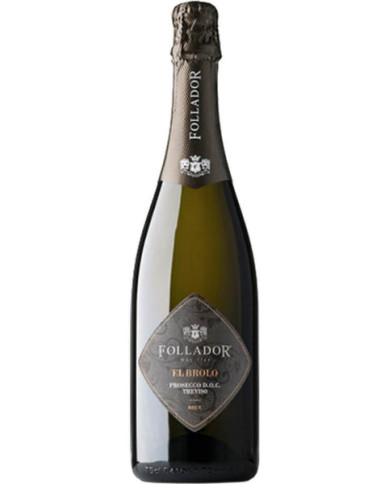
Hints of flowers, apple, pear and citrus fruits, which are found in the mouth giving sensations of flavor and freshness. Fine and persistent bubble. Pale straw yellow color with greenish reflections. Ideal for a refreshing aperitif or with appetizers, first courses and dishes based on fish, vegetables and white meats.
€33.55
€44.24
SKU:
15069
Brand:
Carpineto
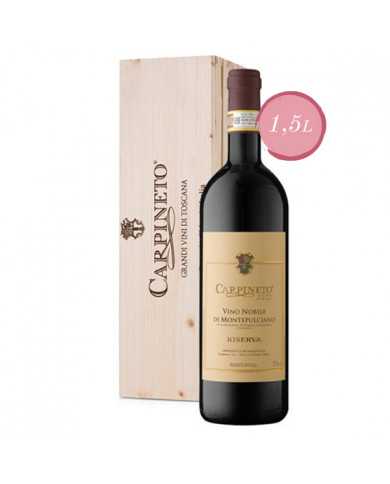
A great red wine, it takes its name from Montepulciano, a Renaissance city in the province of Siena, which dominates the wide and verdant Valdichiana from the top of a hill. The appellation of "Nobile" seems to derive not only from its intrinsic qualities of finesse and elegance, but also from the fact that in the past the production of this wine was particularly cared for by the noble families of the city.
€110.40
SKU:
14900
Brand:
PODERE MATTIOLI
Around the 12th century, an ancient villa known as “il castellare de Ylice” stood near our cellar. The name was probably due to the Latin term ilex (holm oak), a particular variety of oak very common in our area. To date, no trace has remained of this historic villa, but the passion and respect we have for our territory has prompted us to pass on the name of that ancient presence.
€33.86
SKU:
14878
Brand:
Cascina del Colle
From the archaeological discovery of a mammoth tusk in the second half of the 60s at the point where the current company "La Cascina del Colle " was built. Hence the idea of a lively, powerful and majestic wine
€44.15
SKU:
14876
Brand:
Cascina del Colle
Invasione Riserva Villamagna Cascina del Colle , ruby red. On the nose hints of red fruit and aromas of jam. Round and balanced on the palate, pleasantly tannic.
€32.21
SKU:
14872
Brand:
Fontefico
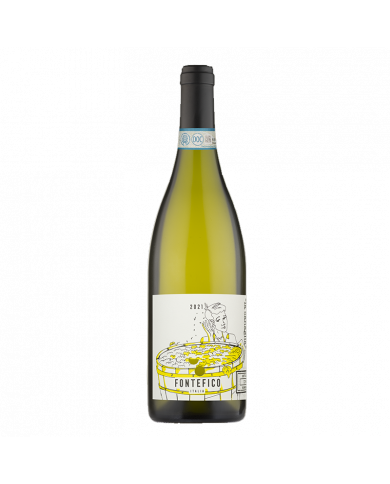
This superior pecorino comes from the white vineyard, a spiteful vineyard because, despite our attentions, it has very low yields, as if it wanted to avoid the effort of producing more grapes. But then he is forgiven by giving us a unique, fresh and voluminous wine, which you will never tire of drinking. It is the "rogue" of Fontefico.
SKU:
14825
Brand:
CVA Canicattì
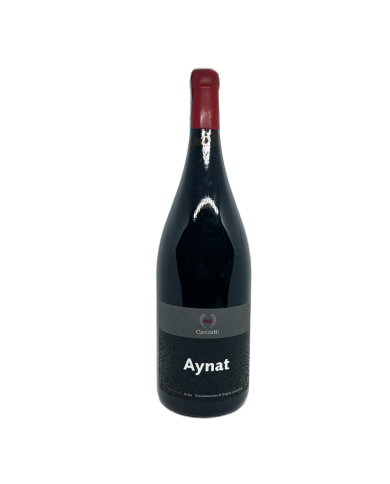
A Nero d'Avola of great harmony, our spearhead. Surprising in its aromas, precious for the elegance and silkiness of its tannins. An exciting wine.
€63.44
€228.38
€129.90
SKU:
14654
Brand:
Tenuta Antonini
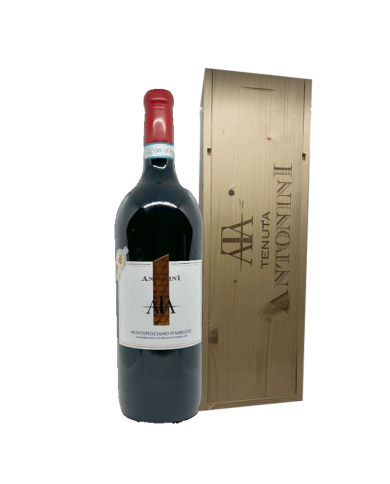
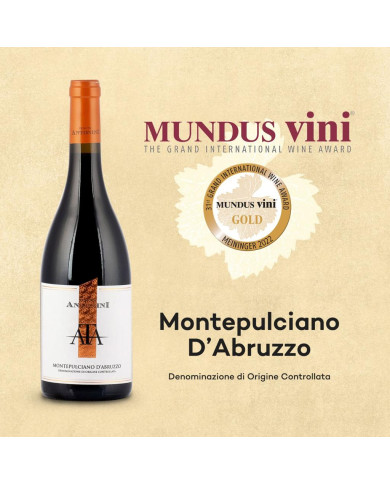
Red is the color of passion. Strong, energetic, charged, exciting: our Montepulciano d'Abruzzo is exactly like that, enveloping and full-bodied. Each sip encourages the discovery of its sensorial complexity, but also to let oneself be pervaded by positive sensations and share them with those around us.
€35.87
SKU:
14645
Brand:
Cantina Dorigati
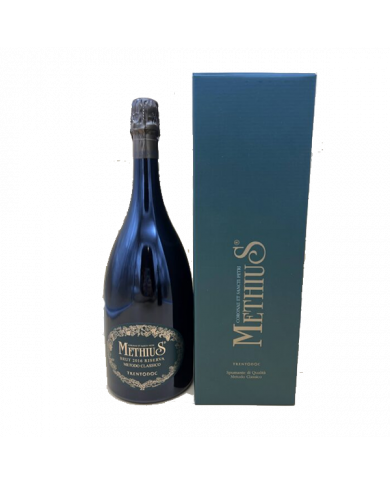
Il Trentino è una terra indubbiamente vocata alla produzione di basi spumanti. Se si aggiunge una produzione artigianale e rispettosa delle tradizioni ecco che si ottiene TRENTODOC, ovvero il metodo classico trentino.è da questi presupposti che nel 1986 nasce METHIUS TRENTO DOC grazie all’amicizia tra due amici enologi: Carlo Dorigati ed Enrico Paternoster. Il Trento Doc Methius è prodotto solo nella tipologia riserva, a sottolineare la qualità eccelsa di questo prodotto e la sua unicità. La cantina d’invecchiamento, ubicata a Mezzocorona (Trentino), risale ai primi del 1900, è completamente interrata e costruita con i “volti a botte” quasi tutti in pietra squadrata. Qui le bottiglie di Methius sostano per 60 mesi, a temperatura e umidità pressoché costanti tutto l’anno. Il nome “Methius” deriva dalla ricerca di un toponimo locale che accomuna l’origine del prodotto aziendale al territorio di nascita. L’etimo del nome scelto si perde nella storia. Si sa che già nel 1150 (Principe Vescovo e Mainardo II conte di Tirolo) il nome delle due borgate site nella “Piana Rotaliana” erano: Methius Coronae (oggi Mezzocorona) e Methius Sancti Petri (oggi Mezzolombardo) ove il radicale comune “Methius” deriva dal celtico e latino volgare.
€98.09
SKU:
14588
Brand:
Ca' Rugate
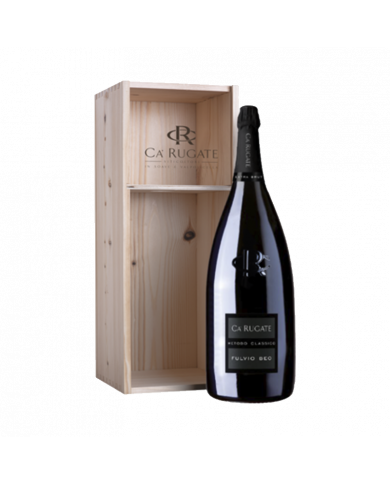
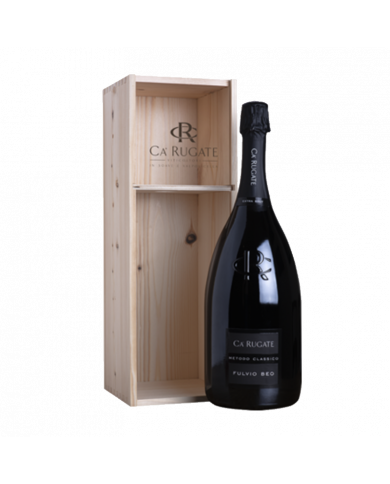
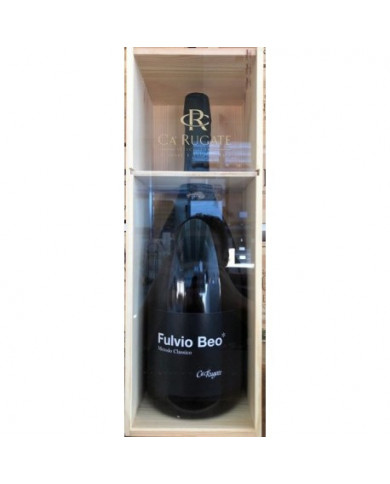
Fulvio Beo Classic Method Ca' Rugate has a straw yellow color with greenish reflections, it is a sparkling wine with a fine and persistent perlage. The nose releases a delicate hint of yeast with pleasant fruity notes. Harmonious, almost velvety flavour, with a dry finish.
€720.29
SKU:
14587
Brand:
Ca' Rugate
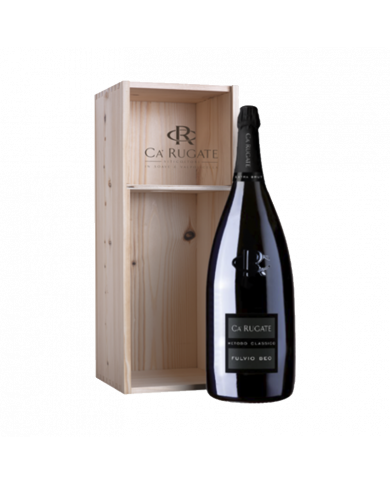
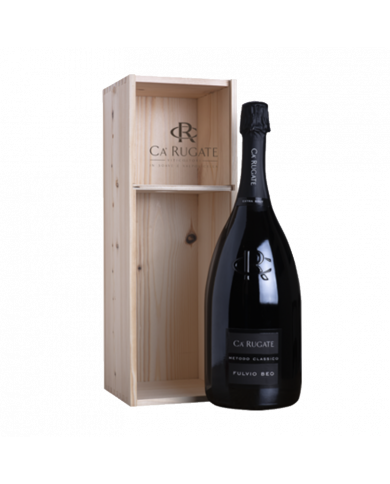
Fulvio Beo Classic Method Ca' Rugate has a straw yellow color with greenish reflections, it is a sparkling wine with a fine and persistent perlage. The nose releases a delicate hint of yeast with pleasant fruity notes. Harmonious, almost velvety flavour, with a dry finish.
€551.75
SKU:
14586
Brand:
Ca' Rugate
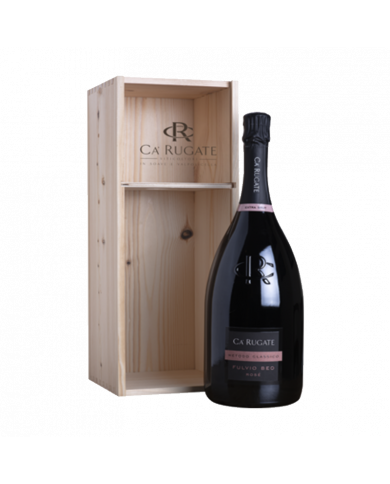
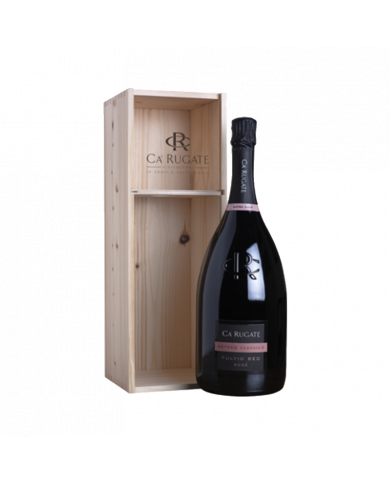
After a short maceration of 1-2 days on the skins, the fermentation takes place in stainless steel tanks. About 6 months after the harvest, the base wine is bottled with the addition of yeasts which trigger a second fermentation. After about 24 months the yeasts, through the "disgorgement", come out of the bottle. At this point, the Fulvio Beo Rosè sparkling wine is ready for marketing.
Tasting notes
Coral pink in color with shades that veer towards salmon-colored tones. On the nose aromas of small berries, currants and strawberries and delicate hints of almond.
€333.06
SKU:
14585
Brand:
Ca' Rugate
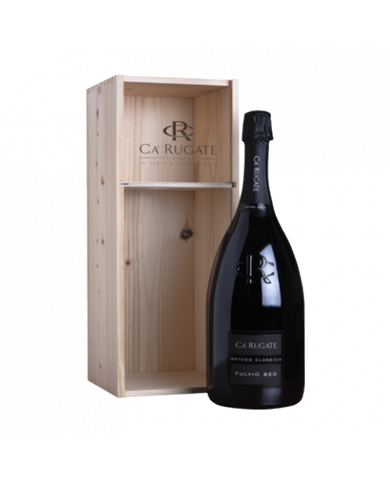
Fulvio Beo Classic Method Ca' Rugate has a straw yellow color with greenish reflections, it is a sparkling wine with a fine and persistent perlage. The nose releases a delicate hint of yeast with pleasant fruity notes. Harmonious, almost velvety flavour, with a dry finish.
€333.06
SKU:
14584
Brand:
Ca' Rugate
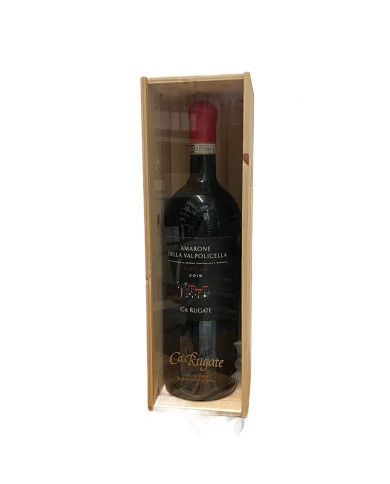
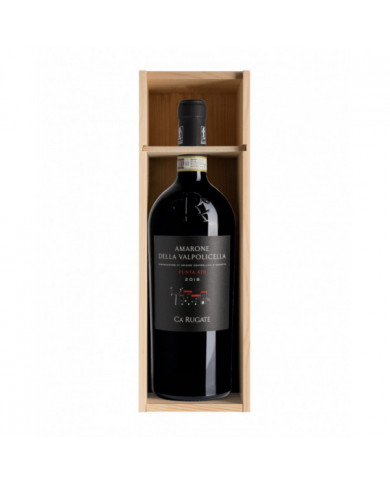
The Amarone di Ca' Rugate "Punta 470" announces itself in the glass with a well concentrated garnet colour. The olfactory bouquet that emerges on the nose is broad, where various notes of small berry fruits such as blackberry, cherry and currant can be traced, alternating with spicy references. On the palate it has an excellent structure, powerful and energetic thanks to a round sip, which wraps the palate with softness; it closes with a finish of excellent persistence, characterized by an aftertaste that recalls the flavor of the dried grapes from which the Amarone production process is born. A label of important depth both on the nose and in the mouth, which comes from a meticulous production process, in which each phase of the production is followed with care and attention, until the wine, after a good period of refinement, is not ready to be bottled. A great expression, dense, intense and elegant. The "Punta 470" takes shape from the union between Corvina, Corvinone and Rondinella, varieties grown in soils rich in skeleton and limestone located in the hilly area of Montecchia di Crosara. The manual harvest begins during the second half of September, taking care to place the bunches in boxes without overlapping them, in order to guarantee correct ventilation. The bunches wither for 4-5 months in a fruit cellar, dehydrating and thus concentrating their sugary substances; then we proceed with the pressing, and the must obtained is fermented in steel. The wine ages for 30-36 months in 500-litre oak tonneaux and 25-hectolitre barrels.
SKU:
14583
Brand:
Ca' Rugate
Fulvio Beo Classic Method Ca' Rugate has a straw yellow color with greenish reflections, it is a sparkling wine with a fine and persistent perlage. The nose releases a delicate hint of yeast with pleasant fruity notes. Harmonious, almost velvety flavour, with a dry finish.
€142.74
SKU:
14580
Brand:
Ca' Rugate
Delicate hints of freshly baked croissant crust, with references to spices and notes of white peach, accompanied by a vigorous and enveloping drink, supported by a whipping and crystalline acidity.
€97.17
SKU:
14579
Brand:
Ca' Rugate
Deep ruby red dress, a Valpolicella Superiore with aromas of small red fruits, from blackberry to currant to cherry that blend well in a splendid harmony of spicy flavors given by the aging in barrel.
Letting the wine decant from the important organoleptic structure and important tannins, it is possible to perceive the softness on the palate.
Enveloping and sensual, it is perfect for your most intense evenings with important dinners with the strongest flavours.
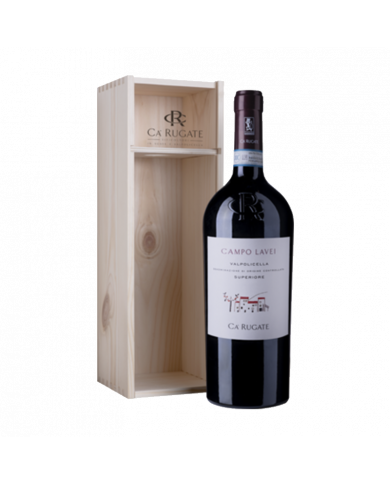
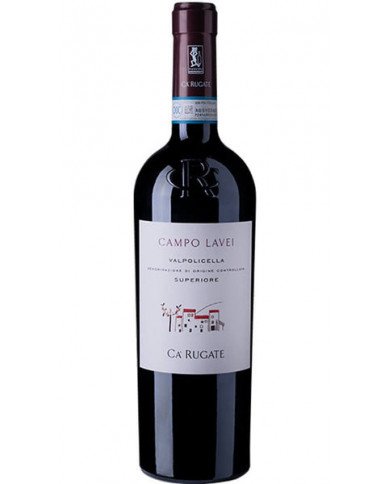
€75.40
SKU:
14578
Brand:
Ca' Rugate
Fulvio Beo Classic Method Ca' Rugate has a straw yellow color with greenish reflections, it is a sparkling wine with a fine and persistent perlage. The nose releases a delicate hint of yeast with pleasant fruity notes. Harmonious, almost velvety flavour, with a dry finish.
€64.90
SKU:
14577
Brand:
Ca' Rugate
Fulvio Beo Magnum sparkling wine in wooden case from the Ca' Rugate winery comes from 100% Garganega grapes. The base wine is vinified entirely in steel so as not to alter the typical aromas and freshness. A complex and full-bodied sparkling wine, which highlights the great potential of the volcanic territory of the Soave area.
€61.61
SKU:
14576
Brand:
Ca' Rugate
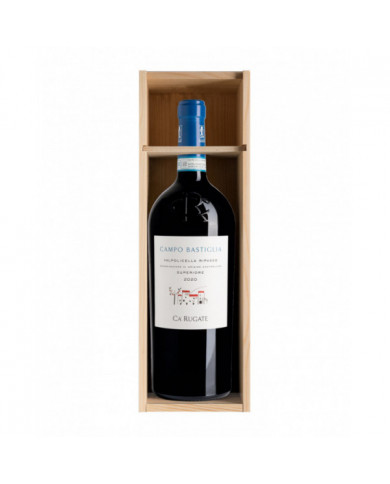
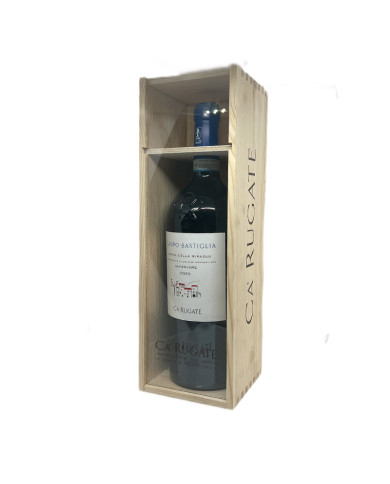
The Valpolicella Classico Superiore "Campo Bastiglia" by Cà Rugate has a deep garnet red colour. On the nose the aromas are fruity with notes of cherry and red fruit with floral and spice nuances. The taste is full and velvety thanks to the soft tannins that characterize it. Ripasso is a traditional practice which involves, after pressing the dried Amarone grapes, the refermentation of the pomace on a vintage wine. The subsequent refinement takes place 50% in tonneaux and 50% in steel for a period of about 8 months. The best grapes from the various owned vineyards are located in the hilly area of Montecchia di Crosara, in soils rich in skeleton and mainly calcareous. A great wine with excellent value for money.
€61.50
SKU:
14575
Brand:
Ca' Rugate
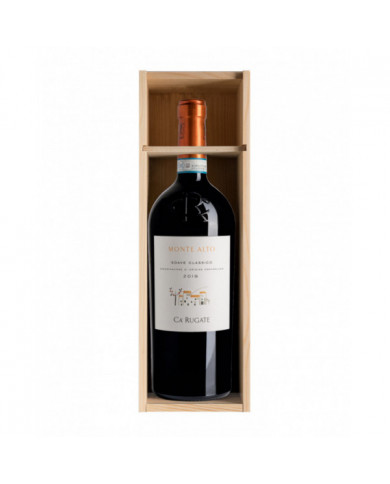
The Soave Classico "Monte Alto" is a soft and fragrant white wine from the Veneto region, which the aging on the lees in barriques and oak barrels has contributed to rounding out. On the nose emerge aromas of flowers, yellow fruit and almonds. The sip is enveloping, fresh and intense, with a good structure. The "Monte Alto" belongs to the group of crus of Ca' Rugate, historic company of the Tessari family, born in the heart of Valpolicella, between Monteforte d'Alpone and Montecchia di Crosara, and witness for over a century of a viticulture closely linked to local traditions and local vines. Spread over an area of over 4000 meters and divided over 3 levels, the cellar allows the company to concentrate all the processes of vinification, refinement, bottling and storage in a single location. The owned vineyards, located on the Rugate hill which gives the company its name, are cultivated partly with the Veronese pergola system, partly with the guyot system. On the south-facing slopes, where the cultivation of vines finds particularly favorable conditions, the soil is basaltic and rich in clay and silt. The area is vast and rather homogeneous, with characteristics that have made it possible to identify particular micro-areas, suitable for obtaining a fresh, balanced, persistent Soave Classico with great personality. These are the territorial premises that give rise to this warm and soft wine, with a structure capable of supporting a remarkable evolution after a few years of age, the Soave Classico "Monte Alto" is produced with the best grapes from the vineyards of Monteforte d'Alpone, bringing with it a varietal expression of extremely high quality which thus seals the great relationship established over time between the Ca' Rugate company and the hills of Soave.
€60.60
SKU:
14573
Brand:
Ca' Rugate
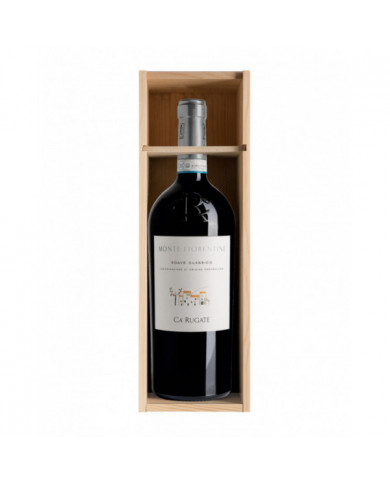
The Soave Classico Magnum "Monte Fiorentine" by Cà Rugate has a deep straw yellow colour. The nose is fine and delicate with exotic fruit and citrus. The Taste is soft, persistent and sapid.
This wine is vinified in white with fermentation in steel at 16-18 degrees, for a period of 10-15 days.
The vineyards of Monte Fiorentine are located north of Colle Rugate, in Brognoligo di Monteforte d'Alpone, in soils of volcanic origin rich in minerals.
A very structured wine that is best expressed after 1-2 years of aging in the bottle.
€43.07
SKU:
14568
Brand:
Ca' Rugate
Fulvio Beo sparkling wine in a wooden box from the Ca' Rugate winery comes from 100% Garganega grapes. The base wine is vinified entirely in steel so as not to alter the typical aromas and freshness. A complex and full-bodied sparkling wine, which highlights the great potential of the volcanic territory of the Soave area.
€136.64
SKU:
14566
Brand:
Ca' Rugate
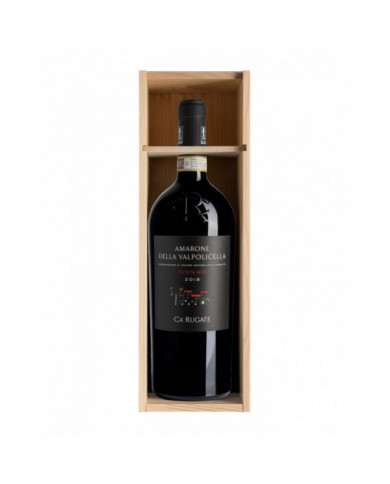
The Amarone di Ca' Rugate "Punta 470" announces itself in the glass with a well concentrated garnet colour. The olfactory bouquet that emerges on the nose is broad, where various notes of small berry fruits such as blackberry, cherry and currant can be traced, alternating with spicy references. On the palate it has an excellent structure, powerful and energetic thanks to a round sip, which wraps the palate with softness; it closes with a finish of excellent persistence, characterized by an aftertaste that recalls the flavor of the dried grapes from which the Amarone production process is born.
A label of important depth both on the nose and in the mouth, which comes from a meticulous production process, in which each phase of the production is followed with care and attention, until the wine, after a good period of refinement, is not ready to be bottled. A great expression, dense, intense and elegant.
The "Punta 470" takes shape from the union between Corvina, Corvinone and Rondinella, varieties grown in soils rich in skeleton and limestone located in the hilly area of Montecchia di Crosara. The manual harvest begins during the second half of September, taking care to place the bunches in boxes without overlapping them, in order to guarantee correct ventilation. The bunches wither for 4-5 months in a fruit cellar, dehydrating and thus concentrating their sugary substances; then we proceed with the pressing, and the must obtained is fermented in steel. The wine ages for 30-36 months in 500-litre oak tonneaux and 25-hectolitre barrels.
€139.69
SKU:
14518
Brand:
Bellavista
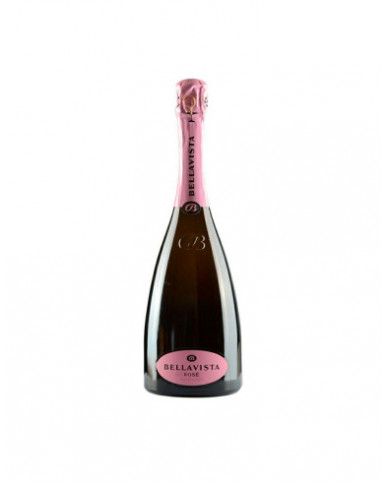
Bellavista Wine's Magnum di Rose Millesimato Franciacorta DOCG is a sparkling wine produced in Lombardy. It is a ready-to-drink wine. It is recommended to serve at a temperature of 6°C
€132.59
SKU:
14511
Brand:
Bellavista
White foam, exuberant and of excellent persistence. The pearl necklaces are very fine to form a well-present and prolonged crown over time. The effervescence is dynamic and full of youth. Bright and bright yellow color with clear greenish reflections. Perfume characterized by marked minerality. Wide and inviting, it embraces nuances of ripe sweet fruit, meringue, pastry and candied citrus peel. Flavor fully corresponding to the nose, with an almost crunchy creamy sensation and a texture that combines elegance and lightness, thickness and harmony. The vibrant and contemporary character represents its unmistakable identity.
€317.07
SKU:
14510
Brand:
Bellavista
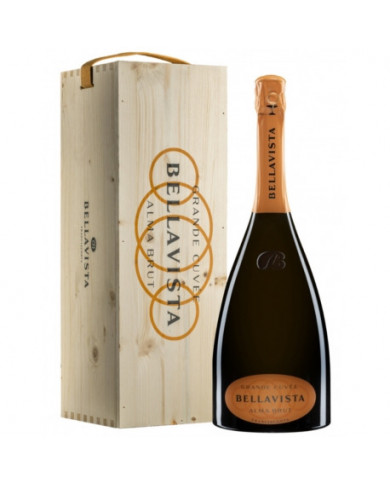
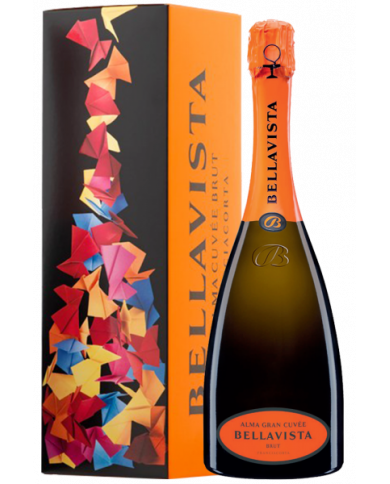
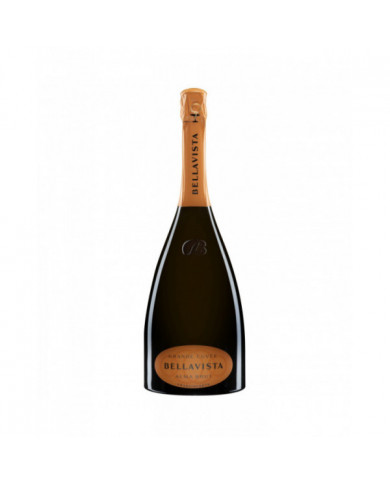
The Franciacorta DOCG Cuvèe Brut "Alma" by Bellavista comes from the skilful union of about 60 of the 120 harvest selections obtained in the cellar. About 100 selections come from the same harvest and are identified with extreme care in 107 parcels distributed in 10 different municipalities of Franciacorta ("horizontal assembly"). To this vast patrimony of olfactory and gustatory variants are then added the aromas and flavors of particular "reserve wines" from different vintages ("vertical assembly"). A unique cuvée, which with its elegant complexity represents the most complete and often mysterious soul of Franciacorta.
€81.45
SKU:
14508
Brand:
Bellavista
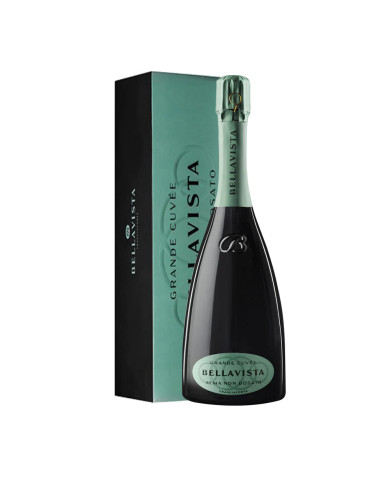
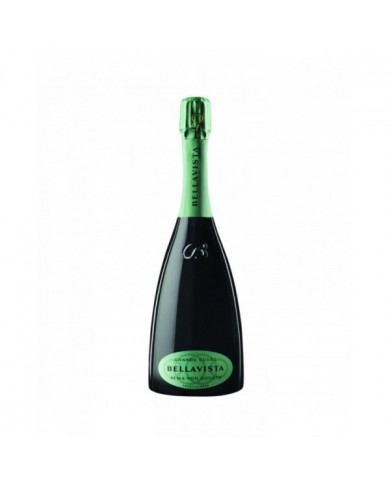
It is told through a sensory profile that evolves giving altogether sapidity, freshness, finesse, elegance and agility: the result is simply superlative, given by the Franciacorta Non Dosato "Alma Grande Cuvée", labeled Bellavista . A bubble that wants to become the symbol of the purest essence of the lands of Franciacorta, proposing a sip with which Bellavista drops its mask, retracing its history in a contemporary key. Here then is that every detail - label included - becomes a reference to the concept of harmony, both external and connected to the precious content. The apparent - and intended - aesthetic minimalism, again, finally connects with a Franciacorta that remains suspended in time, as if to recall the impossibility of finding glasses of a similar caliber.
€84.06
SKU:
14505
Brand:
Bellavista
The Franciacorta DOCG Cuvèe Brut "Alma" by Bellavista comes from the skilful union of about 60 of the 120 harvest selections obtained in the cellar. About 100 selections come from the same harvest and are identified with extreme care in 107 parcels distributed in 10 different municipalities of Franciacorta ("horizontal assembly"). To this vast patrimony of olfactory and gustatory variants are then added the aromas and flavors of particular "reserve wines" from different vintages ("vertical assembly"). A unique cuvée, which with its elegant complexity represents the most complete and often mysterious soul of Franciacorta.
€81.50
SKU:
14450
Brand:
Emidio Pepe
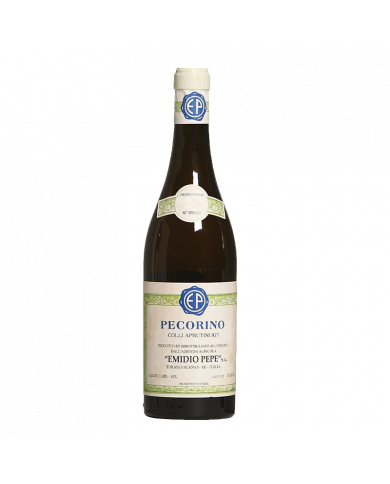
Pecorino by Emidio Pepe is a white wine with a great personality, full-bodied and intense, which gives us floral and yellow fruit notes on the nose, with a herbaceous finish. The sip has a very pleasant mineral note and a vertical taste of great persistence.
SKU:
14449
Brand:
Montevertine
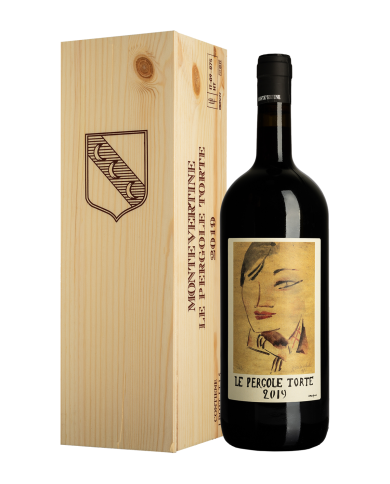
Produced for the first time in the 1977 vintage, it was the first pure Sangiovese vinified in our area of Radda in Chianti. The grapes come from our historic vineyards, planted between 1968 and 1999. It ages for one year in Allier barriques and one year in Slavonian oak barrels.
€858.00
SKU:
14448
Brand:
Montevertine
Produced for the first time in the 1977 vintage, it was the first pure Sangiovese vinified in our area of Radda in Chianti. The grapes come from our historic vineyards, planted between 1968 and 1999. It ages for one year in Allier barriques and one year in Slavonian oak barrels.
€877.50
SKU:
14447
Brand:
Montevertine
Produced for the first time in the 1977 vintage, it was the first pure Sangiovese vinified in our area of Radda in Chianti. The grapes come from our historic vineyards, planted between 1968 and 1999. It ages for one year in Allier barriques and one year in Slavonian oak barrels.
SKU:
14426
€32.50
SKU:
14421
Brand:
Fontodi
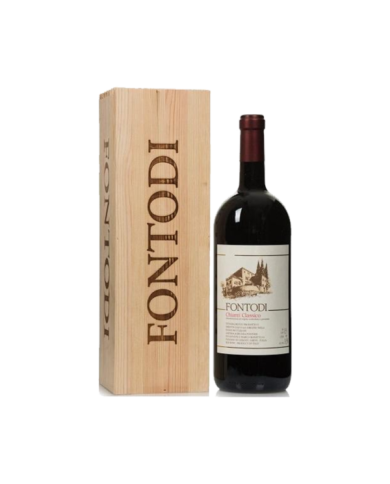
Famous and full-bodied expression of Sangiovese from Tuscany, Fontodi 's Chianti Classico is an intense and elegant wine, aged in old barriques for 24 months. Allows aromas of violets, leather and tobacco to emerge in the glass. The sip reveals body, spice, clarity and precision. Organic wine
€65.59
SKU:
14420
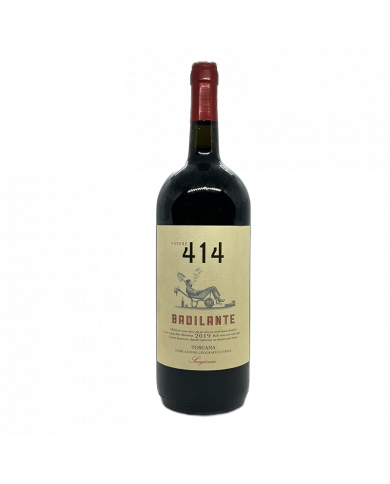
Badilante IGT Sangiovese Brilliant ruby red, bouquet characterized by fruity aromas that integrate with spicy perceptions. On the palate it shows medium structure, elegance and roundness conferred by the docility of the tannins. The objective set for this wine is finalized in the creation of a drink endowed with great versatility able to accompany many of the dishes of the Tuscan tradition. The shovelers were those who for over a century tilled the virgin lands of the Maremma. Our Sangiovese is born today from the same areas, elegant and generous, a timeless classic.
€25.22
SKU:
14419
Brand:
Ornellaia
Intense ruby red to the eye. It offers hints of black cherry, blackberry and ripe dark pulp fruit on the nose, enriched with mineral and spicy tones. In tasting the tannins are still very gritty, and communicate that they are ready to support the wine at least until the next decade. Excellent persistence and fruity closure. It goes perfectly with land cuisine, and with second courses in particular. Try it with stuffed honey duck.
€46.90
SKU:
14390
Brand:
Cantina Roeno
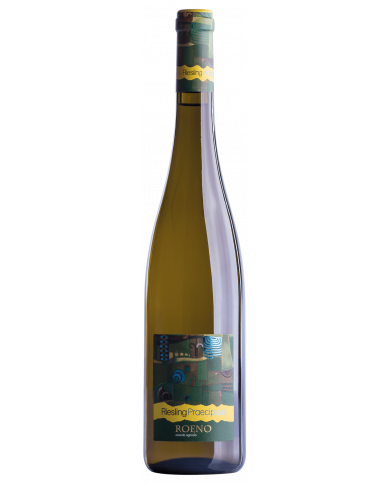
From the ambitious project of the Cantina Roeno was born "PRAECIPUUS" obtained from Renano riesling grapes. The choice of the Latin name is a tribute to the excellence of the product obtained. Praecipuus: extraordinary, excellent. First vintage of Praecipuus 2009.
€48.07
SKU:
14368
Brand:
Borgo Maragliano
Grape variety: CHARDONNAY 100% fermentation in stainless steel tanks Altitude: 410 meters slm Slope: 17% facing East Training system: Low Guyot Soil: 30% tufa - 68% sandstone - 2% calcium Average yield per hectare: 55 hl.
€55.51
SKU:
14345
Brand:
Merotto
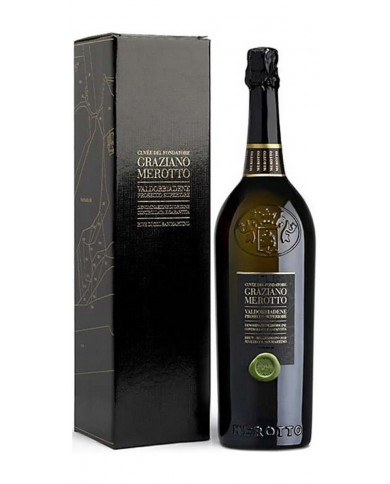
The grapes of the Cuvée del Fondatore come from the Banks of Col San Martino and in particular from cadastral maps 86 - 826 at 230 meters above sea level.
€51.85
SKU:
14340
Brand:
Merotto
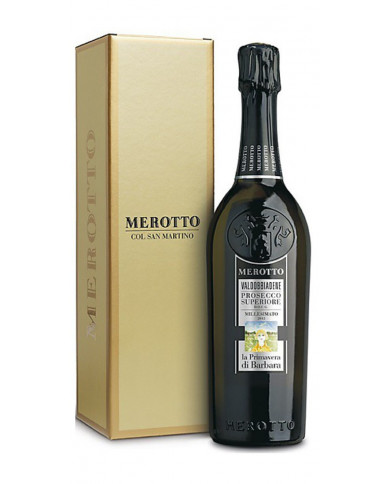
The grapes for this appreciated sparkling wine are harvested in a small and selected vineyard in Col San Martino.
€49.29
€51.24
€37.82
SKU:
14329
Brand:
Merotto
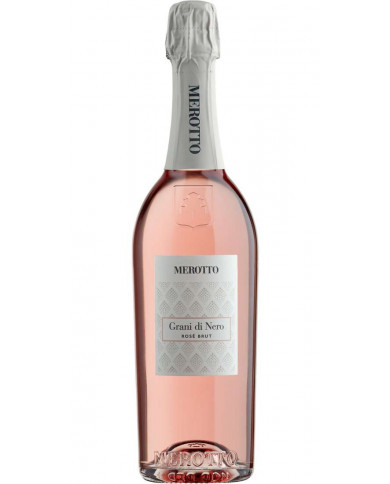
The temptation of fresh and elegant, intense and immediate rosé is always irresistible.
€37.58
SKU:
14328
Brand:
Merotto
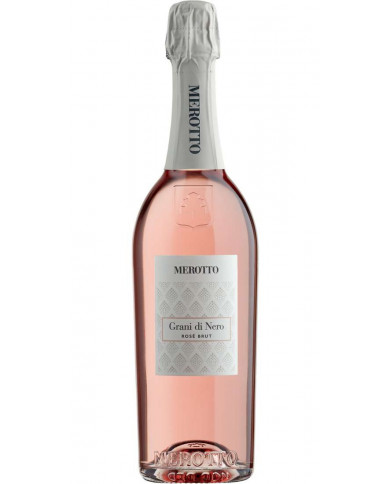
The temptation of fresh and elegant, intense and immediate rosé is always irresistible.
€71.86
SKU:
14323
Brand:
Ornellaia
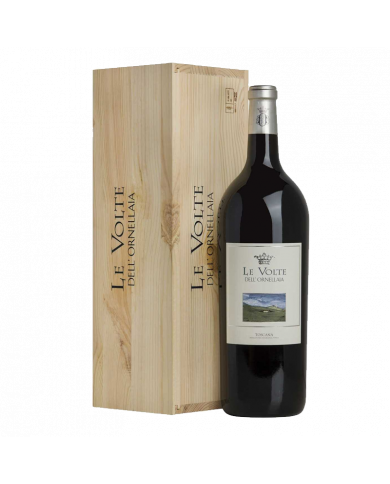
Intense ruby red to the eye. It offers hints of black cherry, blackberry and ripe dark pulp fruit on the nose, enriched with mineral and spicy tones. In tasting the tannins are still very gritty, and communicate that they are ready to support the wine at least until the next decade. Excellent persistence and fruity closure. It goes perfectly with land cuisine, and with second courses in particular. Try it with stuffed honey duck.
SKU:
14322
Brand:
Cantina Marchesi Antinori
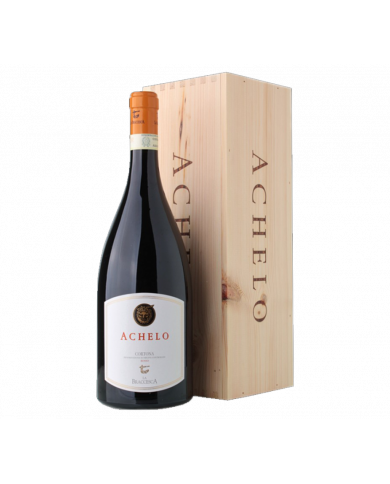
Cortona Syrah Achelo La Braccesca dei Marchesi Antinori was born in the homonymous estate, located on the Sienese hills. It is produced exclusively with Syrah grapes, harvested in mid-September. Fermentation takes place in stainless steel tanks at a controlled temperature of 28 ° C for 10 days. Subsequently the wine partially ages in barriques and steel tanks for about 7 months, before being bottled.
€36.90
SKU:
14321
Brand:
Cantina Marchesi Antinori
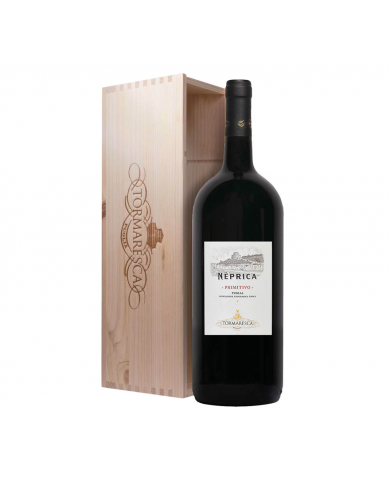
Primitivo Neprica by Tormaresca Antinori is a puliese red wine from the province of Brindisi, aged in steel for about 8 months to maintain a fragrant and fruity sensorial profile. It has an intense ruby red color, furrowed by purple reflections, and releases notes of black cherries, small fresh and candied red fruits and licorice aromas to the nose, revealing a soft, round sip with evolved tannins, awakened by a balanced freshness .
€29.90
SKU:
14320
Brand:
Codice Citra
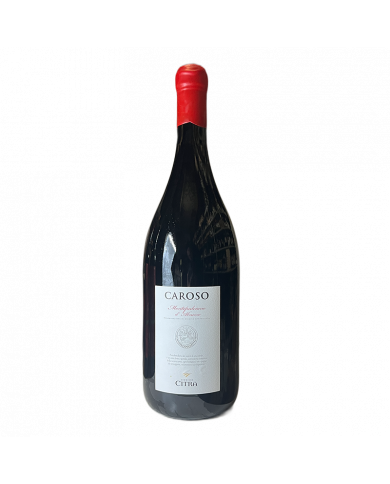
Aging in large barrels and barriques. Elegant flavor, with a rich tannic texture.
€146.89
€67.47
SKU:
14297
Brand:
Marcalberto
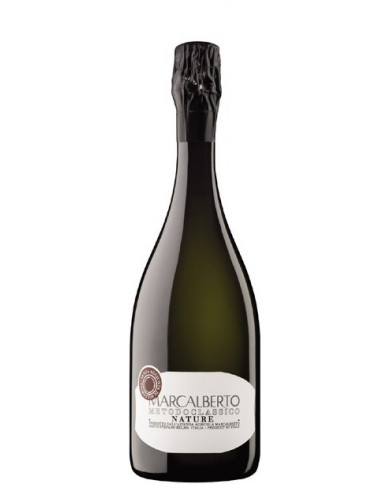
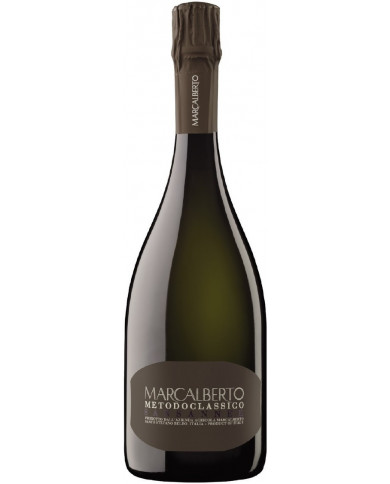
Sansannée, a word that derives from the French and which reminds us that this sparkling wine does not come from a single vintage, but from the mélange of several vintages. Therefore a multi-millesimato Classic Method, conceived through a variable blend of Pinot Noir and Chardonnay which aims, as an essential prerogative, to demonstrate our qualitative constancy through an entry wine that symbolically contains all the stylistic characteristics of our work.
€62.10
SKU:
14289
Brand:
Castelsimoni
Terre dell'Aquila PGI Pinot Noir Aged 1 year in large oak barrels and at least 21 months in the bottle
€68.15
SKU:
14247
Brand:
Azienda Agricola Gorgo
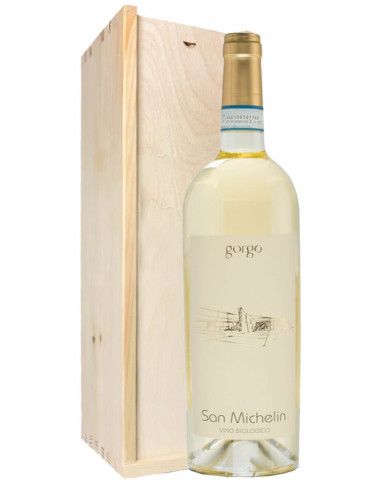
The San Michelin vineyard wants to interpret and represent the Custoza wine even more vigorously and elegantly.
It then undergoes a very long refinement for 6 months in barrels and for 24 months in bottles before being served.
Fresh, fruity and slightly aromatic. Custoza is a dry white wine with bright yellow colors and a complex blend of Garganera, Trebiano, Cortese and Riesling.
Aromas of flowers and white pulp fruits, with dry and harmonious flavours. It lends itself deliciously as an aperitif or paired with fish-based dishes.
€42.09
€89.90
€30.26
SKU:
14182
Brand:
Tenuta San Guido
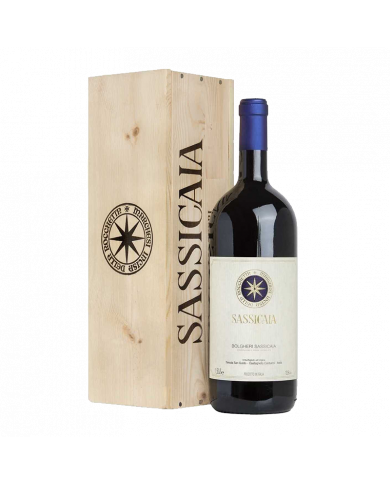
Sassicaia Tenuta San Guido is one of those mythical wines that all fans should drink at least once in their life! Its fame precedes it but with good reason because the most famous Bordeaux blend in Italy, obtained from Cabernet Sauvignon for the greater part and a small percentage of Cabernet Franc , always manages to meet expectations. Daughter of the Marquis Mario Incisa della Rocchetta and the unforgettable Giacomo Tachis , today the bottle with the unmistakable star on the label, represents an icon of Made in Italy that, year after year, adds value to its fame.
€900.00
SKU:
14168
Brand:
Buccia Nera
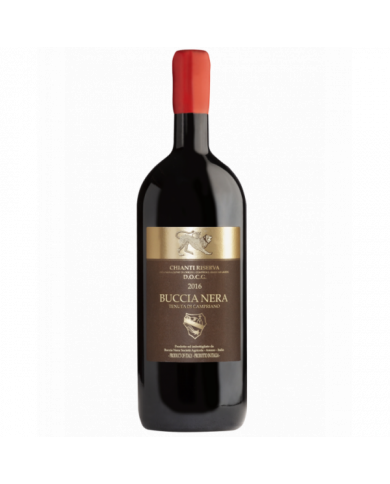
It is not surprising to discover that this Chianti Riserva DOCG Tenuta di Campriano produced from Buccia Nera has been awarded several times by international wine critics. After all, it is clear that it is a great product from the first taste. It could be defined as pure Sangiovese, given that in the blending this grape weighs for about 85%. But in this case, to add nobility to the blend, a part of Merlot and one part of Cabernet Sauvignon are added, improving vines par excellence. The vinification of the grapes takes place in three different moments, always in steel at a controlled temperature. Spontaneous alcoholic and malolactic fermentation and 2-year aging in 30-hectolitre oak barrels followed by a further year in the bottle. The result is a complex and structured red. The color is impenetrable, ruby red with garnet reflections. The nose opens with notes of cherry in alcohol and blackberry, to then offer spicy sensations of chocolate, licorice and tobacco. In the mouth it is full, voluminous, soft at the entrance, with nice ripe tannins that leave the mouth dry and clean.
€77.99
SKU:
14146
Brand:
Banfi
Deep red, tending to garnet. Rich and complex bouquet, with sweet notes of plum, ripe cherry and small fruits that blend well with balsamic and tobacco notes. In the mouth you can immediately notice the great structure, full and soft, characterized by powerful tannins that give dimension while remaining gentle on the palate. A wine that lends itself to a very long aging. Throughout the meal, it is an ideal accompaniment to red meats, savory game and aged cheeses.
SKU:
14145
Brand:
Banfi
Deep red, tending to garnet. Rich and complex bouquet, with sweet notes of plum, ripe cherry and small fruits that blend well with balsamic and tobacco notes. In the mouth you can immediately notice the great structure, full and soft, characterized by powerful tannins that give dimension while remaining gentle on the palate. A wine that lends itself to a very long aging. Throughout the meal, it is an ideal accompaniment to red meats, savory game and aged cheeses.
SKU:
14121
Brand:
Gianfranco Bovio
The Barolo Gattera by Gianfranco Bovio vintage 2016 is a wine with a very intense ruby red color with orange reflections. The nose opens immediately a little closed to then feel the spicy and ripe fruit notes slowly emerge. On the palate it is soft, with an olfactory return.
€45.87
SKU:
14104
Brand:
Bosio
Curtefranca Rosso Zenighe di Bosio has an intense red color to the eye. On the nose there are hints of red fruits, spices and leather.
€55.02
SKU:
14099
Brand:
Bosio
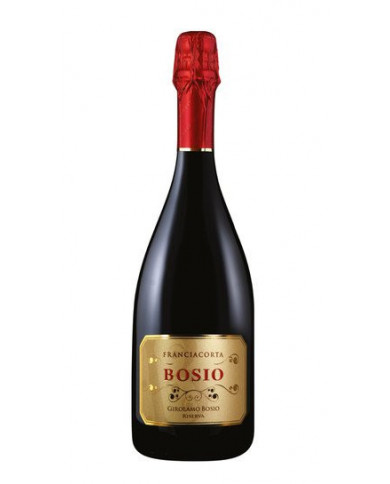
Franciacorta Riserva "Girolamo Bosio" is a dry, intense and structured sparkling wine, aged on the lees in the bottle for 60 months. It is a founder's reserve with an exuberant bouquet of yellow fruit, citrus and flint and a rich and creamy sip, of great elegance!
€118.95
SKU:
14097
Brand:
Bosio
Non-vintage Brut made from 2 vintages, sugar dosage reduced to just 4 g/lt to safeguard the character of the wine and the area of origin.
€137.86
SKU:
14096
Brand:
Bosio
Non-vintage Brut made from 2 vintages, sugar dosage reduced to just 4 g/lt to safeguard the character of the wine and the area of origin.
€56.36
SKU:
14094
Brand:
Bosio
Franciacorta Rosé Bosio Millesimato pink in colour, it has a fine and persistent perlage, a typical bouquet of berries and citrus fruits; on the palate it is rich, mineral, fresh and complex.
€67.34
SKU:
14089
Brand:
Bosio
Cuvée Extra Brut equal to Pinot Noir which gives structure, body and important aromas, and Chardonnay which gives finesse and elegance. The grapes come from a 3-hectare vineyard, equally divided between chardonnay and pinot noir, which is located on a morainic hill, particularly valuable for soil and exposure. Aging on the lees for no less than 30 months.
€147.50
SKU:
14088
Brand:
Bosio
Cuvée Extra Brut equal to Pinot Noir which gives structure, body and important aromas, and Chardonnay which gives finesse and elegance. The grapes come from a 3-hectare vineyard, equally divided between chardonnay and pinot noir, which is located on a morainic hill, particularly valuable for soil and exposure. Aging on the lees for no less than 30 months.
€73.81
SKU:
14087
Brand:
Bosio
The Saten grapes are subjected to a soft pressing in order to obtain the separation of only the flower must which ferments in thermo-controlled stainless steel tanks, at a temperature of 15°C. Part of the sparkling base obtained matures for 6-7 months in steel tanks, about 20% is aged in French oak barriques and then assembled for the cuvée.
€59.54
SKU:
14063
Brand:
Cantina Marchesi Antinori
Historic Antinori house wine which, since the 2011 vintage, is produced with grapes from the Tignanello estate. It is composed almost entirely of Sangiovese grapes combined with a small amount of other complementary varieties. A wine that presents itself as the full expression of the quality and elegance of the Sangiovese of these areas.
€21.90
SKU:
14047
Brand:
Campi Valerio
AE is a tribute to the city of Isernia. Ruby red color with violet reflections. the nose is complex and persistent with hints reminiscent of balsamic herbs and ripe red berries. Full-bodied, rightly tannic.
€90.10
SKU:
14043
Brand:
Giuseppe Attanasio
White wine with a golden yellow color with hints of honey and acacia.
€137.74
SKU:
14042
Brand:
Giuseppe Attanasio
Vermentino di Sardegna Camminera Audarya: “Sa Camminera” is the walkway that runs along the vineyards. For some, certainly for us, it is the gateway to a magical world. Our Vermentino di Sardegna is also called Camminera, obtained from selected grapes from our best vineyards, selected for the characteristics and exposure of the soil.
€68.93
SKU:
14026
Brand:
Quintarelli
Alzero is an IGT appellation wine produced in Veneto by the renowned Giuseppe Quintarelli farm. The Alzero IGP Veneto red wine is one of the best red wines in Italy and in the world, a Venetian masterpiece that comes from Cabernet Franc, Cabernet Sauvignon and Merlot grapes .
€840.58
SKU:
14021
Brand:
Scrimaglio
Limited production commemorative fiat racing team. A gift idea: wines with automotive design!
SKU:
14002
Brand:
Pieropan
Amarone is the symbolic wine of Valpolicella and represents an exciting challenge for the Pieropan Company. This wine comes from the family's desire to compete with the unique territory of Valpolicella, in Cellore di Illasi. Amarone fulfills the dream of an important, rich and structured wine, but also elegant and fine, a distinctive element of the wines of the Pieropan company.
€98.97
SKU:
13980
Brand:
Agriverde
Straw yellow, bright, brilliant. The nose is expressed with clotted hints of white peach, beeswax and broom, the very subtle notes of dill and lavender fully express the typical character of the Pecorino variety. On the palate it is refreshing, savory and balanced. Food matches: Excellent as an aperitif, seafood dishes, baked pastries.
€17.76
SKU:
13979
Brand:
Casal Thaulero
Grape variety / Montepulciano. Production area / Abruzzo. Color / Intense red. Bouquet / Ethereal and complex, with hints of black cherry and berries.
€49.74
SKU:
13978
Brand:
Valle Reale
Montepulciano d'Abruzzo DOC Vigna del Convento di Capestrano 2015 Very hot and long vintage, excellent for Montepulciano. July and August were very hot months with little rainfall. Perfect phenolic maturity has been reached in this vineyard which has allowed us to produce this wine for the second time in twenty years.
€162.50
SKU:
13963
Brand:
Agricosimo
First vinification of the cellar, first passage barrique, first selection of the best grapes. The label takes up the one, written in hand block letters, of the first test bottles.
€65.79
SKU:
13955
Brand:
Jermann
Brilliant straw yellow with greenish reflections. The nose reveals an intense, fruity, slightly aromatic aroma. Notes of banana and golden apple open to a fresh and balanced taste, naturally rich and with excellent persistence. Also as an aperitif, it goes well with sauced fish, shellfish and vegetable creams.
€54.18
SKU:
13950
Brand:
Il Palagio
Il Palagio is located above the picturesque Tuscan town of Figline Valdarno. For the last two decades it has been the summer home of Sting and Trudie's growing family and the site of many of their intimate parties, private concerts and anniversaries. The villa, its guest houses, vineyards and olive groves have been lovingly restored by Sting and Trudie and is now a fully functioning, living organic farm and vineyard.
€38.94
SKU:
13944
Brand:
Agricole Vallone
Graticciaia Agricole Vallone 2016 Magnum 1,5 lt. in wooden case: it is an Apulian red wine born from Negroamaro grapes only and aged for 26 months in steel and 12 in barrique. It manifests itself to the eye with a bright garnet red color. The scent is rich, intense and very complex with notes of blackberries, plums, dried flowers, humus and sweet spices. In the mouth it is intense, round and austere, with rich aromas, notes of licorice and vigorous tannins. PAIRINGS: red meats, game, aged cheeses. SERVING TEMPERATURE: 18-20° C.
SKU:
13906
Brand:
Emidio Pepe
Deep ruby red. It develops hints of ripe red fruit on the nose, with a vinous and herbaceous touch. In the mouth, great mineral momentum, good tannic structure and full body. It spreads out with balance and boldness on fruity vibes. Persistent and harmonious. Deep and elegant, Emidio Pepe 's Montepulciano d'Abruzzo is a wine that goes well with main courses of meat, especially lamb-based. Excellent with the very traditional kebabs.
SKU:
13892
Brand:
Emidio Pepe
Emidio Pepe 's Trebbiano d'Abruzzo is a white of remarkable expressiveness and charisma. On the nose there are floral notes, slightly almondy and delicate white fruit. Of beautiful minerality on the palate, refreshing and decisive. Its development over the years is noteworthy.
SKU:
13891
Brand:
Emidio Pepe
Emidio Pepe 's Trebbiano d'Abruzzo is a white of remarkable expressiveness and charisma. On the nose there are floral notes, slightly almondy and delicate white fruit. Of beautiful minerality on the palate, refreshing and decisive. Its development over the years is noteworthy.
SKU:
13880
Brand:
Piandimare
Red berried grapes of the territory, harvested and pressed immediately without maceration. Vinified at low temperature. After vinification, the wine ages for 6 months in steel in order to harmonize and enhance its varietal aroma characterized by aromas of pink petal flowers, banana, pineapple, pear, wild strawberry and wild cherry. Pale pink color, on the palate it is fresh, elegant and with a pleasant finish. The pleasant salty note gives a lean and refreshing drink. Unmissable during summer aperitifs based on local butchery, it is a wine that calls one bottle after another and invites to a convivial sharing. Perfect as an aperitif, it goes well with raw seafood dishes and fried Adriatic paranza
€15.71
Large format wines are a popular choice for special occasions and among wine collectors. They come in a variety of sizes and offer a variety of advantages over standard bottles. In this article, we'll explore everything you need to know about large format wines, from their benefits to storage and purchasing.
The advantages of large format wines
Large format wines offer numerous advantages over standard bottles. First, most wines in large formats age better than standard bottles. This is because the amount of oxygen entering the bottle is lower than in standard bottles. Furthermore, the larger capacity of wine in a single container means that temperature fluctuations are less significant, reducing the risk of damage to the wine.
Secondly, large format wines are an ideal choice for special occasions. A large bottle quickly becomes the center of attention and impresses guests. Furthermore, a single large bottle is much easier to manage than many smaller ones. For example, if you're hosting a dinner for a large group, you can use several large bottles to facilitate service.
Large format wine sizes
Large format wines are available in different sizes, each with a specific name:
Magnum : 1.5 litres, equal to two standard bottles
Jeroboam : 3 liters, equal to four standard bottles
Rehoboam : 4.5 liters, equal to six standard bottles
Methuselah : 6 liters, equal to eight standard bottles
Salmanazar : 9 liters, equal to twelve standard bottles
Balthazar : 12 liters, equal to sixteen standard bottles
Nebuchadnezzar : 15 litres, equal to twenty standard bottles
Storage of large format wines
Storing large-format wines is an important aspect to consider. Because these bottles are larger than standard bottles, storage can be more complicated. Most cellars don't have shelves or space suitable for large bottles, so planning ahead is essential.
Additionally, large bottles may take longer to adjust to the ambient temperature in which they are stored. To avoid temperature fluctuations, it's important to store large bottles in a cool, dry place.
Purchase of large format wines
Buying large format wines can be an excellent choice for wine collectors and for special occasions. However, it's important to pay attention to the bottles' origin. Large bottles can be more susceptible to counterfeiting than standard bottles, so it's important to buy from reputable and trustworthy sellers.
What are large format wines?
Large format wine bottles are larger than the standard 750ml bottle. There are numerous larger wine bottle sizes, including the Magnum (1.5 liters), the Double Magnum (3 liters), the Jeroboam (4.5 liters), the Rehoboam (4.5 liters), the Methuselah (6 liters), the Salmanazar (9 liters), the Balthazar (12 liters), and the Nebuchadnezzar (15 liters).
Why choose large-format wines?
There are many reasons to choose a larger bottle of wine over the traditional 750 ml bottles. First, wine in larger formats is more stable than standard bottles, thanks to the greater volume of wine in the bottle and the smaller amount of air coming into contact with the wine.
Secondly, wines in large formats develop more slowly, meaning they can be stored for a longer period without undergoing any alteration. Furthermore, these wines have greater harmony and balance than standard bottles, thanks to the greater contact surface between the wine and the cork.
Finally, wines in large formats are ideal for special occasions, such as weddings, anniversaries, birthdays, or corporate events, because they have a greater visual impact and can satisfy the palates of a greater number of people.
How to choose a large format wine?
Choosing a large-format wine depends on the type of wine and your personal needs. Generally, the wines best suited to larger formats are those that require a longer aging period, such as structured red wines, complex white wines, or sweet dessert wines.
Furthermore, it's important to choose a high-quality wine, because the larger the quantity of wine in the bottle, the greater the chance of defects appearing. It's therefore important to purchase wines in large formats from reputable retailers who offer guarantees regarding the wine's quality and shelf life.
Finally, it's important to consider the number of people attending the event to choose the right bottle size. For example, a Magnum bottle (1.5 liters) is enough for about 10 people, while a Balthazar bottle (12 liters) can satisfy up to 100 people.
In conclusion, large format wines are an excellent choice for special occasions and for wine collectors, thanks to their greater stability, their ability to evolve more slowly, and their ability to please the palates of a larger number of people.