

 Italiano
 Deutsch






























There are no more items in your cart
SKU:
16096
Brand:
Tenuta Valdipiatta
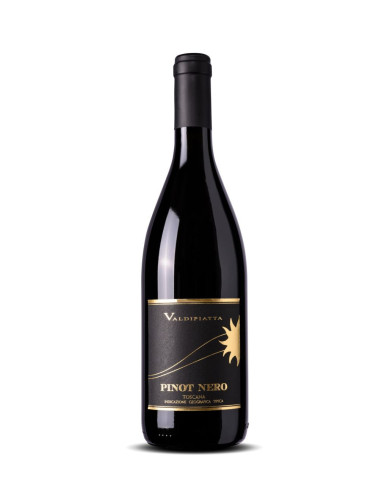
Pinot Noir Valdipiatta is an expression of our desire to combine the passion for this noble vine with the curiosity to touch first-hand what surprises our terroir can reserve. Two thousand vines trained with spurred cordon to which we dedicate a double harvest and a totally manual vinification. It is a wine that expresses all the craftsmanship of our work and our ever-living enthusiasm for experimentation.
€22.20
SKU:
16094
Brand:
Tenuta Valdipiatta
Vino Nobile is the result of a careful selection of the best Sangiovese and Canaiolo Nero grapes from the various company vineyards which are harvested and vinified separately each year and then expertly blended so as to best express all the elegance, complexity and finesse of the Montepulciano terroir.
€33.16
SKU:
16093
Brand:
Tenuta Valdipiatta
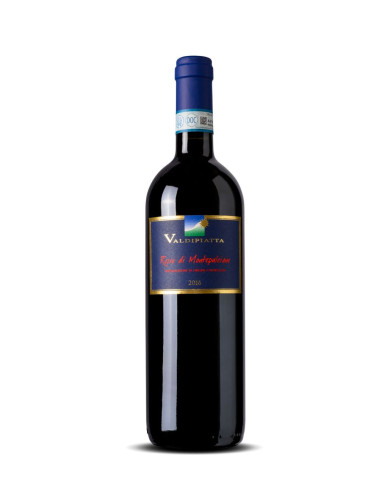
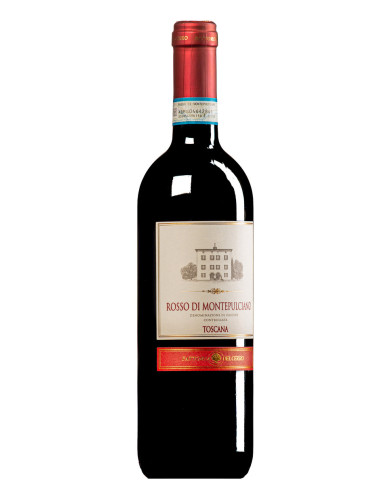
Rich in aromas and soft on the palate, Rosso di Montepulciano is an everyday wine that does not require special occasions to be uncorked and appreciated. We suggest enjoying it as a pleasant aperitif or in combination with simple or medium-complex savory dishes.
€13.32
SKU:
16065
Brand:
Tamburini
Denomination: THE BOSS Chianti Docg Grapes: Sangiovese and Canaiolo. Suggested pairings: Cold cuts and cured meats, roast chicken, vegetable soups and semi-mature cheese. Alcohol: 13.5% Vol. Format: 0.75 litres. Serving temperature: 18°C. Typology: Chianti DOCG.
€14.01
SKU:
15973
Brand:
Terenzi
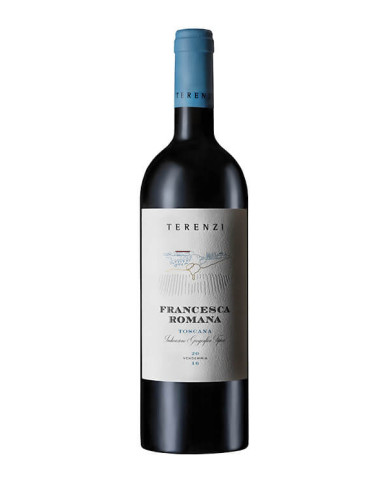
A unique interpretation in Tuscany of the international Cabernet Franc, Cabernet Sauvignon and Merlot vines, characterized by a rare freshness and elegance. Very drinkable.
€34.16
SKU:
15972
Brand:
Terenzi
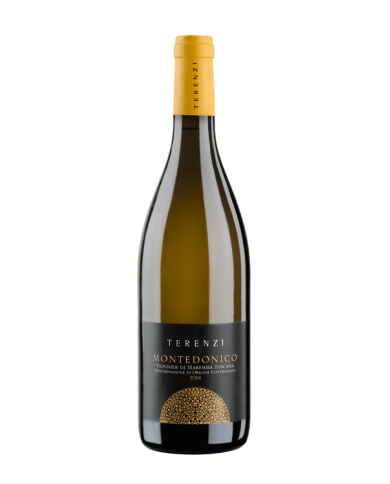
A viognier vinified only in steel, with an unusual freshness and minerality that make our interpretation of this noble vine and our territory unique.
€18.08
SKU:
15971
Brand:
Terenzi
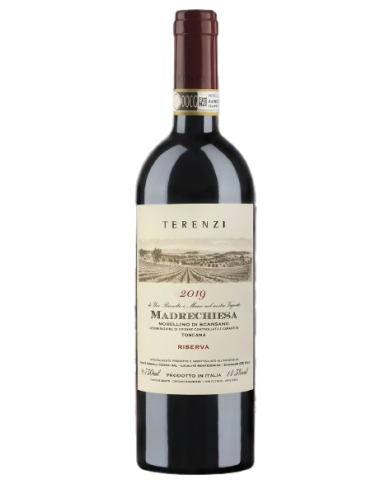
Madrechiesa Is The Wine Symbol Of The Enological History Of Casa Terenzi, A Tuscan Winery Created By A Family Who Had The Privilege Of Choosing To Belong To The Wonderful Land Of Maremma. Madrechiesa Represents The Selection Of A Single Vineyard, The Maximum Expression Of The Sangiovese Grape. In This Wine You Can Find The Essence Of The Tuscan Territory's Vocation For Great Red Wines, Together With The Entrepreneurial Spirit Of The Balbino Brothers, Federico And Francesca Romana Terenzi.
€32.21
SKU:
15970
Brand:
Terenzi
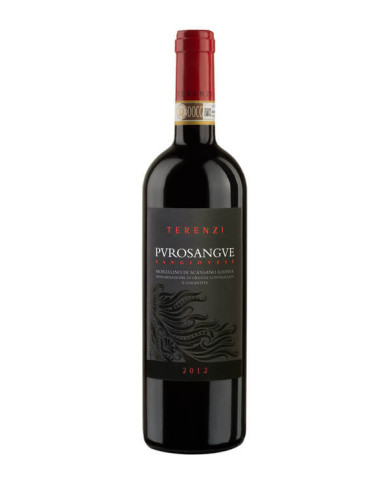
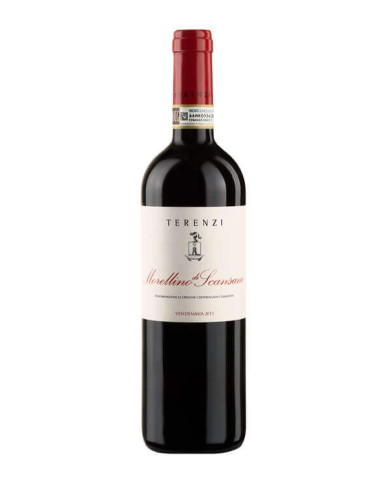
The unique expression of Morellino from 100% Sangiovese grapes, as the name of this wine recalls, which also recalls the tradition that sees the name Morellino derive from the Maremma horses "Morelli", for a thoroughbred Sangiovese, juicy and elegant.
€18.79
SKU:
15969
Brand:
Terenzi
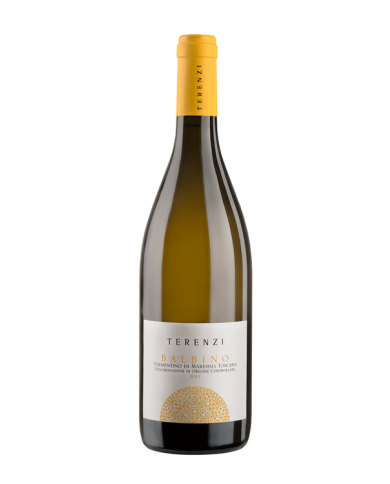
A Vermentino with unique characteristics of typicality and elegance, characterized by a marked sapidity.
€14.27
SKU:
15968
Brand:
Terenzi
Our first wine, a classic Morellino that impresses with its unique freshness, drinkability and elegance that have made it a great classic over time.
€14.52
SKU:
15955
Brand:
Tenuta di Lilliano
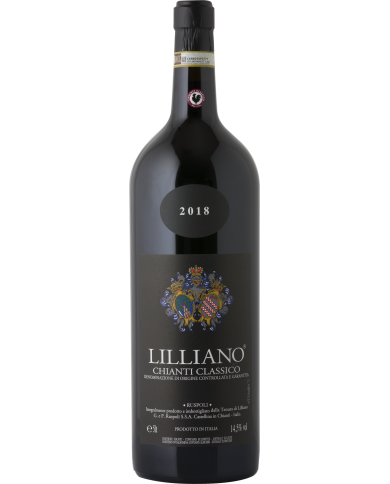
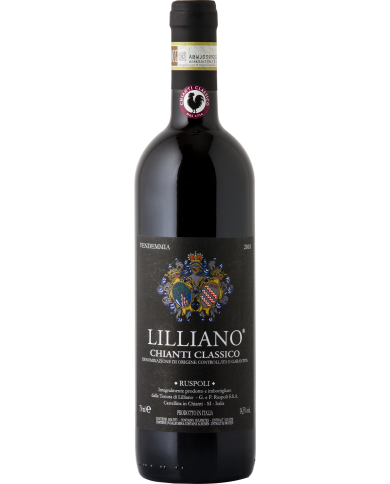
The grapes that give rise to Chianti Classico derive entirely from the vineyards of the Tenuta di Lilliano and are harvested by hand during the harvest. The alcoholic fermentation takes place in cement tanks with temperature control, and at the end of the malolactic fermentation the wine ages partly in large French oak barrels and partly in cement. At the end of the refinement, which lasts 12-14 months, the wine is bottled and subjected to a short refinement in the bottle before consumption.
€34.65
SKU:
15954
Brand:
Tenuta di Lilliano
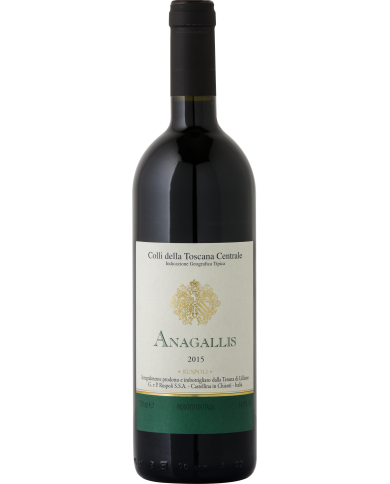
The grapes that give rise to Anagallis come from the best vineyards of the Lilliano Estate, carefully selected by hand during the harvest. The alcoholic fermentation takes place in small steel tanks with temperature control, and at the end of the malolactic fermentation the wine ages in French oak barriques for about 14 months.
At the end of this period, at least 10 months of aging in the bottle follow.
€32.09
SKU:
15953
Brand:
Tenuta di Lilliano
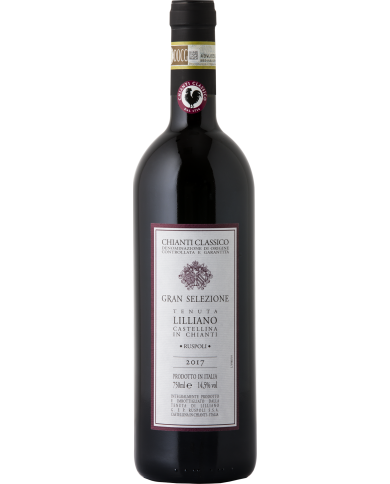
The grapes that give rise to the Gran Selezione come from two of the best vineyards of the Tenuta di Lilliano (Piagge and Casina), carefully selected by hand during the harvest. The alcoholic fermentation takes place in small steel tanks with temperature control, and at the end of the malolactic fermentation the wine ages in large French oak barrels for 14-15 months. At the end of this period, at least 6 months of aging in the bottle follow.
€32.82
SKU:
15950
Brand:
Tenuta di Lilliano
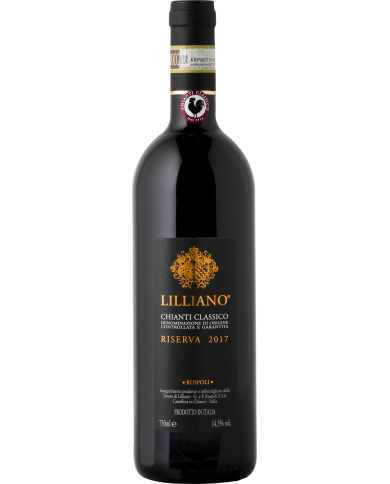
The grapes that give rise to the Riserva come from the best vineyards of the Lilliano Estate, carefully selected by hand during the harvest. The alcoholic fermentation takes place in small steel and cement tanks with temperature control, and at the end of the malolactic fermentation the wine ages in French oak tonneaux for 15 months. At the end of this period, at least 6 months of aging in the bottle follow.
€29.40
SKU:
15949
Brand:
Tenuta di Lilliano
The grapes that give rise to Chianti Classico derive entirely from the vineyards of the Tenuta di Lilliano and are harvested by hand during the harvest. The alcoholic fermentation takes place in cement tanks with temperature control, and at the end of the malolactic fermentation the wine ages partly in large French oak barrels and partly in cement. At the end of the refinement, which lasts 12-14 months, the wine is bottled and subjected to a short refinement in the bottle before consumption.
€16.91
SKU:
15936
Brand:
Tenuta La Chiusa
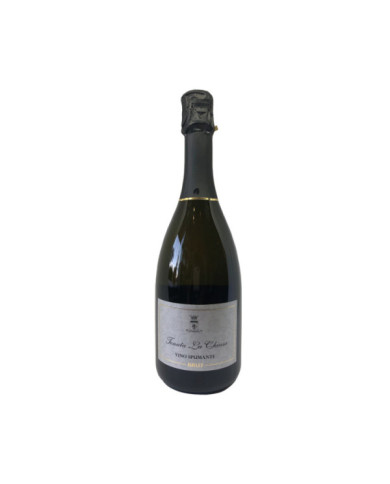
Tenuta La Chiusa's Brut sparkling wine is made only from Vermentino grapes, harvested in advance of those destined for still wine. The harvest at the end of August is followed by a soft pressing of the grapes and finally a slow fermentation at a controlled temperature. The sparkling process takes place with the Charmat method.
€21.01
SKU:
15935
Brand:
Tenuta La Chiusa
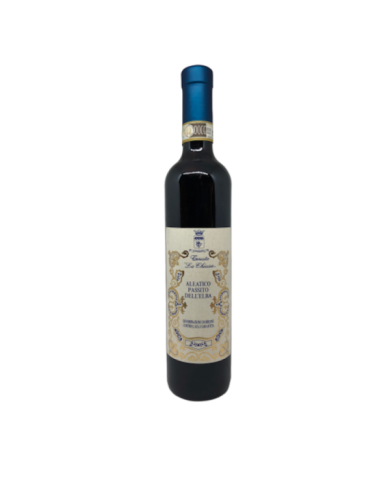
The Aleatico Passito dell'Elba docg 2021 is a natural passito obtained from the aromatic Aleatico vine, native to the island of Elba. After the harvest which generally takes place during the first half of September, the grapes are dried on special racks in the open air for a period of about 10-15 days. Vinified in steel containers at a controlled temperature. Maceration on the skins for about 7 days.
€36.42
SKU:
15934
Brand:
Tenuta La Chiusa
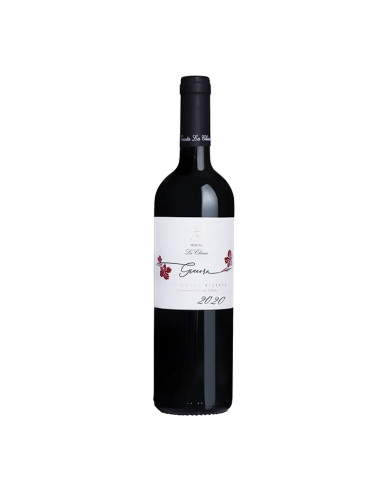
Ginevra Elba Rosso Doc 2018 is obtained from Sangiovese (60%) and Merlot (40%) grapes born on clayey-ferrous soils on a flat position. The harvest is early for the Merlot while it generally takes place around mid-September for the Sangiovese.
Vinified in steel, with maceration for about 7 days; aged in French oak barriques for 12 months and refined in the bottle for another 12 months.
€29.41
SKU:
15933
Brand:
Tenuta La Chiusa
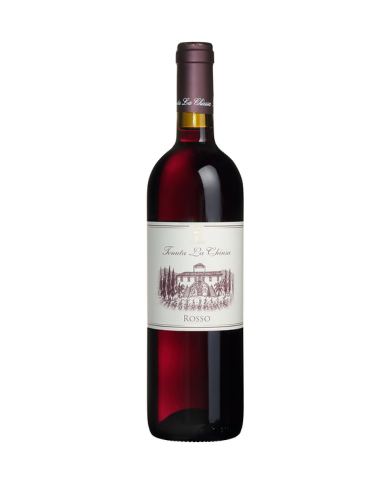
Elba Rosso is a red wine produced in Portoferraio on the Island of Elba, with 70% Sangiovese and 30% Merlot grapes, the vines are grown on flat, clayey and iron-rich soil. The Merlot is harvested early, otherwise the Sangiovese is done in mid-September; the vinification takes place in stainless steel tanks at a controlled temperature with maceration for 7 days and the passage in oak barriques for a short period. A wine with an intense ruby red color with garnet reflections. The first hints that stand out on the nose are those typical of spices and leather of Sangiovese, the secondary notes are of ripe red fruit, violet and aromatic herbs. In the mouth the taste is full and enveloping, with balanced tannins and freshness, characteristics of a young wine with the right savory note, typical of the island's wines. It goes perfectly with soups, roasted or grilled meats, chicken cacciatore and medium-aged cheeses.
€20.98
SKU:
15931
Brand:
Tenuta La Chiusa
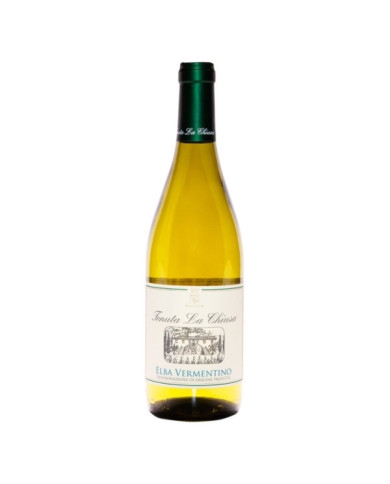
Vermentino Elba Doc 2022 comes from vines on clayey-ferrous soils in a flat area. Harvested in early September. It is vinified in white, in steel containers, with temperature control during fermentation. Continuous batonage during the winter to enrich the wine with the aromas of the fine lees on which it is left to rest. Bottled in the spring following the harvest, it has a straw yellow colour. On the nose the typical floral aromas of acacia, pineapple and marked notes of aromatic herbs. On the palate it is dry, fresh, sapid and with good persistence. Ideal alone as an aperitif, or in combination with appetizers, fish risottos and soft cheeses.
€20.25
SKU:
15930
Brand:
Tenuta La Chiusa
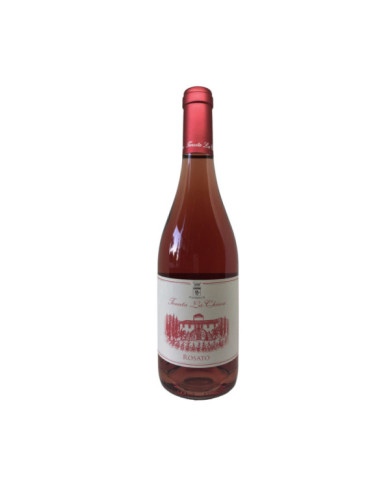
Rosato Elba Doc 2022 is obtained from Sangiovese and Merlot grapes grown on the clayey-ferrous soils of the company. The contact of the must with the skins takes place for at least 12 hours. This is followed by a soft pressing and slow fermentation at a controlled temperature. The result is a cherry-pink colored wine with garnet reflections. The bouquet has hints of English candy, wild strawberries and raspberry. Balanced, fresh, with good persistence with a slight tannic finish. It is the ideal wine for cold cuts, roast meats and grilled pork, but also in summer with panzanella, salads and savory pies.
€19.52
SKU:
15910
Brand:
Tiezzi
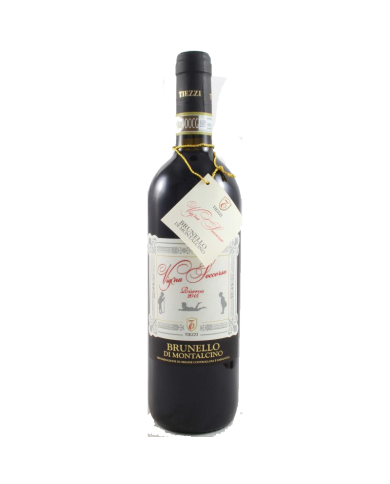
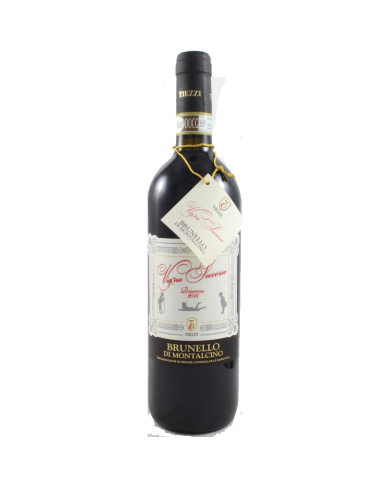
Wine obtained from Sangiovese grapes, exclusively from the vineyards of the "Soccorso" farm unit near the church of the Madonna del Soccorso, patroness of the inhabitants of Montalcino.
€110.12
SKU:
15909
Brand:
Tiezzi
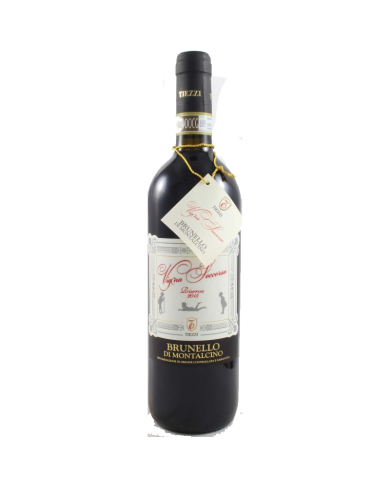
Wine obtained from Sangiovese grapes, exclusively from the vineyards of the "Soccorso" farm unit near the church of the Madonna del Soccorso, patroness of the inhabitants of Montalcino.
€110.12
SKU:
15908
Brand:
Tiezzi
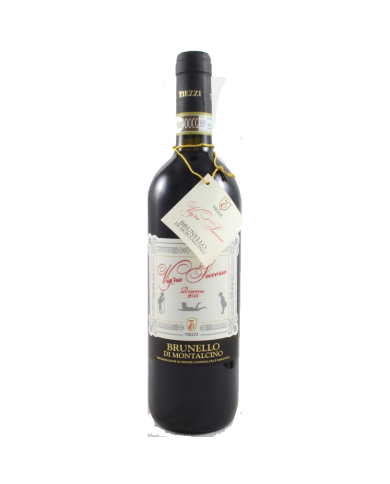
Wine obtained from Sangiovese grapes, exclusively from the vineyards of the "Soccorso" farm unit near the church of the Madonna del Soccorso, patroness of the inhabitants of Montalcino.
SKU:
15907
Brand:
Tiezzi
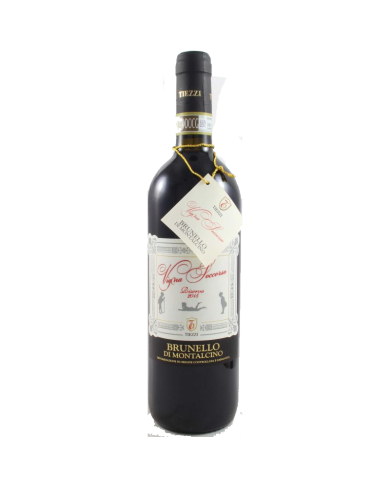
Wine obtained from Sangiovese grapes, exclusively from the vineyards of the "Soccorso" farm unit near the church of the Madonna del Soccorso, patroness of the inhabitants of Montalcino.
€110.12
SKU:
15906
Brand:
Tiezzi
Wine obtained from Sangiovese grapes, exclusively from the vineyards of the "Soccorso" farm unit near the church of the Madonna del Soccorso, patroness of the inhabitants of Montalcino.
SKU:
15905
Brand:
Tiezzi
Wine obtained from Sangiovese grapes, exclusively from the vineyards of the "Soccorso" farm unit near the church of the Madonna del Soccorso, patroness of the inhabitants of Montalcino.
SKU:
15904
Brand:
Tiezzi
Wine obtained from Sangiovese grapes, exclusively from the vineyards of the "Soccorso" farm unit near the church of the Madonna del Soccorso, patroness of the inhabitants of Montalcino.
€56.93
SKU:
15903
Brand:
Tiezzi
Wine obtained from Sangiovese grapes, exclusively from the vineyards of the "Soccorso" farm unit near the church of the Madonna del Soccorso, patroness of the inhabitants of Montalcino.
€52.34
SKU:
15902
Brand:
Tiezzi
Wine obtained from Sangiovese grapes, exclusively from the vineyards of the "Soccorso" farm unit near the church of the Madonna del Soccorso, patroness of the inhabitants of Montalcino.
€54.07
SKU:
15901
Brand:
Tiezzi
The Rosso di Montalcino wine undergoes the same treatments as the Brunello di Montalcino wine. As the main difference, it is released for consumption after a year of aging in barrels; does not undergo physical / chemical treatments. - It can be consumed throughout the meal, combined with first courses and meat-based dishes, or in any case with more delicate foods.
€18.42
SKU:
15900
Brand:
Tiezzi
€13.42
€12.08
The color of this wine is a bright peach; the nose is delicate and elegant with notes of light pulp fruit, pomegranate and white flowers. Soft, enveloping mouth, moderated by an excellent freshness and a subtle sapidity. It is an excellent product for the whole meal and an elegant companion for a perfect aperitif.
€13.42
€12.08
SKU:
15899
Brand:
Tiezzi
Wine obtained from Sangiovese grapes, exclusively from the vineyards of the "Soccorso" farm unit near the church of the Madonna del Soccorso, patroness of the inhabitants of Montalcino.
€53.31
SKU:
15898
Brand:
Tiezzi
Wine obtained from Sangiovese grapes, exclusively from the vineyards of the "Soccorso" farm unit near the church of the Madonna del Soccorso, patroness of the inhabitants of Montalcino.
SKU:
15897
Brand:
Tiezzi
Wine obtained from Sangiovese grapes, exclusively from the vineyards of the "Soccorso" farm unit near the church of the Madonna del Soccorso, patroness of the inhabitants of Montalcino.
€69.00
SKU:
15896
Brand:
Tiezzi
Wine obtained from Sangiovese grapes, exclusively from the vineyards of the "Soccorso" farm unit near the church of the Madonna del Soccorso, patroness of the inhabitants of Montalcino.
€79.00
SKU:
15895
Brand:
Tiezzi
Wine obtained from Sangiovese grapes, exclusively from the vineyards of the "Soccorso" farm unit near the church of the Madonna del Soccorso, patroness of the inhabitants of Montalcino.
SKU:
15894
Brand:
Tiezzi
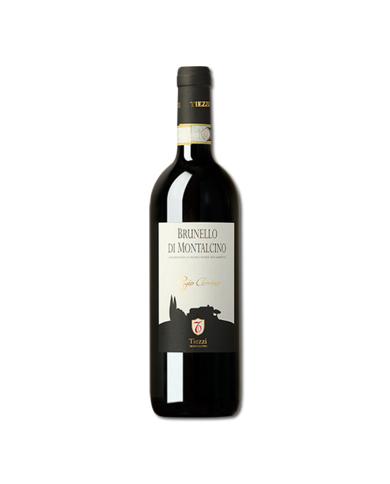
The Brunello di Montalcino wine is produced with traditional methods; naturally stabilized; upon bottling it is not filtered
€42.36
SKU:
15893
Brand:
Tiezzi
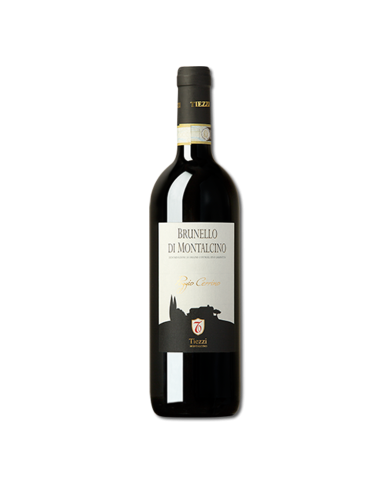
The Brunello di Montalcino wine is produced with traditional methods; naturally stabilized; upon bottling it is not filtered
€42.36
SKU:
15892
Brand:
Tiezzi
€105.16
The Brunello di Montalcino wine is produced with traditional methods; naturally stabilized; upon bottling it is not filtered
SKU:
15891
Brand:
Tiezzi
The Brunello di Montalcino wine is produced with traditional methods; naturally stabilized; upon bottling it is not filtered
€39.08
SKU:
15890
Brand:
Tiezzi
The Brunello di Montalcino wine is produced with traditional methods; naturally stabilized; upon bottling it is not filtered
€38.92
SKU:
15889
Brand:
Tiezzi
The highly prized Moscadello di Montalcino DOC white wine is one of the 39 Denominations of Controlled Origin of the Tuscany region. This Tuscan wine is produced in a very small area in the province of Siena. The production area of the Moscato Bianco grapes, essential for the production of Moscadello di Montalcino DOC, includes the entire administrative territory of the municipality of Montalcino in the province of Siena. In addition to some small plots of land immediately in contact with the Montalcino area.
SKU:
15888
Brand:
Tiezzi
€14.76
€13.29
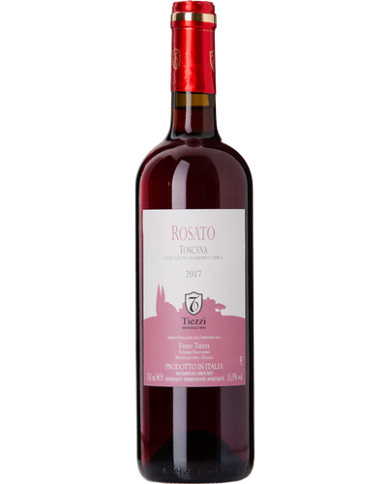
It is a very juicy wine, with heady aromas and the color of cherry juice
SKU:
15887
Brand:
Tiezzi
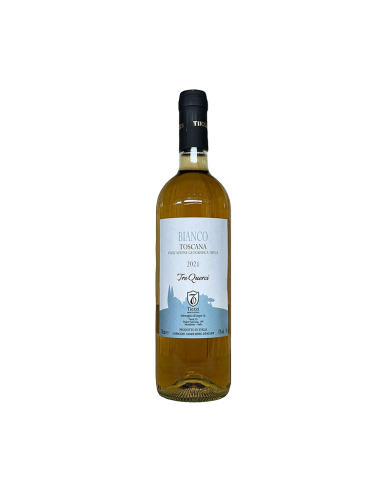
It has a straw yellow color with greenish reflections. The nose opens fruity with notes of green apple, peach, ending with hints of almond and delicate white flowers. On the palate excellent freshness and pleasant minerality
€15.20
SKU:
15781
Brand:
San Giusto a Rentennano
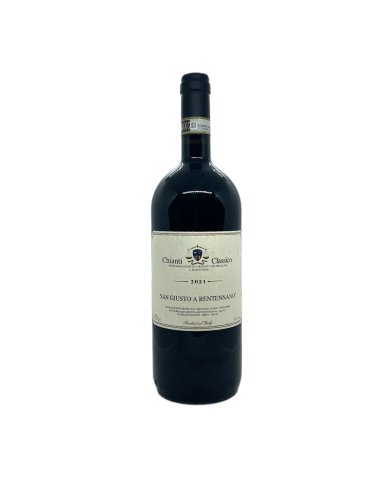
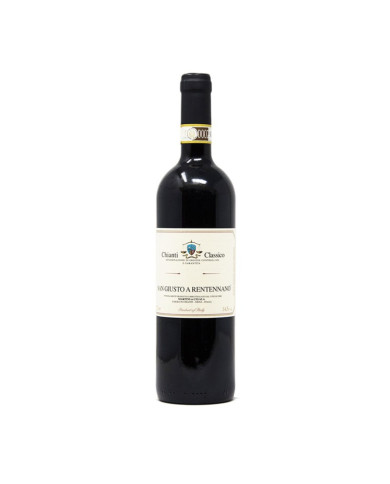
The Chianti Classico of San Giusto a Rentennano is a wine with an energetic and traditional style. The olfactory spectrum ranges from ripe red fruit to spicy spices. The sip is agile, dynamic and elegant. It is aged for at least 10 months in oak barrels
SKU:
15780
Brand:
San Giusto a Rentennano
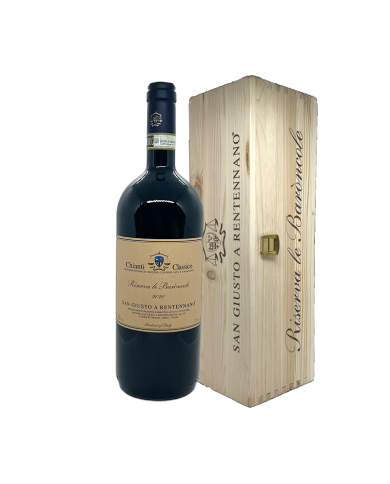
The Chianti Classico Riserva "Le Baroncole" expresses the richness and beauty of the Tuscan land. Refines for 16-20 months in oak barrels and casks and is enriched with vanilla nuances, in addition to the already present fruity and spicy aromas typical of the type. The taste is balanced, complex and deep, supported by a nice tannic texture and a pleasant savory tip
€85.00
SKU:
15779
Brand:
San Giusto a Rentennano
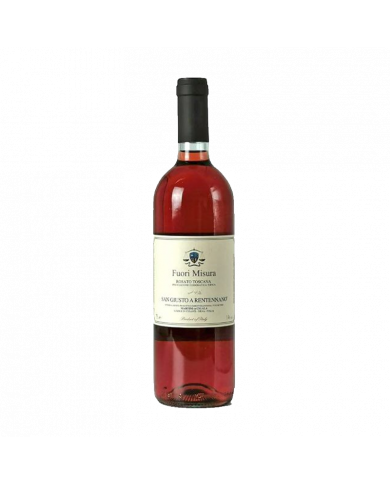
Yield per vine 1 kg, harvest 25-28 September. The wine is obtained by extracting the must from the Chianti Classico, Riserva, Percarlo, Ricolma tanks within 12-24 hours of placing the grapes, and partly with grapes (Merlot, Sangiovese, Canaiolo) harvested early and vinified in white. Slow fermentation at a temperature below 23°C, with the addition of about 15% of de-stemmed grapes. Maturation for 5 months in steel. The wine is subjected to light filtering, so it may have natural sediment. 8,200 bottles bottled on March 20th. Organic wine.
€11.50
SKU:
15778
Brand:
San Giusto a Rentennano
€20.50
€18.45
The Chianti Classico of San Giusto a Rentennano is a wine with an energetic and traditional style. The olfactory spectrum ranges from ripe red fruit to spicy spices. The sip is agile, dynamic and elegant. It is aged for at least 10 months in oak barrels
€12.19
SKU:
15640
Brand:
Pianirossi
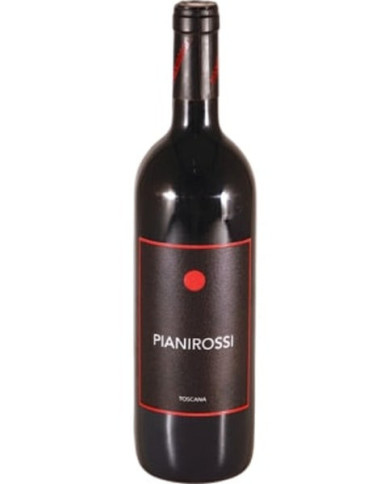
Toscana Rosso is a wine produced in Cinigiano, in Maremma, from grapes from 40% Petit Verdot, 30% Cabernet Sauvignon and 30% Montepulciano vines.
The company includes an uncontaminated expanse of 25 hectares of land, 14 of which are planted with vineyards. The methods selected for cultivation are organic, everything is done manually from pruning to harvest, respecting the environment and the Tuscan wine tradition. The refinement is carried out in small French oak barrels for 15 months.
€27.45
SKU:
15639
Brand:
Pianirossi
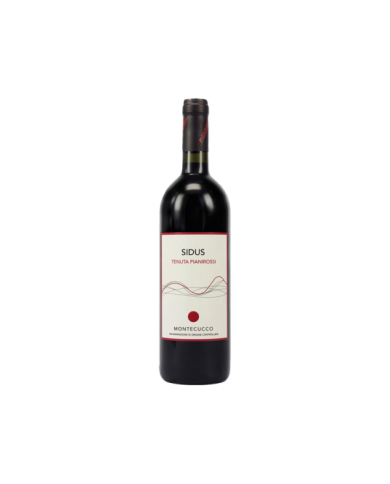
Sidus is an excellent wine produced from grapes from 60% Sangiovese and 40% Montepulciano vines. The Pianirossi estate was born over twenty years ago, between the hills of Montalcino and the slopes of Mount Amiata, an ancient territory where love for the land and passion for wine are at home. The Sidus is aged in small French oak barrels for 10 months. In the glass its color is lively with shades tending towards purplish. The nose has intense fruity aromas, especially of ripe cherries and wild berries. In the mouth it is delicate and persistent, with soft tannins and good acidity. A wine with excellent balance. It goes perfectly with robust first courses and red meats, but can also accompany cold cuts and aged cheeses.
€13.88
SKU:
15579
Brand:
Castellare di Castellina
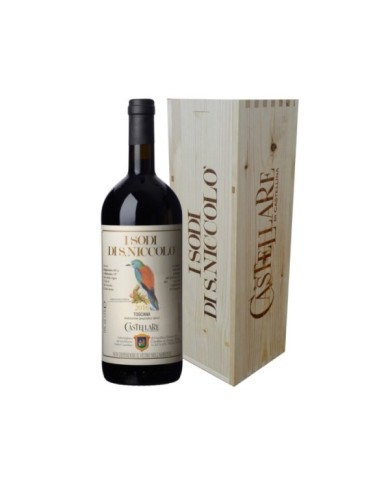
Intense ruby red with garnet reflections. The nose expresses richness and intensity thanks to beautiful fruity and slightly spicy, balsamic and floral notes. On the palate it is centered, juicy, fine and complete. It closes with a vibrant and persistent finish. Throughout the meal, it goes well with salami and meats rich in flavor, tasty and aromatic cheeses.
€222.35
SKU:
15578
Brand:
Castellare di Castellina
€19.22
€17.29
The twin of the Canon, but made with Sauvignon blanc grapes, the most fascinating but also the most difficult of the white grape varieties. Also for those who love complex wines, not passing through, rich in aromas, perfumes and long texture even if with white grapes. To drink like reading a score of great music.
€19.22
€17.29
SKU:
15570
Brand:
Castellare di Castellina
Canonico A Chardonnay of great structure and minerality, complex, to drink even in a few years. Capable of holding even the tastiest dishes, thanks to the vinification in barriques and the long aging in the bottle. A Burgundian-style Chardonnay, for those who love depth of flavour.
€19.22
SKU:
15556
Brand:
Castellare di Castellina
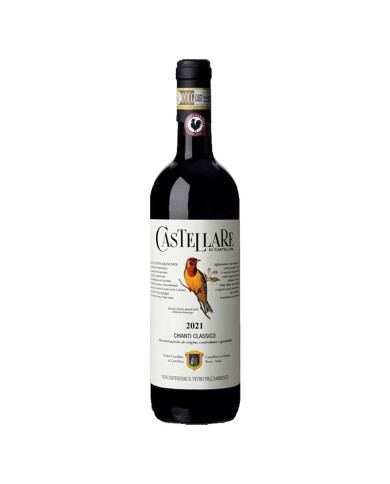
Brilliant ruby red color with violet reflections. Thanks to the harmony of the tannins, combined with the delicate complexity of the aromas and the final note of sweetness, the wine is characterized by an excellent balance in the mouth.
Chianti Classico Castellare di Castellina
€22.25
SKU:
15555
Brand:
Petra
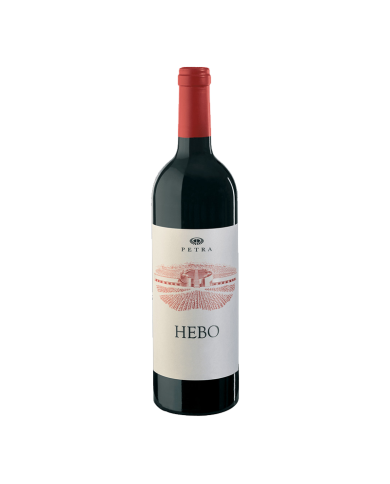
Hebo di Petra is a Tuscan red wine born from Cabernet Sauvignon, Merlot and Sangiovese grapes, vinified with indigenous yeasts and aged for at least 12 months in wood. It has an intense ruby red color and opens up a bouquet of violet and black cherry, with Mediterranean and spicy hints. On the palate it is surprising for its balance between body and mineral freshness, to close with a fruity persistence
€14.69
SKU:
15535
Brand:
Stefano Amerighi
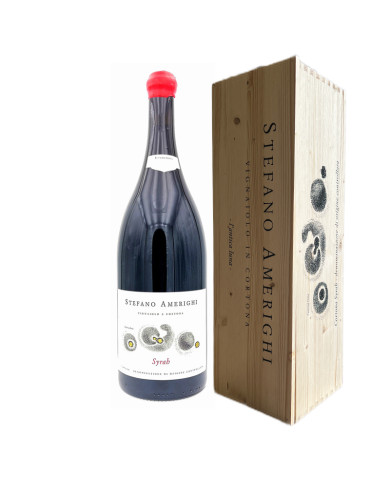
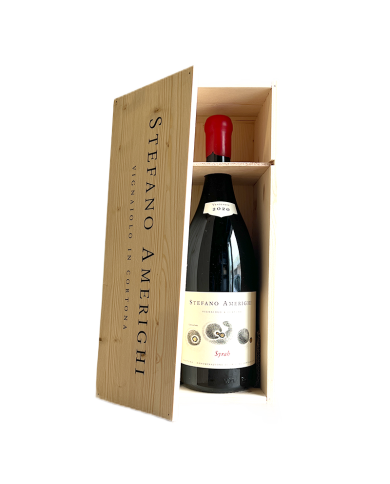
This Syrah is Stefano Amerighi 's representative wine, the result of his work and his idea. A broad idea that goes from the soil to the plant to the balance of nature.
€179.90
SKU:
15534
Brand:
Stefano Amerighi
This Syrah is Stefano Amerighi 's representative wine, the result of his work and his idea. A broad idea that goes from the soil to the plant to the balance of nature.
€84.90
SKU:
15532
Brand:
Stefano Amerighi
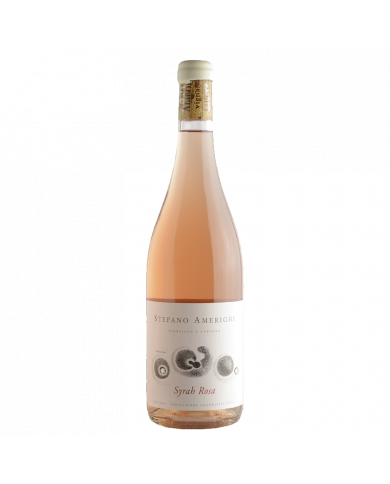
Bright coral pink color, the nose is fruity and with hints that recall red fruit, in the mouth it is round, fresh, characterized by a slight spiciness, and persistent in length.
€16.90
SKU:
15531
Brand:
Stefano Amerighi
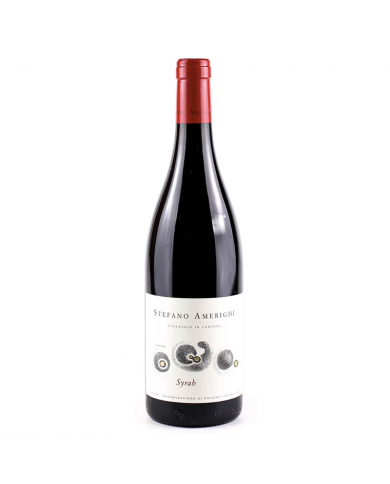
This Syrah is Stefano Amerighi 's representative wine, the result of his work and his idea. A broad idea that goes from the soil to the plant to the balance of nature.
€28.69
SKU:
15527
Brand:
Avignonesi
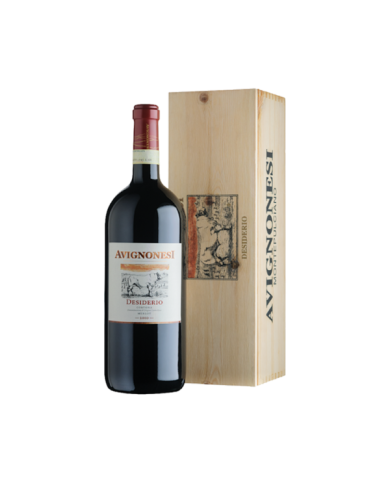
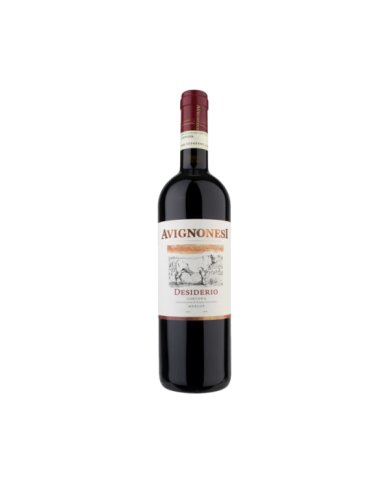
With a warm and sensual character, full of fruity notes and sweet spices, Desiderio 2016 goes perfectly with savory dishes, such as roast lamb, aged cheeses and game. Intense ruby red in color, this wine reveals an inviting bouquet of black cherries and blackberries with notes of eucalyptus and fresh mint, underlined by elegant sensors of roses and sandalwood. Well structured and very persistent, in the mouth it is enveloping and caressing, characterized by fruity notes and fine-grained tannins.
€125.00
SKU:
15526
Brand:
Avignonesi
Intense ruby red to the eye. Elegant on the nose, it initially gives fruity hints of blackberries, morello cherries and raspberries, followed by flavors of aromatic herbs, licorice, chocolate and coffee beans. Precious shades of goudron and cedar wood complete the olfactory picture. The palate is refined and important, well developed in the tannic texture, with a good structure and long persistence. Requires to be combined with meat preparations. Excellent to accompany stewed kid.
€55.29
SKU:
15519
Brand:
Canalicchio di Sopra
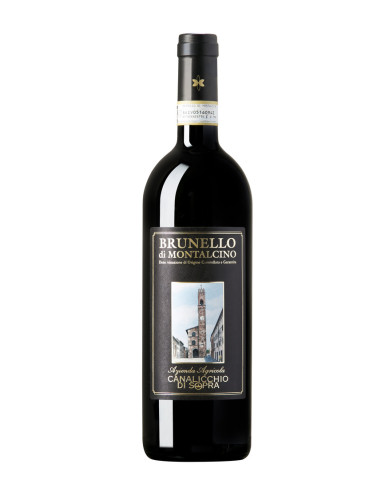
Canalicchio di Sopra's Brunello di Montalcino is a noble and fascinating expression of this well-known typology from southern Tuscany. The nose is typical and frank, full of earthy sensations, of violet, raspberry and strawberry with nuanced shades of tobacco and licorice which accompany a decisive and full entry on the palate, of vibrant freshness and lively structure, where all the components are in harmony between them in a fine texture
SKU:
15510
Brand:
Avignonesi
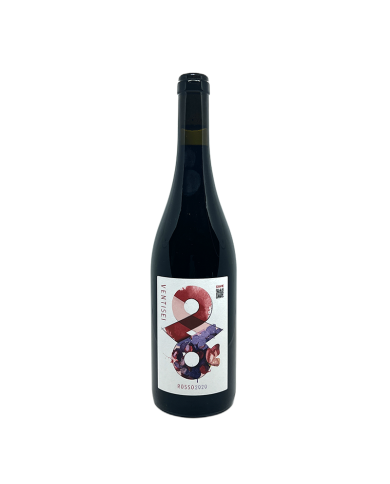
Fermented in stainless steel tanks with the use of indigenous yeasts, Ventisei Rosso undergoes a partial carbonic maceration, which gives that scent of candied fruit, capable of making us immediately fall in love. Twenty-six Rosso is fruit, elegance, delicacy and harmony. It is the wine you need for long chats, great reflections, the ideal nectar to let the boulders slip away from the heart. Fresh notes of raspberry, delicate hints of undergrowth and aromas of sweet spices will enchant you from the first glass. One sip leads to another!
€10.07
SKU:
15465
€13.49
€12.14
Grapes harvested manually, placed in the cell until a temperature close to 10°C is reached, then pressed. Fermentation carried out at low temperatures using selected yeasts
€13.49
€12.14
SKU:
15316
Brand:
La Madonnina
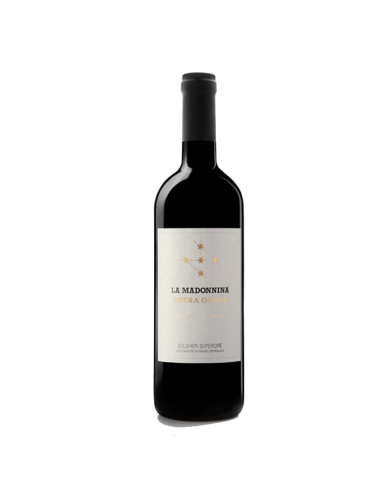
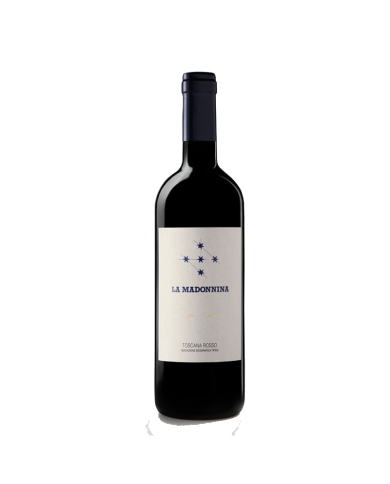
This Bolgheri Superiore combines the expression of the Bolgheri territory and an essential attention to quality, given that only grapes that exceed strict selection requirements come from the vineyard.
€68.32
SKU:
15314
Brand:
La Madonnina
This blend of Cabernet Franc, Syrah, Merlot, Cabernet Sauvignon, Petit Verdot is the entry wine of the range produced by La Madonnina. It is vinified in steel and aged in French oak barriques for 16 months.
€24.52
SKU:
15313
Brand:
La Madonnina
A 100% Syrah that represents the maximum expression of the estate's production, the result of an extreme selection in terms of quality and particularity of the grapes and their winemaking process.
€126.64
SKU:
15307
Brand:
La Lastra
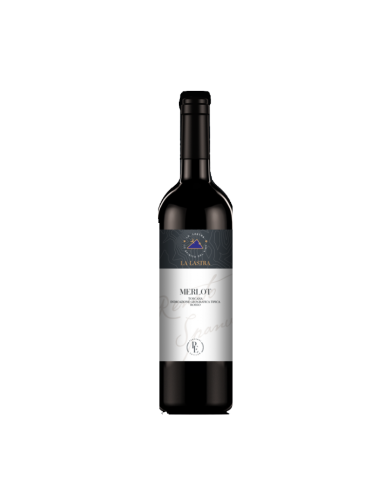
When we took over our small company close to the city of Siena twenty years ago, in the first place we replanted a large part of the vineyards and, on the occasion, above all out of curiosity and a great desire for knowledge and experimentation, we introduced into our viticultural heritage proudly Tuscan, even a very modest quantity of Merlot vines. Since this very small vineyard has reached a good physiological maturity we vinify it in purity and we mature it in a French oak tonneau. The result is a wine of excellence, truly particular and intriguing that we offer, given the small and non-reproducible quantity, in our Personal Edition.
€37.04
SKU:
15306
Brand:
La Lastra
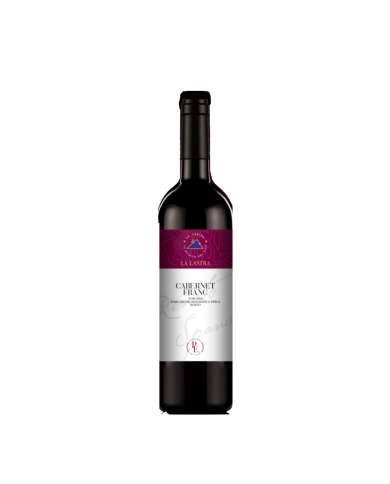
When we took over our small company twenty years ago near the city of Siena, in addition to a very small plot of Merlot, we planted 7 rows of Cabernet Franc. The first in Tuscany, not to be different, but because by studying our terroir we realized that it had those characteristics whereby the Cabernet Franc grapes, if properly ripened and well vinified and aged, could offer us a wine that is not for everyone , but exciting and strongly character. The first years of production disappointed our expectations, a wine that was too herbaceous and tannic but, from the tenth harvest, when the plants reached their physiological maturity, here was the big surprise: a fruity wine where the raspberry replaced the herbaceous, thick, intense and almost moving. Given the very small quantity that we are able to produce, it has rightfully become part of the wines of our Personal Edition.
€37.04
SKU:
15300
Brand:
La Lastra
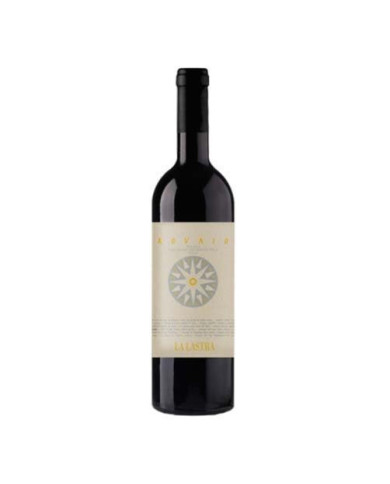
Our first edition is that of 1995 entirely produced in San Gimignano and that, even today, when we taste one of the last bottles that we have kept in the cellar excites us! Since 2017, when our vineyards in Siena have reached a good maturity, our persevering oenological curiosity to understand how the same blend produced in a different territory would have behaved has meant that, thanks to the fantastic 2017 harvest, we have put to mature a barrique of Sangiovese, one of Merlot and one of Cabernet Sauvignon. After 18 months of blending and, with great emotion, we understood that that very little wine of great depth deserved to be bottled and here is our Rovaio Personal Edition.
€33.81
SKU:
15299
Brand:
La Lastra
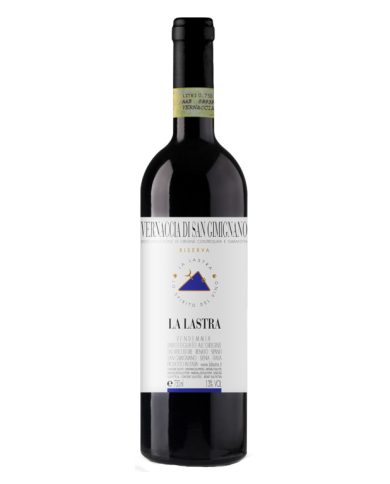
Vernaccia di San Gimignano Riserva La Lastra is produced with Vernaccia grapes (98%) and percentages of Trebbiano Toscano and Malvasia Bianca lunga del Chianti grown organically at about 280 meters above sea level. The grape harvest takes place between mid and late September with manual selection of the bunches. Long fermentation and aging take place in barriques and steel, guaranteeing structure and longevity to this important white. On the nose the bouquet is rich with notes of flowers, citrus fruits, spices and mineral hints. On the palate it is full, sapid and elegant.
€20.13
SKU:
15298
Brand:
La Lastra
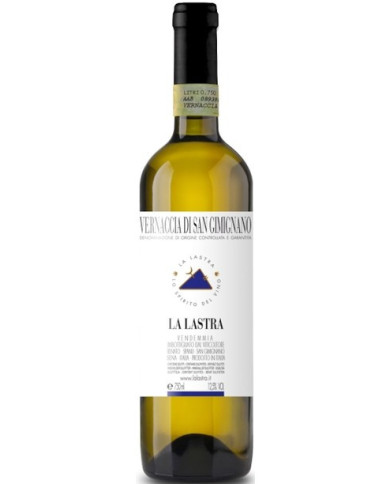
Vernaccia Di San Gimignano La Lastra is an organic white wine with an intense straw yellow colour. The nose reveals mineral notes, tropical fruit and citrus. In the mouth it is sapid, fresh and persistent.
€14.27
SKU:
15297
Brand:
La Lastra
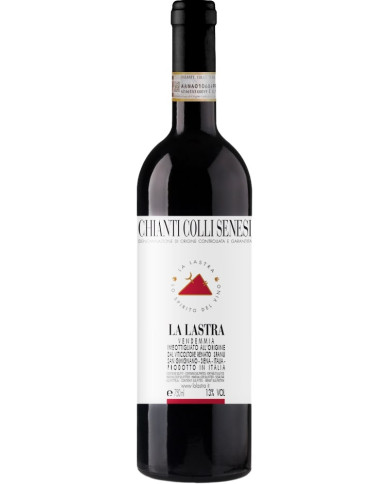
Our Chianti Colli Senesi is born from the ancient typicality of this centenary wine aimed at interpreting a new tradition. The vines used are those of the past, only autochthonous and Tuscan, red and white. The Sangiovese bunches, which are 95% of our Chianti, are those of the oldest plants we have in the company, which ripen well beyond the time of the new clones, small and loose bunches, but with a thick skin rich in polyphenols and aromas , crunchy and sugary.
€15.95
SKU:
15251
Brand:
Cantina Marchesi Antinori
The 2021 vintage in Bolgheri was characterized by a prolonged dry period from June to September. However, unlike 2017, the particularly rainy winter helped to significantly increase the soil's water reserves, providing the vines with the right support throughout the production phase.
€59.90
SKU:
15145
Brand:
Castello dei Rampolla
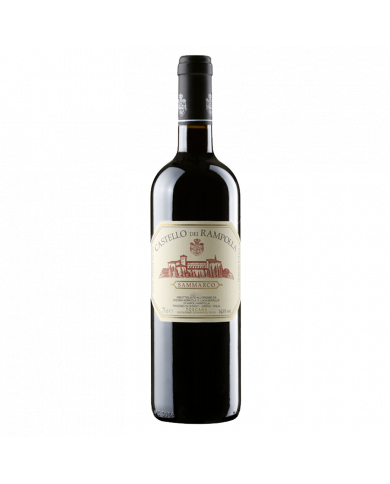
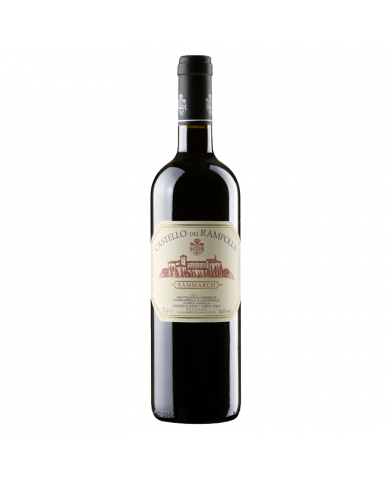
Sammarco is a wine with fresh and fine scents of undergrowth, with a deep and intense colour. It presents specific aromas of the soil and impressions of ripe fruit. It has a great concentration with robust tannins. Elegant and refined wine. Percentages of Sangiovese and Merlot are added to the Cabernet Sauvignon. Production varies according to climatic conditions: 8,000 – 25,000 bottles.
€107.06
SKU:
15144
Brand:
Castello dei Rampolla
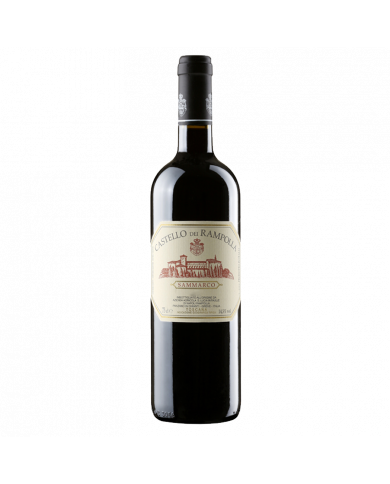
Sammarco is a wine with fresh and fine scents of undergrowth, with a deep and intense colour. It presents specific aromas of the soil and impressions of ripe fruit. It has a great concentration with robust tannins. Elegant and refined wine. Percentages of Sangiovese and Merlot are added to the Cabernet Sauvignon. Production varies according to climatic conditions: 8,000 – 25,000 bottles.
€90.59
SKU:
15143
Brand:
Castello dei Rampolla
Sammarco is a wine with fresh and fine scents of undergrowth, with a deep and intense colour. It presents specific aromas of the soil and impressions of ripe fruit. It has a great concentration with robust tannins. Elegant and refined wine. Percentages of Sangiovese and Merlot are added to the Cabernet Sauvignon. Production varies according to climatic conditions: 8,000 – 25,000 bottles.
€98.82
SKU:
15142
Brand:
Castello dei Rampolla
Sammarco is a wine with fresh and fine scents of undergrowth, with a deep and intense colour. It presents specific aromas of the soil and impressions of ripe fruit. It has a great concentration with robust tannins. Elegant and refined wine. Percentages of Sangiovese and Merlot are added to the Cabernet Sauvignon. Production varies according to climatic conditions: 8,000 – 25,000 bottles.
€131.76
SKU:
15141
Brand:
Castello dei Rampolla
Sammarco is a wine with fresh and fine scents of undergrowth, with a deep and intense colour. It presents specific aromas of the soil and impressions of ripe fruit. It has a great concentration with robust tannins. Elegant and refined wine. Percentages of Sangiovese and Merlot are added to the Cabernet Sauvignon. Production varies according to climatic conditions: 8,000 – 25,000 bottles.
€98.82
SKU:
15132
Brand:
Carpineto
Produced with grapes from vineyards of the companies of Gaville (Florence) and Chianciano/Montepulciano (Siena), the latter planted at high density and considered by us to be particularly happy and suitable for producing great wines.
€19.89
SKU:
15069
Brand:
Carpineto
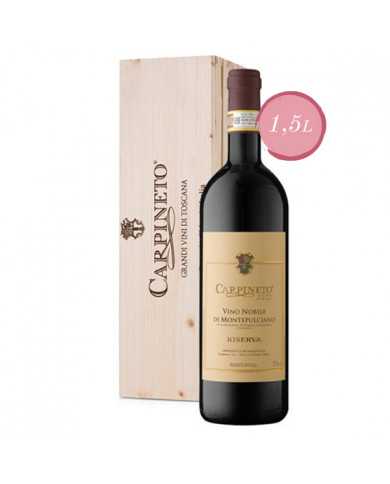
A great red wine, it takes its name from Montepulciano, a Renaissance city in the province of Siena, which dominates the wide and verdant Valdichiana from the top of a hill. The appellation of "Nobile" seems to derive not only from its intrinsic qualities of finesse and elegance, but also from the fact that in the past the production of this wine was particularly cared for by the noble families of the city.
€110.40
SKU:
15047
Brand:
Castello dei Rampolla
Sammarco is a wine with fresh and fine scents of undergrowth, with a deep and intense colour. It presents specific aromas of the soil and impressions of ripe fruit. It has a great concentration with robust tannins. Elegant and refined wine. Percentages of Sangiovese and Merlot are added to the Cabernet Sauvignon. Production varies according to climatic conditions: 8,000 – 25,000 bottles.
€58.90
SKU:
15046
Brand:
Castello dei Rampolla
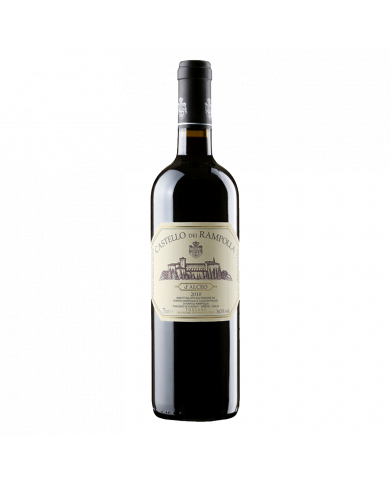
D'Alceo fully reflects the characteristics of the vineyard from which it comes. Intense, warm, refined and elegant. The well-ripe red fruit combines perfectly with the notes of delicate cigar and tobacco. An incredible concentration without heaviness. For once we are not talking about a wine, but about the personality of a vineyard planted by Alceo, who could not imagine having found the excellent combination of exposure, soil and vines (Cabernet Sauvignon and Petit Verdot). The average production is 6000 – 12000 bottles.
€134.90
SKU:
15032
Brand:
Carpineto
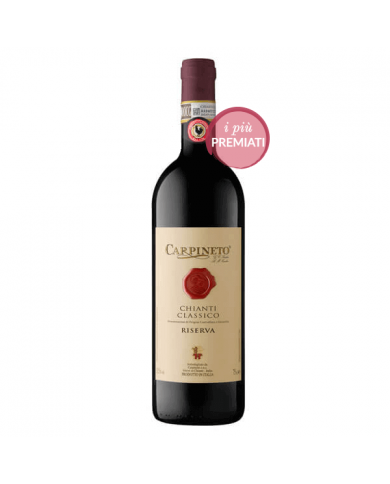
Produced in the oldest production area, as stated in the disciplinary that regulates it, this area gave its name to the wine and is the only one where Chianti Classico is produced. It extends between Florence and Siena in a territory of breathtaking beauty, made up of villages perched on the top of the hills, of olive trees cultivated in steep fields with an irregular outline and of cypresses lined up to delimit the innumerable dirt roads.
€89.67
SKU:
15029
Brand:
Carpineto
Produced in the oldest production area, as stated in the disciplinary that regulates it, this area gave its name to the wine and is the only one where Chianti Classico is produced. It extends between Florence and Siena in a territory of breathtaking beauty, made up of villages perched on the top of the hills, of olive trees cultivated in steep fields with an irregular outline and of cypresses lined up to delimit the innumerable dirt roads.
€86.01
SKU:
15025
Brand:
Carpineto
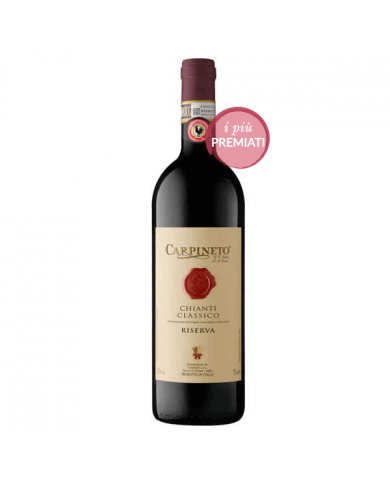
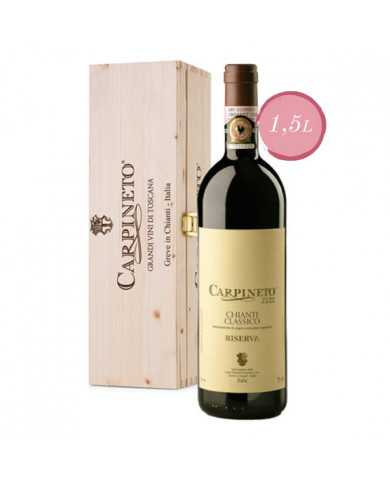
Chianti Classico Riserva is produced exclusively in the oldest wine-growing area of Tuscany, in a landscape of breathtaking beauty.
€111.63
SKU:
15024
Brand:
Carpineto
Produced in the oldest production area, as stated in the disciplinary that regulates it, this area gave its name to the wine and is the only one where Chianti Classico is produced. It extends between Florence and Siena in a territory of breathtaking beauty, made up of villages perched on the top of the hills, of olive trees cultivated in steep fields with an irregular outline and of cypresses lined up to delimit the innumerable dirt roads.
€51.24
SKU:
14968
Brand:
Villa da Filicaja
The Bolgheri from the Collection of the Count of Villa da Filicaja was born in the Livorno municipality of Castagneto Carducci, in the heart of the magical Bolgheri terroir. It is obtained with Cabernet Sauvignon, Merlot and Cabernet Franc grapes, harvested following a careful selection. After a short cold maceration, the must ferments spontaneously for 15-20 days at a controlled temperature. The refinement takes place in oak barrels for at least 12 months and for a further 3 months in the bottle before being placed on the market. It has a deep ruby red color with violet reflections. It is characterized by a complex and refined aroma, with hints of wild berries in the foreground, accompanied by herbaceous and mentholated notes. In the mouth it reveals a wine of great balance, with good minerality and sapidity which contrast with a good structure and body. Excellent to accompany red meats and aged cheeses, it lends itself to combinations with roast chicken and game recipes.
SKU:
14958
Brand:
Poggio Ameno
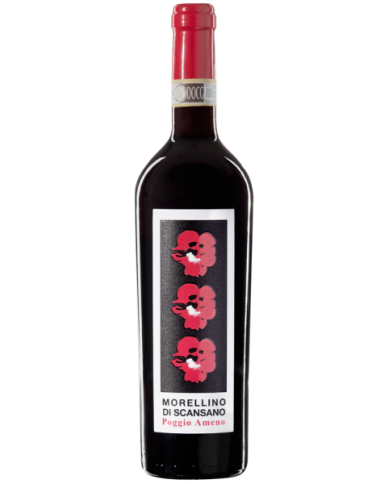
POGGIO AMENO, THE MORELLINO THAT ENJOYS THE SOUL
Between the Albegna and Ombrone rivers, in southern Tuscany, there is the municipality of Scansano, whose territory is the homeland of Morellino di Scansano, an area particularly suited to the breeding of Sangiovese thanks to the breezes coming from the Tyrrhenian Sea which mitigate the high temperatures summer. Wine with Denomination of Controlled and Guaranteed Origin since 2007 is obtained with at least 85% Sangiovese grapes harvested and vinified in the area of origin. Poggio Ameno owes its name to the hill on which it stands, in the Scansano area. In addition to Sangiovese, the Ciliegiolo and Alicante grapes enter its composition.
€12.72
SKU:
14940
Brand:
Fattoria dell’Agresto
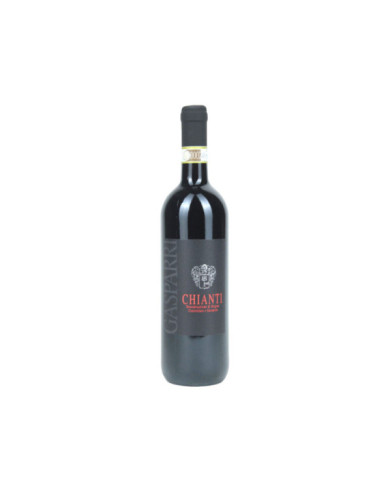
Among the green hills of Chianti, the Gasparri family has been producing wine for three generations in its Fattoria dell'Agresto, always trying to enhance the typicality of the prince of Tuscan vine, Sangiovese. The property covers approximately 220ha of land, including vineyards and olive trees. 80% Sangiovese, 10% Colorino, 10% Canaiolo. Fermented in steel with 10-12 day maceration. After the malolactic fermentation, it ages in steel for several months before bottling.
€9.19
SKU:
14939
Brand:
Fattoria del Cerro
Rosso di Montepulciano DOC the taste is well balanced, elegant and has a slight initial tannic note. Ideal served at 18° C in medium-sized glasses. Excellent combined with appetizers, first courses with meat sauces, stuffed pasta, grilled or casserole red meat main courses
€10.28
SKU:
14938
Brand:
Fattori dei Barbi
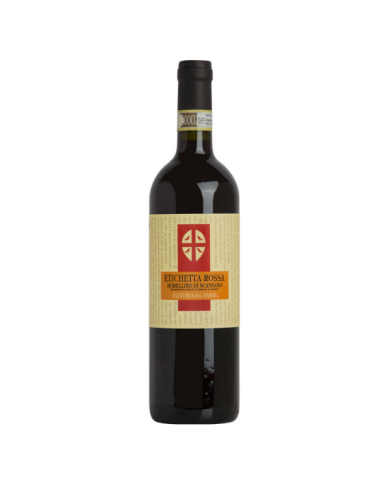
Fattoria dei Barbi's Morellino di Scansano "Red Label" is a red with an agile and refreshing drink, to be enjoyed at its best in its youth.
€13.91
SKU:
14923
Brand:
Campo al Faro
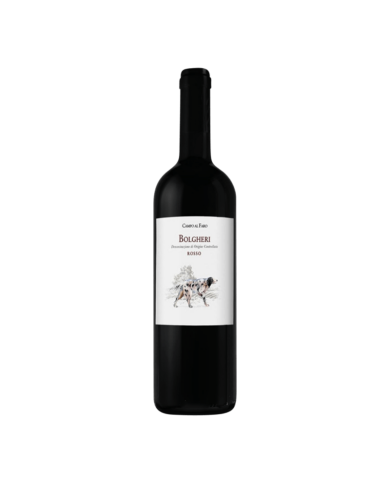
The Bolgheri Superiore di Campo al Faro was born in Castagneto Carducci, in the heart of the magical Bolgheri terroir. The Cabernet Sauvignon and Merlot grapes that make up the blend are hand selected. Fermentation takes place in steel tanks with temperature control and long maceration on the skins.
SKU:
14451
Brand:
Frescobaldi
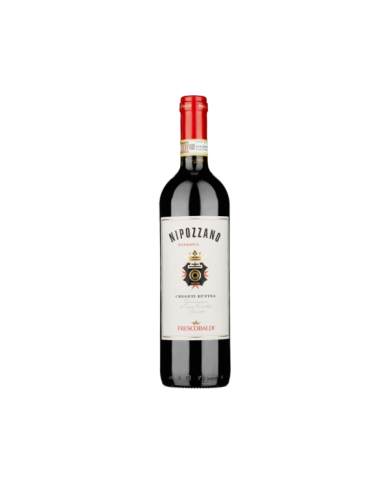
Ruby red with purple reflections. The nose is floral, characterized by clear hints of violet that prevail over the fruity. Followed by raspberry, black currant and black cherry accompanied by scents of licorice and spicy notes of nutmeg and white pepper. The entry in the mouth is warm, with tannins in full evidence. The texture appears decisive, a typical characteristic of Chianti Rùfina. Long persistence. For the whole meal, it goes well with grilled red meat, baked lamb, slightly seasoned pecorino.
€21.78
SKU:
14449
Brand:
Montevertine
Produced for the first time in the 1977 vintage, it was the first pure Sangiovese vinified in our area of Radda in Chianti. The grapes come from our historic vineyards, planted between 1968 and 1999. It ages for one year in Allier barriques and one year in Slavonian oak barrels.
€858.00
SKU:
14448
Brand:
Montevertine
Produced for the first time in the 1977 vintage, it was the first pure Sangiovese vinified in our area of Radda in Chianti. The grapes come from our historic vineyards, planted between 1968 and 1999. It ages for one year in Allier barriques and one year in Slavonian oak barrels.
€877.50
SKU:
14447
Brand:
Montevertine
Produced for the first time in the 1977 vintage, it was the first pure Sangiovese vinified in our area of Radda in Chianti. The grapes come from our historic vineyards, planted between 1968 and 1999. It ages for one year in Allier barriques and one year in Slavonian oak barrels.
SKU:
14442
Brand:
Tenuta degli Dei
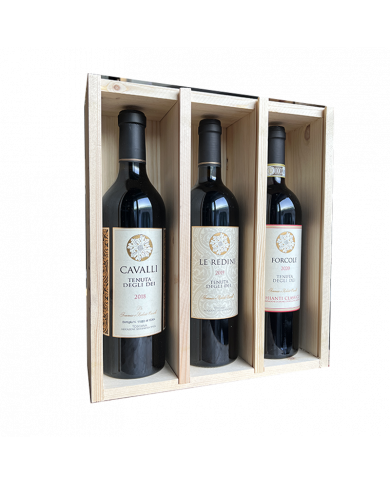
The 'Tenuta degli Dei', a winery located in Panzano in Chianti, owned by the Cavalli family for over 30 years, has been transformed into a production reality of excellence by Tommaso, son of the stylist.Blend of Cabernet Sauvignon, Cabernet Franc and Petit Verdot, this IGT Toscana is a wine which, year after year, acquires more and more awareness and recognizes itself in the values of its territory, in the elegance, harmony and gustatory depth of a great Tuscan.
€104.14
SKU:
14424
Brand:
Fontodi
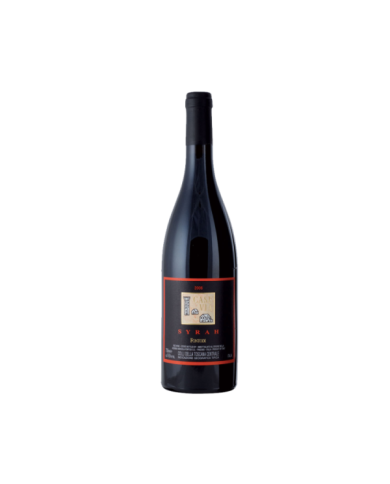
"Case Via" is the cru of Syrah vineyards that gives its name to this powerful and full-bodied Tuscan wine. It is aged for 12 months in barrique, giving it spicy, toasted and jelly-like fruit tones. It is a warm, strong, intense wine that knows how to enhance the flavors of grilled meat
€49.90
SKU:
14423
Brand:
Fontodi
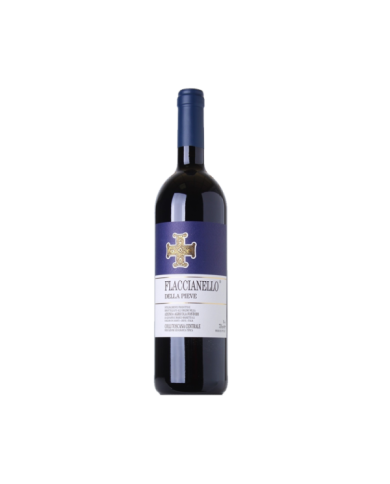
Flaccianello della Pieve is one of the symbolic products of Sangiovese in the Chianti area. The Flaccianello receives minimal treatments in the cellar, according to a production philosophy perfectly consistent with the line undertaken in the vineyard, characterized by a high manual selection of the best grapes: only spontaneous fermentation with indigenous yeasts is carried out.
€189.90
SKU:
14422
Brand:
Fontodi
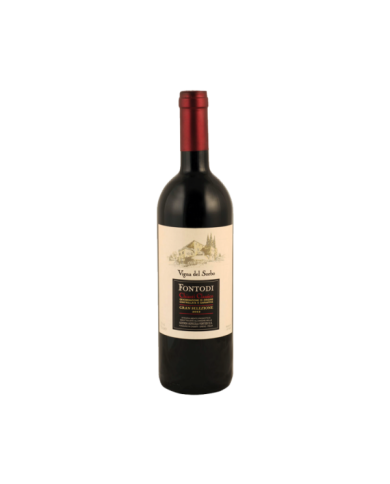
Intense and bright ruby red. The nose recalls dark sensations of cherries in alcohol and plum, dry leaves, wet earth, undergrowth, tobacco and balsamic hints. The taste is refined, harmonious, supported by the pseudo-caloric sensation and well supported by integrated tannins, thanks also to an acid backbone that accompanies a long persistence of cocoa and dried fruit.
€69.90
SKU:
14421
Brand:
Fontodi
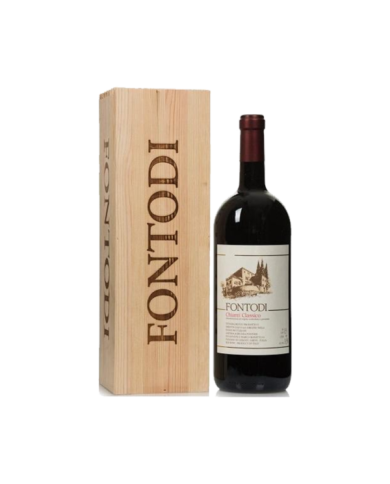
Famous and full-bodied expression of Sangiovese from Tuscany, Fontodi 's Chianti Classico is an intense and elegant wine, aged in old barriques for 24 months. Allows aromas of violets, leather and tobacco to emerge in the glass. The sip reveals body, spice, clarity and precision. Organic wine
€65.59
SKU:
14420
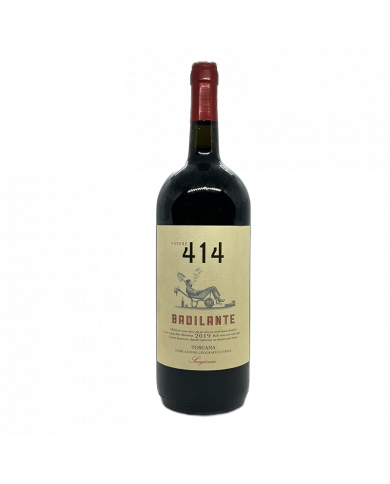
Badilante IGT Sangiovese Brilliant ruby red, bouquet characterized by fruity aromas that integrate with spicy perceptions. On the palate it shows medium structure, elegance and roundness conferred by the docility of the tannins. The objective set for this wine is finalized in the creation of a drink endowed with great versatility able to accompany many of the dishes of the Tuscan tradition. The shovelers were those who for over a century tilled the virgin lands of the Maremma. Our Sangiovese is born today from the same areas, elegant and generous, a timeless classic.
€25.22
SKU:
14419
Brand:
Ornellaia
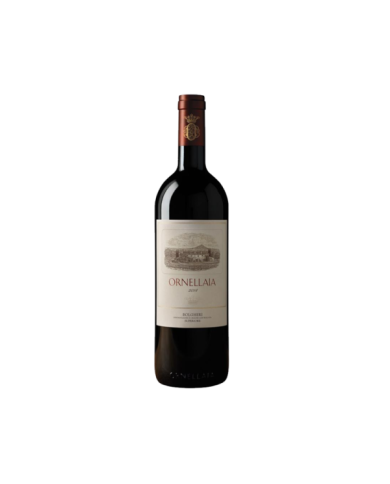
Intense ruby red to the eye. It offers hints of black cherry, blackberry and ripe dark pulp fruit on the nose, enriched with mineral and spicy tones. In tasting the tannins are still very gritty, and communicate that they are ready to support the wine at least until the next decade. Excellent persistence and fruity closure. It goes perfectly with land cuisine, and with second courses in particular. Try it with stuffed honey duck.
€46.90
SKU:
14323
Brand:
Ornellaia
Intense ruby red to the eye. It offers hints of black cherry, blackberry and ripe dark pulp fruit on the nose, enriched with mineral and spicy tones. In tasting the tannins are still very gritty, and communicate that they are ready to support the wine at least until the next decade. Excellent persistence and fruity closure. It goes perfectly with land cuisine, and with second courses in particular. Try it with stuffed honey duck.
SKU:
14322
Brand:
Cantina Marchesi Antinori
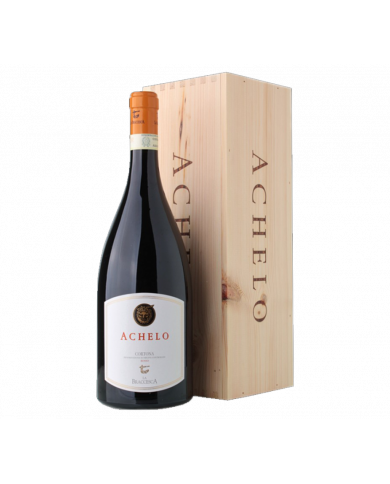
Cortona Syrah Achelo La Braccesca dei Marchesi Antinori was born in the homonymous estate, located on the Sienese hills. It is produced exclusively with Syrah grapes, harvested in mid-September. Fermentation takes place in stainless steel tanks at a controlled temperature of 28 ° C for 10 days. Subsequently the wine partially ages in barriques and steel tanks for about 7 months, before being bottled.
€36.90
SKU:
14236
Brand:
Il Palagio
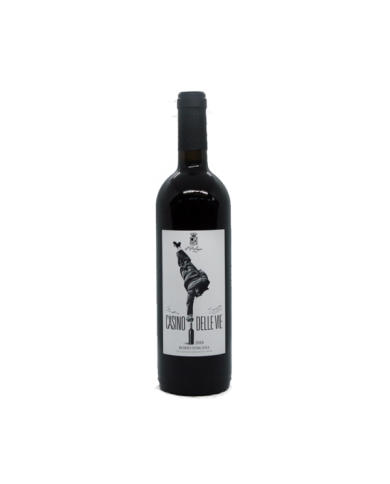
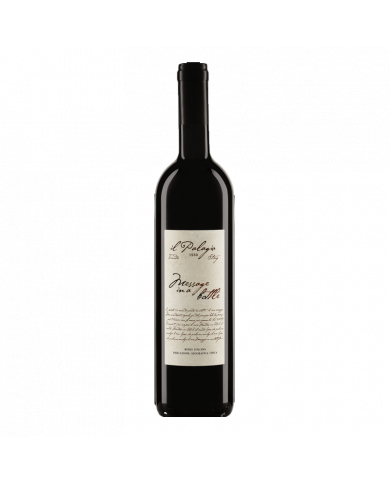
This wine takes its name from a property of the estate and when translated it means "little house on the roads". Colloquially, this can also mean "the confusion of ways" by suggesting philosophical reflections on the paths we all take in life.
€89.90
SKU:
14197
Brand:
Tenuta San Guido
Guidalberto is an elegant and intense red wine, born from the desire to produce a younger wine than Sassicaia, also using Merlot grapes. After an aging of 15 months in barrique it is expressed in a bouquet of berries, coffee, spices and Mediterranean scrub. On the palate it is fruity, full, solid and persistent.
€53.29
SKU:
14182
Brand:
Tenuta San Guido
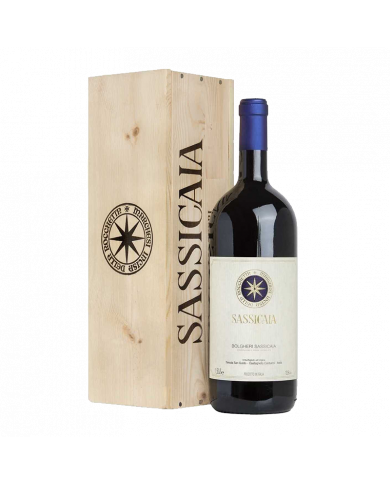
Sassicaia Tenuta San Guido is one of those mythical wines that all fans should drink at least once in their life! Its fame precedes it but with good reason because the most famous Bordeaux blend in Italy, obtained from Cabernet Sauvignon for the greater part and a small percentage of Cabernet Franc , always manages to meet expectations. Daughter of the Marquis Mario Incisa della Rocchetta and the unforgettable Giacomo Tachis , today the bottle with the unmistakable star on the label, represents an icon of Made in Italy that, year after year, adds value to its fame.
€900.00
SKU:
14181
Brand:
Tenuta San Guido
Both powerful and incredibly fine, the wine reveals mature and elegant tannins, exquisite fruitiness and exceptional length on the palate. Pleasant since its youth, it has the advantage of being able to be appreciated without waiting too long, while retaining a great aging potential, rare for an Italian wine of this level ... In short, we are facing a legendary bottle and words are not enough to describe its beauty.
SKU:
14180
Brand:
Tenuta San Guido
Both powerful and incredibly fine, the wine reveals mature and elegant tannins, exquisite fruitiness and exceptional length on the palate. Pleasant since its youth, it has the advantage of being able to be appreciated without waiting too long, while retaining a great aging potential, rare for an Italian wine of this level ... In short, we are facing a legendary bottle and words are not enough to describe its beauty.
€430.00
€32.49
SKU:
14168
Brand:
Buccia Nera
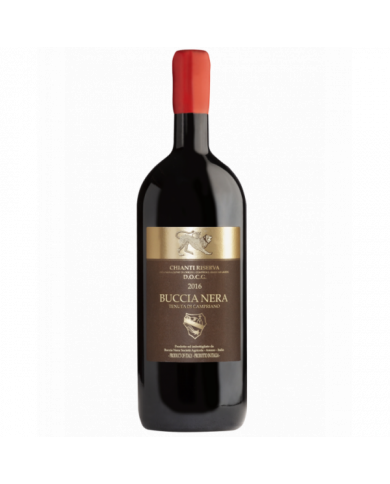
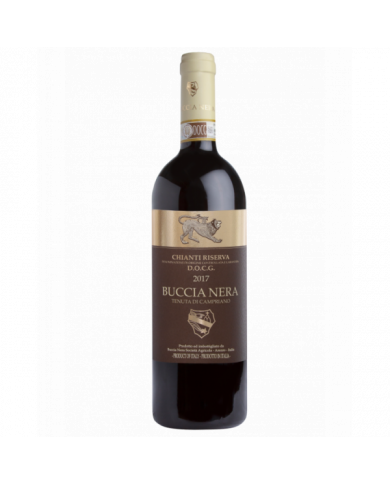
It is not surprising to discover that this Chianti Riserva DOCG Tenuta di Campriano produced from Buccia Nera has been awarded several times by international wine critics. After all, it is clear that it is a great product from the first taste. It could be defined as pure Sangiovese, given that in the blending this grape weighs for about 85%. But in this case, to add nobility to the blend, a part of Merlot and one part of Cabernet Sauvignon are added, improving vines par excellence. The vinification of the grapes takes place in three different moments, always in steel at a controlled temperature. Spontaneous alcoholic and malolactic fermentation and 2-year aging in 30-hectolitre oak barrels followed by a further year in the bottle. The result is a complex and structured red. The color is impenetrable, ruby red with garnet reflections. The nose opens with notes of cherry in alcohol and blackberry, to then offer spicy sensations of chocolate, licorice and tobacco. In the mouth it is full, voluminous, soft at the entrance, with nice ripe tannins that leave the mouth dry and clean.
€77.99
SKU:
14167
Brand:
Buccia Nera
It is not surprising to discover that this Chianti Riserva DOCG Tenuta di Campriano produced from Buccia Nera has been awarded several times by international wine critics. After all, it is clear that it is a great product from the first taste. It could be defined as pure Sangiovese, given that in the assembly this grape weighs for about 85%. But in this case, to add nobility to the blend, a part of Merlot and one part of Cabernet Sauvignon are added, improving vines par excellence. The vinification of the grapes takes place in three different moments, always in steel at a controlled temperature. Spontaneous alcoholic and malolactic fermentation and 2-year aging in 30-hectolitre oak barrels followed by a further year in the bottle. The result is a complex and structured red. The color is impenetrable, ruby red with garnet reflections. The nose opens with notes of cherry in alcohol and blackberry, to then offer spicy sensations of chocolate, licorice and tobacco. In the mouth it is full, voluminous, soft at the entrance, with nice ripe tannins that leave the mouth dry and clean.
€23.40
SKU:
14166
Brand:
Buccia Nera
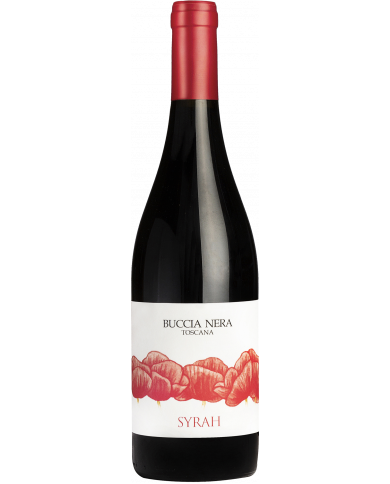
The Syrah vine is at home on the rolling hills surrounding Arezzo. Originally from the French region of Rhone, he has found a welcoming second home in Tuscany and is often able to express himself at high levels. In the version proposed here by Buccia Nera, the grapes that have reached a perfect degree of ripeness are harvested by hand and vinified without resorting to selected yeasts. Fermentation, in fact, is activated spontaneously thanks to the colony of native yeasts found on the skins and in the cellar environment. The result is a wine of beautiful complexity but just as pleasant. In this case, it is easy to recognize the characteristics of the varietal which are enhanced by a minimally invasive vinification. The color is intense and lively ruby red. On the nose they are clearly distinguished by more typical spicy notes of black pepper which are accompanied by memories of coffee and sweeter toffee. In the mouth it is soft with ripe tannins and a nice acidity that perfectly balances the alcoholic component. A versatile wine that is easy to enhance with the right combination of meat and cheese but also with dishes with a pleasantly spicy flavor, such as a tasty goulash.
€17.45
SKU:
14165
Brand:
Buccia Nera
In the mouth it is fresh and light. Good correspondence to the nose and palate, it completes the tasting leaving the mouth pleasantly clean.
€16.84
SKU:
14164
Brand:
Buccia Nera
Soft and enveloping. The tannins are ripe and well balanced by the acidity. Good taste-olfactory persistence, after swallowing the fruity aromas immediately return.
PAIRINGS: Red meat, game, aged cheeses.
€16.84
SKU:
14163
Brand:
Buccia Nera
Lobster pink with beautiful opalescence. Well visible deposits of yeast on the bottom of the bottle. Upon opening, the nose shows hints of yeast and bread making and then opens up with fruity aromas of cherry, wild strawberries, white currants and rose petals. There is minerality in the finish. The taste is dry with very delicate but persistent bubbles, fresh and savory with good persistence. Red fruits return to the aftertaste and finish. The mouth remains pleasantly dry.
€14.52
SKU:
14161
Brand:
Tenuta San Guido
Both powerful and incredibly fine, the wine reveals mature and elegant tannins, exquisite fruitiness and exceptional length on the palate. Pleasant since its youth, it has the advantage of being able to be appreciated without waiting too long, while retaining a great aging potential, rare for an Italian wine of this level ... In short, we are facing a legendary bottle and words are not enough to describe its beauty.
€550.00
SKU:
14162
Brand:
Buccia Nera
When tasted, a very delicate bubble, which pleasantly massages the palate, decisive and pleasant citrus freshness, right flavor and good persistence, with a aftertaste and finish of citrus and fruit with a long trail of freshness to characterize the whole taste.
€14.52
SKU:
14160
Brand:
Buccia Nera
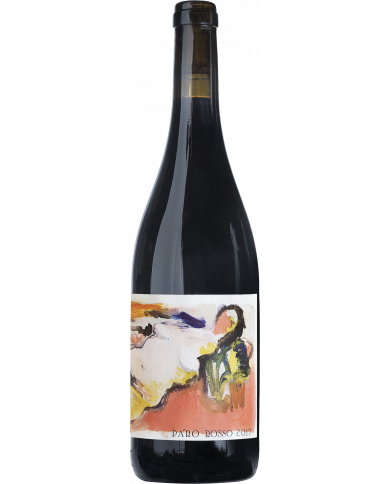
Disturbing. If we had to describe this wine in one word, we would use this adjective and no other. The red blend, based on Cabernet Sauvignon and Merlot, is an intense amalgam of two vines that express themselves with great elegance and strength in this territory. We are at 350 meters above sea level, in a soil rich in clay and silt, ideal characteristics for the production of intense reds, with a complex organoleptic profile and great aging potential. Pa' Ro rosso immediately expresses itself in the glass with great personality: the color is an intense and impenetrable ruby red. A sense of smell that is very full of aromas and herbaceous notes is striking, the spiciness embellishes an already well-stressed nose with notes of black pepper and licorice. Scents of plum and blueberry define its fruitiness, while the balsamic note makes it vivid and powerful. At the sip it continues to seduce us for the fullness of the taste; enveloping softness and alcohol on one side, well balanced by good freshness and elegant tannins on the other. A fine wine, very intense, very long. All the cards are in order to achieve excellence. What better pairing than a sweet wild boar?
€18.45
SKU:
14159
Brand:
Buccia Nera
€20.04
€14.03
The destemmed grapes remain in maceration on the skins throughout the alcoholic fermentation. The alcoholic fermentation takes place entirely in stainless steel barrels at a controlled temperature of 18°C. AGING: In stainless steel for 8 months and in bottle for at least 2 months.
€20.04
€14.03
SKU:
14157
Brand:
Buccia Nera
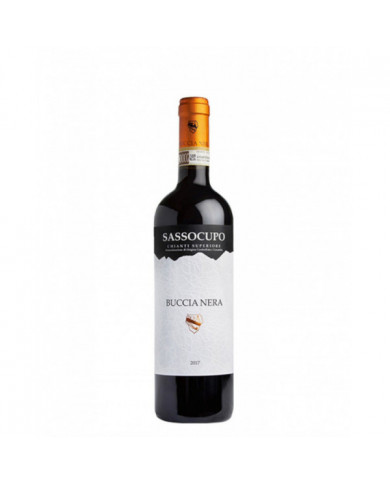
90% Sangiovese, with just a hint of Canaiolo to make the cut more intriguing. Thus Sassocupo was born, which bears the Chianti Superiore Denomination on the label and is distinguished by an alcohol content of 14 degrees. An extremely pleasant red, which can give great satisfaction at the table, especially if the menu includes a large use of red meats. If in the glass it has a beautiful, not too lively ruby red color, the nose reveals the unmistakable notes of ripe red fruit, such as cherry and black cherry, which soon give way to an evident hint of pepper. In the mouth it is vertical, with a nice tannin and a decisive freshness that make it elegant and versatile. Long persistence, leaves the mouth pleasantly clean and dry.
€16.25
SKU:
14156
Brand:
Ornellaia
Cuvée of Cabernet Sauvignon, Merlot, Cabernet Franc and Petit Verdot, Ornellaia 2014 is capable of expressing all the exceptional qualities of the territory. 2014 was a particular year for Tenuta dell ' Ornellaia , with a particularly rainy August that threatened very difficult conditions for grape ripening and an increased risk of diseases for the vineyards. But it is in the dark moments that passion and experience can change the course of events: the continuous leaf stripping and treatments carried out during the summer have allowed the grapes to arrive safe and sound for the harvest.
€427.00
SKU:
14155
Brand:
Ornellaia
Cuvée of Cabernet Sauvignon, Merlot, Cabernet Franc and Petit Verdot, Ornellaia 2014 is capable of expressing all the exceptional qualities of the territory. 2014 was a particular year for Tenuta dell ' Ornellaia , with a particularly rainy August that threatened very difficult conditions for grape ripening and an increased risk of diseases for the vineyards. But it is in the dark moments that passion and experience can change the course of events: the continuous leaf stripping and treatments carried out during the summer have allowed the grapes to arrive safe and sound for the harvest.
SKU:
14154
Brand:
Ornellaia
Cuvée of Cabernet Sauvignon, Merlot, Cabernet Franc and Petit Verdot, Ornellaia 2014 is capable of expressing all the exceptional qualities of the territory. 2014 was a particular year for Tenuta dell ' Ornellaia , with a particularly rainy August that threatened very difficult conditions for grape ripening and an increased risk of diseases for the vineyards. But it is in the dark moments that passion and experience can change the course of events: the continuous leaf stripping and treatments carried out during the summer have allowed the grapes to arrive safe and sound for the harvest.
SKU:
14153
Brand:
Ornellaia
Cuvée of Cabernet Sauvignon, Merlot, Cabernet Franc and Petit Verdot, Ornellaia 2014 is capable of expressing all the exceptional qualities of the territory. 2014 was a particular year for Tenuta dell ' Ornellaia , with a particularly rainy August that threatened very difficult conditions for grape ripening and an increased risk of diseases for the vineyards. But it is in the dark moments that passion and experience can change the course of events: the continuous leaf stripping and treatments carried out during the summer have allowed the grapes to arrive safe and sound for the harvest.
SKU:
14152
Brand:
Ornellaia
Cuvée of Cabernet Sauvignon, Merlot, Cabernet Franc and Petit Verdot, Ornellaia 2014 is capable of expressing all the exceptional qualities of the territory. 2014 was a particular year for Tenuta dell ' Ornellaia , with a particularly rainy August that threatened very difficult conditions for grape ripening and an increased risk of diseases for the vineyards. But it is in the dark moments that passion and experience can change the course of events: the continuous leaf stripping and treatments carried out during the summer have allowed the grapes to arrive safe and sound for the harvest.
SKU:
14150
Brand:
Ornellaia
Cuvée of Cabernet Sauvignon, Merlot, Cabernet Franc and Petit Verdot, Ornellaia 2014 is capable of expressing all the exceptional qualities of the territory. 2014 was a particular year for Tenuta dell ' Ornellaia , with a particularly rainy August that threatened very difficult conditions for grape ripening and an increased risk of diseases for the vineyards. But it is in the dark moments that passion and experience can change the course of events: the continuous leaf stripping and treatments carried out during the summer have allowed the grapes to arrive safe and sound for the harvest.
SKU:
14149
Brand:
Ornellaia
Intense ruby red and noble color. It has elegant fruity scents on the nose, of cherries, black cherries, black currants, blackberries and blueberries, which are enriched with tertiary tones of spices, coffee, licorice and oak. The taste is soft, luxuriant and persistent, expressive in the fruit and silky in the tannins. Long persistence and deep closure. Perfect in combination with the second dishes of the land cuisine, it goes very well with dishes based on noble poultry or feathered game. Try it with the chicken in red wine.
SKU:
14148
Brand:
Ornellaia
Intense ruby red and noble color. It has elegant fruity scents on the nose, of cherries, black cherries, black currants, blackberries and blueberries, which are enriched with tertiary tones of spices, coffee, licorice and oak. The taste is soft, luxuriant and persistent, expressive in the fruit and silky in the tannins. Long persistence and deep closure. Perfect in combination with the second dishes of the land cuisine, it goes very well with dishes based on noble poultry or feathered game. Try it with the chicken in red wine.
SKU:
14147
Brand:
Ornellaia
Intense ruby red and noble color. It has elegant fruity scents on the nose, of cherries, black cherries, black currants, blackberries and blueberries, which are enriched with tertiary tones of spices, coffee, licorice and oak. The taste is soft, luxuriant and persistent, expressive in the fruit and silky in the tannins. Long persistence and deep closure. Perfect in combination with the second dishes of the land cuisine, it goes very well with dishes based on noble poultry or feathered game. Try it with the chicken in red wine.
€66.27
SKU:
14146
Brand:
Banfi
Deep red, tending to garnet. Rich and complex bouquet, with sweet notes of plum, ripe cherry and small fruits that blend well with balsamic and tobacco notes. In the mouth you can immediately notice the great structure, full and soft, characterized by powerful tannins that give dimension while remaining gentle on the palate. A wine that lends itself to a very long aging. Throughout the meal, it is an ideal accompaniment to red meats, savory game and aged cheeses.
SKU:
14145
Brand:
Banfi
Deep red, tending to garnet. Rich and complex bouquet, with sweet notes of plum, ripe cherry and small fruits that blend well with balsamic and tobacco notes. In the mouth you can immediately notice the great structure, full and soft, characterized by powerful tannins that give dimension while remaining gentle on the palate. A wine that lends itself to a very long aging. Throughout the meal, it is an ideal accompaniment to red meats, savory game and aged cheeses.
SKU:
14144
Brand:
Banfi
Intense, deep color, with garnet reflections. The nose is complex, with sweet hints of licorice, coffee, plum jam, tobacco and a light note of violet. The structure is very elegant, large in size, with very soft tannins and perfectly balanced with a lively acidity, capable of sustaining its persistence for a long time. From great aging. For the whole meal, it superbly accompanies red meats, game and aged cheeses.
€136.64
SKU:
14143
Brand:
Banfi
Intense, deep color, with garnet reflections. The nose is complex, with sweet hints of licorice, coffee, plum jam, tobacco and a light note of violet. The structure is very elegant, large in size, with very soft tannins and perfectly balanced with a lively acidity, capable of sustaining its persistence for a long time. From great aging. For the whole meal, it superbly accompanies red meats, game and aged cheeses.
€95.16
SKU:
14142
Brand:
Banfi
Intense, deep color, with garnet reflections. The nose is complex, with sweet hints of licorice, coffee, plum jam, tobacco and a light note of violet. The structure is very elegant, large in size, with very soft tannins and perfectly balanced with a lively acidity, capable of sustaining its persistence for a long time. From great aging. For the whole meal, it superbly accompanies red meats, game and aged cheeses.
€129.90
SKU:
14072
Brand:
Montevertine
Produced for the first time in the 1977 vintage, it was the first pure Sangiovese vinified in our area of Radda in Chianti. The grapes come from our historic vineyards, planted between 1968 and 1999. It ages for one year in Allier barriques and one year in Slavonian oak barrels.
€448.90
SKU:
14071
Brand:
Montevertine
Produced for the first time in the 1977 vintage, it was the first pure Sangiovese vinified in our area of Radda in Chianti. The grapes come from our historic vineyards, planted between 1968 and 1999. It ages for one year in Allier barriques and one year in Slavonian oak barrels.
SKU:
14069
Brand:
Cantina Marchesi Antinori
This fine wine from the Antinori winery respects the local traditions of Tuscany. The denomination is that of Vin Santo della Valdichiana DOC. Produced from the blended vinification of Tuscan Trebbiano and Malvasia vines.
€17.81
SKU:
14068
Brand:
Cantina Marchesi Antinori
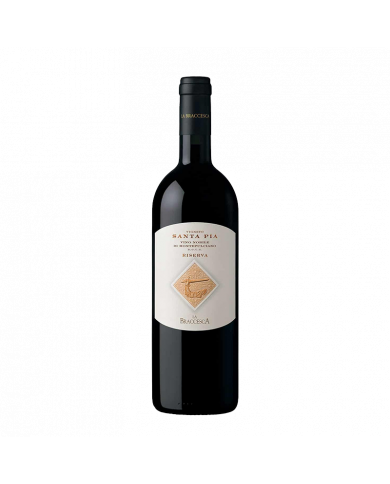
The Vino Nobile di Montepulciano Santa Pia La Braccesca of the Marchesi Antinori was born in the homonymous estate, located on the Sienese hills. It is produced exclusively with Prugnolo Gentile grapes, harvested only by hand during the month of September. Fermentation takes place in stainless steel tanks at a controlled temperature of 28 ° C for 20 days. Subsequently the wine is aged in barrique for 15 months and for another 20 months in the bottle before being put on the market.
SKU:
14067
Brand:
Cantina Marchesi Antinori
Dense ruby color with garnet reflections. The nose expands sensations of plum, mulberry, violet, and then unraveling on wild and licorice tones. In the mouth, warm and enveloping, it declines sumptuous softness and caressing tannins. Ideal together with the silverside with mustard and plums or on the stuffed roast in a crust.
€119.90
SKU:
14066
Brand:
Cantina Marchesi Antinori
Dense ruby color with garnet reflections. The nose expands sensations of plum, mulberry, violet, and then unraveling on wild and licorice tones. In the mouth, warm and enveloping, it declines sumptuous softness and caressing tannins. Ideal together with the silverside with mustard and plums or on the stuffed roast in a crust.
SKU:
14065
Brand:
Cantina Marchesi Antinori
Dense ruby color with garnet reflections. The nose expands sensations of plum, mulberry, violet, and then unraveling on wild and licorice tones. In the mouth, warm and enveloping, it declines sumptuous softness and caressing tannins. Ideal together with the silverside with mustard and plums or on the stuffed roast in a crust.
€65.90
SKU:
14064
Brand:
Cantina Marchesi Antinori
The Chianti Classico "Badia a Passignano" is a famous and intense expression of the Chianti of the Marchesi Antinori . It is a full-bodied and complex red wine, with the unmistakable aromas of berries, cherries and sweet spices. Aged for 14 months in oak barrels
€68.81
SKU:
14063
Brand:
Cantina Marchesi Antinori
Historic Antinori house wine which, since the 2011 vintage, is produced with grapes from the Tignanello estate. It is composed almost entirely of Sangiovese grapes combined with a small amount of other complementary varieties. A wine that presents itself as the full expression of the quality and elegance of the Sangiovese of these areas.
SKU:
14019
Brand:
Cantina Marchesi Antinori
Ruby mantle tending to garnet. On the nose, sensations of violet, berries and plum follow one another in sequence, then black pepper, pleasant mentholated touches and sensations of leather and chocolate. In the mouth it expresses vigor and roundness, with tannins of excellent caliber that anticipate a very long finish. Ideal with delicious stuffed meats such as quail or pigeon.
€73.44
SKU:
14018
Brand:
Cantina Marchesi Antinori
Ruby mantle tending to garnet. On the nose, sensations of violet, berries and plum follow one another in sequence, then black pepper, pleasant mentholated touches and sensations of leather and chocolate. In the mouth it expresses vigor and roundness, with tannins of excellent caliber that anticipate a very long finish. Ideal with delicious stuffed meats such as quail or pigeon.
€82.47
SKU:
14017
Brand:
Cantina Marchesi Antinori
Ruby mantle tending to garnet. On the nose, sensations of violet, berries and plum follow one another in sequence, then black pepper, pleasant mentholated touches and sensations of leather and chocolate. In the mouth it expresses vigor and roundness, with tannins of excellent caliber that anticipate a very long finish. Ideal with delicious stuffed meats such as quail or pigeon.
€76.13
SKU:
14016
Brand:
Cantina Marchesi Antinori
Ruby mantle tending to garnet. On the nose, sensations of violet, berries and plum follow one another in sequence, then black pepper, pleasant mentholated touches and sensations of leather and chocolate. In the mouth it expresses vigor and roundness, with tannins of excellent caliber that anticipate a very long finish. Ideal with delicious stuffed meats such as quail or pigeon.
SKU:
14015
Brand:
Cantina Marchesi Antinori
Intense ruby red, the nose perceives intense warm notes of ripe red fruit and spices accompanied by deep floral notes. On the palate it is persuasive, rich, enveloping and sweet thanks to the presence of ready, thick and soft tannins. The balance between freshness and body contributes to an excellent expression in the flavor and to a long and extremely pleasant persistence of taste.
SKU:
14014
Brand:
Cantina Marchesi Antinori
Intense ruby red, the nose perceives intense warm notes of ripe red fruit and spices accompanied by deep floral notes. On the palate it is persuasive, rich, enveloping and sweet thanks to the presence of ready, thick and soft tannins. The balance between freshness and body contributes to an excellent expression in the flavor and to a long and extremely pleasant persistence of taste.
SKU:
14013
Brand:
Cantina Marchesi Antinori
Intense ruby red, the nose perceives intense warm notes of ripe red fruit and spices accompanied by deep floral notes. On the palate it is persuasive, rich, enveloping and sweet thanks to the presence of ready, thick and soft tannins. The balance between freshness and body contributes to an excellent expression in the flavor and to a long and extremely pleasant persistence of taste.
SKU:
14012
Brand:
Cantina Marchesi Antinori
Powerful and very balanced, it presents itself to the eye with a compact ruby color. The nose shows elegant sensations of ripe blackberry, oriental spices, wild flowers, pink pepper, white chocolate, leather and rhubarb. In the mouth it is balanced to the micron, with a powerful caloric note adequately balanced by fresh-savory stitching. The tannins, as expected, are tapered and stretch up to the very long finish dominated by sweet spices. Ideal with important meats such as thrush in truffle sauce or venison with juniper.
€245.00
SKU:
14011
Brand:
Cantina Marchesi Antinori
Powerful and very balanced, it presents itself to the eye with a compact ruby color. The nose shows elegant sensations of ripe blackberry, oriental spices, wild flowers, pink pepper, white chocolate, leather and rhubarb. In the mouth it is balanced to the micron, with a powerful caloric note adequately balanced by fresh-savory stitching. The tannins, as expected, are tapered and stretch up to the very long finish dominated by sweet spices. Ideal with important meats such as thrush in truffle sauce or venison with juniper.
SKU:
14010
Brand:
Cantina Marchesi Antinori
Powerful and very balanced, it presents itself to the eye with a compact ruby color. The nose shows elegant sensations of ripe blackberry, oriental spices, wild flowers, pink pepper, white chocolate, leather and rhubarb. In the mouth it is balanced to the micron, with a powerful caloric note adequately balanced by fresh-savory stitching. The tannins, as expected, are tapered and stretch up to the very long finish dominated by sweet spices. Ideal with important meats such as thrush in truffle sauce or venison with juniper.
€219.00
SKU:
14009
Brand:
Cantina Marchesi Antinori
Powerful and very balanced, it presents itself to the eye with a compact ruby color. The nose shows elegant sensations of ripe blackberry, oriental spices, wild flowers, pink pepper, white chocolate, leather and rhubarb. In the mouth it is balanced to the micron, with a powerful caloric note adequately balanced by fresh-savory stitching. The tannins, as expected, are tapered and stretch up to the very long finish dominated by sweet spices. Ideal with important meats such as thrush in truffle sauce or venison with juniper.
SKU:
14008
Brand:
Cantina Marchesi Antinori
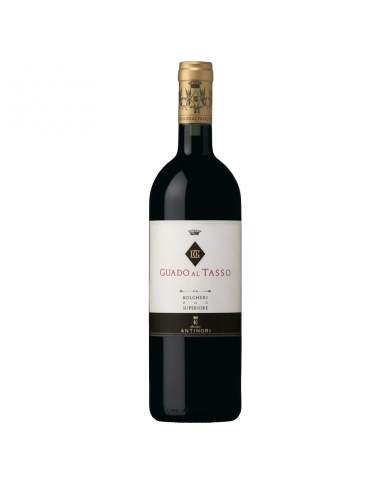
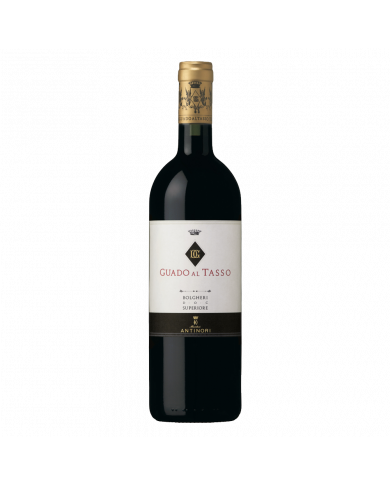
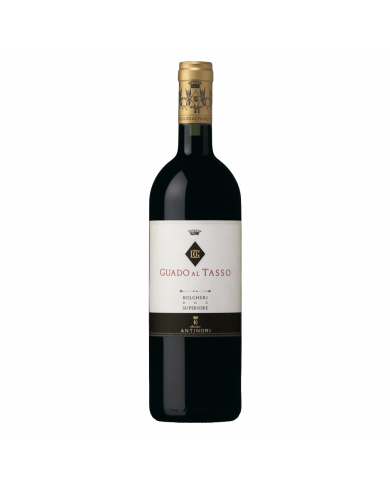
Guado al Tasso Bolgheri Superiore is the symbolic wine of the Estate and one of the best wines produced by Antinori , it is a powerful red wine, extremely elegant and rich in exceptional balsamic notes and ripe fruit. It is composed of 5% Cabernet Franc, 50% Cabernet Sauvignon, 45% Merlot grown in the best vineyards of the estate.
SKU:
14007
Brand:
Cantina Marchesi Antinori
Guado al Tasso Bolgheri Superiore is the symbolic wine of the Estate and one of the best wines produced by Antinori , it is a powerful red wine, extremely elegant and rich in exceptional balsamic notes and ripe fruit. It is composed of 5% Cabernet Franc, 50% Cabernet Sauvignon, 45% Merlot grown in the best vineyards of the estate.
€195.00
SKU:
14006
Brand:
Cantina Marchesi Antinori
Guado al Tasso Bolgheri Superiore is the symbolic wine of the Estate and one of the best wines produced by Antinori , it is a powerful red wine, extremely elegant and rich in exceptional balsamic notes and ripe fruit. It is composed of 5% Cabernet Franc, 50% Cabernet Sauvignon, 45% Merlot grown in the best vineyards of the estate.
€252.49
SKU:
14005
Brand:
Cantina Marchesi Antinori
Guado al Tasso Bolgheri Superiore is the symbolic wine of the Estate and one of the best wines produced by Antinori , it is a powerful red wine, extremely elegant and rich in exceptional balsamic notes and ripe fruit. It is composed of 5% Cabernet Franc, 50% Cabernet Sauvignon, 45% Merlot grown in the best vineyards of the estate.
€209.35
SKU:
14004
Brand:
Cantina Marchesi Antinori
Guado al Tasso Bolgheri Superiore is the symbolic wine of the Estate and one of the best wines produced by Antinori , it is a powerful red wine, extremely elegant and rich in exceptional balsamic notes and ripe fruit. It is composed of 5% Cabernet Franc, 50% Cabernet Sauvignon, 45% Merlot grown in the best vineyards of the estate.
€159.90
SKU:
13950
Brand:
Il Palagio
Il Palagio is located above the picturesque Tuscan town of Figline Valdarno. For the last two decades it has been the summer home of Sting and Trudie's growing family and the site of many of their intimate parties, private concerts and anniversaries. The villa, its guest houses, vineyards and olive groves have been lovingly restored by Sting and Trudie and is now a fully functioning, living organic farm and vineyard.
€38.94
€36.42
SKU:
13924
Brand:
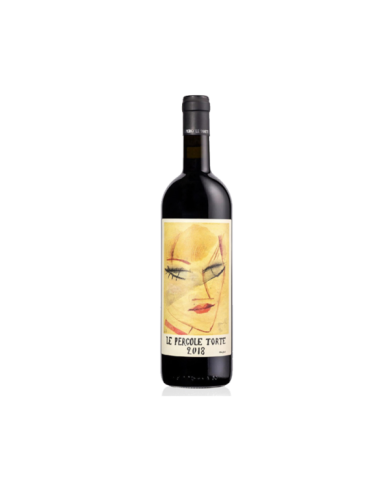
Montevertine
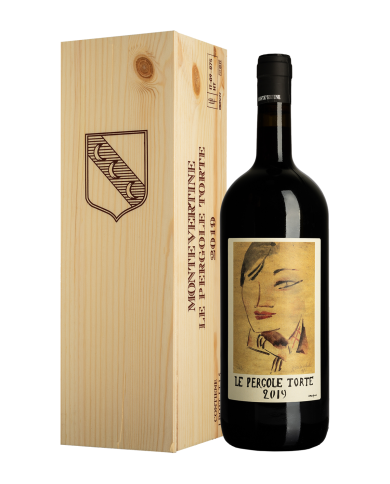
Aqua Vitae Le Pergole Torte It is a product obtained by distillation with steam cauldrons from the dripping pomace of Sangiovese grapes from the harvest of the "Le Pergole Torte" vineyard, located at the Montevertine farm.
€84.51
SKU:
13923
Brand:
Montevertine
Produced for the first time in the 1977 vintage, it was the first pure Sangiovese vinified in our area of Radda in Chianti. The grapes come from our historic vineyards, planted between 1968 and 1999. It ages for one year in Allier barriques and one year in Slavonian oak barrels.
€84.50
SKU:
13921
Brand:
Montevertine
It is our simplest wine and suitable for all occasions. It is produced with Sangiovese, Canaiolo and Colorino grapes from all our vineyards, it ages for a year in Slavonian oak barrels.
€39.90
SKU:
13915
Brand:
Montevertine
Produced for the first time in the 1977 vintage, it was the first pure Sangiovese vinified in our area of Radda in Chianti. The grapes come from our historic vineyards, planted between 1968 and 1999. It ages for one year in Allier barriques and one year in Slavonian oak barrels.
€337.94
€30.87
SKU:
13854
Brand:
San Felice
40 years after the acquisition of the Campogiovanni estate in Montalcino, San Felice 's interest has shifted to another area of Tuscan wine excellence: Bolgheri. Faithful to its philosophy of producing exclusively wines from proprietary grapes, 6 hectares of vineyards have been identified in Le Sondraie. The vines have an average age of 5 years and are planted on a silt-sandy soil typical of the area. The varieties are mainly Cabernet Sauvignon (2 ha) and Merlot (4 ha). Two wines are produced: Bolgheri and Bolgheri Superiore.
€49.17
SKU:
13849
Brand:
San Felice
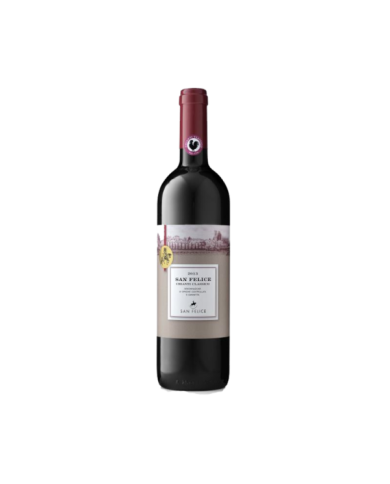
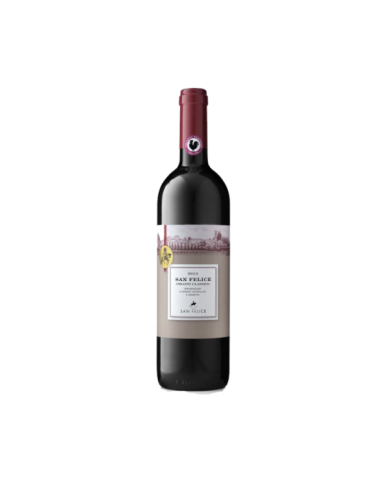
Produced entirely with native grapes, Sangiovese mainly with additions of Colorino and Pugnitello, it is a typical Chianti Classico, of medium structure, with a strong personality that stands out in particular for its elegance. The vinification takes place in the traditional way, with medium length maceration, followed by a maturation of the wine for 12 months in Slavonian oak barrels.
€64.97
SKU:
13848
Brand:
San Felice
Produced entirely with native grapes, Sangiovese mainly with additions of Colorino and Pugnitello, it is a typical Chianti Classico, of medium structure, with a strong personality that stands out in particular for its elegance. The vinification takes place in the traditional way, with medium length maceration, followed by a maturation of the wine for 12 months in Slavonian oak barrels.
€26.88
SKU:
13847
Brand:
San Felice
Produced entirely with native grapes, Sangiovese mainly with additions of Colorino and Pugnitello, it is a typical Chianti Classico, of medium structure, with a strong personality that stands out in particular for its elegance. The vinification takes place in the traditional way, with medium length maceration, followed by a maturation of the wine for 12 months in Slavonian oak barrels.
€11.86
SKU:
13846
Brand:
San Felice
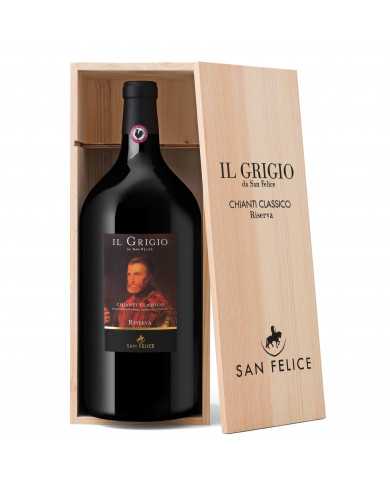
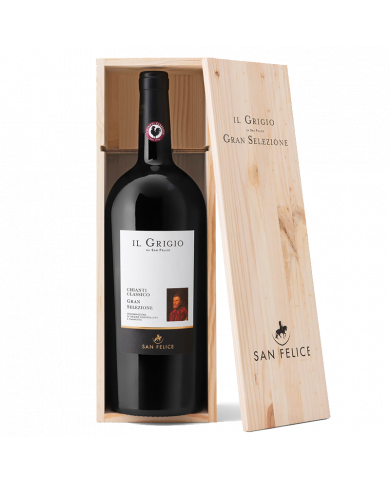
Only the best Sangiovese grapes selected in the company's Chianti Classico vineyards make up this Reserve, a valid combination of tradition and modernity. It ages for about 24 months in wood, of which a part (about 20%) in barriques, and one year in bottle. The label depicts a famous painting by Titian 'Man with armor'.
€142.74
SKU:
13840
Brand:
San Felice
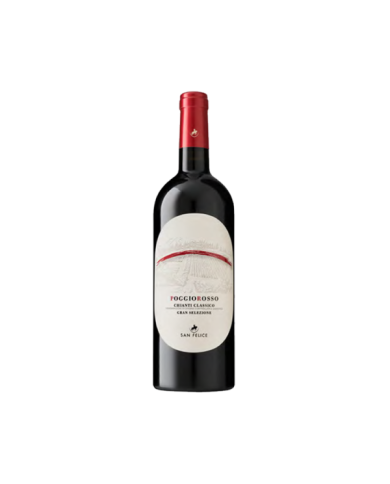
Already towards the end of the 70s, in the locality of Poggio Rosso, some selected clones of Sangiovese were planted several times. Poggio Rosso is the result of a careful selection of this grape from some plots of the vineyard of the same name and today represents the excellence of the San Felice terroir. Wine of great concentration and elegance, produced in limited quantities and, especially in the best vintages, it ages for about 20 months in 500-liter tonneaux and another 12 months in the bottle.
€53.92
SKU:
13824
Brand:
Il Palagio
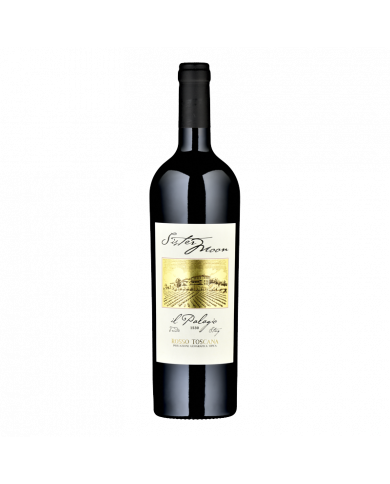
Named after Sting's song "Sister Moon", this was the first Tuscan IGT wine produced at the Palagio. With an alcohol content of 14.9% it ages for 24 months in new French barriques.
€47.90
SKU:
13823
Brand:
Il Palagio
Message in a Bottle now joins our acclaimed wine portfolio. A versatile and highly drinkable Tuscan IGT wine, it goes well with many dishes. With an alcohol content of 13.2% it is aged for 12 months in French oak barrels.
SKU:
13730
Brand:
Fattoria Felsina
The Rancia vineyard takes its name from the ancient farm that stands next to a pre-existing Benedictine monastery.
€140.91
SKU:
13728
Brand:
Fattoria Felsina
Chianti Classico, 100% Sangiovese from Castelnuovo Berardenga, produced for the first time in 1967. Extremely heterogeneous soils, mirror of the territory, the vineyards develop with south-west exposure at about 320-420 m slm where the wind makes itself felt. The higher ground is rich above all in quartz sandstone, while the land bordering the Colli Senesi area is rich in stratiform sandstone and silt. Since the vineyards are located at different altitudes, the harvest is done at different times but in any case within the first 3 weeks of October.
€11.90
SKU:
13709
Brand:
Frescobaldi
Witness of an environment that is still uncontaminated and unchanged over time, cradle of breathtaking landscapes, Faunae expresses the essence of Chianti Classico, respecting its territory.
€14.50
SKU:
13680
Brand:
San Felice
The Grigio Gran Selezione, 80% Sangiovese enriched with ancient indigenous varieties such as Abrusco, Pugnitello, Black Malvasia, Ciliegiolo and Mazzese, is born only from our most suitable soils, which contribute to the complexity of the wine, keeping intact the elegance and expression of the terroir of San Felice .
€74.16
SKU:
13679
Brand:
San Felice
The Grigio Gran Selezione, 80% Sangiovese enriched with ancient indigenous varieties such as Abrusco, Pugnitello, Black Malvasia, Ciliegiolo and Mazzese, is born only from our most suitable soils, which contribute to the complexity of the wine, keeping intact the elegance and expression of the terroir of San Felice .
€68.66
SKU:
13670
Brand:
San Felice
Tradition and Future The first Supertuscan in Chianti Classico since 1968. It has an important history and today it stands out in the wine market of this category for a reason: it combines the tradition of international vines such as Cabernet and Merlot with the inclusion of a native variety, il Pugnitello, which is a unicum of San Felice .
€26.47
SKU:
13614
Brand:
Carpineto
€5.98
€4.78
Novello wine is the first product to be consumed from the harvest. However, by novello we do not mean only the new wine of the vintage, but the wine produced with particular techniques, designed to give those peculiar aromas and those characteristics of softness and roundness that make it suitable for immediate consumption.
SKU:
13604
Brand:
Fattoria le Pupille
Saffredi is a robust, rich and complex Supertuscan, produced with a Bordeaux blend and aged in barriques for 18 months. Ample and intense hints of berries, spices and balsamic herbs emerge from a round and velvety texture, of great balance and persistence: an exuberant expression of the Tuscan Maremma
€89.67
SKU:
13598
Brand:
Fattoria le Pupille
Saffredi is a robust, rich and complex Supertuscan, produced with a Bordeaux blend and aged in barriques for 18 months. Ample and intense hints of berries, spices and balsamic herbs emerge from a round and velvety texture, of great balance and persistence: an exuberant expression of the Tuscan Maremma
€93.12
SKU:
13498
Brand:
Ferrari
The Toscana Rosso Aliotto of Tenute Lunelli was born in vineyards located in the Podernovo estate, in the municipality of Terricciola, in the extraordinary terroir of the Pisan hills.
€11.10
SKU:
13467
Brand:
San Giusto a Rentennano
€12.35
€10.49
Yield per vine 1 kg, harvest 25-28 September. The wine is obtained by extracting the must from the Chianti Classico, Riserva, Percarlo, Ricolma tanks within 12-24 hours of placing the grapes, and partly with grapes (Merlot, Sangiovese, Canaiolo) harvested early and vinified in white. Slow fermentation at a temperature below 23°C, with the addition of about 15% of de-stemmed grapes. Maturation for 5 months in steel. The wine is subjected to light filtering, so it may have natural sediment. 8,200 bottles bottled on March 20th. Organic wine.
€12.35
€10.49
€10.90
SKU:
13386
Brand:
Avignonesi
Avignonesi 's Vin Santo di Montepulciano is a sweet wine of great elegance obtained from Malvasia and Trebbiano and aged for 10 years in casks. The nose releases intense aromas of caramel, chocolate, honey, orange peel and Mediterranean herbs. The taste is rich and enveloping with notes of figs, almonds, lemon and coffee
€54.83
SKU:
13385
Brand:
Avignonesi
Avignonesi 's Vin Santo Occhio di Pernice is an extraordinarily rich sweet wine, produced from Sangiovese grapes and aged for 10 years in kegs. It exudes aromas of dates, dried fruit, panforte and sweet spices. On the palate it is sweet and sensual, infinite, with notes of cedar, salty candies and freshly baked biscuits
€82.24
SKU:
13363
Brand:
San Felice
This selection of chardonnay, sauvignon blanc and semillon grapes is the demonstration of how an excellent white wine can also be produced in a territory more traditionally suited to the production of red grapes. Chardonnay, harvested when fully ripe, brings structure and complexity to the Sauvignon freshness and acidity. The small French oak barrels, where part of the wine ferments and ages for about 9 months, give it a pleasant and discreet toasted note.
€13.76
SKU:
13273
Morellino di Scansano del Podere 414 is a medium-bodied, soft and fresh red wine, aged for 12 months in wood. The notes of red fruit and sweet spices integrate with the fine and smooth tannins in a balanced and expressive structure, with good intensity and persistence
€24.95
SKU:
13261
Brand:
Carpineto
Chianti Classico Riserva is produced exclusively in the oldest wine-growing area of Tuscany, in a landscape of breathtaking beauty.
€103.58
SKU:
13256
Brand:
Carpineto
Obtained from fully ripe grapes from a vineyard located on the hills of the Valdarno. The must is macerated with its skins at a low temperature and is subsequently processed fresh from fermentation in an artisanal distillery not far from the cellar.
€29.40
Discover the best wines of Tuscany: an unforgettable experience!
Tuscany is one of Italy's most renowned wine regions, and for decades its excellent wines have been appreciated worldwide. Tuscan wines offer a range of flavors, from sweet and fruity to robust and intense. Furthermore, this region also boasts a rich traditional culture and a long history of winemaking, making it an ideal destination for tourists seeking an unforgettable food and wine experience.
Why is Tuscany famous for its wine?
Tuscany has a mild climate and rich, fertile soil, making it one of Italy's most suitable regions for wine production. The region is particularly known for its red wines, such as Chianti, Brunello di Montalcino, and Vino Nobile di Montepulciano. These wines are made from Sangiovese grapes, the most widely grown grape in Tuscany. The region also has a rich tradition of white wines, such as Vernaccia di San Gimignano, Vermentino, and Trebbiano.
How to choose the right Tuscan wine?
When choosing a Tuscan wine, the first thing to consider is your personal taste. If you prefer sweet, fruity wines, a white wine like Vernaccia di San Gimignano or Vermentino is the right choice. If you prefer more robust, structured wines, then a red wine like Chianti or Vino Nobile di Montepulciano is better.
Furthermore, it's also important to consider the vintage of the wine you're purchasing. Wine quality depends on the climatic conditions during the period in which the grapes were grown, so before purchasing a bottle, it's a good idea to ask the producer about the vintage.
Where to find Tuscan wines?
Tuscan wines are readily available in supermarkets and specialty shops, but to savor the finest, highest-quality wines, you can also visit a winery. Tuscany boasts numerous wineries that organize guided tours and tastings to showcase their wines. Visiting one is a truly unique experience, as you have the opportunity to learn firsthand how wine is made and taste the different varietals.
What are the most famous wines of Tuscany?
Tuscany's most famous wines are Chianti, Brunello di Montalcino, Vino Nobile di Montepulciano, and Vernaccia di San Gimignano. Chianti is a light and fruity red wine, while Brunello di Montalcino is a red wine with great intensity and structure. Vino Nobile di Montepulciano is a full-bodied and complex red wine, while Vernaccia di San Gimignano is a dry white wine with fruity and floral notes.
How to pair Tuscan wines?
Tuscan wines are ideal paired with meat, fish, vegetable, or cheese dishes. For example, Chianti pairs excellently with meat dishes such as roasts or braised meats, while Vino Nobile di Montepulciano is perfect with fish dishes such as cod or salmon. Brunello di Montalcino pairs well with vegetable dishes such as soups and broths, while Vernaccia di San Gimignano is ideal with aged cheeses.
How to store Tuscan wines?
Tuscan wines should be stored in a cool, dry place, away from heat and direct light. The ideal storage temperature is between 10 and 14°C. Red wines can be stored for up to 5 years, while white wines should not be stored for more than 2 years. Furthermore, it's important to remember that wines should be stored horizontally, so that the cork is always in contact with the wine.
Tuscan Wine Denomination
Tuscany is one of the most important wine regions in Italy and the world. The region is famous for its fine wines such as Chianti , Brunello di Montalcino , and Vino Nobile di Montepulciano. These wines have either a controlled designation of origin (DOC) or a controlled and guaranteed designation of origin (DOCG). In this article, we'll explore the appellations of Tuscan wines and how they're produced.
Introduction to the Wine Denominations of Tuscany
Wine appellations are a classification system that guarantees the quality and geographical origin of Italian wines. There are three levels of appellation: Vino da Tavola, DOC, and DOCG. Table wines have no geographical or grape variety restrictions, while DOC and DOCG wines are produced in specific geographical areas and with specific grapes.
DOC wines of Tuscany
Tuscan DOC (Denominazione di Origine Controllata) wines are produced in specific areas of the region and are made with specific grapes. These wines have strict production requirements, such as grape yield, alcohol content, and minimum aging time.
Chianti DOCG
Chianti is one of the best-known and most popular Italian wines, produced primarily in the Chianti region, between the cities of Florence, Siena, and Arezzo. The wine is made primarily from Sangiovese grapes and may also contain other red grapes such as Canaiolo, Colorino, and Merlot. Chianti DOCG is a dry red wine that can be classified by its aging period: Chianti, Chianti Riserva, and Chianti Classico .
Brunello di Montalcino DOCG
Brunello di Montalcino is a DOCG wine produced in the Montalcino area, in the province of Siena. It is made with Sangiovese grapes, known locally as Brunello. The wine is aged for at least five years and must be produced exclusively with grapes from the Montalcino area.
Vino Nobile di Montepulciano DOCG
Vino Nobile di Montepulciano is a DOCG wine produced in the Montepulciano area, in the province of Siena. It is made primarily from Sangiovese grapes and must be aged for at least two years. The name "Nobile" derives from this wine's reputation during the Renaissance.
IGT wines from Tuscany
IGT (Indicazione Geografica Tipica) is an Italian wine designation that indicates a broader geographical area than DOC and DOCG wines. These wines can be made with grape varieties other than those specified by the DOC and DOCG designations.
Super Tuscan
Super Tuscans are IGT wines produced in Tuscany that do not comply with the DOC and DOCG designations. These wines are often made with international grapes such as Cabernet Sauvignon, Merlot, and Syrah, and are aged in French oak barrels. Super Tuscans are generally full-bodied and intense red wines, with a high concentration of fruit.
Tuscany is a world-renowned wine region, and its controlled and guaranteed designations of origin guarantee the quality of its wines. Tuscan DOC and DOCG wines are produced in specific geographical areas and with specific grapes, while Tuscan IGT wines have fewer restrictions in terms of geographical area and grape variety. Each appellation has its own unique characteristics and offers a different tasting experience. Regardless of which wine you choose, Tuscan wines are definitely a winning choice.
Frequently Asked Questions
What are the main Tuscan wine denominations?
The main Tuscan wine denominations are Chianti DOCG, Brunello di Montalcino DOCG, Vino Nobile di Montepulciano DOCG and IGT.
What do DOC and DOCG mean?
DOC stands for Controlled Designation of Origin, while DOCG stands for Controlled and Guaranteed Designation of Origin. These designations guarantee the quality and geographical origin of Italian wines.
What are the production requirements for DOC and DOCG wines from Tuscany?
Tuscan DOC and DOCG wines have strict production requirements, such as grape yield, alcoholic strength, and minimum aging time.
What are Super Tuscans?
Super Tuscans are IGT wines produced in Tuscany that do not comply with the DOC and DOCG designations. These wines are often made with international grapes such as Cabernet Sauvignon, Merlot, and Syrah.
What are the most famous DOCG wines from Tuscany?
The most famous DOCG wines of Tuscany are Chianti DOCG, Brunello di Montalcino DOCG and Vino Nobile di Montepulciano DOCG .