

 Italiano
 Deutsch






There are no more items in your cart
SKU:
16006
Brand:
Kandèa F.lli Tullio Cataldo
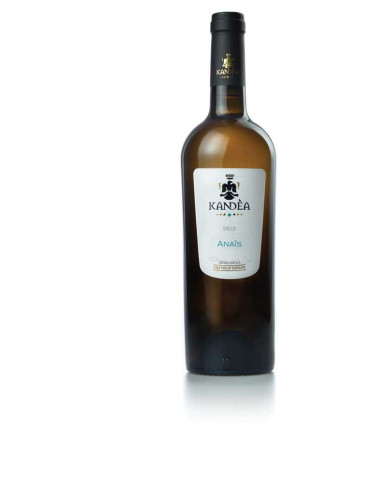
A true delight of whites, entirely produced from our grapes of the Greco vine. Its name and its origin derive from the "Aminea Gemina", whose meaning refers to the People of the Aminei, coming from ancient Greece. Gratitude goes to this people for having imported splendid vines into our peninsula characterized by clusters that branch out twins from the same stem (gemini). This vine finds in our territory the right habitat to express wines of great minerality and freshness. Anais makes these characteristics its own, surprisingly integrating them with floral scents and delicate citrus scents of citron and grapefruit. To characterize the finish of this wine is a sapidity rich in elegance blends with sensations that recall ripe fruits!
€13.66
SKU:
16004
Brand:
Kandèa F.lli Tullio Cataldo
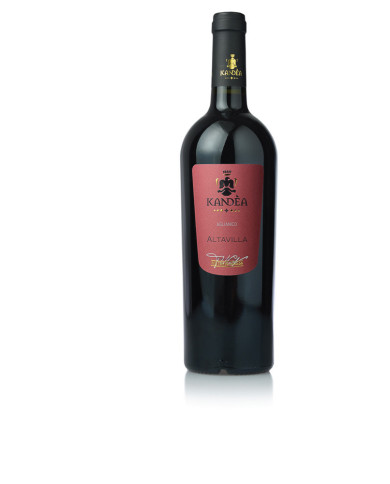
Aglianico, brought to Italy by the Greeks as early as the 6th century aC , takes its name from the "Vitis Hellenica", whose qualities are repeatedly sung in the odes of Horace and in the writings of masters consigned to history such as Pliny and Virgil. The high complexity and deep structure of Aglianico, grown directly in the company's vineyards, give Altavilla an extraordinary aptitude for aging in the bottle.
€11.90
SKU:
16003
Brand:
Kandèa F.lli Tullio Cataldo
Lord of the Daunia in the land of Puglia, the Uva di Troia vine ties its origins to the myth of Diomedes. Legend has it that the mythical Greek hero, after the Trojan War, sailed across the Adriatic Sea up to the Ofanto River which also flows through our lands. Here, having found the ideal place, he planted some vine shoots brought with him from Troy. Cherrug, respecting the greatness of this vine, comes from a careful selection of these grapes only from the best vintages! After aging for over 10 months, it is left to age in 10/20 hl barrels for about 2 years before being refined in the bottle for a further 6 months. Cherrug involves for its power and elegance, with its intense and refined aromas with hints of licorice, black cherry and ripe black fruits. On the palate it is dry, soft and enveloping. Extraordinarily rich and very long-lived, it becomes even more refined and elegant over the years.
€21.72
SKU:
16002
Brand:
Kandèa F.lli Tullio Cataldo
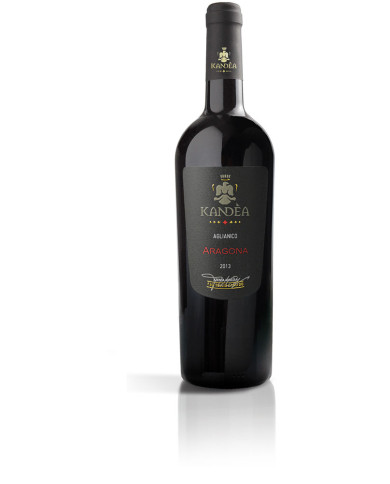
Aragona comes from a careful selection of Aglianico grapes, with a gradual harvest where the knowledge and expertise of the winemaker is combined with the technique of the winemaker to let you taste a unique product. It is aged for one year in French and American oak barriques and completes its aging in the bottle. Its extraordinary richness and elegance reaches its peak already within the first seven years, retaining its characteristics for many years afterwards.
€16.59
SKU:
16000
Brand:
Kandèa F.lli Tullio Cataldo
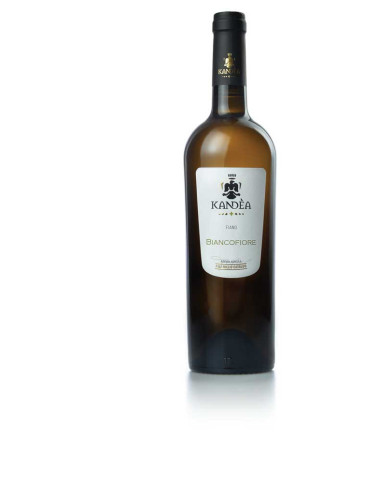
Lord of the whites in the Dauno Subappennino, this inimitable white is entirely produced from our grapes of the Fiano vine, from the Latin "Vitis Apiane"; a name that, going back through the centuries, can be found in the "Naturalis Historia" of the noble Pliny: "... the bees gave the surname of Apiana to this magnificent grape, due to their greed in sucking the grapes!"
€13.30
SKU:
15999
Brand:
Kandèa F.lli Tullio Cataldo
Lord of the Daunia in the land of Puglia, the Uva di Troia vine ties its origins to the myth of Diomedes. Legend has it that the mythical Greek hero, after the Trojan War, sailed across the Adriatic Sea up to the Ofanto River which also flows through our lands. Here, having found the ideal place, he planted some vine shoots brought with him from Troy. Lanario is a subtle balance of fruity notes, spices, sweets, with an intriguing goudron in the the final. Seductive for its class and aromatic intensity, it is quite soft for the component tannins present but not impetuous and annoying, savory and quite fresh. wine of great elegance, where structure and acidity support each other, it becomes even more refined and elegant with the passing of the years.
€13.04
SKU:
15995
Brand:
Kandèa F.lli Tullio Cataldo
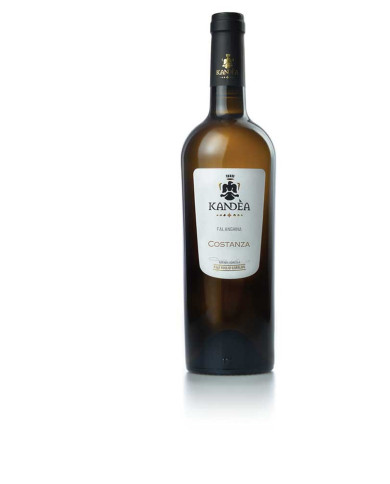
A dry white of great class, entirely produced from our grapes of the Falanghina vine: its origin is lost in the mists of time; the etymology derives from “falanga”, the pole that acted as a guardian to the vine. Our vineyards are close to the Daunia mountains where the mild winds of Apulia meet the cold ones that come from Irpinia; therefore strong temperature variations are generated, to the full advantage of the perfumes and the great minerality of this vine.
€12.05
SKU:
15994
Brand:
Kandèa F.lli Tullio Cataldo
Its softness and appreciable acidity make it possible to create excellent pairings with all pasta-based first courses and rich side dishes. Its good structure and low quantity of tannins also make it suitable for fish-based preparations, especially richly seasoned and flavored roasted fish. Delicious for aperitifs.
€11.48
Daunia denomination
The "Daunia Designation" is a recognized geographical indication for wines produced in the Daunia region, located in the northern part of Puglia, Italy. This designation is synonymous with quality and winemaking tradition, reflecting the distinctive characteristics of the Daunia region and the artisanal skill of its producers.
Origins and Characteristics
Daunia is a region rich in history and culture, known for its hilly landscapes and Mediterranean climate. The grape varieties grown in the region primarily include Nero di Troia, Bombino Nero, and Pampanuto. These varieties give Daunia wines a unique and complex character, reflecting the terroir and the expertise of its winemakers.
Production Methods
Daunia Denomination wines are produced using traditional, artisanal methods. The grapes are harvested by hand and carefully selected before pressing and fermentation. Fermentation can take place in stainless steel or wooden barrels, depending on the desired characteristics of the wine. After fermentation, the wines can be aged in wooden barrels or in bottles before being released for sale.
Sensory Characteristics
The wines of Daunia are distinguished by their aromatic complexity and elegant palate. Nero di Troia offers intense aromas of ripe red fruit, spices, and aromatic herbs, with soft tannins and a pleasant acidity. Bombino Nero offers notes of fresh fruit and white flowers, with a lively freshness and a pleasant minerality. Pampanuto, on the other hand, offers notes of exotic fruit and citrus, with remarkable freshness and persistence.
Name and Certifications
The Daunia denomination is recognized as a Protected Geographical Indication (PGI), guaranteeing the quality and authenticity of the wines produced in the region. The wineries producing these wines must adhere to strict production standards and undergo quality controls to ensure respect for tradition and the uniqueness of the wine.
FAQs
What are the main grape varieties used in the production of Daunia wines?
The main grape varieties used in the production of Daunia wines include Nero di Troia, Bombino Nero and Pampanuto.
What are the recommended pairings for Daunia wines?
Daunia wines pair well with a variety of Apulian and Italian cuisine. Nero di Troia pairs well with roast meats, game, and aged cheeses, while Bombino Nero pairs well with grilled fish, seafood, and vegetable dishes. Pampanuto pairs perfectly with light appetizers, fish-based first courses, and white meat dishes.
How long can Daunia wines be aged?
The aging potential of Daunia wines depends on the type of wine and the specific characteristics of the harvest. Nero di Troia and Bombino Nero can be aged for several years in the bottle, developing greater complexity and structure, while Pampanuto is generally enjoyed young to maintain its freshness and vivacity.
Where can I buy Daunia wines?
Daunia wines are available at specialized wine shops, local wineries, and online wine shops. They can also be found in restaurants and venues that showcase the region's typical products.
What are the distinctive characteristics of Daunia wines?
The wines of Daunia are distinguished by their aromatic complexity, their elegance on the palate, and their typically Daunian character, which reflects the uniqueness of the territory and the artisanal skill of local producers.