

 Italiano
 Deutsch




There are no more items in your cart
SKU:
15249
Brand:
Himmelreich
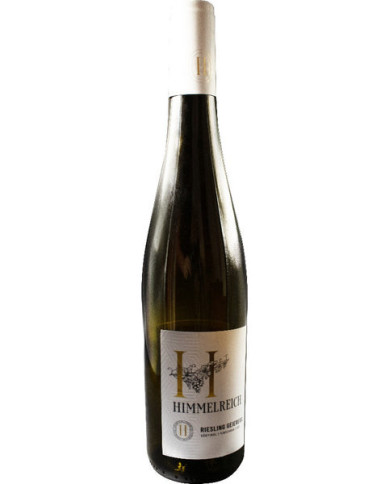
The classy version of the now timeless Riesling: with the "Geieregg" the Himmelreich estate presents the luxury version of its classic white wine. Once poured into the glass, a bright yellow color can be seen adorned with greenish reflections. The nose is captivated by a mature and complex bouquet, consisting of fresh pineapple, sweet peach and grapefruit. "Geieregg" reveals a decidedly full-bodied and juicy mineral taste, supported by deep persistent mineral notes on the palate. It is not only an excellent accompaniment for light appetizers, but also for fish and seafood dishes. By virtue of the particularly refined taste, given by its accentuated minerality and its bouquet, it is in excellent harmony with Asian cuisine.
€36.89
SKU:
15248
Brand:
Himmelreich
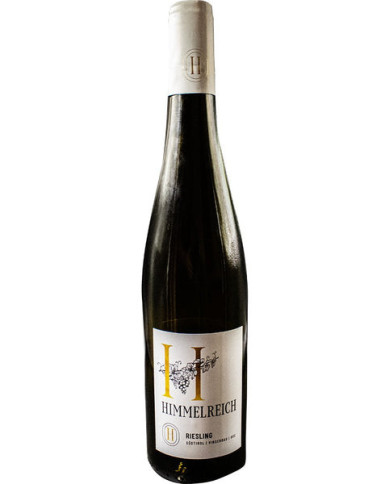
This Riesling is an excellent white wine produced with grapes from the homonymous vine that grows in Val Venosta. The vines are grown on Monte Sole, where there is less rainfall than the entire western area of Alto-Adige. These particular climatic conditions, and the composition of the morainic soils, give the wines of the Himmelreich cellar their unique and unmistakable character. Its robe is of a bright yellow colour, with intervals of greenish reflections. As it enters the glass, Riesling releases a multifaceted bouquet, the first scent that is perceived is sweet and ripe yellow peach. Notes of pineapple with the right point of ripeness, prickly pears and fresh grapefruit follow immediately afterwards. As it passes, the palate is filled with minerality, its juicy and exotic taste is incomparably mineral and refreshing. This fresh white wine with a delicious taste goes perfectly with light appetizers, fish in general and seafood, but is also perfect with Asian dishes.
€24.05
SKU:
15247
Brand:
Himmelreich
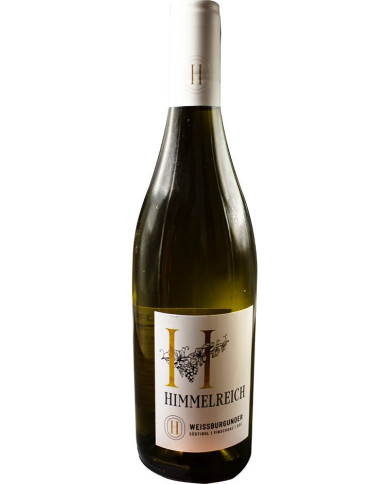
On behalf of the Himmelreich winery, Markus Fliri presents a Pinot Blanc with a strong character and natural charm. The bright yellowish-greenish color hides a characteristic fruity aroma of pear, apple and delicate citrus notes. Compact, fresh and crunchy: this is how the taste profile of Pinot Blanc presents itself, which is, at the same time, enriched by fine mineral notes. This wine is excellent when combined with light appetizers, lightly fried fish and spicy poultry.
€20.25
SKU:
15246
Brand:
Himmelreich
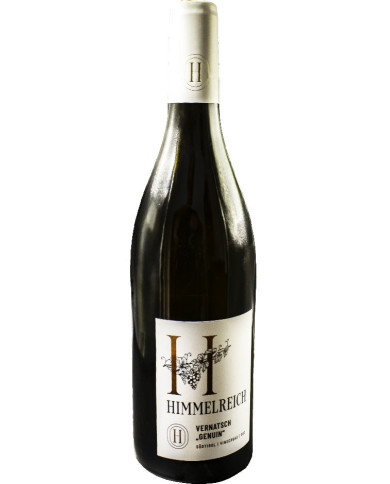
Genuin is a genuine and authentic albeit atypical red wine. Its essence has a thousand facets, and can be savored intensely, revealing its liveliness.
These stupendous qualities are due to the excellent components of the terroir of morainic origin, and to the special temperature range deriving from the presence of Monte Sole.
In the glass its color has a splendid bright red robe. The aromas of raspberries and red cherry arrive intoxicating to the nose, with faint notes of almond, and hints of wild flowers.
A sip capable of conquering and satisfying the palate. Excellent glass to serve in combination with roasts, red meats and medium-aged cheeses.
€18.91
SKU:
14965
Brand:
Cantina Tramin
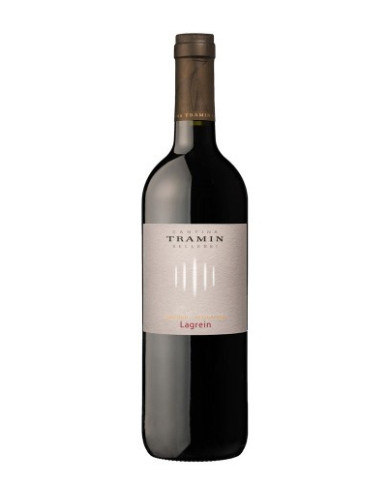
Perhaps the most important native vine of Alto Adige, lagrein leads to elegant and relaxed wines of great pleasure. Tramin's matures in oak barrels of various capacities and in cement tanks for at least 6 months. Perfect to accompany the elegant local gastronomy, it is always elegant and generous at the same time. A wine that cannot be missing from the table of a true enthusiast.
SKU:
14946
Brand:
J.Hütte
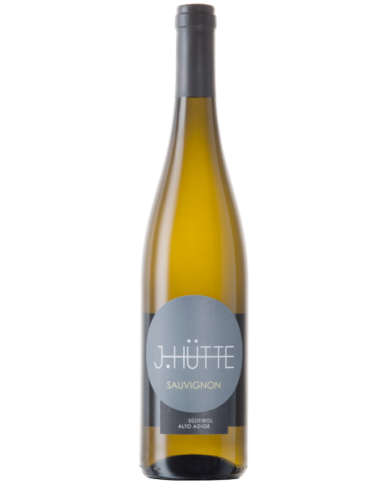
The result of a merger, which took place in 2001, between the Cantina Produttori Santa Maddalena and the Cantina Produttori Gries, this kaleidoscopic winery offers an incredible range, complete in the multiplicity of products and refined in the interpretation of the territory. The quality standard is truly impressive and does not fail to satisfy any palate, even the most demanding one, with the right attention to both native and international vines. A splendid example of quality is this Sauvignon, a semi-aromatic vine, characterized by a great variety of aromas, here incredibly enhanced by the warm, sandy soils and the breezy climate, which constitute the ideal terroir for a great wine.
€17.91
SKU:
14945
Brand:
J.Hütte
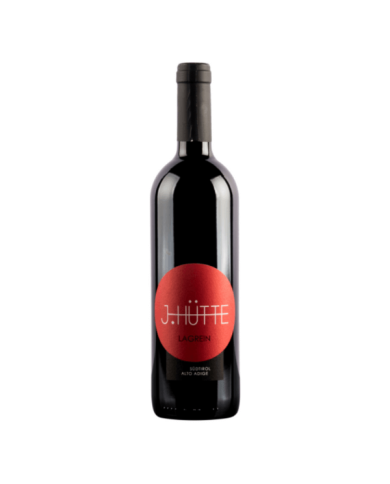
With a rich range of labels with attention to the smallest details, the J.Hütte winery, in the province of Bolzano, has managed in a short time to reach a substantial production volume of out of the ordinary quality, which sees the coexistence of native grapes of the area, such as Moscato Giallo , Lagrein and Gewürztraminer with the international Chardonnay, Pinot Noir and Sauvignon. A mix of sandy and morainic soils, accentuated temperature variations and the support of the Bolzano winery combine to create measured and incisive wines, elegant and refined as only South Tyroleans can be.
€12.86
SKU:
14944
Brand:
J.Hütte
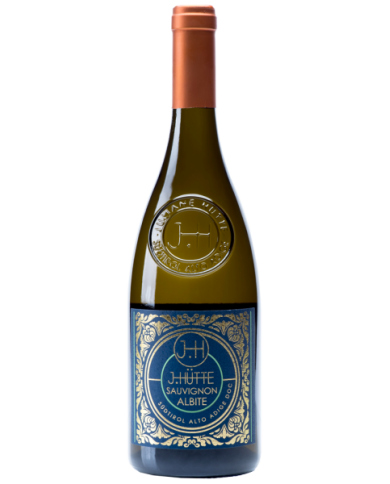
Rich in sodium, albite is a typical mineral of the Alps, in particular of Valle d'Aosta, Piedmont and Alto Adige, where it finds the ideal subsoil for its development, proving to be a faithful ally for the vine. This Sauvignon is proof of this, presenting itself as the perfect synthesis between territory, climate and grape variety, thanks to its typicality which, in combination with albite, gives life to an authentic, complex and characterful label, capable of perfectly combining, to the gentleness of citrus and floral tones, an important structure and a strong minerality.
€25.47
SKU:
14919
Brand:
Blumenfeld
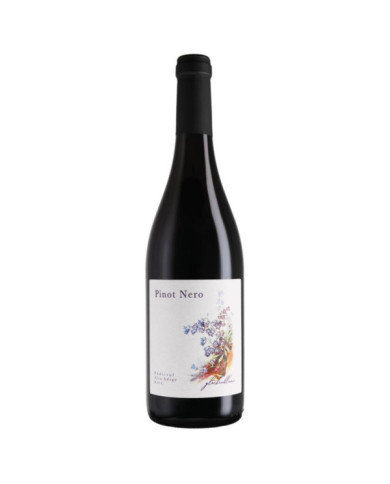
Blumenfeld's Pinot Noir is a typical red wine from Alto Adige, which comes from the warm and well-ventilated soils surrounding the municipality of Bolzano.
The grape harvest takes place in September. The vinification takes place in steel at a controlled temperature, followed by a short maturation in oak barrels.
The color is ruby red. It opens on the nose with fruity aromas of cherry, plum and raspberry that intertwine with refined notes of licorice and violet. The palate is velvety and elegant, medium structured, characterized by good tannins.
To be savored in the company of beef and game birds, it is appreciated with medium-aged cheeses.
€14.91
SKU:
14915
Brand:
Abbazia di Novacella
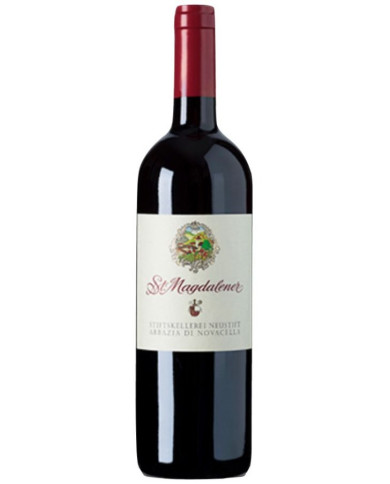
St. Magdalener Sudtirol Kofleitnhof Doc 2019 - Novacella Abbey
Grapes: Schiava 100% It is the most full-bodied of the Schiava grape wines, with a brilliant ruby red colour; as it ages it takes on brick-like reflections. Floral and fruity; hints of cherries and violets. Harmonious and velvety, with a slight aftertaste of bitter almonds. It goes well with game first courses, white meats with light seasonings.
€11.90
€16.97
SKU:
14477
Brand:
Von Blumen
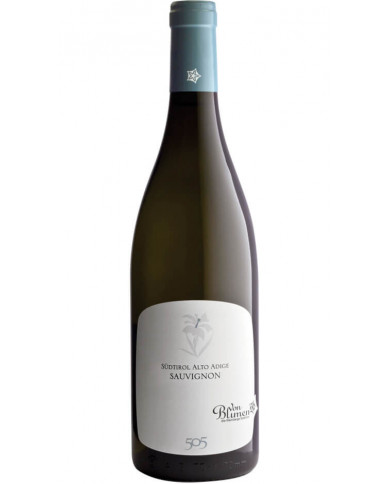
For more than a century this vine, originally from France and precisely from the Loire Valley area, has been grown on the hills of Alto Adige. The grape harvest takes place by hand, as in the past, starting from the beginning of September. After a gentle destemming, the grapes undergo a short cold maceration in a stainless steel press. The alcoholic fermentation takes place in steel tanks at a controlled temperature. At the end of alcoholic fermentation, the wine is kept in contact with the lees, in stainless steel containers for about 6 months. The Sauvignon has a yellow color with light green reflections. On the nose the scent is fresh, with extravagant hints of nettle, pepper, tomato leaves and anise. On the palate the flavor is intense and persistent with a good aroma and a savory and gritty acidity. A versatile goblet that goes perfectly with all courses at the table and after the first sip it will take you back to the unspoiled nature on the slopes of Monte Corno.
€18.45
Kulinarik: Erleben Sie die Denomination Alto Adige Südtirol!
Südtirol, a region in Trentino-Alto Adige, Italy, is one of the largest wine-producing appellations in the country. Nestled in the heart of the Alps, this wine region produces premium wines from indigenous grapes grown in vineyards nestled in the mountains. The Alto Adige Südtirol ( DAAS ) appellation is a protected wine-growing area offering numerous high-quality wine options. The grapes grown in this area are traditionally cultivated according to sustainable agricultural principles. Here, a combination of soil, climate, and grape varieties give the wines a unique character recognized worldwide.
If you want to discover the grandeur of the Alto Adige Südtirol appellation, you've come to the right place. In this article, we'll explore the history, wines, and culinary culture of this region, so get ready to explore this amazing world!
The history of the Alto Adige Südtirol denomination
The Alto Adige Südtirol appellation was founded in 1978 and is one of Italy's largest wine appellations. It encompasses 44 municipalities in the region, spanning the provinces of Bolzano and Trento. The wine region is divided into four subzones, each with unique characteristics in terms of soil, climate, and grape varietals.
The success of this wine region is due to the commitment of local farmers, who have dedicated themselves to growing grapes traditionally, according to sustainable agricultural principles. Due to the diverse terroir and climate, this area offers a wide variety of superior wines.
The wines of the Alto Adige Südtirol denomination
The Alto Adige Südtirol appellation is known for its white wines, which are among the best in Italy. The range of white wines includes varieties such as Chardonnay, Pinot Grigio, and Sauvignon Blanc.
In addition to white wines, this wine region also produces red wines, including Pinot Noir, Lagrein, Merlot, and Cabernet Sauvignon. DAAS also produces rosé wines, such as Pinot Grigio Rosato and Merlot Rosato. This area is also famous for its sweet and straw wines, such as Sylvaner Dolce, Gewürztraminer Dolce, and Moscato Giallo.
The culinary culture of the Alto Adige Südtirol denomination
Like all regions of Trentino-Alto Adige, the Alto Adige Südtirol appellation has a rich culinary tradition. The region's cuisine is a blend of Italian, Austrian, and German influences, with a touch of modernity.
The region's main dishes include canederli, a type of dumpling made with stale bread and spices, and Knödel, a potato dumpling that can be served as a side dish or main course. Other typical dishes include bread soup, a soup made with bread and vegetables, and cheese dumplings, a sweeter version of traditional dumplings.
The region is also known for its cheeses, such as Trentingrana and Puzzone di Moena. Let's not forget the desserts, such as apple pies and Christmas cookies.
The Alto Adige Südtirol appellation is a paradise for wine lovers
The Alto Adige Südtirol appellation is a paradise for sommeliers and wine lovers. The region offers a wide variety of superior wines, all produced according to sustainable farming principles. The wines from this area have a unique character that is appreciated worldwide.
Furthermore, the region also offers a rich culinary culture that is the perfect complement to the local wines. If you too would like to taste the wines and dishes of the Alto Adige Südtirol appellation, don't hesitate to visit this splendid region and discover everything it has to offer.