

 Italiano
 Deutsch




There are no more items in your cart
SKU:
15550
Brand:
Monchiero Carbone
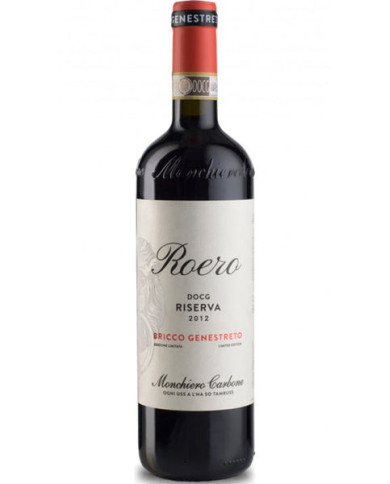
Bricco Genestreto is a wine of great intensity and potential born from Francesco Monchiero's desire to express all his ability and passion in a Nebbiolo that was "powerful". After bottling, before being tasted and marketed, this wine is kept in the cellar for 8 years.
The first vintage is of only 588 bottles, all numbered, an amazing limited edition to try.
A wine that wears a brilliant garnet red color to the glass. It seduces the sense of smell with its intent and ample pleasant bouquet punctuated by fruity hints of plum that blend sinuously with balsamic nuances of dried flowers, licorice and sweet tobacco.
It enters the mouth demonstrating from the first sip an enveloping, harmonious, full and velvety taste. It conquers the palate with its intense balsamic notes and long persistence.
It expresses its maximum potential in combination with dishes based on meat, game, roasts rich in aromas and intense flavors, ribs or long-aged cheeses.
€64.66
SKU:
15549
Brand:
Monchiero Carbone
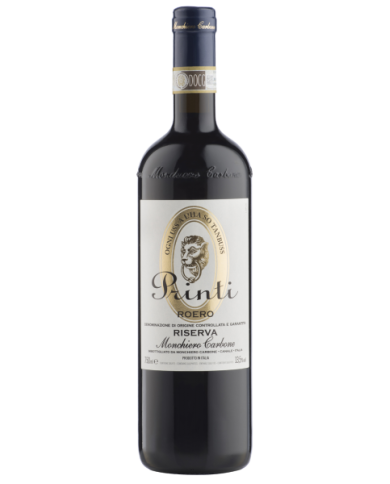
The Roero Riserva "Printi" is one of the precious pieces of the Monchiero Carbone winery, produced starting from the exceptional harvest of 1997 and which, year after year, has been able to establish itself on the Piedmontese wine scene proving to be able to compare itself with the other more structured wines of the region , without however having to give up the typical elegance of the Nebbiolo grapes grown on the rugged hills of the Roero. The Nebbiolo grapes from which Printi is born are grown at an altitude of 350 meters on the Frailin hill, on very calcareous soils; the fermentation is always long and slow to ensure that the wine is enriched with all the natural components contained in the grape and for the refinement, which lasts at least 24 months, small woods of different passages are used. The result can only be a wine with a great aromatic, balanced baggage, to be chosen for weekend conviviality and which will certainly not disappoint expectations. It opens to the eye with a beautiful ruby red hue, intense and brilliant. After an initial ethereal attack, the nose develops a fruity bouquet with hints of raspberries and wild strawberries, followed by spicy notes of vanilla, cinnamon, tobacco and noble woods. The taste is full-bodied and endowed with pleasant softness, with good fruit in the right balance with acidity and a texture of sweet and seraphic tannins, which gradually relax, giving a long and harmonious finish. Perfect to drink in combination with game, braised and overcooked meats, seasoned or lightly blue cheeses.
€33.53
Roero denomination
The Controlled Designation of Origin (DOC) is a quality mark that guarantees the authenticity and uniqueness of Italian products, highlighting the distinctive characteristics of their terroir. The Roero appellation, located in the Piedmont region, is renowned for producing fine wines that reflect the uniqueness of its terroir and the work of its winemakers.
History of the Roero Denomination and its Connection to the Territory
The history of the Roero appellation is rooted in Piedmont's age-old winemaking tradition. The first evidence of grape cultivation in the region dates back to Roman times, but over the centuries, viticulture has assumed an increasingly important role in the local economy and culture. The Roero appellation, with its calcareous soils and continental climate, offers ideal conditions for growing native varieties such as Nebbiolo and Arneis, which yield wines of great complexity and personality.
Characteristics of the Roero Denomination Wines
Terroir
The terroir of the Roero Denomination is characterized by calcareous and clay soils that give the wines a distinct minerality and structure. The region's continental climate, with cold winters and hot summers, contributes to a slow ripening of the grapes, allowing them to develop complex aromas and lively acidity.
Grape Varieties Used
Roero wines are produced primarily using native grape varieties, such as Nebbiolo for red wines and Arneis for white wines. These varieties have adapted perfectly to the Roero terroir, producing wines of great elegance and character, with distinctive notes of red fruit, flowers, and spices.
Production Method
The production process for Roero wines involves hand-harvesting the grapes, followed by gentle pressing and controlled fermentation. Red wines are then aged in oak barrels for a variable period, ranging from a few months to several years, while white wines are often vinified and aged in stainless steel to preserve the freshness and vivacity of their aromas.
The Naming Process
The Roero appellation is subject to rigorous controls that guarantee the quality and authenticity of the wines. Analytical and organoleptic parameters are established to define the wine's characteristics and ensure compliance with traditional agronomic practices.
How to Recognize and Appreciate Roero Denomination Wines
The wines of the Roero appellation are distinguished by their aromatic complexity, elegant structure, and balance. The red wines are characterized by soft tannins, ripe fruit, and spices, while the white wines are fresh, floral, and mineral. They pair perfectly with Piedmontese dishes such as tajarin with ragù, braised meat, and aged cheeses, enhancing their flavor and aroma.
The Importance of the Denomination for Piedmont
The Roero appellation plays a fundamental role in the economic and cultural development of Piedmont, promoting the region and its food and wine products nationally and internationally. It also helps preserve the region's ancient winemaking traditions, ensuring the continuity and enhancement of Piedmont's viticultural heritage.
Roero Denomination Wines in the Context of the Italian Wine Market
Roero wines are highly regarded on the Italian and international wine markets, thanks to their quality and distinctive character. They are sought after by consumers seeking authentic, characterful wines that reflect their history and the terroir from which they originate.
Winery Tours and Tastings
For those who wish to delve deeper into the wines of the Roero appellation, numerous wineries in the region offer guided tours and tastings. A unique opportunity to discover the secrets of local winemaking and savor the appellation's finest wines.
Food and Wine Pairing Tips
Roero wines pair perfectly with Piedmontese dishes such as tajarin with ragù, braised meats, and aged cheeses. Their complexity and structure also make them ideal for enjoying on their own, as a meditation wine.
Roero: A Piedmontese Winemaking Excellence
In conclusion, the wines of the Roero denomination represent Piedmont's finest winemaking, capable of recounting the history and territory of Roero through their unique and unmistakable flavor.
Frequently Asked Questions about the Roero Denomination
Which grape varieties are used to produce Roero wines?
The main grape varieties used in the production of Roero wines are Nebbiolo for red wines and Arneis for white wines.
What are the distinctive characteristics of the wines of the Roero denomination?
The wines of the Roero denomination are distinguished by their aromatic complexity, their elegant structure and their balance.
Where can I buy Roero wines?
Roero wines are available at specialized wine shops, supermarkets, and online through the producers' websites.
What is the production method for Roero wines?
The production process for Roero wines involves hand-harvesting the grapes, followed by gentle pressing and controlled fermentation. The wines are then aged in oak barrels for the reds and in steel for the whites.
What is the origin of the name Roero?
The Roero denomination takes its name from the Roero area, located in the Piedmont region, famous for its vine cultivation and the production of high-quality wines.