

 Italiano
 Deutsch




There are no more items in your cart
SKU:
3571
Brand:
Cantina Tollo
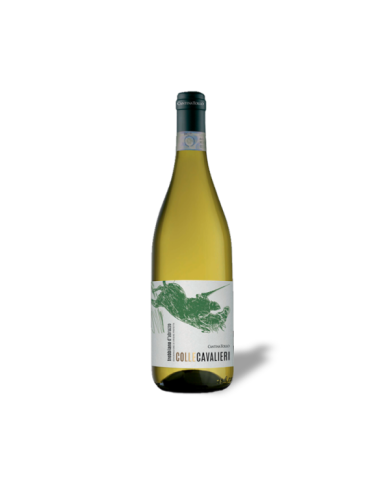
A classic. A well-assorted line that gives a lot, ideal for spicing up moments of healthy conviviality with joy.
Pairings
excellent as an aperitif and with all seafood, white meats and fresh cheeses.
SKU:
3558
Brand:
Cantina Tollo
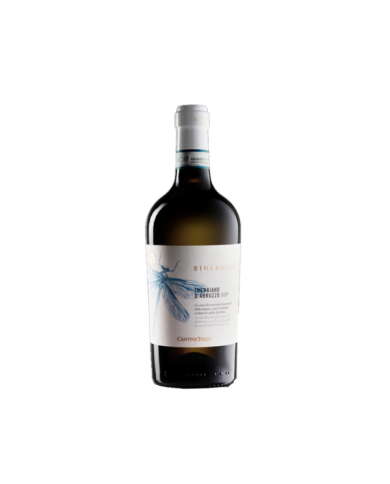
This delicate and fragrant wine is born from the uncontaminated land of Abruzzo, obtained from hand-picked grapes on gentle and sunny hills.
Pairings
Excellent as an aperitif and with all seafood, white meats and fresh cheeses.
SKU:
3553
Brand:
Cantina Tollo
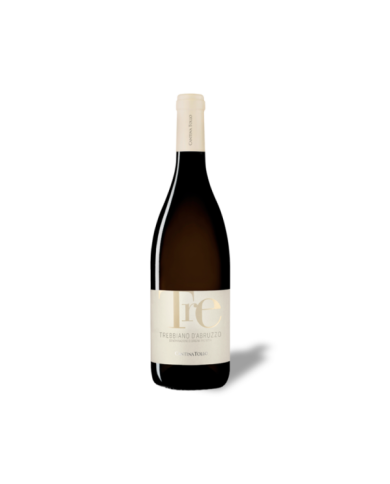
We have taken care of a great wine from the past and brought it into the future. A Trebbiano d'Abruzzo Dop with hints of yellow fruit, citrus and white flowers, able to best express the emotions of a luminous land and trace new paths of pleasure thanks to the elegance of its flavor.
Pairings
Excellent with fish-based appetizers and all seafood, white meats and medium-aged cheeses
€12.42
SKU:
3538
Brand:
Cantina Tollo
€18.42
€14.74
C'Incanta is the result of a fermentation in contact with the skins that takes place with natural yeasts as per ancient peasant tradition.
Pairings
dishes based on porcini mushrooms and truffles, red meats, game and various aged cheeses.
€18.42
€14.74
SKU:
3234
Brand:
Il Feuduccio
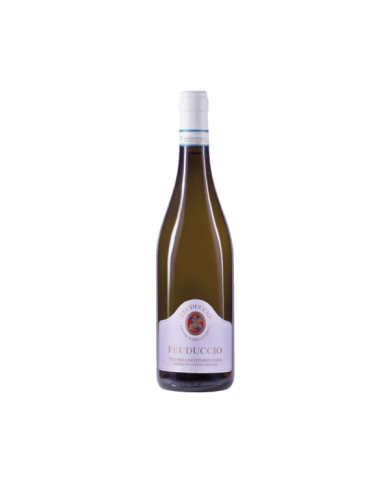
Trebbiano of Abruzzo blood obtained from a selection characterized by low production, which produces wines with a strong taste and multifaceted and long-lived aromas.
€9.85
€8.86
SKU:
2292
Brand:
Speranza
€13.85
€11.77
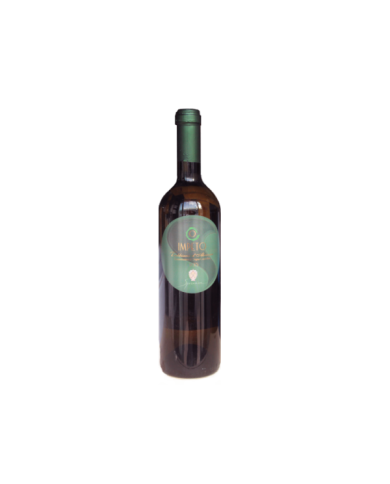
The "Trebbiano d'Abruzzo Impeto" , are characterized by the right sugar and alcohol content and by a good fixed acidity, which helps to enhance the aromas and maintain them over time. The Speranza winery produces about 5000 bottles of the "Trebbiano d'Abruzzo Impeto" wine, testifying to the importance that this wine has in the context of the company's production.
€13.85
€11.77
SKU:
1373
Brand:
Ruggieri
€8.36
€6.27
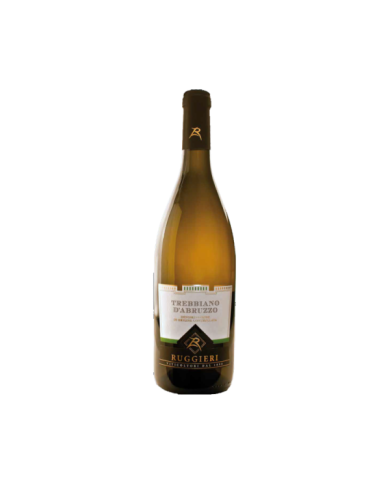
Color : straw yellow Bouquet : scent of white flowers and fruit Taste : fresh and persistent Serving temperature : 10-12 ° C Pairings : particularly suitable with fish and white meat dishes Harvest : manual
€8.36
€6.27
SKU:
1011
Brand:
Cataldi Madonna
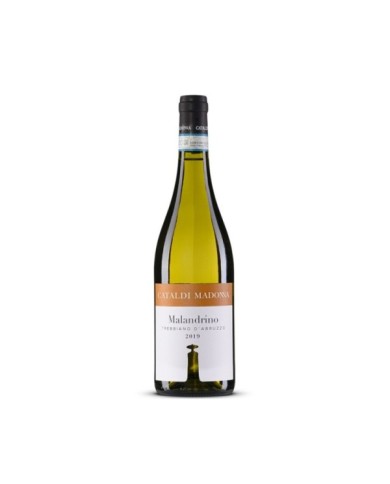
Straw yellow, the nose expresses a beautiful olfactory profile, all played on fresh notes of fruit and freshly picked flowers. In the mouth it has sprint and elongation, it is balanced and defined by a good acidity and a minerality that peeps out at the end of the tasting. Very clean, with excellent persistence.
Excellent as an aperitif, Trebbiano goes well with fish-based first courses. Spaghetti with seafood.
€11.63
€10.46
SKU:
766
Brand:
Masciarelli
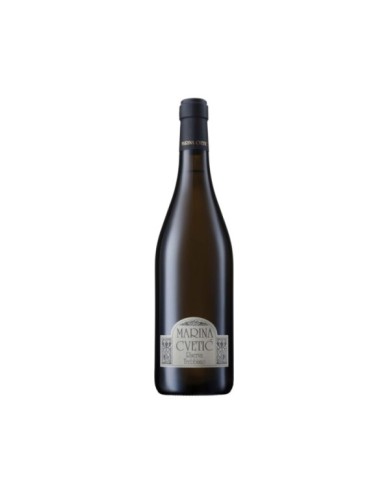
Intense straw yellow, the nose expresses beautiful fruity and slightly spicy notes. Clear hints of papaya, yellow peach, honey, vanilla open to an intense and material taste, rich and very pleasant. Full and tasty, it closes with a final of great gustatory energy. For the whole meal, it goes well with countless land and sea preparations. Try it with a stuffed pasta embellished with a few flakes of truffle.
SKU:
764
Brand:
Masciarelli
Straw yellow, the nose expresses the quintessence of the typology thanks to beautiful fruity notes embellished with hints of jasmine and vegetal traces. On the palate it is intense, vibrant and very fine. Balanced and relaxed, it closes with a finish of rare persistence. Throughout the meal, it goes well with countless fish-based preparations. Perfect with a cod tartare.
SKU:
238
Brand:
Nestore Bosco
Eclipse Trebbiano D'Abruzzo Dop 2019 - Nestore Bosco Color: straw yellow with light greenish reflections. Smell: intense with marked floral notes. Taste: dry and fresh followed by the typical bitter aftertaste. Service temperature: 8/10 ° C. Food matches: it goes perfectly with all fish dishes. Alcohol: 12.5% Bottle: 750 ml.
Trebbiano d'Abruzzo Denomination: The Complete Guide
Trebbiano d'Abruzzo is a white wine with a Controlled Designation of Origin (DOC) designation produced in Abruzzo , a region in central-southern Italy. In this article, we'll explore the characteristics of this wine, from its history to its production and tasting. We'll also discover which dishes pair best with this wine and how to store it properly.
Trebbiano d'Abruzzo is a white wine made from Trebbiano grapes. Its production is permitted only in certain provinces of Abruzzo, specifically in the areas of Chieti, L'Aquila, and Teramo. This wine has a long history, but has only achieved significant popularity in recent years.
Terroir and production of Trebbiano d'Abruzzo
The Abruzzo region is characterized by a Mediterranean climate with mild winters and hot, dry summers. The Trebbiano d'Abruzzo terroir extends across the hills adjacent to the Adriatic Sea, offering excellent sun exposure and mineral-rich soil.
The grape variety used to produce Trebbiano d'Abruzzo is Trebbiano d'Abruzzo , one of the most widely planted grape varieties in Italy. Trebbiano d'Abruzzo is made through temperature-controlled fermentation, followed by a short period of bottle aging.
Organoleptic characteristics of Trebbiano d'Abruzzo
Trebbiano d'Abruzzo is straw yellow in color with greenish highlights. Its aroma is delicate, with floral and white fruit notes. On the palate, the wine is fresh and slightly savory, with good acidity and a subtle smoothness. Its alcohol content ranges from 11% to 13%.
The main characteristic of Trebbiano d'Abruzzo is its elegance and lightness. Thanks to its unique terroir and meticulous winemaking, this wine retains remarkable freshness and aromatic finesse.
Food pairing: Trebbiano d'Abruzzo
Trebbiano d'Abruzzo pairs very well with seafood dishes, such as fish soup, grilled fish, and oysters. This wine also pairs well with white meat dishes, such as chicken and turkey, and with fresh, light cheeses such as buffalo mozzarella and caciocavallo.
Trebbiano d'Abruzzo is a very versatile wine that pairs well with vegetable dishes, salads, and appetizers. In general, this wine pairs well with delicate, fresh dishes, but also with flavorful, structured dishes.
Preservation and serving of Trebbiano d'Abruzzo
Trebbiano d'Abruzzo should be served chilled, between 8°C and 10°C. To preserve the wine, it is recommended to store it in a cool, dry place, away from direct sunlight. Once opened, the wine can be stored in the refrigerator for up to two days.
Economic information on Trebbiano d'Abruzzo
Trebbiano d'Abruzzo is a highly regarded wine in Italy and abroad. Annual production is approximately four million bottles, and the average price per bottle is around 7 euros.
Trebbiano d'Abruzzo is a delicate and fresh white wine, worthy of discovery and appreciation. Thanks to its unique terroir and meticulous winemaking, this wine retains remarkable freshness and aromatic finesse. Its versatility makes it suitable for pairing with a wide range of dishes, from fish to white meats and vegetables.
FAQ
Which provinces in Abruzzo allow the production of Trebbiano d'Abruzzo?
Production is permitted in the provinces of Chieti, L'Aquila, and Teramo.
What are the organoleptic characteristics of Trebbiano d'Abruzzo?
Trebbiano d'Abruzzo is straw yellow in color with greenish highlights. Its aroma is delicate, with floral and white fruit notes. On the palate, the wine is fresh and slightly savory, with good acidity and a subtle smoothness.
Which grape varieties are used to produce Trebbiano d'Abruzzo?
The grape variety used is Trebbiano d'Abruzzo , one of the most widely cultivated grape varieties in Italy.
What is the average price of a bottle of Trebbiano d'Abruzzo?
The average price is around 7 euros.
What dishes pair best with Trebbiano d'Abruzzo?
Trebbiano d'Abruzzo pairs very well with fish dishes, white meat, fresh and light cheeses, but also with vegetable dishes, salads and appetizers.