

 Italiano
 Deutsch








There are no more items in your cart
SKU:
14511
Brand:
Bellavista
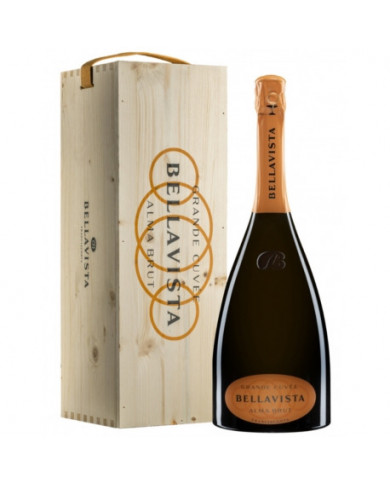
White foam, exuberant and of excellent persistence. The pearl necklaces are very fine to form a well-present and prolonged crown over time. The effervescence is dynamic and full of youth. Bright and bright yellow color with clear greenish reflections. Perfume characterized by marked minerality. Wide and inviting, it embraces nuances of ripe sweet fruit, meringue, pastry and candied citrus peel. Flavor fully corresponding to the nose, with an almost crunchy creamy sensation and a texture that combines elegance and lightness, thickness and harmony. The vibrant and contemporary character represents its unmistakable identity.
€317.07
SKU:
14510
Brand:
Bellavista
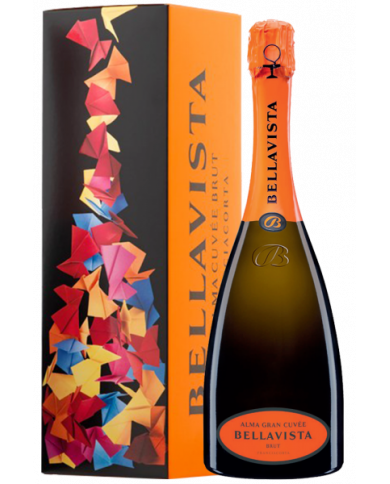
The Franciacorta DOCG Cuvèe Brut "Alma" by Bellavista comes from the skilful union of about 60 of the 120 harvest selections obtained in the cellar. About 100 selections come from the same harvest and are identified with extreme care in 107 parcels distributed in 10 different municipalities of Franciacorta ("horizontal assembly"). To this vast patrimony of olfactory and gustatory variants are then added the aromas and flavors of particular "reserve wines" from different vintages ("vertical assembly"). A unique cuvée, which with its elegant complexity represents the most complete and often mysterious soul of Franciacorta.
€81.45
SKU:
14508
Brand:
Bellavista
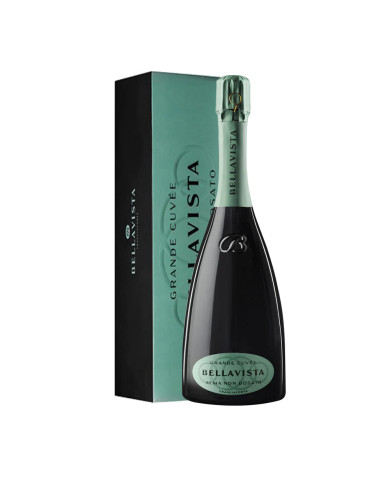
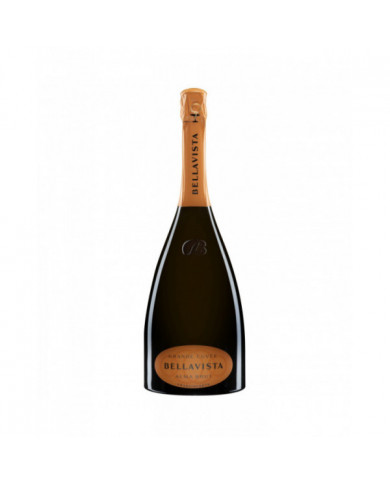
It is told through a sensory profile that evolves giving altogether sapidity, freshness, finesse, elegance and agility: the result is simply superlative, given by the Franciacorta Non Dosato "Alma Grande Cuvée", labeled Bellavista . A bubble that wants to become the symbol of the purest essence of the lands of Franciacorta, proposing a sip with which Bellavista drops its mask, retracing its history in a contemporary key. Here then is that every detail - label included - becomes a reference to the concept of harmony, both external and connected to the precious content. The apparent - and intended - aesthetic minimalism, again, finally connects with a Franciacorta that remains suspended in time, as if to recall the impossibility of finding glasses of a similar caliber.
€84.06
SKU:
14505
Brand:
Bellavista
The Franciacorta DOCG Cuvèe Brut "Alma" by Bellavista comes from the skilful union of about 60 of the 120 harvest selections obtained in the cellar. About 100 selections come from the same harvest and are identified with extreme care in 107 parcels distributed in 10 different municipalities of Franciacorta ("horizontal assembly"). To this vast patrimony of olfactory and gustatory variants are then added the aromas and flavors of particular "reserve wines" from different vintages ("vertical assembly"). A unique cuvée, which with its elegant complexity represents the most complete and often mysterious soul of Franciacorta.
€81.50
SKU:
14502
Brand:
Banfi
Sweet sparkling wine obtained from the Brachetto vine, an ancient and complex aromatic grape present only in the Acquese area, characterized by unique and inimitable aromas. The cold maceration of the fruits and the subsequent soft pressing allow the extraction of the intense typical aromas contained in the peel and the characteristic pale ruby red color. A pleasant wine, extraordinarily elegant.
€10.90
SKU:
14501
Brand:
Cantina Tollo
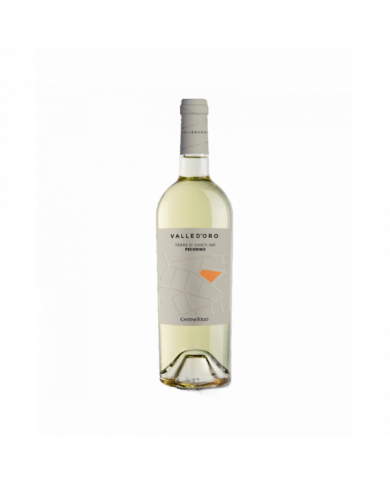
Vine to rediscover ancient variety that gives persistence, harmonious and slightly balsamic flavor with notes of citrus and garden fragrances. Made exclusively with Pecorino.
Pairings
Raw fish and shellfish, fish dishes in general also excellent with fresh or stretched curd cheeses.
€7.71
SKU:
14500
Brand:
Cantina Tollo
Company : Cantina Tollo Wine region : Abruzzo (Italy) Appellation : Terre di Chieti IGT (IGP) Vegan Type : white, dry, still Variety : Pecorino 100% Alcohol content : 13% Year : 2021 Format: 750 ml
SKU:
14499
Brand:
Cantina Tollo
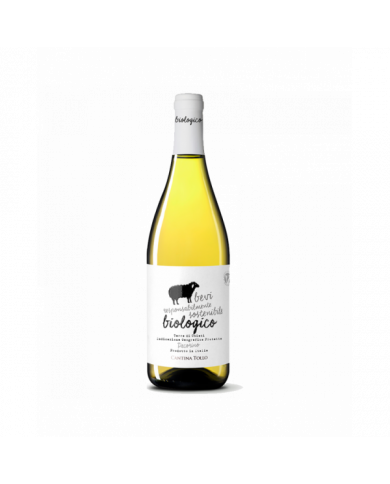
A wine that tells the authenticity of nature, just as bees are proof of the quality of food.
Pairings
Excellent as an aperitif or with fish-based dishes, white meats and fresh cheeses
€8.00
SKU:
14498
Brand:
Cantina Tollo
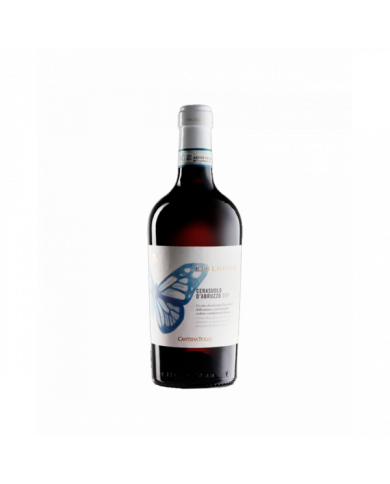
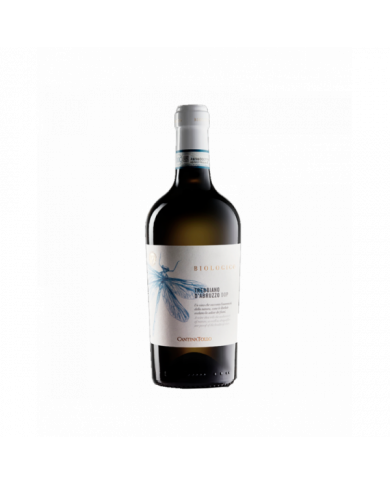
A wine that tells the authenticity of nature, just as butterflies are proof of climate change.
Pairings
First courses of meat or fish, second courses of fish, roasted white meats, fresh or semi-mature cheeses
€9.00
SKU:
14497
Brand:
Cantina Tollo
From the uncontaminated land of Abruzzo comes this delicate and fragrant wine, obtained from hand-picked grapes on gentle and sunny hills.
Pairings
Excellent as an aperitif and with all seafood cuisine, white meats and fresh cheeses.
€8.04
SKU:
14496
Brand:
Castel Firmian
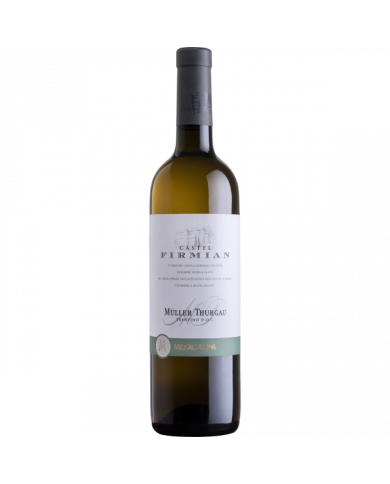
Produced only with grapes from its own vineyards in the medium-high hills of the Cembra Valley. It comes from the vine of the same name obtained in 1882 by the researcher Hermann Müller in the Swiss town of Thurgau from the cross between the Rhine Riesling and Chasselas varieties. The vinification is traditional with brief contact on the skins to ensure maximum conservation and the transmission to the wine of the varietal aromas characteristic of the grape. Subsequent fermentation at controlled temperature (18-20°C).
€8.88
€7.99
SKU:
14495
Brand:
Castel Firmian
€13.01
€10.40
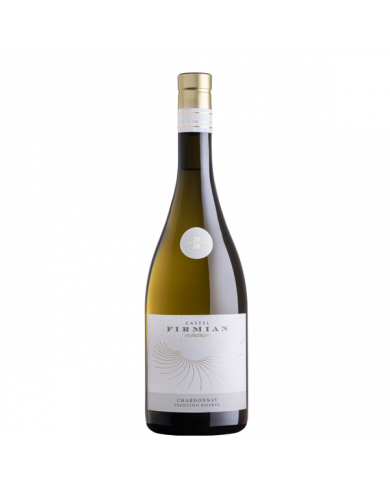
The Chardonnay Riserva comes from a selection of the best vineyards grown on the slopes of the Trentino mountains between 250 and 500 m above sea level. The preferred soils are of alluvial and draining origin. The grapes are harvested well ripe and characterized by a golden yellow colour, an indication of high aromatic richness. The skilful blending of wines obtained from vineyards located at various altitudes and with different exposures results in a wine that is ripe and rich but also fresh and fragrant. The grapes are harvested in September, partly subjected to cold maceration to increase the extraction of aromas and subsequently subjected to soft pressing. The must is fermented with the addition of selected yeasts, half in steel and half in lightly toasted French oak. The wines mature for 8 months in wood and 4 months in steel. The part that ages in barrique also carries out the malolactic fermentation and repeated batonage (resuspension of the fermentation yeasts) is carried out. Finally, 3-4 months of aging in the bottle follow.
€13.01
€10.40
€33.43
SKU:
14482
Brand:
Cantina dei Monaci
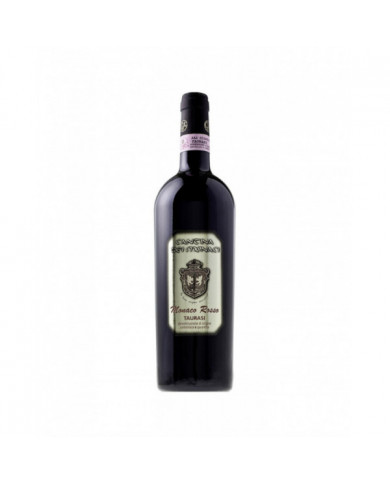
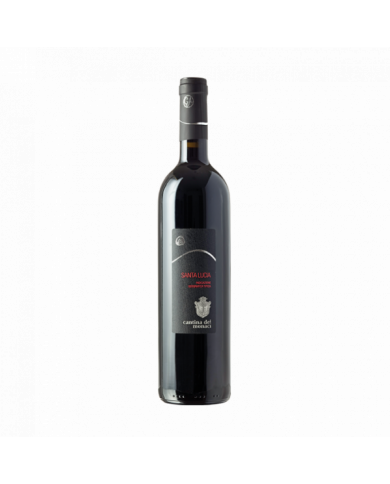
Intense and structured, the most important, thanks to its aging in Barriques for a period between 18 and 24 months, and for a further 6 months in bottle before being served.
Vinification in stainless steel tanks with controlled temperature fermentation. Subsequent maturation for one year and refinement of at least six months in the bottle.
With intense ruby red colors, and fantastic hints of plum, black pepper and roots.
Very dense and decisive taste. The aging in barriques make it a long and persistent wine of great drinkability.
Excellent with both fish and meat. It will make every meal more intense.
SKU:
14481
Brand:
Cantina dei Monaci
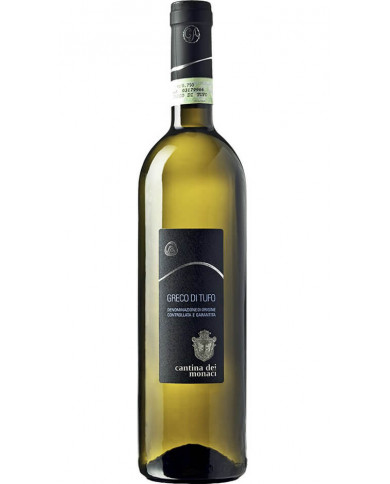
The grape variety is particularly fruity and easy to recognize on the palate. Greco di Tufo is a vine mainly dedicated to the production of still white wines, which over time has been able to distinguish itself thanks to its strong and unmistakable scents. It lends itself very well to the best everyday meals.
With intense straw yellow colors with olfactory presences of yellow peach, golden apple and mint which highlights its freshness on the palate.
Equally structured and complex taste, it knows how to envelop the palate but also refresh it.
Very versatile wine that lends itself well both as an aperitif and as an accompaniment to fish-based dishes or risottos.
€13.66
SKU:
14480
Brand:
Cantina dei Monaci
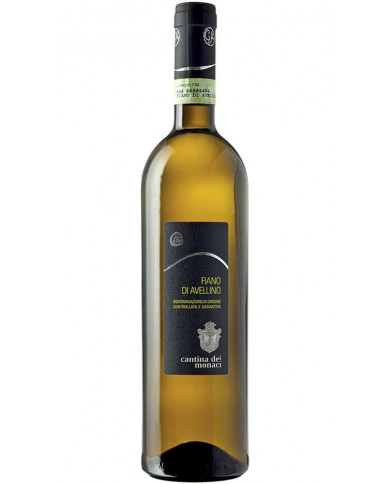
One of the most floral wines that can be produced. The Fiano variety is a particularly fragrant and delicate grape variety. However, thanks to its tannins it manages to give structure to the wine.
With bright straw yellow colors with sensual olfactory essences of white spring flowers, apple and hazelnut.
The surprising acidity makes it a wine that certainly never tires of being drunk. Furthermore, it maintains sapidity and persistence.
Excellent as an aperitif if drunk cold. If, on the other hand, you want to taste it with fish, we recommend stewed or baked dishes and courses, which thanks to its acidity will cleanse your palate making the taste of the dishes even better.
€13.54
SKU:
14479
Brand:
Cantina dei Monaci
The grape variety is particularly fruity and easy to recognize on the palate. Falangina is a vine mainly dedicated to the production of still white wines, which over time has been able to distinguish itself thanks to its strong and unmistakable scents.
With straw yellow colors and fresh fruit notes, where pineapple, mango and papaya stand out. At the sip it envelops the mouth, and enriches in persistence with savory traces.
Very versatile wine that lends itself well both as an aperitif and as an accompaniment to fish-based dishes or risottos.
€16.97
SKU:
14477
Brand:
Von Blumen
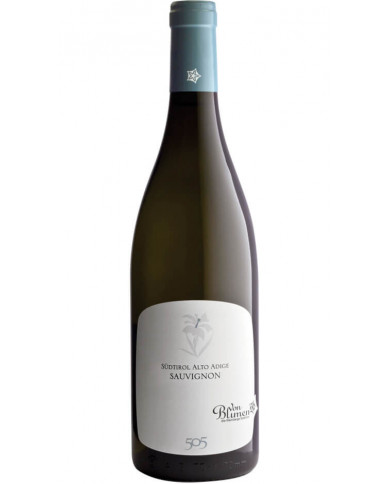
For more than a century this vine, originally from France and precisely from the Loire Valley area, has been grown on the hills of Alto Adige. The grape harvest takes place by hand, as in the past, starting from the beginning of September. After a gentle destemming, the grapes undergo a short cold maceration in a stainless steel press. The alcoholic fermentation takes place in steel tanks at a controlled temperature. At the end of alcoholic fermentation, the wine is kept in contact with the lees, in stainless steel containers for about 6 months. The Sauvignon has a yellow color with light green reflections. On the nose the scent is fresh, with extravagant hints of nettle, pepper, tomato leaves and anise. On the palate the flavor is intense and persistent with a good aroma and a savory and gritty acidity. A versatile goblet that goes perfectly with all courses at the table and after the first sip it will take you back to the unspoiled nature on the slopes of Monte Corno.
€18.45
SKU:
14476
Brand:
Von Blumen
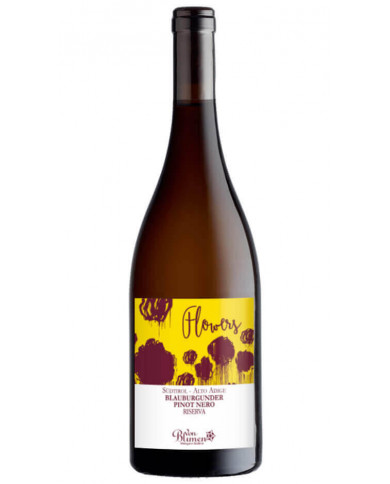
The Pinot Noir grape variety is considered among the most noble red grape varieties in the world and also the most difficult to interpret. The origin of this vine is believed to be attributed to the French region of Burgundy. Flowers is the name chosen by the winery to represent the spearheads of the Von Blumen project. Harvested in September, the grapes are then partially de-stemmed and crushed, and left to ferment with maceration on the skins in stainless steel tanks at a controlled temperature, for about 20 days. Subsequently, before bottling, it is aged for 12 months in French oak tonneaux. In the glass the color is a bright ruby red. The bouquet is intense and broad on the nose, ranging from sweet nuances of red and black fruits to fragrant spicy scents. On the palate it is enveloping and complex, with a mature and long-lasting tannic texture in the mouth. A wine of exceptional drinkability and character, excellent in combination with red meat dishes, medium and long-aged cheeses and traditional main courses of South Tyrolean cuisine.
€34.78
SKU:
14475
Brand:
Von Blumen
The name Traminer appears for the first time in 1349 in Konrad Megenberg's "Book of Nature". The origins of this vine are uncertain; some believe they are in Alsace, others in the town of Termeno (Bolzano), still others in Wurttemberg, and finally in the Reno valley. The grapes are harvested manually in boxes. After a delicate destemming, cold maceration follows at a temperature of 12°. The alcoholic fermentation takes place in steel tanks at a controlled temperature; at the end of alcoholic fermentation, the wine is kept in contact with the lees, in stainless steel containers for about 6 months. In the glass it has an intense straw yellow color. On the nose, the aroma is intense and varied with aromas ranging from yellow pulp fruits, lychee, rose, acacia flowers and saffron. On the palate it immediately proves to be a wine of great structure and balance based on sapid and fresh notes, supported by a never invasive softness and characterized by delicious almond nuances. An eclectic goblet that is excellent on the table as an aperitif or to accompany shellfish dishes, ethnic cuisine and spicy flavours.
€20.68
SKU:
14474
Brand:
Von Blumen
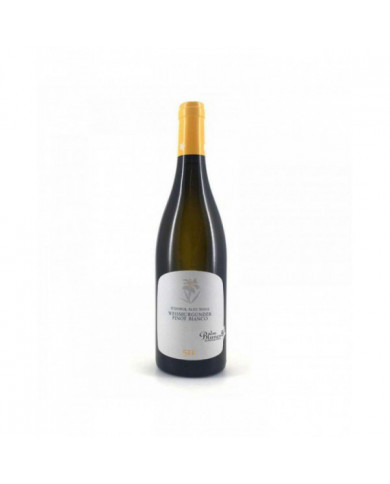
Production notes
After fermentation, the Pinot Blanc from the Von Blumen winery remains in contact with the lees in stainless steel for 6 months.
Tasting notes
The Pinot Bianco from the Von Blumen winery has a straw yellow color, with hints of apple, peach, apricot and pear. Very convincing in the mouth with its acidity and minerality.
€16.47
SKU:
14473
Brand:
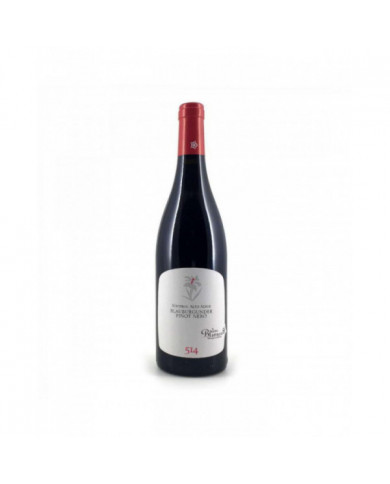
Von Blumen
The Pinot Noir grape variety is considered among the most noble red grape varieties in the world and also the most difficult to interpret. The origin of this vine is believed to be attributed to the French region of Burgundy. The grape harvest is manual, as it was once done. After a delicate destemming and crushing, fermentation follows with maceration on the skins in stainless steel tanks at a controlled temperature. To extract color and aroma from the skins, several pumping overs are carried out and finally the maturation takes place in large wooden barrels. In the glass the color is a pale ruby red. The nose is intense and seductive with notes of raspberry, cherry, blackberry, violet and various spices. On the palate it is warm and enveloping, with lively notes of undergrowth. Thanks to its harmony, bringing this Pinot Noir to the table with red meat dishes, medium and long-aged cheeses and stewed fish will be a guaranteed success.
€22.57
SKU:
14472
Brand:
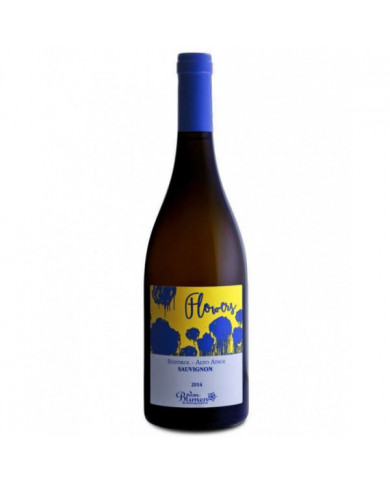
Von Blumen
For more than a century this vine, originally from France and precisely from the Loire Valley area, has been grown on the hills of Alto Adige. The grape harvest takes place by hand, as in the past, starting from the beginning of September. After a gentle destemming, the grapes undergo a short cold maceration in a stainless steel press. The alcoholic fermentation takes place in steel tanks at a controlled temperature. At the end of alcoholic fermentation, the wine is kept in contact with the lees, in stainless steel containers for about 6 months. The Sauvignon has a yellow color with light green reflections. On the nose the scent is fresh, with extravagant hints of nettle, pepper, tomato leaves and anise. On the palate the flavor is intense and persistent with a good aroma and a savory and gritty acidity. A versatile goblet that goes perfectly with all courses at the table and after the first sip it will take you back to the unspoiled nature on the slopes of Monte Corno.
€26.96
SKU:
14471
Brand:
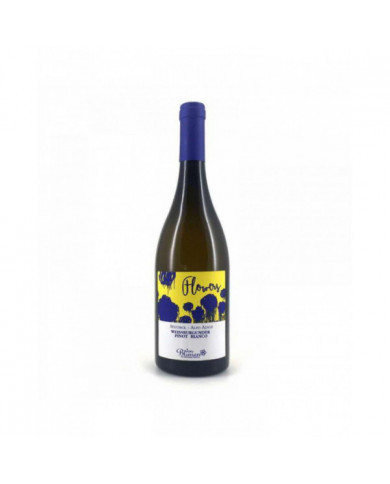
Von Blumen
Production notes Pinot Bianco ''Flowers'' is a white wine aged for 10 months in tonneaux. Malolactic fermentation can be total or partial. Tasting notes Pinot Bianco ''Flowers'' is a straw yellow white wine with green transparencies. Perfumes of white flowers and flint with vegetal notes in the background. Fresh and mineral taste of ripe pineapple, sage and anise.
€25.53
SKU:
14470
Brand:
Von Blumen
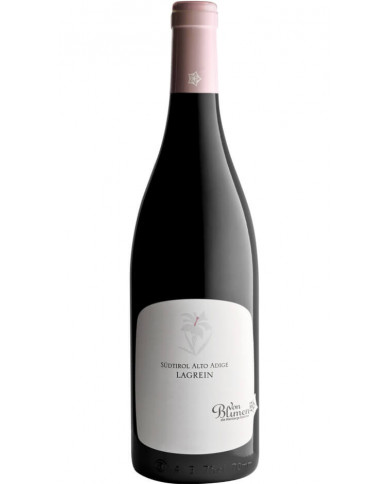
Lagrein is one of the most important and representative red grape varieties of Trentino Alto Adige. The grape harvest takes place in October, manually. After a delicate destemming and crushing, fermentation follows with maceration on the skins in stainless steel tanks at a controlled temperature. To extract color and aroma from the skins, several pumping overs are carried out and finally the maturation takes place in large wooden barrels. In the glass the color is a deep ruby red. The nose is intense and seductive with notes of iris, cherry, blackberry and blueberry. On the palate it is deep and enveloping but at the same time delicate and soft. Thanks to its strong personality, this Lagrein lends itself well to red meat dishes, roasts, medium and long-aged cheeses.
€18.50
SKU:
14460
Brand:
Barsento
Manual harvest. Destemming and low temperature fermentation. The crushed grapes remain at a low temperature for a few hours before fermentation, after which the soft pressing takes place. Fermentation continues at around 18°. It remains three months in steel before being bottled. After bottling it remains in cavea karso for another 2 months.
€12.93
SKU:
14459
Brand:
Barsento
Barsento Casaboli Primitivo Gioia del Colle DOC Riserva has an intense ruby red color with slight purplish reflections. The nose is expressed with great complexity and elegance, on fruity tones of plum, black berries, blackberry and black cherry. On the palate it denotes a considerable thickness and a certain structure, which skilfully blends with its softness and its consistent tannins. The finish is long and of excellent persistence.
€24.83
SKU:
14458
Brand:
Barsento
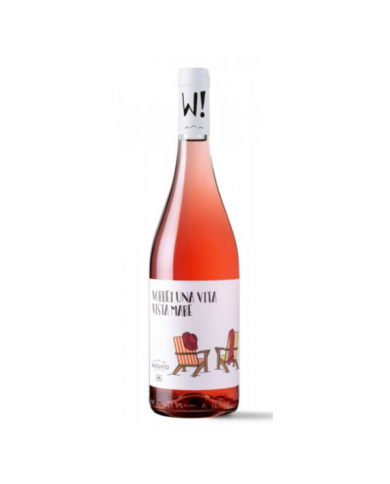
W'Heart! in the rosé version it is an excellent wine produced with 100% Primitivo grapes. The harvest is done manually in the first ten days of September. After destemming, fermentation takes place in stainless steel tanks at a controlled temperature, and before soft pressing, the must is left to macerate on the skins for about 10 hours. A rosé that excites the eye with its splendid intense coral color with violet reflections. It offers the nose sweetly fruity hints mixed with delicate floral notes. On the palate it has a pleasant freshness. A perfect aperitif glass that also lends itself beautifully to fish-based dishes.
€12.53
SKU:
14457
Brand:
Barsento
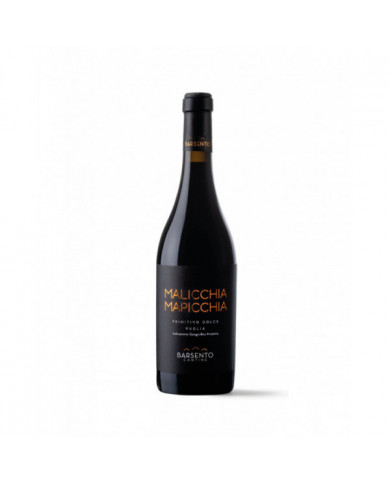
VINIFICATION The maceration lasts 12-14 days in 45 quintal steel vats at a controlled temperature of 25°C, with frequent pumping over in order to extract the aromatic and coloring substances and at the same time soften the tannic mass. AGING: The wine is aged in steel tanks for one year. Before bottling, the wine is filtered, but not cold stabilized, in order to safeguard the integrity of the product. The permanence in the bottle before being marketed lasts 6 months, in aging rooms completely dug out of the limestone rock typical of the area where it was born. TASTING NOTES The nose has clear hints of fresh fruit, plums and strawberries. Strong, full, sweet and very vinous on the palate. Malicchia Mapicchia is a meditation wine ready for any type of combination: from sweets to dry pasta, to aged, aromatic, spicy or blue cheeses, perhaps served with jams to create a splendid contrast between the strong and the sweet taste. Ideal also accompanied by main courses of meat seasoned with fruit-based sauces.
€21.95
SKU:
14456
Brand:
Barsento
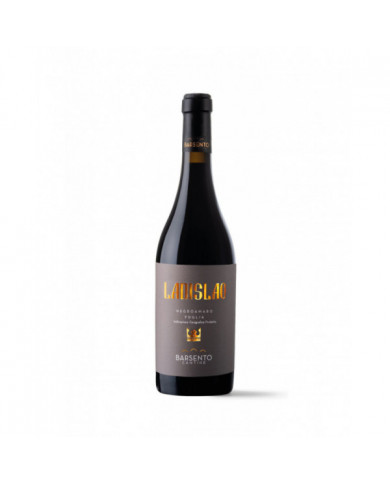
VINIFICATION: The maceration lasts 12-14 days in 45 quintal steel vats at a controlled temperature of 25°C, with frequent pumping over in order to extract the aromatic and coloring substances and at the same time soften the tannic mass. TASTING NOTES Pure Negroamaro, aged in large oak barrels, has an intense and impenetrable red colour. On the nose, hints of ripe cherry, tobacco and carob are perceived. On the palate it is full-bodied, with a great structure with accentuated tannins that balance well with the alcohol and the vanilla notes typical of wines aged in wood. It is best expressed with cured meats, grilled meats and meat sauce.
€21.17
SKU:
14455
Brand:
Barsento
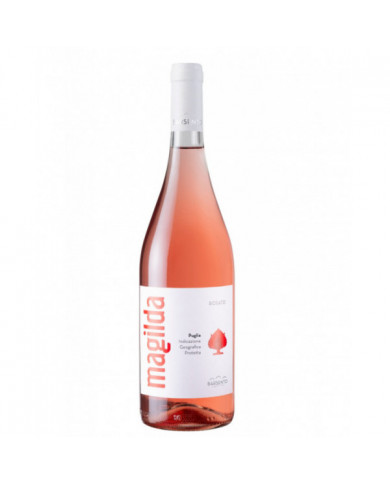
Magilda is a rosé produced with 100% Negroamaro grapes. The harvest of carefully selected grapes begins in the first ten days of September. After destemming, fermentation is carried out at low temperature in stainless steel tanks. In the tanks the must is left to macerate with the skins for about 10 hours, followed by a soft pressing. Before being bottled, the wine rests for a few months in steel, then refines for at least another month in the bottle. At sight it has a coral color with violet reflections. It offers the nose intense floral notes that refer to the rose, and fruity aromas of morello cherry and cherry. It enters the palate with a pleasant minerality and a sinuous roundness offering a long and persistent finish. It goes perfectly with appetizers, seafood and earthy first courses, and fish soups. Also perfect as an aperitif
€9.64
SKU:
14454
Brand:
Barsento
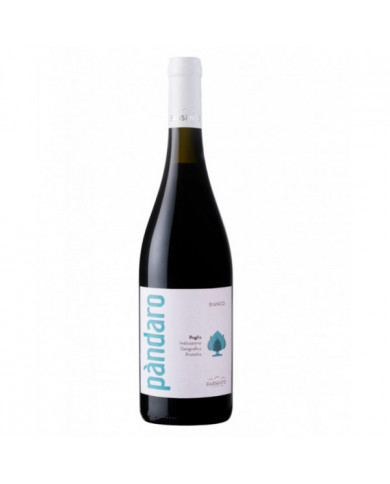
Pandaro is a still white wine produced with fine 100% Fiano grapes.
Once the grapes are harvested in September, after destemming and a soft pressing, the must is clarified and subsequently fermented at a low temperature in stainless steel tanks. The wine is then bottled and further refined in the bottle for at least 1 month before being put on the market.
Pàndaro has a brilliant straw yellow color with greenish reflections. The olfactory examination reveals an intense fruity aroma of green apple and ripe banana, mixed with nuances of pineapple and almond.
In the mouth the flavor is rich, sapid and with a nice acidity. A drink that guarantees a quality, long and persistent finish on the palate.
It goes perfectly with appetizers, first and second seafood dishes, molluscs and crustaceans. Also perfect as an aperitif.
€9.64
SKU:
14453
Brand:
Barsento
Paturno is a wine with great extraction qualities, produced with two distinct batches of grapes. The two wines are vinified separately, in stainless steel tanks at a controlled temperature. Maceration takes place for 10/12 days and frequent pumping over is carried out in order to extract coloring and aromatic substances, but also to soften the tannins. After a few months of aging in stainless steel tanks, the wine is blended, filtered, but not cold stabilized. Then it is bottled, and rests for six months in aging rooms carved into the rock.
€15.86
SKU:
14452
Brand:
Barsento
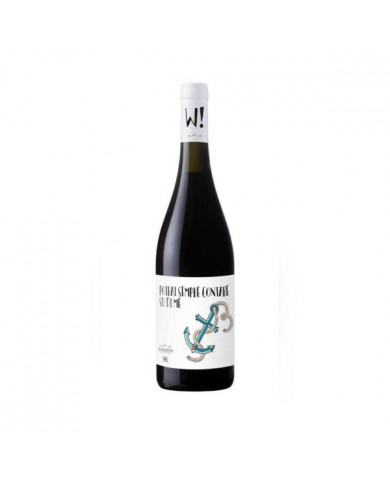
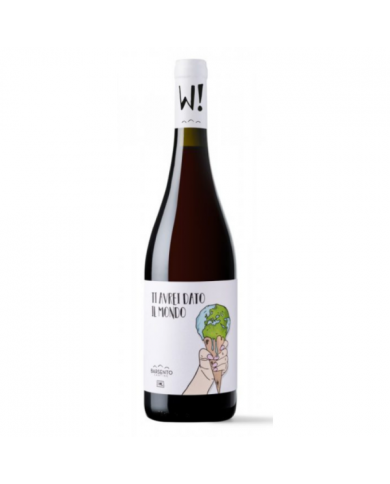
W'Heart! is a still red produced with 100% Primitivo grapes of excellent quality. The harvest takes place during the first ten days of September.
€12.60
SKU:
14451
Brand:
Frescobaldi
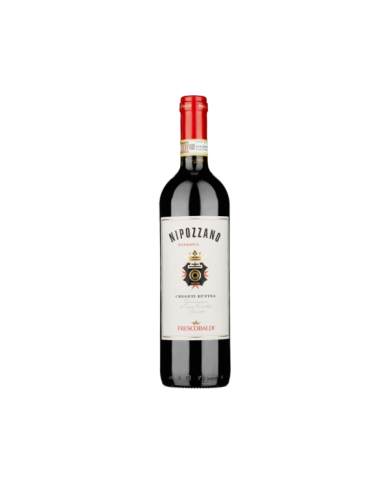
Ruby red with purple reflections. The nose is floral, characterized by clear hints of violet that prevail over the fruity. Followed by raspberry, black currant and black cherry accompanied by scents of licorice and spicy notes of nutmeg and white pepper. The entry in the mouth is warm, with tannins in full evidence. The texture appears decisive, a typical characteristic of Chianti Rùfina. Long persistence. For the whole meal, it goes well with grilled red meat, baked lamb, slightly seasoned pecorino.
€21.78