

 Italiano
 Deutsch









There are no more items in your cart
SKU:
14065
Brand:
Cantina Marchesi Antinori
Dense ruby color with garnet reflections. The nose expands sensations of plum, mulberry, violet, and then unraveling on wild and licorice tones. In the mouth, warm and enveloping, it declines sumptuous softness and caressing tannins. Ideal together with the silverside with mustard and plums or on the stuffed roast in a crust.
€65.90
SKU:
14064
Brand:
Cantina Marchesi Antinori
The Chianti Classico "Badia a Passignano" is a famous and intense expression of the Chianti of the Marchesi Antinori . It is a full-bodied and complex red wine, with the unmistakable aromas of berries, cherries and sweet spices. Aged for 14 months in oak barrels
€68.81
SKU:
14063
Brand:
Cantina Marchesi Antinori
Historic Antinori house wine which, since the 2011 vintage, is produced with grapes from the Tignanello estate. It is composed almost entirely of Sangiovese grapes combined with a small amount of other complementary varieties. A wine that presents itself as the full expression of the quality and elegance of the Sangiovese of these areas.
€36.42
SKU:
13849
Brand:
San Felice
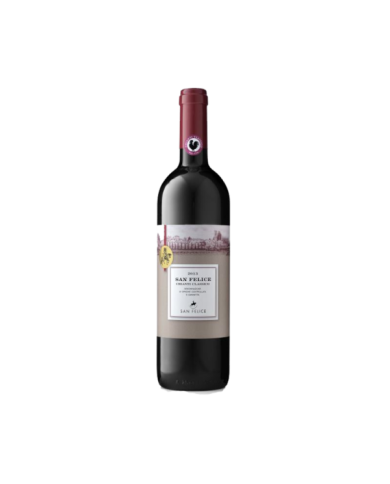
Produced entirely with native grapes, Sangiovese mainly with additions of Colorino and Pugnitello, it is a typical Chianti Classico, of medium structure, with a strong personality that stands out in particular for its elegance. The vinification takes place in the traditional way, with medium length maceration, followed by a maturation of the wine for 12 months in Slavonian oak barrels.
€64.97
SKU:
13848
Brand:
San Felice
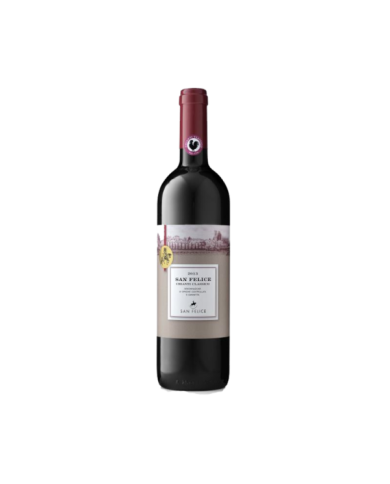
Produced entirely with native grapes, Sangiovese mainly with additions of Colorino and Pugnitello, it is a typical Chianti Classico, of medium structure, with a strong personality that stands out in particular for its elegance. The vinification takes place in the traditional way, with medium length maceration, followed by a maturation of the wine for 12 months in Slavonian oak barrels.
€26.88
SKU:
13847
Brand:
San Felice
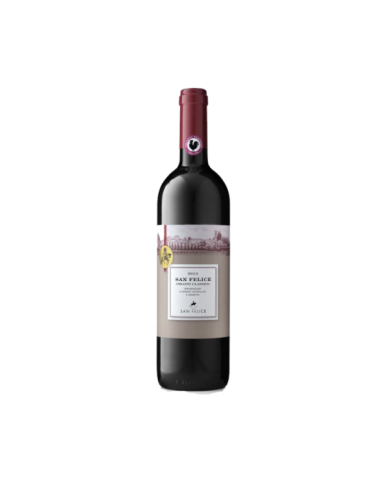
Produced entirely with native grapes, Sangiovese mainly with additions of Colorino and Pugnitello, it is a typical Chianti Classico, of medium structure, with a strong personality that stands out in particular for its elegance. The vinification takes place in the traditional way, with medium length maceration, followed by a maturation of the wine for 12 months in Slavonian oak barrels.
€11.86
SKU:
13846
Brand:
San Felice
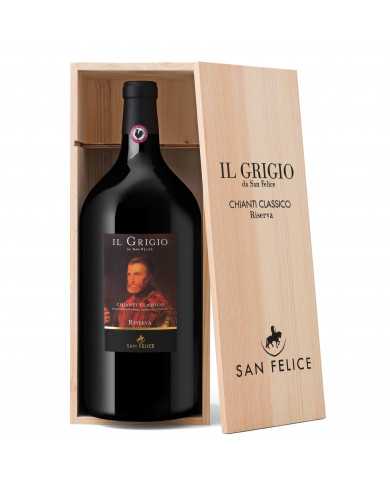
Only the best Sangiovese grapes selected in the company's Chianti Classico vineyards make up this Reserve, a valid combination of tradition and modernity. It ages for about 24 months in wood, of which a part (about 20%) in barriques, and one year in bottle. The label depicts a famous painting by Titian 'Man with armor'.
€142.74
SKU:
13840
Brand:
San Felice
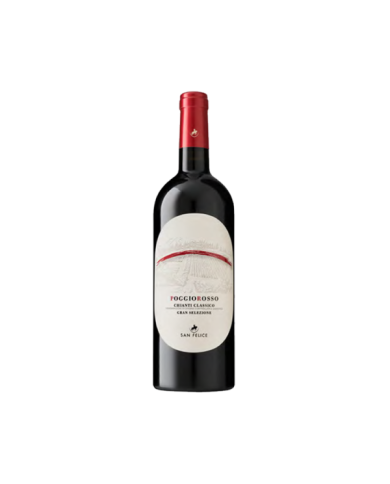
Already towards the end of the 70s, in the locality of Poggio Rosso, some selected clones of Sangiovese were planted several times. Poggio Rosso is the result of a careful selection of this grape from some plots of the vineyard of the same name and today represents the excellence of the San Felice terroir. Wine of great concentration and elegance, produced in limited quantities and, especially in the best vintages, it ages for about 20 months in 500-liter tonneaux and another 12 months in the bottle.
€53.92
SKU:
13730
Brand:
Fattoria Felsina
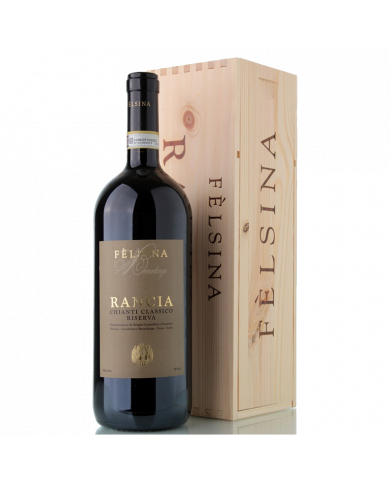
The Rancia vineyard takes its name from the ancient farm that stands next to a pre-existing Benedictine monastery.
€140.91
SKU:
13728
Brand:
Fattoria Felsina
Chianti Classico, 100% Sangiovese from Castelnuovo Berardenga, produced for the first time in 1967. Extremely heterogeneous soils, mirror of the territory, the vineyards develop with south-west exposure at about 320-420 m slm where the wind makes itself felt. The higher ground is rich above all in quartz sandstone, while the land bordering the Colli Senesi area is rich in stratiform sandstone and silt. Since the vineyards are located at different altitudes, the harvest is done at different times but in any case within the first 3 weeks of October.
€19.14
SKU:
13709
Brand:
Frescobaldi
Witness of an environment that is still uncontaminated and unchanged over time, cradle of breathtaking landscapes, Faunae expresses the essence of Chianti Classico, respecting its territory.
€14.50
SKU:
13680
Brand:
San Felice
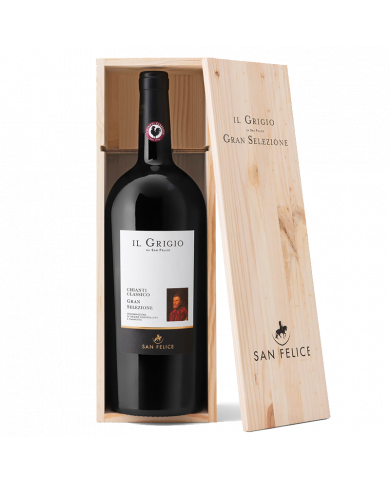
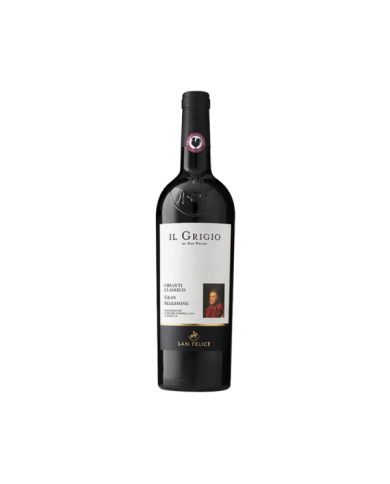
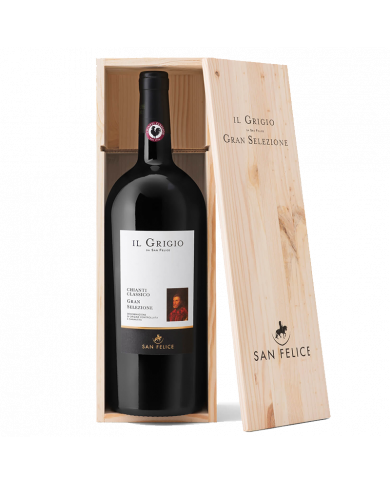
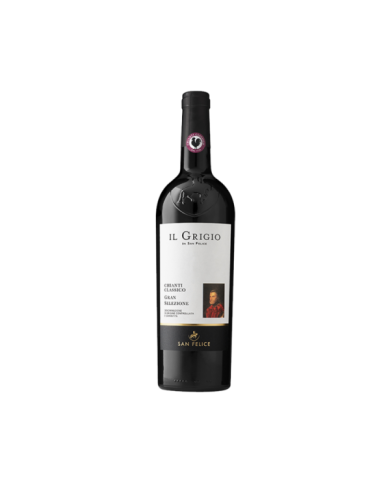
The Grigio Gran Selezione, 80% Sangiovese enriched with ancient indigenous varieties such as Abrusco, Pugnitello, Black Malvasia, Ciliegiolo and Mazzese, is born only from our most suitable soils, which contribute to the complexity of the wine, keeping intact the elegance and expression of the terroir of San Felice .
€74.16
SKU:
13679
Brand:
San Felice
The Grigio Gran Selezione, 80% Sangiovese enriched with ancient indigenous varieties such as Abrusco, Pugnitello, Black Malvasia, Ciliegiolo and Mazzese, is born only from our most suitable soils, which contribute to the complexity of the wine, keeping intact the elegance and expression of the terroir of San Felice .
€68.66
SKU:
13413
Brand:
San Felice
Our Vin Santo In Pincis is produced only in the best years, when the conditions give the healthiest grapes and the highest sugar levels. Rigorously selected bunches of Trebbiano Toscano and Malvasia del Chianti undergo a long drying process, then the wine spends seven years in wooden barrels.
€41.24
SKU:
13261
Brand:
Carpineto
Chianti Classico Riserva is produced exclusively in the oldest wine-growing area of Tuscany, in a landscape of breathtaking beauty.
€103.58
SKU:
13247
Brand:
Carpineto
Tuscan Vinsanto… a wine whose origins are lost in the mists of time. Vinsanto in Tuscany is such an important wine full of meaning that it was difficult to buy, it was an ambition to make it at home with your own hands; in every family there was a person in charge of this art, usually the father or grandfather. The hypothesized origins of this exquisite drink, as well as those of its singular name are different and are lost in the mists of time. A Sienese legend says that in the 14th century a friar distributed a wine that healed the sick, hence the belief that it was a miraculous wine, "Santo". However, it cannot be excluded that the name "holy" derives from the use that has always been made of it during Mass.
€41.24
SKU:
13240
Brand:
Carpineto
€8.37
€7.53
This is certainly the best known Italian wine in the world and is produced in Central Tuscany.
€8.37
€7.53
SKU:
13230
Brand:
Carpineto
Produced in the oldest production area, as stated in the disciplinary that regulates it, this area gave its name to the wine and is the only one where Chianti Classico is produced. It extends between Florence and Siena in a territory of breathtaking beauty, made up of villages perched on the top of the hills, of olive trees cultivated in steep fields with an irregular outline and of cypresses lined up to delimit the innumerable dirt roads.
€27.84
SKU:
13119
Brand:
Fattoria Felsina
The vineyards are located in Castelnuovo Berardenga, in the south-eastern part of the Chianti Classico production area, north-east of Siena.
€133.22
SKU:
13111
Brand:
Fattoria Felsina
The vineyards are located in Castelnuovo Berardenga, in the south-eastern part of the Chianti Classico production area, north-east of Siena.
€240.83
SKU:
13110
Brand:
Fattoria Felsina
The vineyards are located in Castelnuovo Berardenga, in the south-eastern part of the Chianti Classico production area, north-east of Siena.
€66.90
SKU:
13109
Brand:
Fattoria Felsina
The vineyards are located in Castelnuovo Berardenga, in the south-eastern part of the Chianti Classico production area, north-east of Siena.
€62.59
SKU:
13108
Brand:
Fattoria Felsina
Chianti Classico constitutes the company's production base. The vineyards are located in Castelnuovo Berardenga, in the south-eastern part of the Chianti Classico production area, north-east of Siena.
€157.34
Complete Guide to the Chianti DOCG Designation of Origin
Welcome to our complete guide to the Chianti DOCG designation of origin! In this article, we'll delve into the terroir, production, and characteristics that make Chianti such a renowned and appreciated wine worldwide. If you're a wine enthusiast or simply want to learn more about this prestigious appellation, you've come to the right place!
The Chianti DOCG Designation of Origin
The Chianti DOCG (Denominazione di Origine Controllata e Garantita) designation of origin represents one of Italy's most famous and historic wines. Its production area extends mainly across Tuscany , in the provinces of Florence, Siena, Arezzo, Pisa, Pistoia, and Prato.
Grape Varieties
Chianti DOCG is made primarily from Sangiovese grapes, a traditional red grape variety from central Italy. However, Chianti production also includes the use of other varieties, such as Canaiolo, Colorino, Merlot, and Cabernet Sauvignon, to give the wine greater complexity and structure.
Terroir
The Chianti DOCG terroir is characterized by a Mediterranean climate, with hot, dry summers and mild winters. The soils vary from calcareous to clayey, offering optimal conditions for growing vines. The rolling hills and moderate altitude contribute to good sun exposure and ventilation, favoring the ripening of the grapes.
The Subzones of Chianti DOCG
The Chianti DOCG designation of origin includes several subzones, each with its own unique characteristics and peculiarities. These include:
Chianti Classico: Located in the center of the Chianti region, this subzone is considered the most prestigious and represents the heart of the Chianti DOCG. The vineyards are located on hillsides and produce elegant and complex wines.
Chianti Rufina: Located east of Florence, this subzone is renowned for its production of high-quality Chianti . Chianti Rufina wines are known for their robust structure and aging potential.
Chianti Colli Fiorentini: This subzone extends west of Florence and includes vineyards located on hills and valleys. The wines produced here are characterized by a balance between fruit and structure.
Chianti Montespertoli: This subzone is located southwest of Florence and boasts a centuries-old winemaking tradition. Chianti Montespertoli wines are prized for their elegance and complexity.
Production Method
Chianti DOCG is produced according to strict regulations that guarantee its quality and authenticity. The wine must be made from grapes grown within the Chianti DOCG area and must undergo a specific aging period before being released for sale.
Food Pairings
Chianti DOCG is a versatile wine that pairs well with a variety of dishes. Its lively acidity and balanced tannins make it the perfect accompaniment to red meats, aged cheeses, pasta with ragù, and traditional Tuscan dishes like ribollita and Florentine steak.
In conclusion, Chianti DOCG represents one of Italy's most prestigious designations of origin. Its unique terroir, the grape varieties used, and the rigorous production method contribute to the creation of high-quality wines, loved and appreciated throughout the world.
If you want to discover the authentic beauty of Chianti DOCG, we invite you to visit the region's wineries and taste their fine wines. We guarantee you an unforgettable experience!