Italiano
 Deutsch



There are no more items in your cart
SKU:
15263
Brand:
Jasci & Marchesani
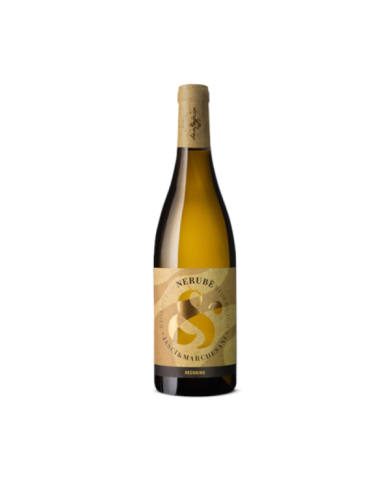
Pecorino is an extremely representative white grape variety for Abruzzo, and Jasci & Marchesani manages to give us a beautiful expression. Hand picked, vinification in white and aging for 6 months in steel vats and bottle.
€11.90
SKU:
15262
Brand:
Jasci & Marchesani
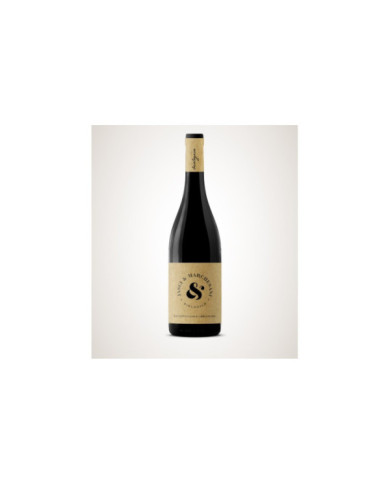
Captivating ruby red, characteristic fruity aromas with hints of vanilla, balsamic vinegar and black olive. Full bodied, powerful, yet very balanced with flavors of mulberry, currant, dark chocolate and a long smoky finish.
€8.87
SKU:
15261
Brand:
Jasci & Marchesani
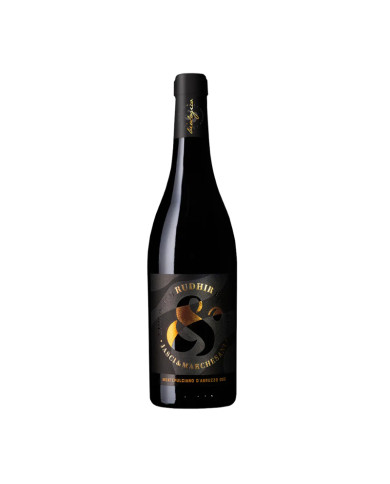
Rudhir is another masterpiece of the Jasci & Marchesani winery which, year after year, proves to be a "Master Cave" for Montepulciano d'Abruzzo. Thanks to Rudhir you go to savor a charismatic, fragrant and intense wine from every point of view. When the word masterpiece is used for a Jasci & Marchesani product, it is not an exaggeration; each bottle is an artistic, pure and sensational brushstroke, which in every sip strikes the soul and heart with the typical scents of the mother vine and those small nuances deriving from the various woods of the barrels. The Rudhir vinifies for 18 months in oak barriques and ends its journey after a further two years in the bottle, before being marketed therefore, explosions of flavours, aromas and aromas are the order of the day with a bottle of this bill. His warm and welcoming heart is a "trademark" and is capable of generating an approving smile even on the face of a drinker with a difficult palate.
€17.92
SKU:
15259
Brand:
Jasci & Marchesani
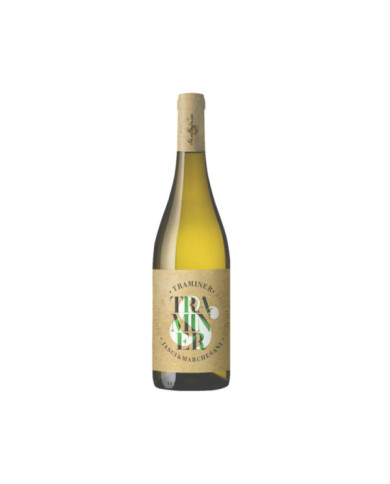
Manual harvest of the grapes for this Traminer, vinification in white and aging for 3 months in stainless steel barrels and bottle.
The glass is a pale straw yellow, very bright.
The nose opens with crunchy hints of green apple, flanked by slightly citrine notes and floral puffs of small white flowers.
Dry, fresh and with good softness, it pleasantly accompanies the meal and satisfies the palate.
€9.64
SKU:
15258
Brand:
Jasci & Marchesani
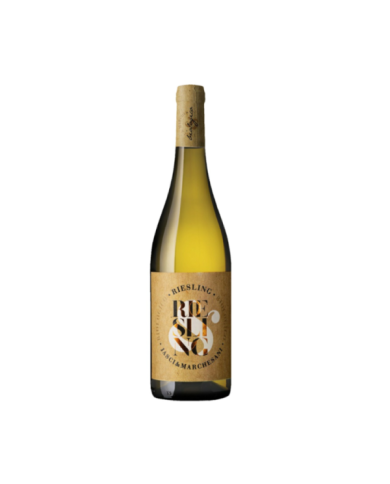
Riesling is a typical vine of northern Italy, Germany and Alsace; Jasci & Marchesani decided to bet on this vine and won the bet in full. A unique product, whose grapes are harvested strictly by hand, processed through vinification in white and finally aged for 6 months in steel barrels and bottles.
€10.15
SKU:
15257
Brand:
Jasci & Marchesani
Produced from Montepulciano grapes. Cherry red color with purplish-red hues. Fruity aroma with hints of cherry and strawberry, on the palate it is fresh and fruity, full-bodied with an aftertaste of bitter almonds.
€10.31
SKU:
15256
Brand:
Jasci & Marchesani
The Trebbiano d'Abruzzo white wine from the Masciarelli winery is obtained exclusively from the processing of Trebbiano grapes. For over 40 years this winery has been one of the best realities in Abruzzo that starts from a deep passion for work in the vineyard and for the enhancement of the territory. The vines are grown on the hills overlooking the sea on clayey soils rich in mineral salts which ensure luxuriant growth and the production of very delicious bunches with a unique flavour. This translates into quality wines that are easy to drink. The harvest begins in late autumn when the bunches have reached the right degree of ripeness. The vinification takes place in steel tanks for a limited period to then proceed with the maturation and refinement directly in the bottle. The result is a wine of medium body and structure which can also be drunk young and which is characterized by delicate aromatic notes of fruit and light hints of spice. Excellent for spending convivial moments with friends.
€8.30
SKU:
15255
Brand:
Jasci & Marchesani
Cherry red in colour, the nose is fruity, vinous, with hints of wood. The flavor is harmonious and tender.
€13.66
SKU:
15139
Brand:
Cantina Cioti
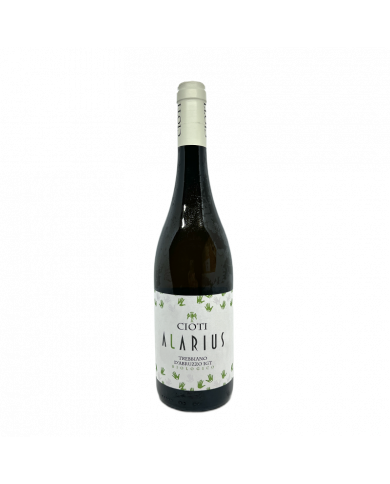
The vineyards are located at an altitude of about 400 meters and fall within the territory of the Gran Sasso Monti della Laga Park.
€10.31
€9.28
SKU:
15138
Brand:
Cantina Cioti
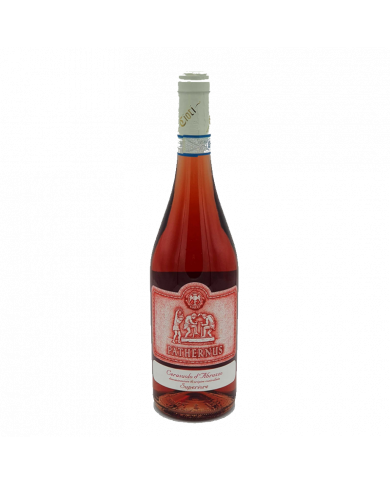
This rosé is produced from a vineyard over 40 years old, trained with spurred cordon with a density of 2200 plants per hectare with a yield of 8000 kg / ha. The production area is on the hills around Paterno di Campli at an altitude of 400 meters above sea level
€12.69
SKU:
14993
Brand:
Lidia e Amato
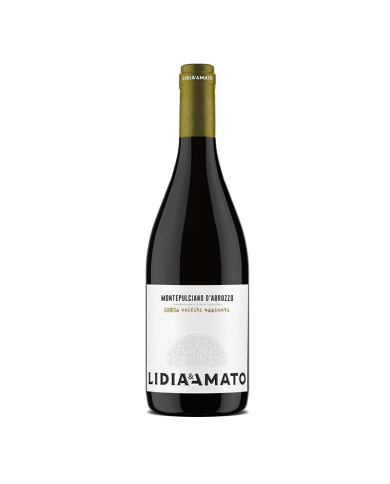
The “Montepulciano d'Abruzzo Doc Forty” wine is one of the most important Montepulciano wines produced by the Lidia e Amato company. The Lidia e Amato company is located in the province of Teramo in the Abruzzo region. The "Montepulciano d'Abruzzo Doc Forty" wine by Lidia e Amato is a red, still and dry wine. The wines of the Lidia e Amato winery, among which the wine "Montepulciano d'Abruzzo Doc Forty", reviewed in this article, contributed to the positive evolution of the appellation, thanks also to the professionalism of the operators who believed in the potential of the territory of province of Teramo. The reputation of the appellation and its wines, such as the "Montepulciano d'Abruzzo Doc Forty" of the Lidia e Amato company, continue to arouse the interest of the markets, as evidenced by the national and international awards of the wines produced by the companies of the Abruzzo region and the province of Teramo in particular. The Montepulciano d'Abruzzo Doc Forty wine from the Lidia e Amato winery, a wine of the appellation, is vinified from Montepulciano grapes. The Lidia e Amato winery produces about 6000 bottles of the Montepulciano d'Abruzzo Doc Forty wine, whose well-balanced organoleptic characteristics and gustatory balance make it one of the most interesting wines of the appellation.
€14.27
SKU:
14959
Brand:
Rupicapra
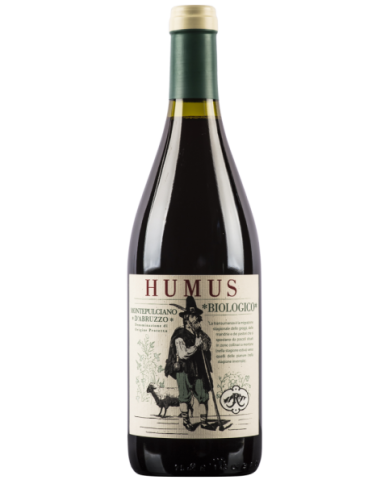
The word 'transhumance' derives from the verb 'transumare' or rather to transit on the ground, to cross: the verb is the union of the two Latin words 'trans', which means beyond, and 'humus' which means soil, land. In Italy this ancient custom originated mainly in Abruzzo where it consisted in transporting (precisely 'transhuming') animals from the mountains to the rich pastures of the Gargano and it is from this activity that probably the most famous wine takes its name and representative of Abruzzo, Montepulciano. Humus is a Montepulciano d'Abruzzo DOP from organic viticulture, a friend of the land and nature, the son of a philosophy that takes shape in every production step and which gives a wine of excellent quality.
€8.98
Taste the Authenticity of Natural Wines!
Natural wines are an increasingly popular choice among consumers, offering a unique and authentic tasting experience. If you're looking to learn more about natural wines and how to try them, you've come to the right place. In this article, we'll explore what natural wines are, how they're made, and how to best enjoy them.
What is a Natural Wine?
A natural wine is one produced without the use of additives, pesticides, or other chemicals. Natural wines are made only with grapes, water, and yeast, and are crafted to preserve the grape's natural flavor as much as possible. They are also generally produced in small quantities, meaning each bottle of natural wine is unique and offers a unique tasting experience.
How Are Natural Wines Made?
Natural wines are made using grapes, water, and yeast. The production process is very different from that used to make conventional wines. The first thing to know is that natural winemakers don't use additives, pesticides, or other chemicals. Instead, they strive to work with the grapes in a way that best preserves their natural flavor, carefully selecting their vineyards and caring for the vines.
Once the grapes are harvested, they are macerated for 12-14 days at a controlled temperature. This allows for greater extraction of aromas and flavors, giving the wine its rich complexity. The wine is then fermented in wooden barrels or concrete vats. This fermentation process is slow and can last from two to six months. Fermentation in wooden barrels gives the wine added complexity, while fermentation in concrete vats gives it greater freshness.
How to Enjoy a Natural Wine?
Savoring a natural wine is a unique experience that offers a rich complexity of aromas and flavors. To fully savor a natural wine, it's important to properly prepare the glass. The glass should be rinsed with warm water and dried with a soft cloth to remove any chemical residue. Then, the glass should be filled halfway with wine to ensure proper aeration.
Once ready, take a sip of wine and savor it slowly. Savor the color, aroma, flavor, and texture of the wine. Try to capture all the aromas and flavors of the grape, such as fruit, grass, hay, chocolate, and so on. Also savor the complexity of the wine, noticing how the aromas and flavors evolve over time.
Conclusion
Natural wines are an excellent choice for those seeking an authentic and unique tasting experience. They are produced without the use of additives, pesticides, or other chemicals, and are crafted to best preserve the natural flavor of the grapes. As we've seen, natural wines are made with grapes, water, and yeast, and are fermented slowly. To fully savor a natural wine, it's important to properly prepare your glass and taste slowly, trying to capture all the aromas and flavors, and savoring the wine's complexity. If you're looking for an authentic and unique tasting experience, try a natural wine!
Related posts