

 Italiano
 Deutsch


















There are no more items in your cart
SKU:
14648
Brand:
Cantina Dorigati
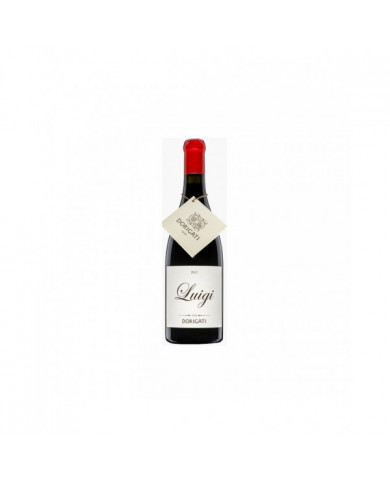
Deep ruby red color with violet reflections. Perfume hints of ripe fruit, cherry and blackcurrant; slightly vanilla note. In the mouth, its main characteristic is consistency, with an important volume, clear perception of the tannic concentration, but with a velvety touch on the palate that leaves a remarkable persistence in the aftertaste.
PAIRING: to be preferred in combination with red meats, also ideal with aged cheeses.
€45.02
SKU:
14647
Brand:
Cantina Dorigati
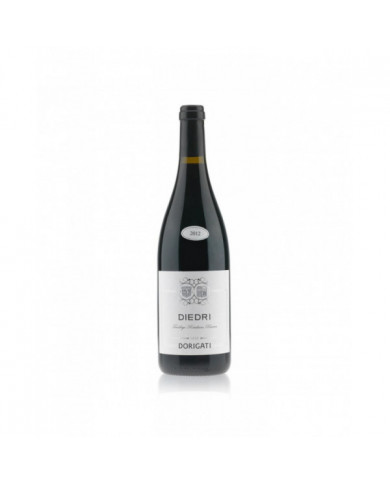
It is distinguished by a floral scent of violet, with hints of ripe fruit, blackberry, raspberry and blueberry with spicy notes of mint. The decisive and full flavor and a certain tannin give importance and depth to this wine of sure substance.
€27.82
SKU:
14646
Brand:
Cantina Dorigati
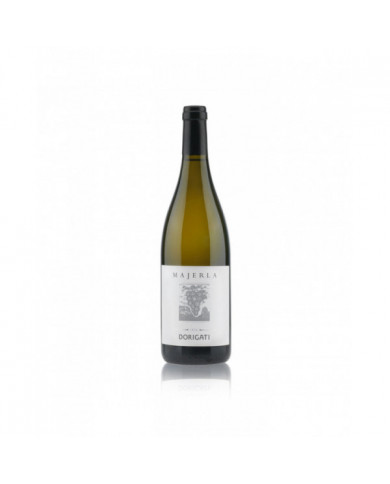
Characterized by aromas of varietal fruit aromas that combine well with the vanilla aroma given by the aging in wood. Creamy and full flavor, but at the same time fresh and pleasant. After the pressing and clarification of the must, the alcoholic fermentation takes place, half carried out in steel and half in wood.
€20.13
SKU:
14645
Brand:
Cantina Dorigati
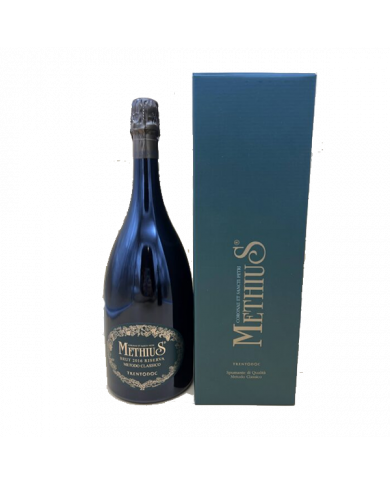
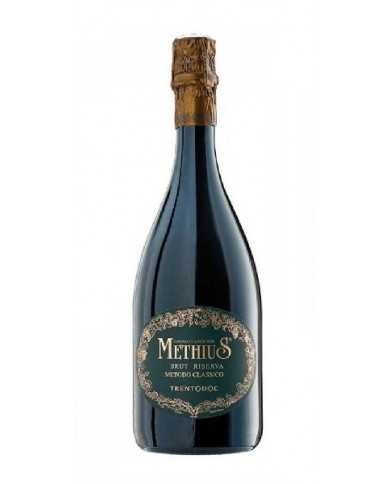
Il Trentino è una terra indubbiamente vocata alla produzione di basi spumanti. Se si aggiunge una produzione artigianale e rispettosa delle tradizioni ecco che si ottiene TRENTODOC, ovvero il metodo classico trentino.è da questi presupposti che nel 1986 nasce METHIUS TRENTO DOC grazie all’amicizia tra due amici enologi: Carlo Dorigati ed Enrico Paternoster. Il Trento Doc Methius è prodotto solo nella tipologia riserva, a sottolineare la qualità eccelsa di questo prodotto e la sua unicità. La cantina d’invecchiamento, ubicata a Mezzocorona (Trentino), risale ai primi del 1900, è completamente interrata e costruita con i “volti a botte” quasi tutti in pietra squadrata. Qui le bottiglie di Methius sostano per 60 mesi, a temperatura e umidità pressoché costanti tutto l’anno. Il nome “Methius” deriva dalla ricerca di un toponimo locale che accomuna l’origine del prodotto aziendale al territorio di nascita. L’etimo del nome scelto si perde nella storia. Si sa che già nel 1150 (Principe Vescovo e Mainardo II conte di Tirolo) il nome delle due borgate site nella “Piana Rotaliana” erano: Methius Coronae (oggi Mezzocorona) e Methius Sancti Petri (oggi Mezzolombardo) ove il radicale comune “Methius” deriva dal celtico e latino volgare.
€98.09
SKU:
14644
Brand:
Cantina Dorigati
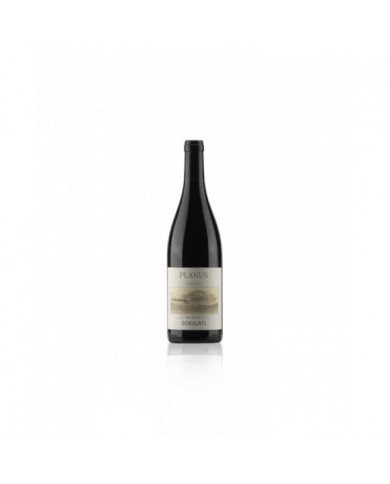
Planus è la loro interpretazione enoica della Piana Rotaliana, attraverso l’assemblaggio di tre varietà storicamente coltivate dalla famiglia : 40% Rebo, 40% Cabernet Sauvignon e 20% Teroldego. Rebo e Cabernet Sauvignon vengono coltivati sulle colline pedemontane del Monte di Mezzocorona, su terreni ghiaioso-calcarei. Il Teroldego, invece, viene coltivato sui terreni alluvionali ben drenanti tipici della Piana Rotaliana. La vinificazione in rosso con lunga permanenza sulle vinacce, la maturazione 12 mesi in piccole botti di rovere e in grandi fusti di rovere con successivo passaggio in acciaio. Di colore rosso rubino carico con riflessi violacei. Il profumo: esplodono inizialmente sentori speziati riconducibili al pepe ed a spezie orientali, provenienti da Cabernet Sauvignon e Rebo, lasciando poi il posto alla frutta rossa, in primis ribes nero, merito del Teroldego. Il Sapore: grazie alla presenza del Rebo l’entrata in bocca è molto gentile, nella parte centrale del palato denota grande pienezza e struttura, proveniente dal tannino del Cabernet Sauvignon; infine chiude con grande freschezza e succosità, data dalla percentuale del più fresco Teroldego.
€17.08
SKU:
14643
Brand:
Cantina Dorigati
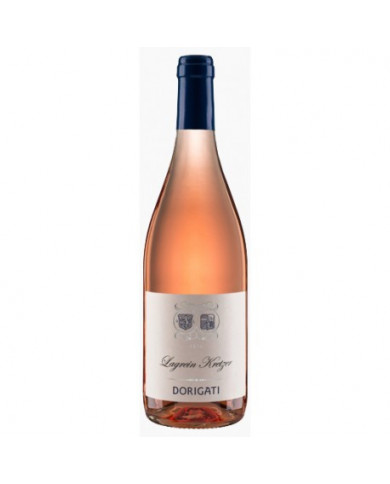
Lagrein Rosato Kretzer Dorigati (term KRETZER, synonymous with rosé), is a wine from Trentino and its name derives from "KRETZE", a large wicker basket with which the farmers drained the pressed grapes to obtain a rosé product. With a very pale cherry color, it presents a wine with a fruity and elegant bouquet, very pleasant. The taste is fresh and slightly mineral.
€15.62
SKU:
14642
Brand:
Cantina Dorigati
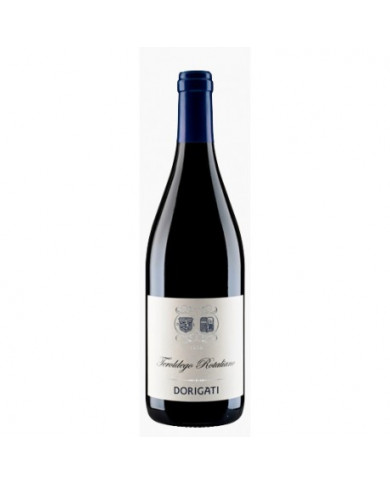
Teroldego Rotaliano Dorigati with an intense and deep red color, the nose releases aromas of raspberry, pepper, licorice, hints of undergrowth and pine needles, in the mouth it is soft, with excellent tannins and a long taste-olfactory.
€14.96
SKU:
14641
Brand:
Cantina Dorigati
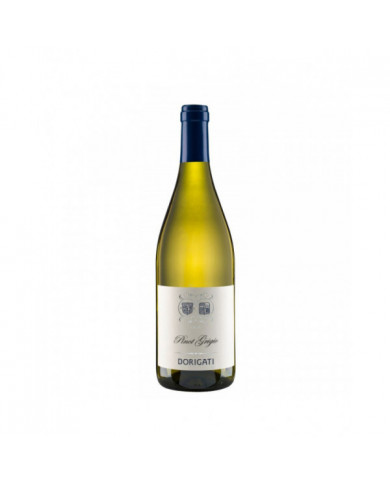
Pinot Grigio Dorigati is a wine from Trentino. It has a straw yellow color with golden reflections, a pleasant, fruity and floral bouquet. Full, fresh and mineral flavour. Pairing: ideal with full meals of light lunches, excellent with hors d'oeuvres and soups.
€15.37
SKU:
14640
Brand:
Cantina Dorigati
Il Trentino è una terra indubbiamente vocata alla produzione di basi spumanti. Se si aggiunge una produzione artigianale e rispettosa delle tradizioni ecco che si ottiene TRENTODOC, ovvero il metodo classico trentino.è da questi presupposti che nel 1986 nasce METHIUS TRENTO DOC grazie all'amicizia tra due amici enologi: Carlo Dorigati ed Enrico Paternoster. Il Trento Doc Methius è prodotto solo nella tipologia riserva, a sottolineare la qualità eccelsa di questo prodotto e la sua unicità. La cantina d'invecchiamento, ubicata a Mezzocorona (Trentino), risale ai primi del 1900, è completamente interrata e costruita con i "volti a botte" quasi tutti in pietra squadrata. Qui le bottiglie di Methius sostano per 60 mesi, a temperatura e umidità pressoché costanti tutto l'anno. Il nome "Methius" deriva dalla ricerca di un toponimo locale che accomuna l'origine del prodotto aziendale al territorio di nascita. L'etimo del nome scelto si perde nella storia. Si sa che già nel 1150 (Principe Vescovo e Mainardo II conte di Tirolo) il nome delle due borgate site nella "Piana Rotaliana" erano: Methius Coronae (oggi Mezzocorona) e Methius Sancti Petri (oggi Mezzolombardo) ove il radicale comune "Methius" deriva dal celtico e latino volgare.
€46.60
SKU:
14638
Brand:
Cirelli
“I work so that my wines reflect as much as possible the territory, the season, my way of being and feeling. The wine, fruit of the environment.”
SKU:
14637
Brand:
Cirelli
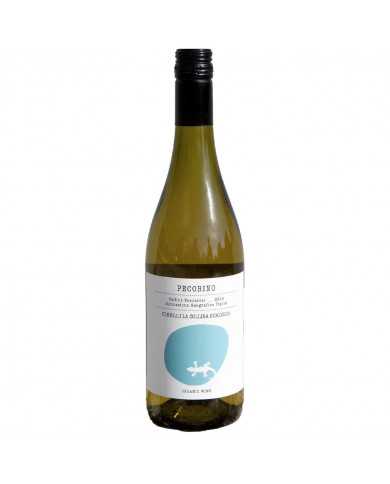
Intense straw yellow. The nose is expressed with hints of exotic fruit and floral notes of hawthorn. On the palate it is fresh, with good flavor and balanced.
€13.00
SKU:
14636
Brand:
Cirelli
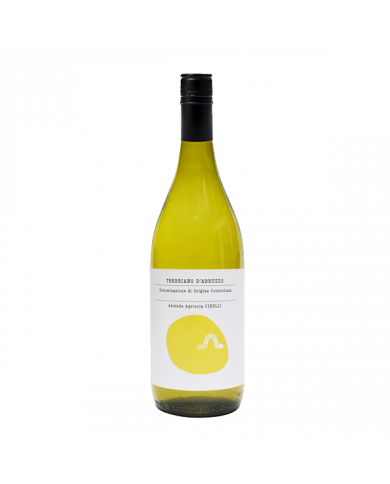
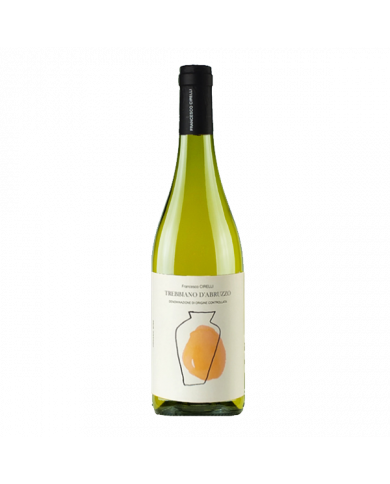
Cirelli 's Trebbiano d'Abruzzo is a fresh, satisfying and thirst-quenching white wine with a pleasantly rustic style, bright minerality and freshness. Delicate floral and fruity notes accompany a smooth and refreshing drink. Vinified in steel and aged for 4 months on the fine lees.
€13.00
SKU:
14635
Brand:
Cantina di Soliera
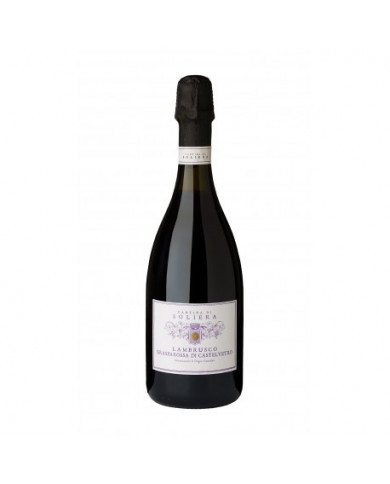
Intense and sparkling ruby red dry wine. Fruity and persistent bouquet with hints of cherry and violet. Fruity, fresh, lively and pleasantly harmonious on the palate. Recommended with red, grilled, roasted and boiled meats. It goes well with Asian cuisine. Serve at a temperature of 12-14 °C.
€8.42
SKU:
14634
Brand:
Cantina di Soliera
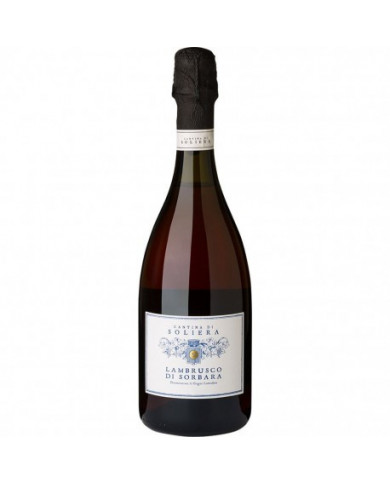
Dry red wine, sparkling, with a beautiful light color and balanced body, with a slightly rosy and very fine foam obtained from a long natural fermentation of Lambrusco di Sorbara grapes with a typical and fruity aroma. Suitable to accompany typical Emilian cuisine, but also with seafood and sushi. Serve at a temperature of 10-12 °C.
€7.61
SKU:
14633
Brand:
Cantina di Soliera
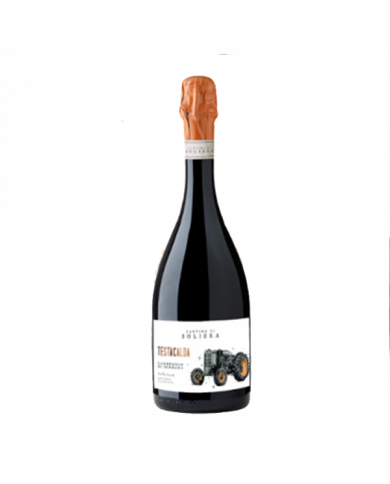
Testacalda is a 100% Classic Method Lambrusco di Sorbara Spumante made with the ancient and traditional method of refermentation in the bottle with final disgorgement. Ideal with cured meats, ramen, noodles, but also carbonara pasta. Serve at a temperature of 6 – 8 °C.
SKU:
14632
Brand:
Cantina di Soliera
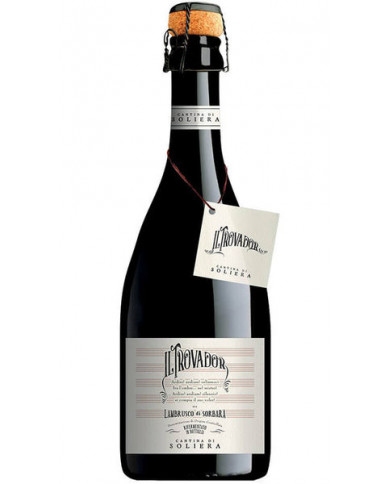
Trovador is a Lambrusco obtained from Sorbara grapes which is then re-fermented with an ancient method done exclusively in the bottle. Therefore obtained through a production process in which the final disgorgement is not performed, thus differentiating itself from the classic methods of production of Lambrusco. In this way a particular wine is produced whose scents are perceived in a more distinct and natural way.
€13.01
SKU:
14631
Brand:
Cantina di Soliera
The Cantina di Soliera Lambrusco Grasparossa Amabile wine is a sweet sparkling ruby red wine, of an intense red color, vinous, fruity with hints of violet, obtained from the natural fermentation of Lambrusco Grasparossa grapes. Lively, evanescent foam with a deep pink colour.
€8.37
SKU:
14630
Brand:
Cantina di Soliera
Sparkling semi-dry ruby red wine. It shows itself among fruity scents characteristic of Lambrusco, obtained from a natural fermentation. Lively sparkling and effervescent mousse. Mainly indicated in combination with typical dishes of the Romagna tradition including fresh pasta and cured meats.
€8.85
SKU:
14629
Brand:
Cirelli
€29.98
€26.98
Trebbiano d'Abruzzo "Anfora" by Cirelli is a soft and intense white wine, vinified with a short maceration in terracotta amphorae, where it remains aged for about 12 months. A bouquet rich in citrus fruits, yellow fruit and aromatic herbs animates a savory and velvety sip, with excellent balance and remarkable persistence.
€29.98
€26.98
SKU:
14628
Brand:
Cirelli
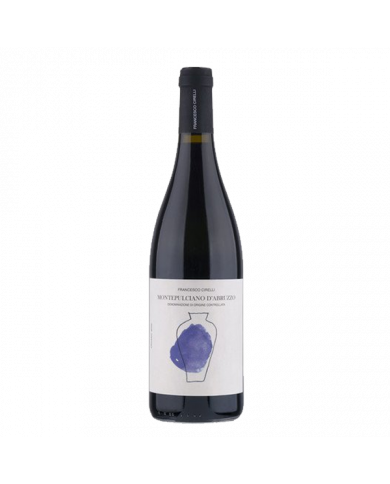
Montepulciano d'Abruzzo "Anfora" is an original and complex red wine, rich and expressive, vinified and aged in amphorae for 9 months. The balsamic and spicy scents and the aromas of wild berries and Mediterranean scrub recall a rich and juicy sip, with velvety tannins.
€25.53
SKU:
14627
Brand:
Cantina Marchesi Antinori
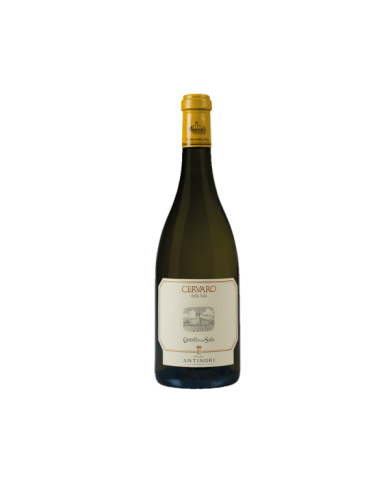
Refined and intense, structured and persistent , it is obtained from Chardonnay grapes with a small percentage of Grechetto, a native grape that brings acidity and binds it even more to the territory. The vinification takes place in Allier and Troncaise barriques, where the wine then matures for six months before being bottled and left to refine for another 10 months.
SKU:
14626
Brand:
Cantina Marchesi Antinori
Refined and intense, structured and persistent , it is obtained from Chardonnay grapes with a small percentage of Grechetto, a native grape that brings acidity and binds it even more to the territory. The vinification takes place in Allier and Troncaise barriques, where the wine then matures for six months before being bottled and left to refine for another 10 months.
SKU:
14625
Brand:
Cantina Marchesi Antinori
Refined and intense, structured and persistent , it is obtained from Chardonnay grapes with a small percentage of Grechetto, a native grape that brings acidity and binds it even more to the territory. The vinification takes place in Allier and Troncaise barriques, where the wine then matures for six months before being bottled and left to refine for another 10 months.
€9.20
€8.28
SKU:
14623
Brand:
Rotari
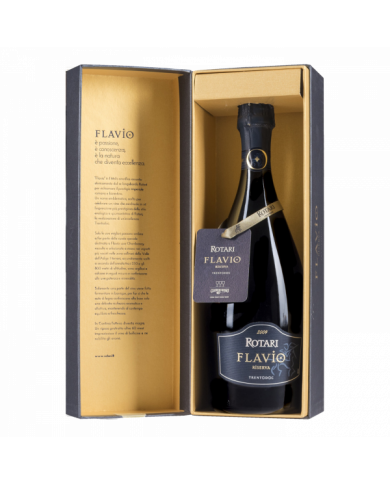
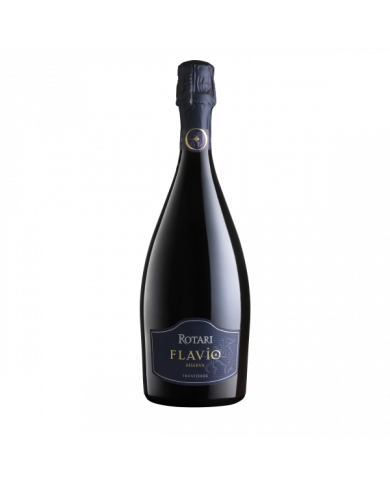
It is produced with 100% Chardonnay grapes, rigorously harvested and selected by hand. The first fermentation, which takes place partly in steel and partly in barrique, is followed by 5 months refinement in the same containers and second fermentation, by refermentation in the bottle, with a full 5 years refinement on its own yeasts.
€49.17
SKU:
14621
Brand:
Casimirri
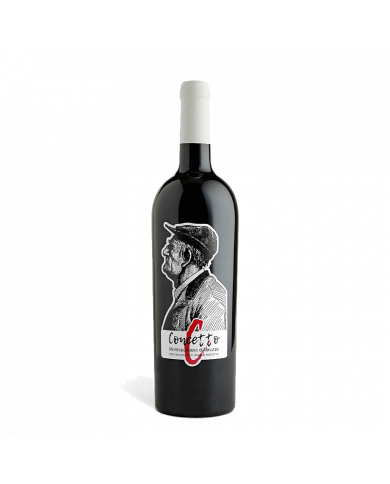
Montepulciano d'Abruzzo PDO dedicated to grandfather Concepts Casimirri , was born as a strong wine and represents the highest expression of our land.
€12.53
SKU:
14620
Brand:
Rasicci
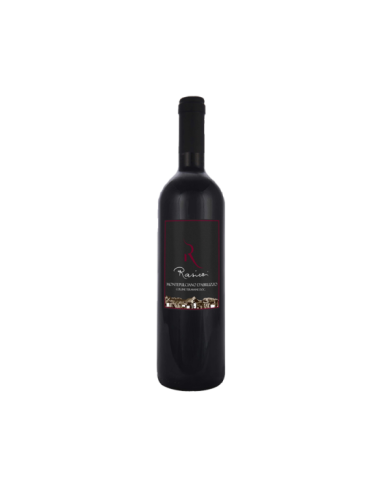
Clear, with an impenetrable ruby color, it still has purplish violet notes, a sign of great youth, very concentrated, with a rich glycerine expression. Intense nose of ripe red fruits, especially undergrowth, which reaches humus and closes on the typically Abruzzo licorice root. Firm and austere softness on an important and still vibrant tannic framework. The freshness of the acids and the flavor? mineral give balance to a warm and soft body. Long persistent intense finish with the return of all the fruity sensations perceived on the nose. Wine already? in harmonic expression with the capacity? to mature for a long time.
€11.10
SKU:
14619
Brand:
Rasicci
Clear, with an impenetrable ruby color, it still has purplish violet notes, a sign of great youth, very concentrated, with a rich glycerine expression. Intense nose of ripe red fruits, especially undergrowth, which reaches humus and closes on the typically Abruzzo licorice root. Firm and austere softness on an important and still vibrant tannic framework. The freshness of the acids and the flavor? mineral give balance to a warm and soft body. Long persistent intense finish with the return of all the fruity sensations perceived on the nose. Wine already? in harmonic expression with the capacity? to mature for a long time.
€12.69
SKU:
14617
Brand:
Feudo Arancio
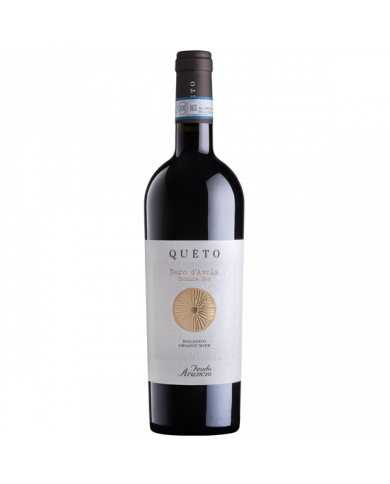
Wine produced from organically grown Nero d'Avola grapes on the Sambuca di Sicilia estate, in the province of Agrigento. The vines are covered with grass and set on a gentle hill (300 meters slm ) which is particularly ventilated and characterized by clayey soils. The vineyard is located in the area of the company most exposed to winds and currents, so as to minimize the pressure of cryptogams.
€16.18
SKU:
14614
Brand:
Cantina Orsogna
Live wine, organic and biodynamic (Demeter) with spontaneous fermentation, without added sulphites, unfiltered, with fermentation lees.
€13.42
SKU:
14609
Brand:
Feudo Arancio
Nero d'Avola and Cabernet Sauvignon come together to give life to a wine that expresses the two souls of Sicily, a land of great native vines such as Nero D'Avola, but also a land that has happily welcomed international vines such as Cabernet Sauvignon. Nero d'Avola: grapes harvested around the second week of September, alcoholic fermentation with selected yeasts at 24-25°C for 14-16 days, malolactic fermentation with selected bacteria, maturation for 8 months in French barriques with 2 years aging and light toast. Cabernet Sauvignon: grapes harvested around the first week of October, fermentation and alcoholic maceration with selected yeasts at 26-28°C for 16-18 days, malolactic fermentation with selected bacteria, maturation for 12 months in French barriques with 3-year aging and medium roast. Blend: at the end of the maturation in wood, the Nero d'Avola and Cabernet wines are blended and further maturation of 4 months in barriques follows to favor the fusion of the aromas of the two different varieties. This is followed by bottling and subsequent maturation in the bottle for 8 months.
€17.20
SKU:
14608
Brand:
Feudo Arancio
Variety of Middle Eastern origin which is best expressed in Sicily thanks to the intense luminosity and uniqueness of the soils. It is a medium-late variety, ripening around the end of September. The grapes are grown both in Sambuca di Sicilia, in the province of Agrigento, and in Acate, in the province of Ragusa. In the first estate, a more mature and structured wine is obtained, while in the second, a more delicate and fruity product is obtained. The type of training used is espalier, with an average planting density of 4,500 plants per hectare. Harvesting of the grapes at perfect phenolic ripeness, destemming and alcoholic fermentation with the skins for 10-12 days at 25-26°C, malolactic fermentation with selected bacteria, maturation for 10 months in French oak barriques.
€10.31
SKU:
14607
Brand:
Cantina Frentana
The wine has a medium intense straw colour. The nose reveals pleasant notes of citrus, honey and yellow peach and sometimes a characteristic hint of "beer". The taste is presented as a wine with body and structure, balanced by a good acidity that refreshes the palate.
SKU:
14606
Brand:
Fattoria Italiana Martelli
Organoleptic characteristics: View: intense dark red with violet reflections Smell: fruity with hints of plum jam, blackberries and black cherries Taste: full harmonious with long persistence.
€11.18
SKU:
14605
Brand:
Amorotti
It impresses with its vivid and bright color. The nose is expressed on notes of cherry, wild strawberry, raspberry and undergrowth. Intense aromas far from the normal and conventional Cerasuolo. In the mouth it is expressive and satisfying with a taste all played on the fruit. Alcoholic content: 13% vol.
€36.48
SKU:
14604
Brand:
Crea Vini
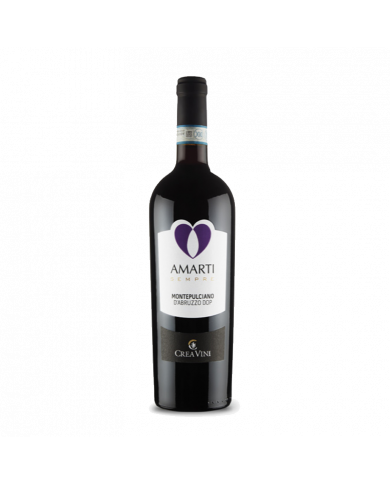
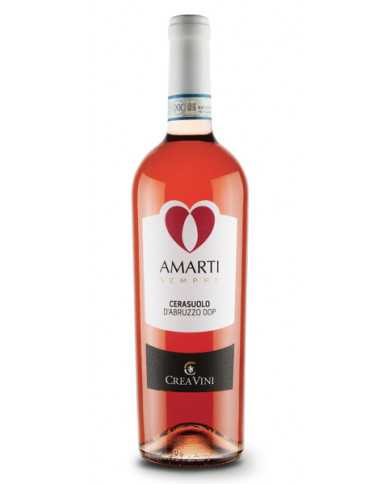
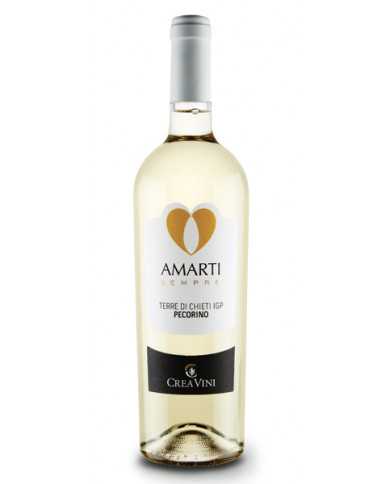
Amarti Semper is a line that combines the quality of our wines and the value of a territory that has always been dedicated to winemaking excellence. Montepulciano, Pecorino, Cerasuolo great wines from great native grapes… a sincere expression of the land of Abruzzo. Glasses to share at any time and occasion.
€10.05
€28.83
€18.90
€11.00
€11.00
SKU:
14595
Brand:
Ca' Rugate
The Favarol and Pendolino cultivar olive groves are located in the highest part of the hill, near the Campo Lavei vineyard in the Tolotti area. The medium fruity flavor goes well with meat, fish and vegetable dishes with a more decisive taste.
€22.37
SKU:
14594
Brand:
Ca' Rugate
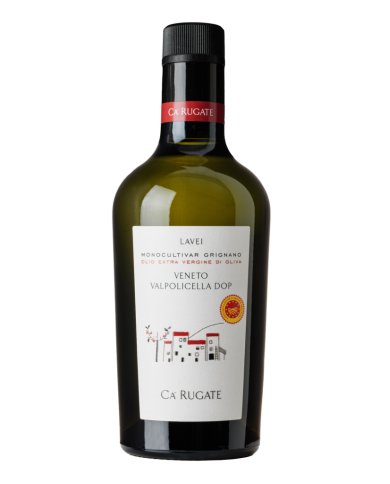
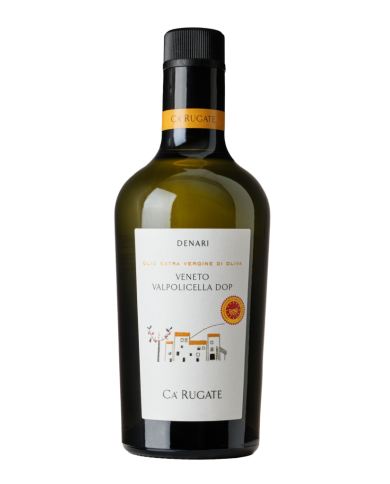
The Grignano and Leccino cultivar olive groves are located in the highest part of the hill, in the area called I Denari, near the Monte Fiorentine vineyard in the Rugate area.
€22.37
SKU:
14593
Brand:
Ca' Rugate
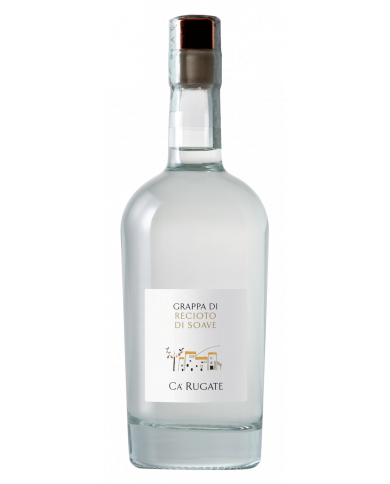
Single-varietal grappa from Garganega, obtained from the skilful and artisanal distillation of the pomace of the most prized grape, the same that gives rise to Recioto di Soave La Perlara. The result is a distillate with fruity aromas, which preserves the elegant aroma of the pomace and the soft and sweet taste of Recioto.
€29.55
SKU:
14592
Brand:
Ca' Rugate
Grappa di Corvina, Corvinone and Rondinella, obtained from the distillation of pomace obtained from the pressing of the Amarone grapes following a drying of 4/5 months in the loft. The distillation takes place at low pressure with a discontinuous system, in order to preserve the aromas and scents of the raw materials. The distillate obtained is aged in oak barrels for about 6/7 months. Enveloping aroma, rich and intense flavour.
€29.55
SKU:
14591
Brand:
Ca' Rugate
Single-varietal grappa from Garganega, obtained from the distillation of pomace obtained exclusively from the grapes of the Monte Fiorentine vineyard. Grappa of great personality, endowed with a strong aromatic profile. The clear fruity aromas and flavors recall the typicality of the cru of origin. In order to bring out the characteristic scents to the fullest, only the "heart" of the distillate is valued in order to obtain a grappa of supreme quality.
€29.55
SKU:
14590
Brand:
Ca' Rugate
Amber in colour, the nose alternates with a notable wealth of sensations ranging from raisins to candied fruit, from tobacco to mineral hints; in the mouth it is dense, balanced, with the acidity balancing the residual sugars and giving a long and elegant finish.
Remarkable sweetness, amber in color, the nose shows complex aromas that expand from raisins to candied fruit, from tobacco to mineral hints. At the sip which must be rigorously delicate and small, it shows an indescribable balance.
Remarkable strength, it is a wine that loves stronger pairings such as aged cheeses or at the end of a meal.
€63.44
SKU:
14589
Brand:
Ca' Rugate
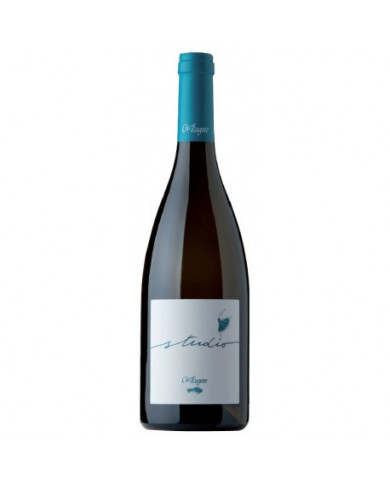
The Bianco "Studio" of Cà Rugate has an intense straw yellow colour. On the nose there is a bouquet of pout pourri and green tea with light notes of white pulp fruit and flint. On the palate it is enveloping and dense, taking up the aromatic freshness contained in the olfactory premises, it relaxes in a finish full of flavor and extraordinary persistence.
Vinification and fermentation take place in steel with consequent assembly of the grapes. 50% of the mass obtained is aged in 680 liter barrels for about 9 months and the remainder in steel.
The selected vine stocks are located in the Tremenalto area north of the municipality of Monteforte d'Alpone, on predominantly basaltic soils.
A wine to be discovered, ideal for any occasion.
€37.58
SKU:
14588
Brand:
Ca' Rugate
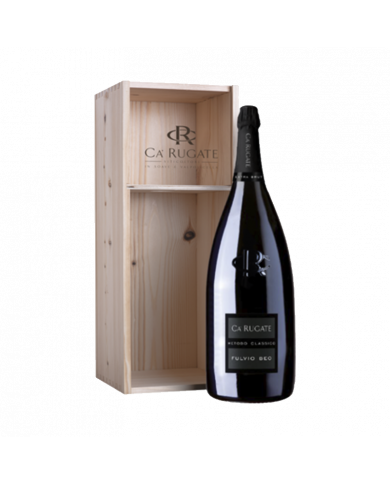
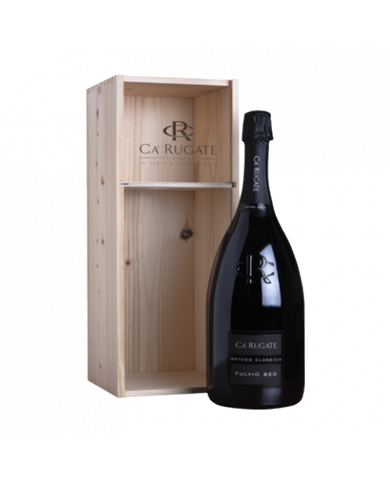
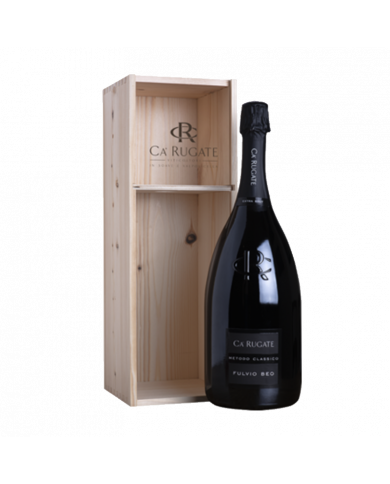
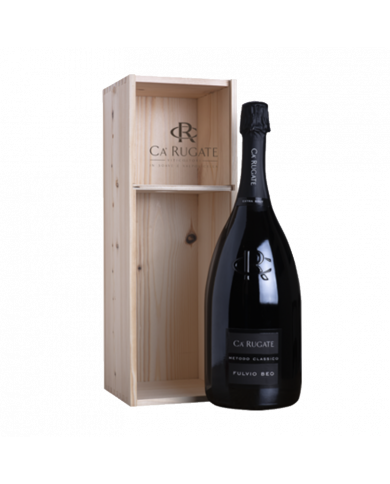
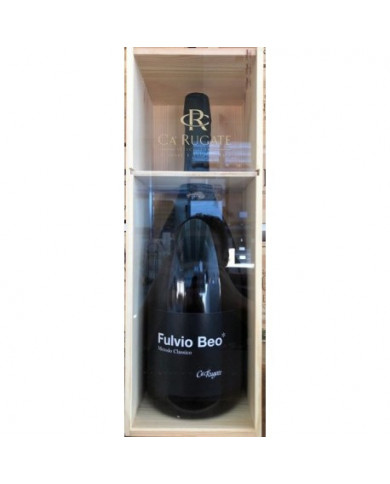
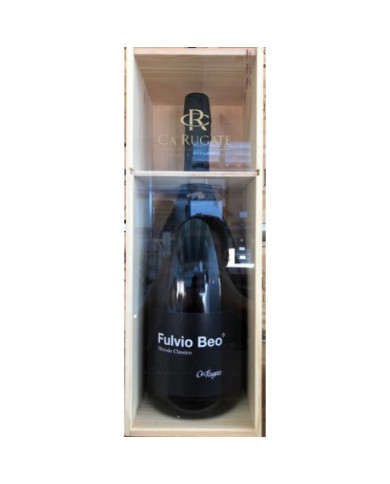
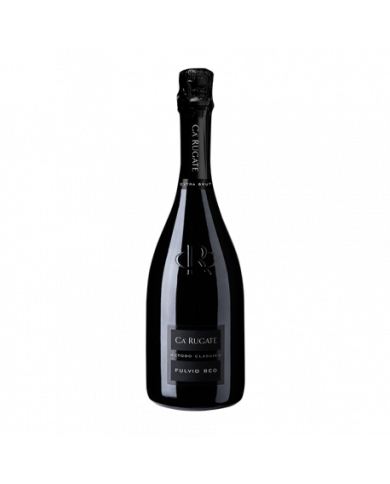
Fulvio Beo Classic Method Ca' Rugate has a straw yellow color with greenish reflections, it is a sparkling wine with a fine and persistent perlage. The nose releases a delicate hint of yeast with pleasant fruity notes. Harmonious, almost velvety flavour, with a dry finish.
€720.29
SKU:
14587
Brand:
Ca' Rugate
Fulvio Beo Classic Method Ca' Rugate has a straw yellow color with greenish reflections, it is a sparkling wine with a fine and persistent perlage. The nose releases a delicate hint of yeast with pleasant fruity notes. Harmonious, almost velvety flavour, with a dry finish.
€551.75
SKU:
14586
Brand:
Ca' Rugate
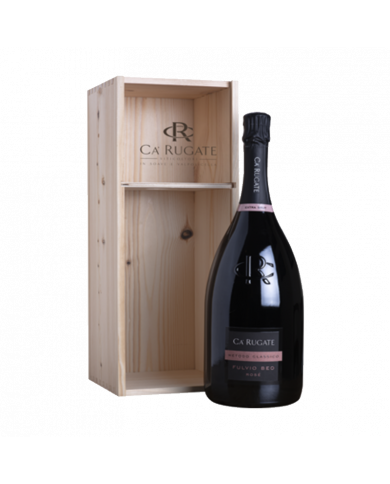
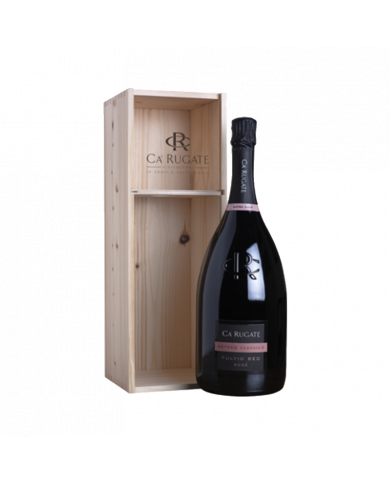
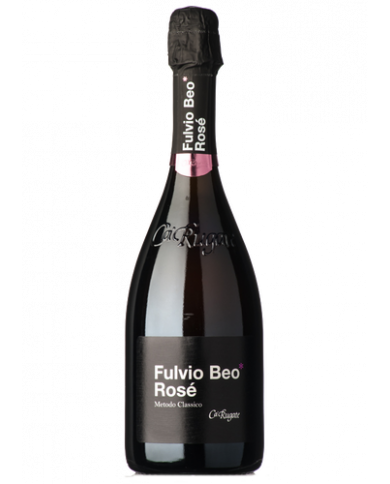
After a short maceration of 1-2 days on the skins, the fermentation takes place in stainless steel tanks. About 6 months after the harvest, the base wine is bottled with the addition of yeasts which trigger a second fermentation. After about 24 months the yeasts, through the "disgorgement", come out of the bottle. At this point, the Fulvio Beo Rosè sparkling wine is ready for marketing.
Tasting notes
Coral pink in color with shades that veer towards salmon-colored tones. On the nose aromas of small berries, currants and strawberries and delicate hints of almond.
€333.06
SKU:
14585
Brand:
Ca' Rugate
Fulvio Beo Classic Method Ca' Rugate has a straw yellow color with greenish reflections, it is a sparkling wine with a fine and persistent perlage. The nose releases a delicate hint of yeast with pleasant fruity notes. Harmonious, almost velvety flavour, with a dry finish.
€333.06
SKU:
14584
Brand:
Ca' Rugate
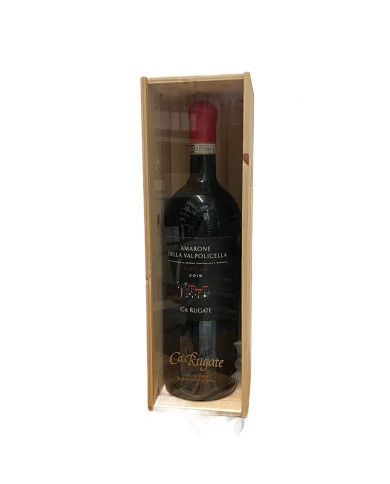
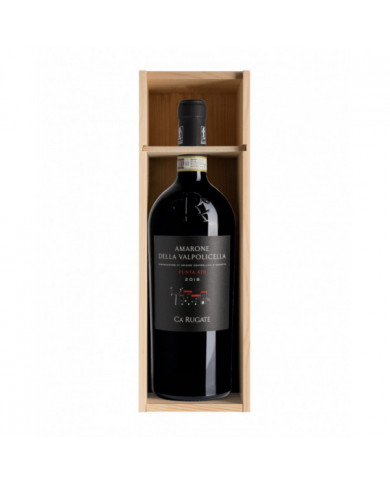
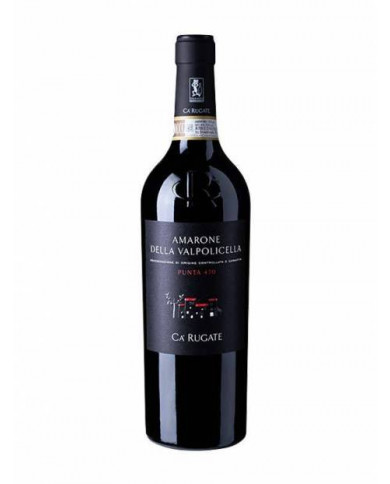
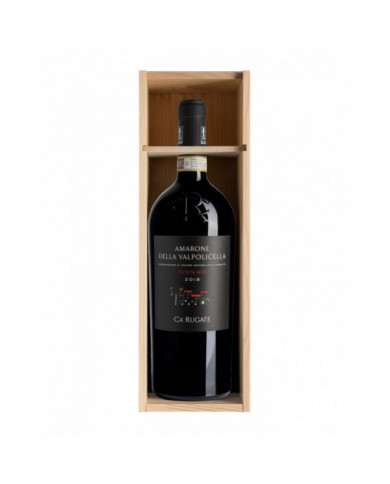
The Amarone di Ca' Rugate "Punta 470" announces itself in the glass with a well concentrated garnet colour. The olfactory bouquet that emerges on the nose is broad, where various notes of small berry fruits such as blackberry, cherry and currant can be traced, alternating with spicy references. On the palate it has an excellent structure, powerful and energetic thanks to a round sip, which wraps the palate with softness; it closes with a finish of excellent persistence, characterized by an aftertaste that recalls the flavor of the dried grapes from which the Amarone production process is born. A label of important depth both on the nose and in the mouth, which comes from a meticulous production process, in which each phase of the production is followed with care and attention, until the wine, after a good period of refinement, is not ready to be bottled. A great expression, dense, intense and elegant. The "Punta 470" takes shape from the union between Corvina, Corvinone and Rondinella, varieties grown in soils rich in skeleton and limestone located in the hilly area of Montecchia di Crosara. The manual harvest begins during the second half of September, taking care to place the bunches in boxes without overlapping them, in order to guarantee correct ventilation. The bunches wither for 4-5 months in a fruit cellar, dehydrating and thus concentrating their sugary substances; then we proceed with the pressing, and the must obtained is fermented in steel. The wine ages for 30-36 months in 500-litre oak tonneaux and 25-hectolitre barrels.
SKU:
14583
Brand:
Ca' Rugate
Fulvio Beo Classic Method Ca' Rugate has a straw yellow color with greenish reflections, it is a sparkling wine with a fine and persistent perlage. The nose releases a delicate hint of yeast with pleasant fruity notes. Harmonious, almost velvety flavour, with a dry finish.
€142.74
SKU:
14582
Brand:
Ca' Rugate
Deep garnet red colour. The aromas are fruity with notes of cherry and red fruit with hints of flowers and spices. The taste in the mouth is full and velvety thanks to the soft tannins that characterize it.
€21.33
SKU:
14581
Brand:
Ca' Rugate
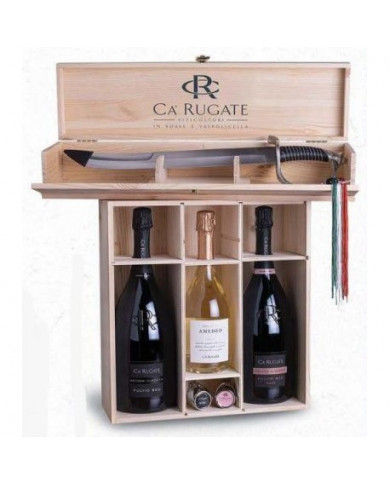
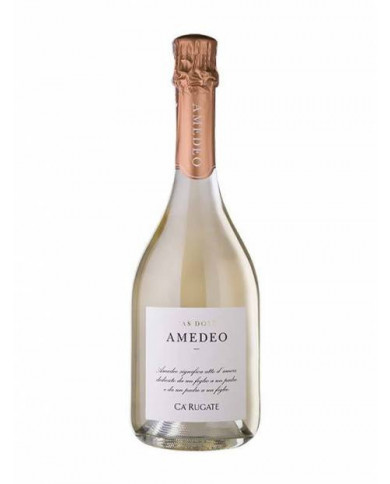
Saber and Bubbles in Ca' Rugate Wooden Case SPARKLING DREAMS. All the Tessari house bubbles (Fulvio Beo - Fulvio Beo Rosè - Amedeo.) in a wooden box with Sommelier's Saber with which you can uncork with elegance and celebrate in joy.
€239.49
SKU:
14580
Brand:
Ca' Rugate
Delicate hints of freshly baked croissant crust, with references to spices and notes of white peach, accompanied by a vigorous and enveloping drink, supported by a whipping and crystalline acidity.
€97.17
SKU:
14579
Brand:
Ca' Rugate
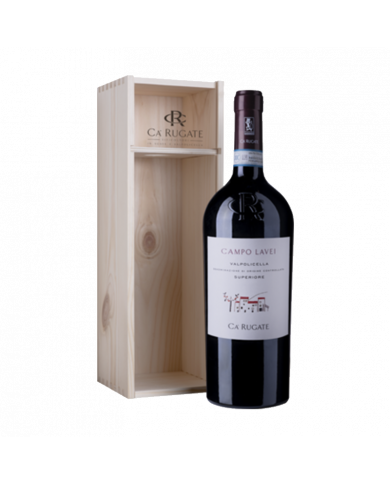
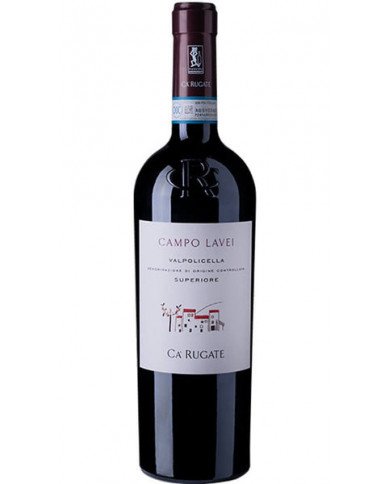
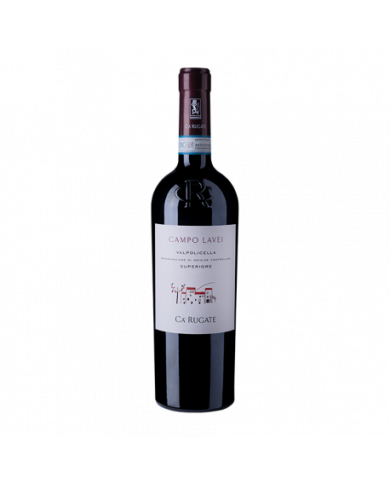
Deep ruby red dress, a Valpolicella Superiore with aromas of small red fruits, from blackberry to currant to cherry that blend well in a splendid harmony of spicy flavors given by the aging in barrel.
Letting the wine decant from the important organoleptic structure and important tannins, it is possible to perceive the softness on the palate.
Enveloping and sensual, it is perfect for your most intense evenings with important dinners with the strongest flavours.
€75.40
SKU:
14578
Brand:
Ca' Rugate
Fulvio Beo Classic Method Ca' Rugate has a straw yellow color with greenish reflections, it is a sparkling wine with a fine and persistent perlage. The nose releases a delicate hint of yeast with pleasant fruity notes. Harmonious, almost velvety flavour, with a dry finish.
€64.90
SKU:
14577
Brand:
Ca' Rugate
Fulvio Beo Magnum sparkling wine in wooden case from the Ca' Rugate winery comes from 100% Garganega grapes. The base wine is vinified entirely in steel so as not to alter the typical aromas and freshness. A complex and full-bodied sparkling wine, which highlights the great potential of the volcanic territory of the Soave area.
€61.61
SKU:
14576
Brand:
Ca' Rugate
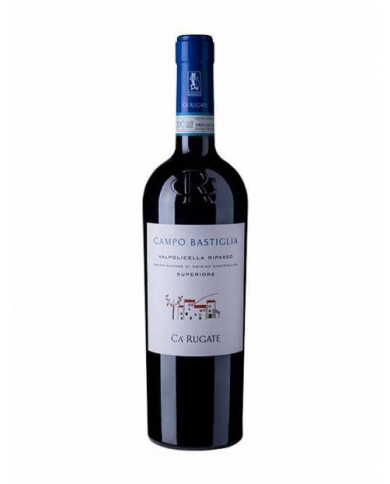
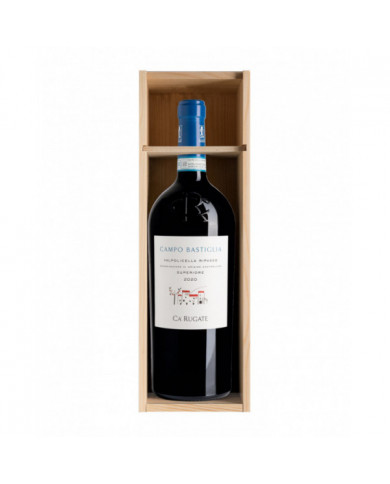
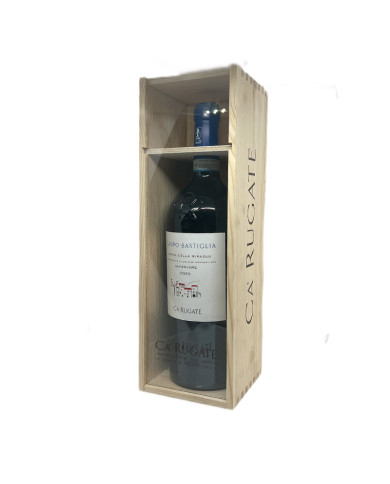
The Valpolicella Classico Superiore "Campo Bastiglia" by Cà Rugate has a deep garnet red colour. On the nose the aromas are fruity with notes of cherry and red fruit with floral and spice nuances. The taste is full and velvety thanks to the soft tannins that characterize it. Ripasso is a traditional practice which involves, after pressing the dried Amarone grapes, the refermentation of the pomace on a vintage wine. The subsequent refinement takes place 50% in tonneaux and 50% in steel for a period of about 8 months. The best grapes from the various owned vineyards are located in the hilly area of Montecchia di Crosara, in soils rich in skeleton and mainly calcareous. A great wine with excellent value for money.
€61.50
SKU:
14575
Brand:
Ca' Rugate
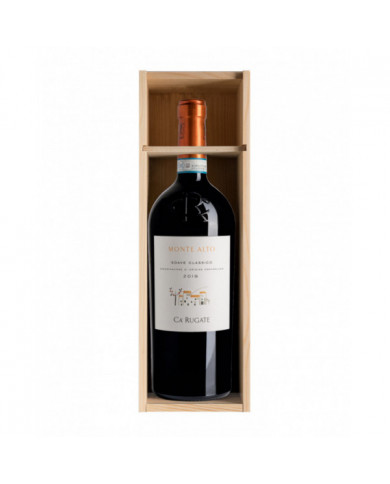
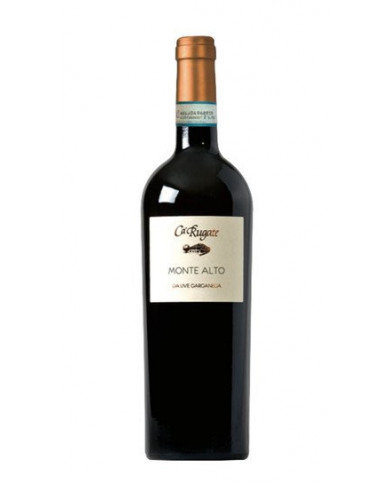
The Soave Classico "Monte Alto" is a soft and fragrant white wine from the Veneto region, which the aging on the lees in barriques and oak barrels has contributed to rounding out. On the nose emerge aromas of flowers, yellow fruit and almonds. The sip is enveloping, fresh and intense, with a good structure. The "Monte Alto" belongs to the group of crus of Ca' Rugate, historic company of the Tessari family, born in the heart of Valpolicella, between Monteforte d'Alpone and Montecchia di Crosara, and witness for over a century of a viticulture closely linked to local traditions and local vines. Spread over an area of over 4000 meters and divided over 3 levels, the cellar allows the company to concentrate all the processes of vinification, refinement, bottling and storage in a single location. The owned vineyards, located on the Rugate hill which gives the company its name, are cultivated partly with the Veronese pergola system, partly with the guyot system. On the south-facing slopes, where the cultivation of vines finds particularly favorable conditions, the soil is basaltic and rich in clay and silt. The area is vast and rather homogeneous, with characteristics that have made it possible to identify particular micro-areas, suitable for obtaining a fresh, balanced, persistent Soave Classico with great personality. These are the territorial premises that give rise to this warm and soft wine, with a structure capable of supporting a remarkable evolution after a few years of age, the Soave Classico "Monte Alto" is produced with the best grapes from the vineyards of Monteforte d'Alpone, bringing with it a varietal expression of extremely high quality which thus seals the great relationship established over time between the Ca' Rugate company and the hills of Soave.
€60.60
SKU:
14574
Brand:
Ca' Rugate
The Amarone di Ca' Rugate "Punta 470" announces itself in the glass with a well concentrated garnet colour. The olfactory bouquet that emerges on the nose is broad, where various notes of small berry fruits such as blackberry, cherry and currant can be traced, alternating with spicy references. On the palate it has an excellent structure, powerful and energetic thanks to a round sip, which wraps the palate with softness; it closes with a finish of excellent persistence, characterized by an aftertaste that recalls the flavor of the dried grapes from which the Amarone production process is born. A label of important depth both on the nose and in the mouth, which comes from a meticulous production process, in which each phase of the production is followed with care and attention, until the wine, after a good period of refinement, is not ready to be bottled. A great expression, dense, intense and elegant. The "Punta 470" takes shape from the union between Corvina, Corvinone and Rondinella, varieties grown in soils rich in skeleton and limestone located in the hilly area of Montecchia di Crosara. The manual harvest begins during the second half of September, taking care to place the bunches in boxes without overlapping them, in order to guarantee correct ventilation. The bunches wither for 4-5 months in a fruit cellar, dehydrating and thus concentrating their sugary substances; then we proceed with the pressing, and the must obtained is fermented in steel. The wine ages for 30-36 months in 500-litre oak tonneaux and 25-hectolitre barrels.
€46.36
SKU:
14573
Brand:
Ca' Rugate
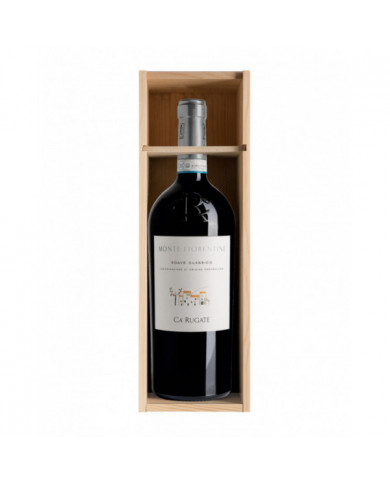
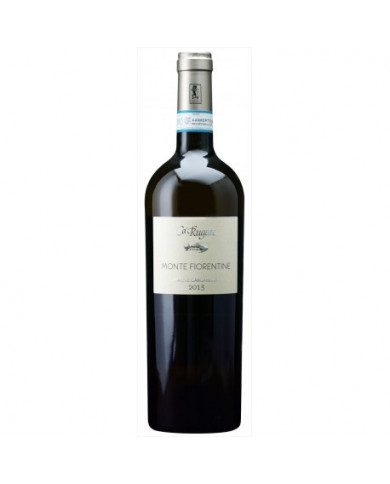
The Soave Classico Magnum "Monte Fiorentine" by Cà Rugate has a deep straw yellow colour. The nose is fine and delicate with exotic fruit and citrus. The Taste is soft, persistent and sapid.
This wine is vinified in white with fermentation in steel at 16-18 degrees, for a period of 10-15 days.
The vineyards of Monte Fiorentine are located north of Colle Rugate, in Brognoligo di Monteforte d'Alpone, in soils of volcanic origin rich in minerals.
A very structured wine that is best expressed after 1-2 years of aging in the bottle.
€43.07
SKU:
14572
Brand:
Ca' Rugate
Delicate hints of freshly baked croissant crust, with references to spices and notes of white peach, accompanied by a vigorous and enveloping drink, supported by a whipping and crystalline acidity.
€36.06
SKU:
14571
Brand:
Ca' Rugate
Straw yellow color with antique gold reflections. The nose offers a complex and harmonious aromatic range that combines citrus notes with those of Mediterranean herbs. On the palate it is intense and elegant with marked minerality and flavor that give a long and fresh finish.
€24.64
SKU:
14570
Brand:
Ca' Rugate
Deep ruby red colour. The aromas are of small berry fruits, blackberry, currant and cherry, well married to spicy notes due to the aging in wood. On the palate it is soft, with good tannins, which integrates pleasantly with a welcome sensation of freshness.
€22.20
SKU:
14569
Brand:
Ca' Rugate
Studio is the name of a wine but it is also the study of a wine. A study made of research and experimentation around two grape varieties typical of the Soave area: Trebbiano di Soave and Garganega. A study that began several years ago, which led Ca' Rugate towards a rereading and reinterpretation of these two native vines.
€21.59
SKU:
14568
Brand:
Ca' Rugate
Fulvio Beo sparkling wine in a wooden box from the Ca' Rugate winery comes from 100% Garganega grapes. The base wine is vinified entirely in steel so as not to alter the typical aromas and freshness. A complex and full-bodied sparkling wine, which highlights the great potential of the volcanic territory of the Soave area.
€136.64
SKU:
14567
Brand:
Ca' Rugate
Straw yellow color with greenish reflections, it is a sparkling wine with a fine and persistent perlage. The nose releases a delicate hint of yeast with pleasant fruity notes. Harmonious, almost velvety flavour, with a dry finish.
€19.03
SKU:
14566
Brand:
Ca' Rugate
The Amarone di Ca' Rugate "Punta 470" announces itself in the glass with a well concentrated garnet colour. The olfactory bouquet that emerges on the nose is broad, where various notes of small berry fruits such as blackberry, cherry and currant can be traced, alternating with spicy references. On the palate it has an excellent structure, powerful and energetic thanks to a round sip, which wraps the palate with softness; it closes with a finish of excellent persistence, characterized by an aftertaste that recalls the flavor of the dried grapes from which the Amarone production process is born.
A label of important depth both on the nose and in the mouth, which comes from a meticulous production process, in which each phase of the production is followed with care and attention, until the wine, after a good period of refinement, is not ready to be bottled. A great expression, dense, intense and elegant.
The "Punta 470" takes shape from the union between Corvina, Corvinone and Rondinella, varieties grown in soils rich in skeleton and limestone located in the hilly area of Montecchia di Crosara. The manual harvest begins during the second half of September, taking care to place the bunches in boxes without overlapping them, in order to guarantee correct ventilation. The bunches wither for 4-5 months in a fruit cellar, dehydrating and thus concentrating their sugary substances; then we proceed with the pressing, and the must obtained is fermented in steel. The wine ages for 30-36 months in 500-litre oak tonneaux and 25-hectolitre barrels.
€139.69
SKU:
14565
Brand:
Ca' Rugate
Deep straw yellow colour. Intense, persistent, floral, fruity nose of ripe fruit, dried fruit and almond. Warm, soft and full-bodied. On the palate it is intense and persistent. Very structured wine that reaches its peak after a few years.
€17.69
SKU:
14564
Brand:
Ca' Rugate
Deep straw yellow colour. Fine and delicate nose of exotic fruit and citrus. Soft, persistent and savory taste. A very structured wine that is best expressed after 1-2 years of aging in the bottle.
€16.10
SKU:
14563
Brand:
Ca' Rugate
Coral pink color with shades that veer towards salmon tones. On the nose aromas of small berries, currants and strawberries and delicate hints of almond.
€21.01
SKU:
14562
Brand:
Ca' Rugate
Ruby red colour. Intense and persistent aromas reminiscent of blackberry and cherry. On the palate it is soft, slightly tannic and with good flavor.
€13.21
SKU:
14561
Brand:
Ca' Rugate
Straw yellow colour. Fine and delicate nose of sweet field flowers: chamomile, elderberry, iris. Pleasant palate, with sweet almond aftertaste.
€11.96
SKU:
14560
Brand:
Ca' Rugate
Straw yellow colour. Fine and delicate nose of sweet field flowers: chamomile, elderberry, iris. Pleasant palate, with sweet almond aftertaste.
€7.44
SKU:
14559
Brand:
Ca' Rugate
Very deep ruby red colour. Aromas of small berry black fruit, with sensations of aromatic herbs and spices on the finish. Taste sweetness clear, round and soon contrasted by the silky sensation of the tannins.
€32.94
SKU:
14558
Brand:
Ca' Rugate
Golden yellow colour. Intense, persistent, floral and fruity aroma of sultanas, dried figs and walnuts, enriched by a spicy note. Intense and persistent also on the palate. Dessert wine that is best expressed after a year of aging in the bottle.
€33.15
SKU:
14556
Brand:
Cantina Orsogna
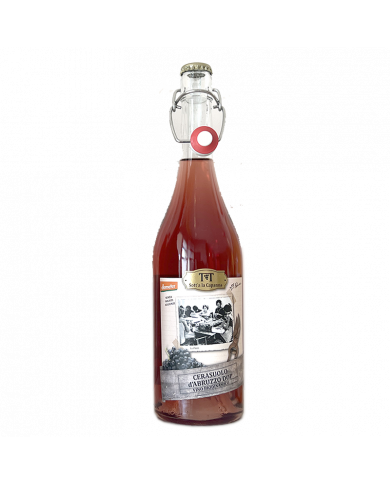
nduccio wine Cerasuolo D'Abruzzo DOP biodynamic and organic with spontaneous fermentation, without added sulphites.
€11.27
SKU:
14555
Brand:
Cantina Orsogna
nduccio wine Montepulciano D'Abruzzo DOP biodynamic and organic with spontaneous fermentation, without added sulphites.
€11.27
€11.27
€11.27
€10.15
SKU:
14552
Brand:
Cantina Orsogna
Short cold maceration and subsequent soft pressing. The must ferments in stainless steel containers at a temperature of 12-14 ° C for about 30 days with its indigenous yeasts. Clarification takes place by decanting. The refinement takes place in steel tanks for about 4 months, followed by in the bottle. At tasting it has a straw yellow color. Intense aroma with hints of grapes, tropical fruit, flowers. Fresh and soft taste, intense, savory and full-bodied. Excellent to accompany seafood, medium-aged cheeses, structured first courses, white meats.
€11.27
€26.64
SKU:
14547
Brand:
MARCHESI DI GRESY
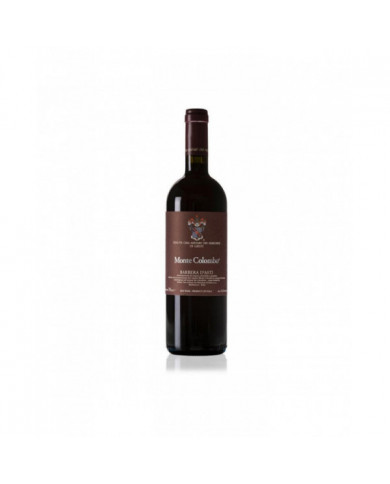
Born in 2001 from the Monte Colombo vineyard in Cassine, it is produced only in the best annate.Vino with an imposing and harmonious structure, with notes of raspberry and ripe cherry. Excellent in combination with first courses and red meats with tasty seasonings. Ideal with medium-aged cheeses.
€26.64
€39.39
SKU:
14541
Brand:
MARCHESI DI GRESY
€30.13
€24.11
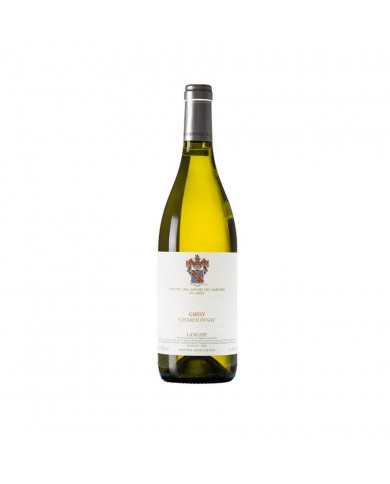
The Chardonnay of the Marchesi di Gresy is a white with great structure, a Piedmontese expression of a classic Burgundian. The grapes are grown on Monte Aribaudo near Treiso and then the must ages for a long period in wood, a full 22 months, an aspect that gives body, softness and tertiary notes of spices and toasting. Peculiar the pleasant sapidity that accompanies the sip and persists for a long time
€30.13
€24.11
SKU:
14537
Brand:
Vivera
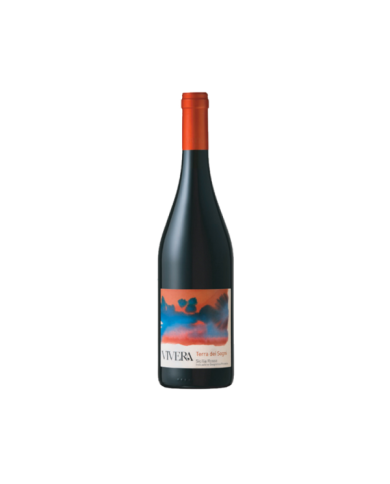
Ruby red wine with violet reflections. It has notes of red fruits, jam and sweet spices on the nose with a finish of vanilla and cocoa. In the mouth it is fresh, tannic and persistent Tagliatelle with ferla mushrooms, pasta with meat sauce, roast pork in milk with homemade bread croutons, grilled meat, walled octopus
€10.83
SKU:
14536
Brand:
Vivera
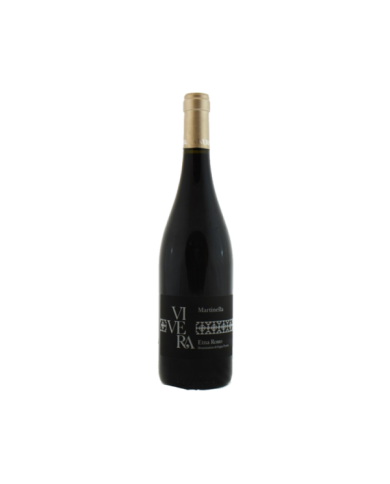
Etna Rosso "Martinella" is a rich, intense and elegant wine that is born in the homonymous district at 600 m on the slopes of the volcano, aged for 30 months in old barriques. It has a deep but delicate bouquet of wild fruit in jam, spices, pepper and undergrowth. On the palate it is decisive, energetic and vigorous, with grace and gracefulness, with lively and soft tannins on the finish
€24.96
SKU:
14535
Brand:
Barsento
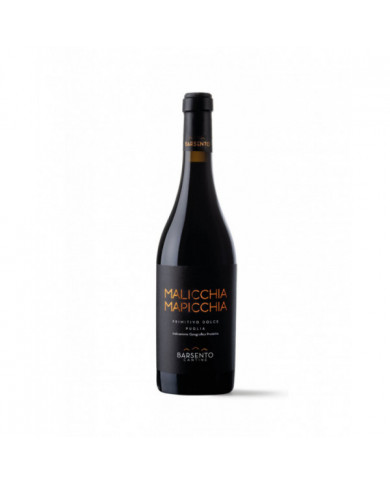
VINIFICATION The maceration lasts 12-14 days in 45 quintal steel vats at a controlled temperature of 25°C, with frequent pumping over in order to extract the aromatic and coloring substances and at the same time soften the tannic mass. AGING: The wine is aged in steel tanks for one year. Before bottling, the wine is filtered, but not cold stabilized, in order to safeguard the integrity of the product. The permanence in the bottle before being marketed lasts 6 months, in aging rooms completely dug out of the limestone rock typical of the area where it was born. TASTING NOTES The nose has clear hints of fresh fruit, plums and strawberries. Strong, full, sweet and very vinous on the palate. Malicchia Mapicchia is a meditation wine ready for any type of combination: from sweets to dry pasta, to aged, aromatic, spicy or blue cheeses, perhaps served with jams to create a splendid contrast between the strong and the sweet taste. Ideal also accompanied by main courses of meat seasoned with fruit-based sauces.
€22.90
SKU:
14527
Brand:
TENUTA FERTUNA
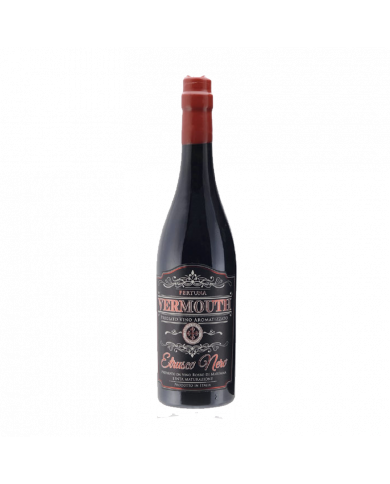
It comes from the mixing of fine Fertuna red wine, flavored with natural extracts of aromatic herbs and spices also coming from the Maremma area.
€27.29
SKU:
14525
Brand:
TENUTA FERTUNA
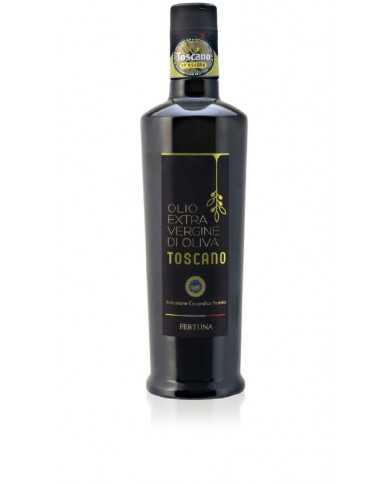
Fine oil of superior category, it is obtained only from the olives of the property, of native varieties, harvested with the picking method on nets. The microclimate, the soil and the uniqueness of the hilly position of the plantation make the position of the olive trees and the quality of the fruit favorable.
€15.21
SKU:
14520
Brand:
Bellavista
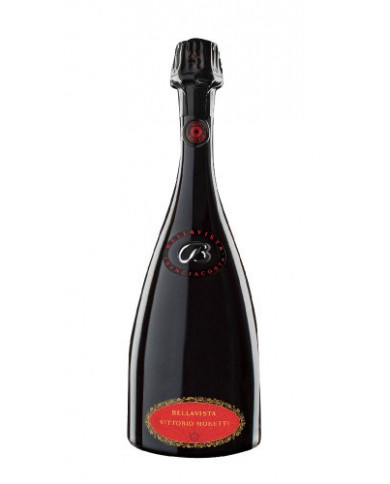
The Franciacorta Extra Brut "Vittorio Moretti" from the Bellavista winery exudes history and love for one's land. It is the result of work begun in 1977, when Vittorio Moretti, a visionary entrepreneur, built a cellar next to his home in Erbusco, deciding to focus on viticulture. Years of study and research have led to today's results. The Bellavista Vittorio Moretti is a sparkling wine of the highest level, elegant and at the same time powerful, complex, a symphony of different aromas: from ripe fruit to candied citrus fruits, passing through honey and toasted dried fruit. Produced from the best harvests of Chardonnay and Pinot Noir, it is vinified in steel and oak barrels, which give the wine spicy hints. The Franciacorta Extra Brut "Vittorio Moretti" is subsequently made sparkling with refermentation in the bottle according to the classic method and completes its maturation with an aging of a further seven years, achieving the unmistakable taste that has crowned it among the excellences of the sector. Ready to drink, it also lends itself to resting further in our cellars. At sight the very fine and persistent perlage embellishes the golden and brilliant tone. On the nose hints of ripe white fruit, spices, candied citrus fruits, honey and toasted dried fruit such as almonds and hazelnuts. The palate is powerful, complex, smooth, broad and creamy. A sparkling wine of great class made to amaze and satisfy enthusiasts and lovers of Italian bubbly.
€119.56
SKU:
14518
Brand:
Bellavista
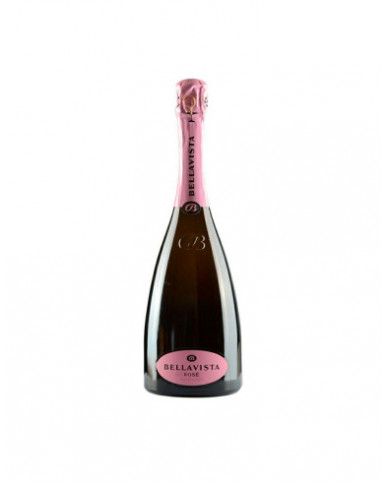
Bellavista Wine's Magnum di Rose Millesimato Franciacorta DOCG is a sparkling wine produced in Lombardy. It is a ready-to-drink wine. It is recommended to serve at a temperature of 6°C
€132.59
SKU:
14516
Brand:
Bellavista
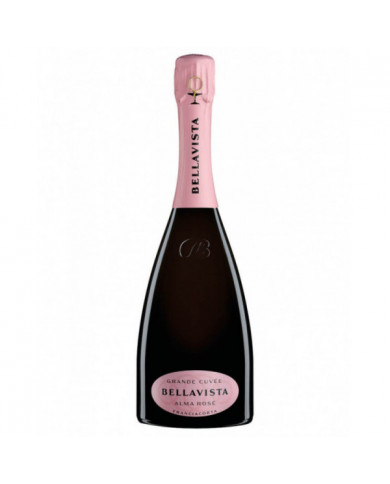
The Franciacorta Grande Cuvée Alma Rosé Pas Dosé by Bellavista was born in vineyards located in the heart of Franciacorta DOCG. The name Alma, which in Latin means "she who feeds", is a tribute to this land. It is mainly produced from Chardonnay grapes, with the addition of Pinot Noir grapes, harvested and selected exclusively by hand from vines with an average age of over 25 years. Once the grapes have been vinified, the wines are aged in pièces (228-litre Burgundian barriques). The sparkling process takes place according to the classic method, with aging on the lees. It is characterized by an antique pink color and a fine and persistent perlage. The nose opens with a broad perfume, among which pleasant nuances of Mediterranean flowers, citrus fruits, peach, lychee and pomegranate stand out, with final notes reminiscent of white chocolate, almond and marzipan. On the palate it is pleasantly sapid and complete in the aftertaste, with a long and persistent finish. Perfect as an aperitif and to accompany appetizers and fish-based first courses.
€52.14
SKU:
14514
Brand:
Bellavista
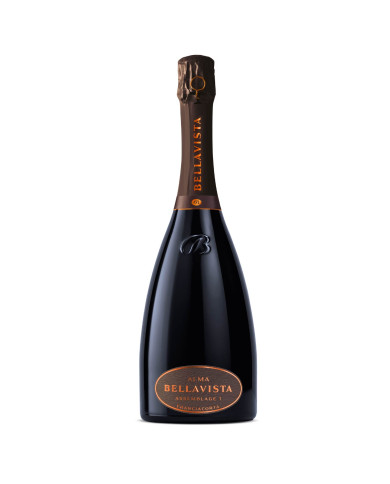
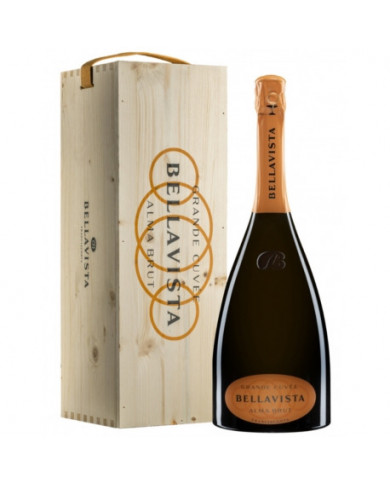
Alma Cuvée is born from the skilful union of about 60 of the 120 harvest selections obtained in the cellar. About 100 selections come from the same harvest and are identified with extreme care in 107 parcels distributed in 10 different municipalities of Franciacorta ("horizontal assembly"). To this vast patrimony of olfactory and gustatory variations are then added the aromas and flavors of particular "reserve wines" from different harvests ("vertical assembly"). A unique cuvée, which with its elegant complexity represents the most complete and often mysterious soul of Franciacorta.
€38.70
SKU:
14513
Brand:
Bellavista
Alma Cuvée is born from the skilful union of about 60 of the 120 harvest selections obtained in the cellar. About 100 selections come from the same harvest and are identified with extreme care in 107 parcels distributed in 10 different municipalities of Franciacorta ("horizontal assembly"). To this vast heritage of olfactory and gustatory variations are added the aromas and flavors of particular "reserve wines" from different vintages ("vertical assembly"). A unique cuvée, which with its elegant complexity represents the most complete and often mysterious soul of Franciacorta.
€39.41
SKU:
14512
Brand:
Bellavista
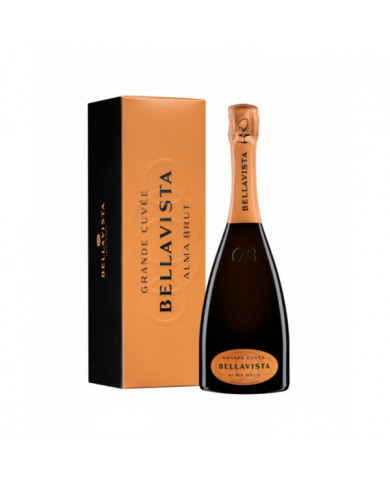
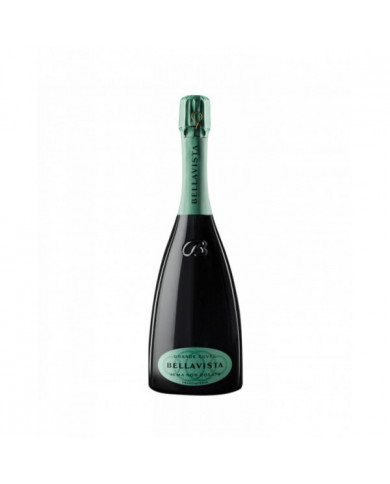
It is told through a sensory profile that evolves giving altogether sapidity, freshness, finesse, elegance and agility: the result is simply superlative, given by the Franciacorta Non Dosato "Alma Grande Cuvée", labeled Bellavista . A bubble that wants to become the symbol of the purest essence of the lands of Franciacorta, proposing a sip with which Bellavista drops its mask, retracing its history in a contemporary key. Here then is that every detail - label included - becomes a reference to the concept of harmony, both external and connected to the precious content. The apparent - and intended - aesthetic minimalism, again, finally connects with a Franciacorta that remains suspended in time, as if to recall the impossibility of finding glasses of a similar caliber.
€39.21
SKU:
14511
Brand:
Bellavista
White foam, exuberant and of excellent persistence. The pearl necklaces are very fine to form a well-present and prolonged crown over time. The effervescence is dynamic and full of youth. Bright and bright yellow color with clear greenish reflections. Perfume characterized by marked minerality. Wide and inviting, it embraces nuances of ripe sweet fruit, meringue, pastry and candied citrus peel. Flavor fully corresponding to the nose, with an almost crunchy creamy sensation and a texture that combines elegance and lightness, thickness and harmony. The vibrant and contemporary character represents its unmistakable identity.
€317.07