

 Italiano
 Deutsch






















There are no more items in your cart
SKU:
16623
Brand:
Luigi Francoli
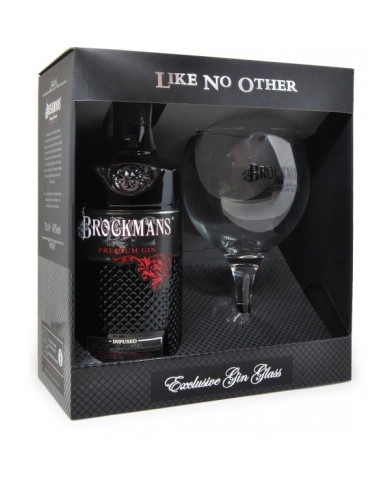
The unrivaled taste of this well-crafted gin can be enjoyed neat neat over ice. It's refreshingly different when served with a tonic or ginger ale. For the mixologists among us it opens up a whole world of new taste experiences when mixed into gin cocktails.
€56.61
SKU:
16622
Brand:
Luigi Francoli
€112.00
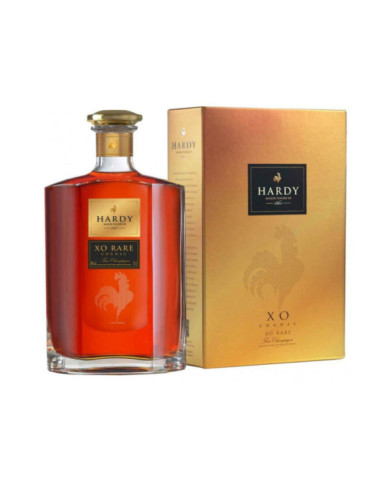
wrapped in its amber vermilion robe, its magical fresh rose petals, ripe dates and cigar box scents are an enchantment. The silky texture that comes with the maturity of a great XO is matched only by its incredibly long-lasting flavors.
€112.00
SKU:
16621
Brand:
Luigi Francoli
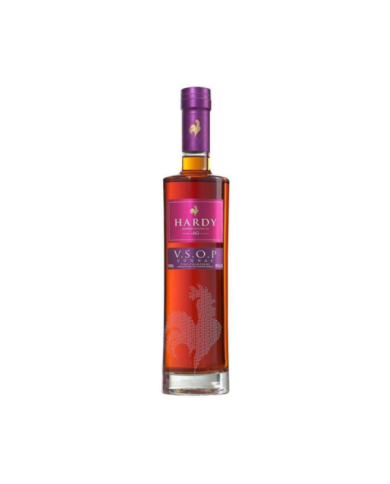
The VSOP Hardly Cognac is a blend of several cognacs with a golden color with mahogany reflections, aged at least 8 years in limousine oak. Great for after dinner
€47.09
SKU:
16620
Brand:
Luigi Francoli
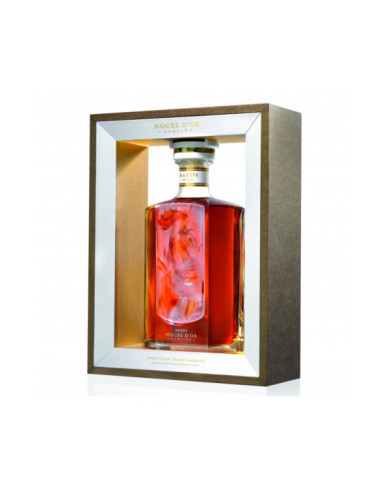
it is well balanced and surprisingly pure. A lively alcoholic debut gives freshness to its subtle taste of candied cherries.
A beautifully balanced cognac with fruity, floral and slightly woody notes.
€375.52
SKU:
16619
Brand:
Luigi Francoli
A deep colour, this is a truly versatile cognac that can be enjoyed in many ways.
€63.68
SKU:
16618
Brand:
Luigi Francoli
€17.81
A surprising and aromatic bitter, with an amber color, bitter and sweet notes, they offer an intriguing natural alternative in classic cocktails.
€17.81
SKU:
16617
Brand:
Luigi Francoli
HKB is produced through the fermentation and distillation of grains and it is left to rest in large earthen holes for at least two years. HKB is the first baijiu that is also appealing to those with Western tastes.
€70.88
SKU:
16616
Brand:
Luigi Francoli
€18.42
An intense, herbaceous fernet with many levels of flavour. this unique herbal liqueur, naturally low in sugar, uses bitter aromatic botanicals typical of the alps and monte noveis
€18.42
SKU:
16615
Brand:
Luigi Francoli
€18.42
This liqueur is obtained from the infusion in alcohol of aromatic herbs (gentiana, gentianella, Roman wormwood, yarrow, genepì, germander) gathered on the slopes of Monte Noveis, which rises between Valsesia and Valsessera, with the addition of cinchona infusions , rhubarb, sweet and bitter orange, licorice, anise.
€18.42
SKU:
16614
Brand:
Luigi Francoli
Gentian roots, rhubarb rhizomes and flowery tops of Roman wormwood are just some of the all-natural ingredients which, put into an infusion, give life to this herbal amaro with penetrating but harmonious aromas.
SKU:
16613
Brand:
Luigi Francoli
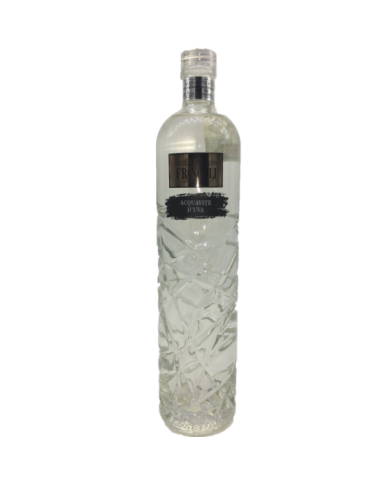
On 1st March 1999 Grappa Luigi Francoli was introduced on the market. From this moment on, Grappa assumed, for Distillerie Francoli, the true connotation of a brand. The characterizing features of the brand are: the clean, essential image, which highlights the very essence of Distillerie Francoli (the long tradition in the distillation of Grappa) and the well-defined and absolutely differentiated contents.
€33.43
€5.25
SKU:
16611
Brand:
Fattoria le Pupille
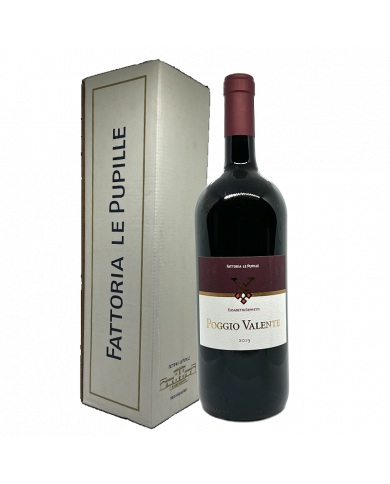
Compact ruby red. The bouquet reveals the fragrance of red roses, black cherry, blood orange and blackberry. Followed by juniper berries, dried flowers, Tuscan cigars and undergrowth. The tannins are dense and silky which develop on a fresh and savory base. Persistent finish on blackcurrant echoes.
€72.59
SKU:
16610
Brand:
Tenuta Montecchiesi
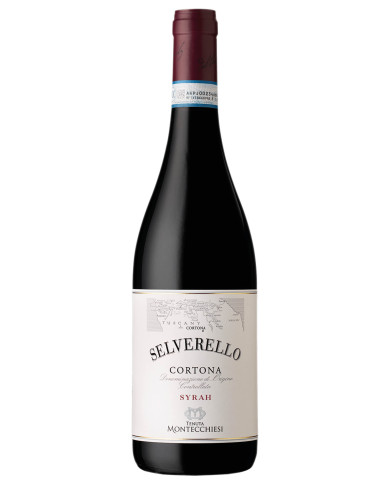
The Cortona Syrah Selverello of the Cantina Dal Cero was born in the Montecchiesi estate, located on the Tuscan hills south of Arezzo, on the border with Umbria.
€13.16
SKU:
16609
Brand:
Broglia
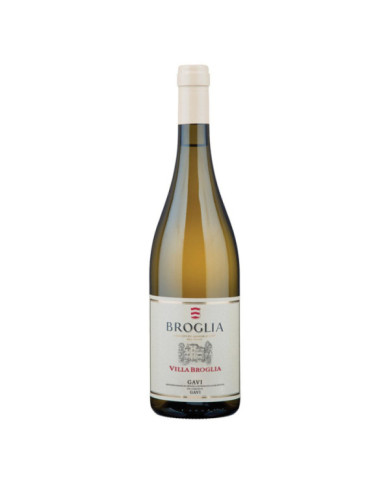
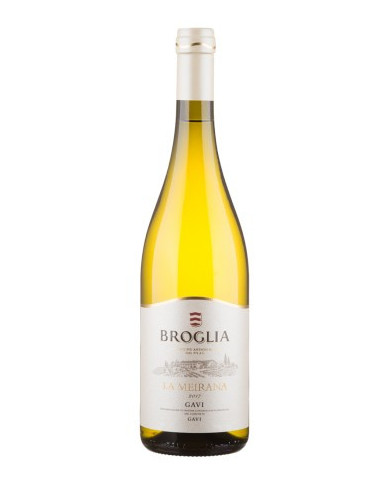
This wine was born in the vineyards of Villa Broglia, planted in 1989 for the birth of Filippo, Piero's son. These vineyards are located in the municipality of Gavi which, due to their splendid position, allows for the production of high quality grapes. It is a wine characterized by fresh, fruity aromas, with a nuance of white flowers and a characteristic note of almonds. Ideal wine for Mediterranean cuisine.
SKU:
16608
Brand:
Broglia
€30.38
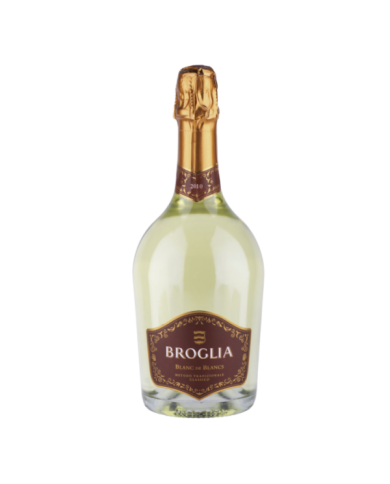
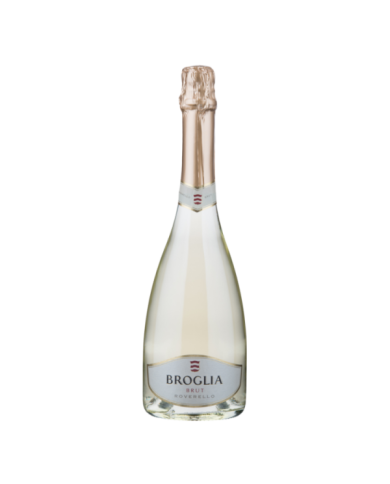
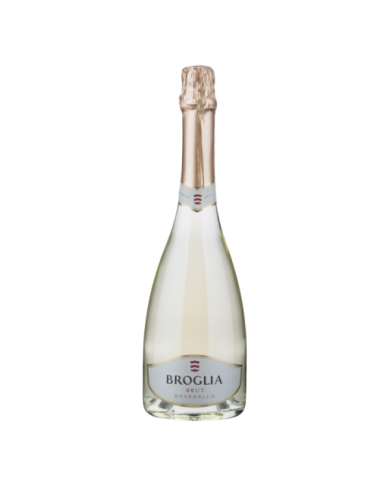
This classic traditional method sparkling wine is in the tradition of the Gavi area. Cortese grapes have always been the basis for the best "blanc de blancs" of Piedmont. We bottled this wine that comes from grapes from our own vineyards after an early harvest.
€30.38
SKU:
16607
Brand:
Broglia
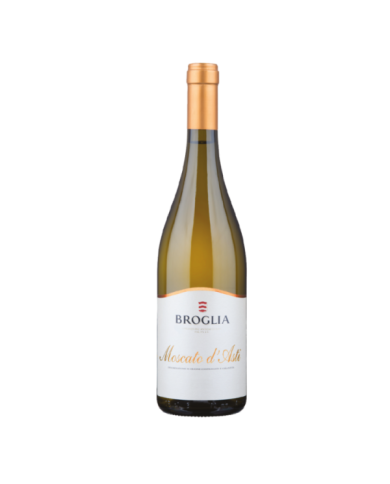
This wine is obtained from the vinification of Moscato grapes, grown in the Moscato production area. Vineyards located in hilly areas that guarantee good temperature ranges favoring the creation of fresh and fruity aromas. The richness in sugar and the low alcohol content mean that this Moscato maintains an intense aromatic fragrance.
€16.47
SKU:
16606
Brand:
Broglia
This sparkling wine is obtained from the vinification of Barbera and Dolcetto grapes with the "salasso" technique, i.e. through a very soft pressing of the bunches which give the wine a "rosé" colour. Fermentation takes place with the Martinotti method in an autoclave. It is a Spumante Brut particularly suitable with all Mediterranean cuisine and white meats.
€13.91
SKU:
16605
Brand:
Broglia
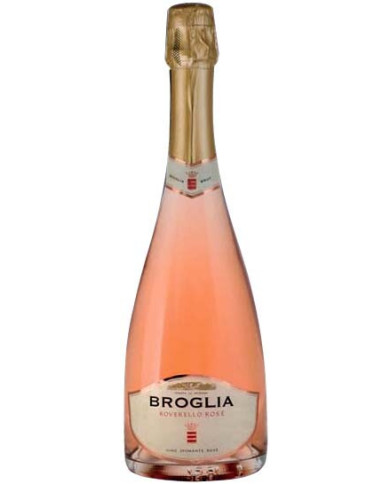
The name Roverello recalls the young oaks of the woods that surround the Meirana vineyards. This Spumante Brut is obtained from our own grapes which are harvested earlier than the others to characterize the youth and freshness that distinguishes it. We have been producing this sparkling wine for over 30 years as required by our denomination of 1974. It is a wine specially prepared for the taste of the modern consumer who likes a young, inviting, high quality sparkling wine. It comes with a gentle petillant, obtained with a refermentation in an autoclave which enhances its aromas, harmony and freshness. In the glass it shows a crystalline clarity, a straw yellow color with greenish reflections, a fruity, characteristic bouquet. The taste is pleasant, clean, harmonious. It goes perfectly with appetizers or cold second courses; also referred to as an aperitif.
€27.33
SKU:
16604
Brand:
Broglia
The name Roverello recalls the young oaks of the woods that surround the Meirana vineyards. This Spumante Brut is obtained from our own grapes which are harvested earlier than the others to characterize the youth and freshness that distinguishes it. We have been producing this sparkling wine for over 30 years as required by our denomination of 1974. It is a wine specially prepared for the taste of the modern consumer who likes a young, inviting, high quality sparkling wine. It comes with a gentle petillant, obtained with a refermentation in an autoclave which enhances its aromas, harmony and freshness. In the glass it shows a crystalline clarity, a straw yellow color with greenish reflections, a fruity, characteristic bouquet. The taste is pleasant, clean, harmonious. It goes perfectly with appetizers or cold second courses; also referred to as an aperitif.
€13.54
SKU:
16603
Brand:
Broglia
This wine is obtained from the vinification of the best Nebbiolo grapes. Its vinous and floral scent comes from a particular vinification and refinement in small barrels for one year plus one year in large barrels, keeping the originality of the tastes intact.
€18.06
SKU:
16602
Brand:
Broglia
Light with floral and fruity hints, it is an elegant and delicate wine. This wine comes from the youngest vineyards of our property. It is characterized by its particular acidity, freshness and drinkability. Its name recalls the bond of our ancient lands with the Doges of the Genoese Republic. It is particularly suitable both as an aperitif, served at a temperature of 8°C, and to accompany Mediterranean cuisine and white meats.
€8.42
SKU:
16601
Brand:
Broglia
It is only from the best vintages that this great wine is born, which comes from the vineyards of the Tenuta La Meirana, planted between the years 1952 and 1953, after a selection of the best bunches harvested by hand and transferred to the cellar in wooden boxes. The 2010 harvest was characterized by regular flowering in the first ten days of June and a windy summer with high temperature variations between day and night. These particular conditions gave the wine a great structure, excellent sapidity and intense aromas of flint and almonds. Here, following an aging in small "sur lie" steel tanks for 108 months, our "Vecchia Annata" comes to light.
€79.06
SKU:
16600
Brand:
Broglia
This wine represents the best production of Meirana. It is obtained from the grapes of old vineyards planted in the years 1953 and 1955. The average yield of the vineyards in the various harvests is from 30 to 40 quintals per hectare. The grapes are harvested in wooden boxes and transferred directly to the presses so that the bunches arrive intact. These, due to their rich structure and acidity, make it possible to obtain a great wine suitable for storage, maintaining its aromas and freshness over the years. The name Bruno Broglia is in honor of the founder of the farm. This selection, recognized as one of the reference white wines, gets important national and international awards every year. It was also served as the only white wine at the Gala dinner, for the G20 in St. Petersburg, in the presence of the greats of the Earth, held on 5 September 2013. Bruno Broglia has a straw yellow color with greenish reflections, brilliant: the bouquet very persistent finish, fruity and reminiscent of the aristocratic scent of the grapes from which it comes. It goes well with both fish-based dishes and shellfish where it brings out the characteristics of haute cuisine better.
€25.01
SKU:
16599
Brand:
Broglia
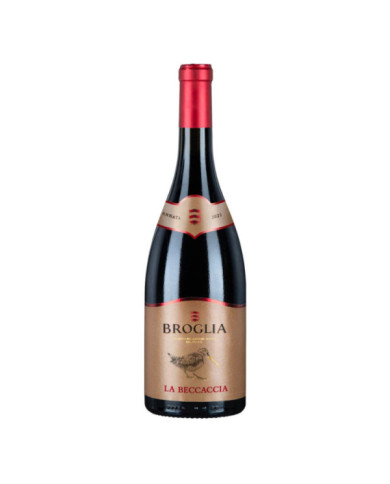
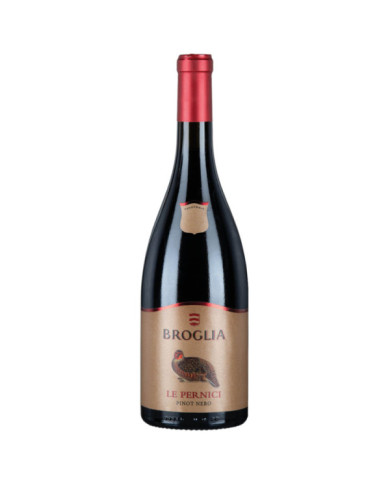
This wine is obtained from the vinification of Pinot Noir grapes.
Its vinous and floral scent comes from a particular vinification that keeps the originality of the tastes intact.
€13.42
SKU:
16598
Brand:
Broglia
The Meirana di Broglia is the most important and representative product of the company's production, a gavi among the most classic and appreciated in the world. La Meirana is not just the name of a wine, it is the main Estate of the Cellar.
€14.90
SKU:
16597
Brand:
Broglia
The Meirana di Broglia is the most important and representative product of the company's production, a gavi among the most classic and appreciated in the world. La Meirana is not just the name of a wine, it is the main Estate of the Cellar.
€31.23
SKU:
16596
Brand:
Broglia
The Meirana di Broglia is the most important and representative product of the company's production, a gavi among the most classic and appreciated in the world. La Meirana is not just the name of a wine, it is the main Estate of the Cellar.
€6.22
SKU:
16595
Brand:
Broglia
Derthona di Broglia comes from a selection of Timorasso grapes, from vineyards facing south at 300-350 meters slm , located on calcareous soil.
€20.74
SKU:
16594
Brand:
Broglia
Spumante Broglia Brut is a fresh, subtle and elegant Classic Method obtained from Cortese di Gavi grapes with aging on the lees in the bottle for 18 months. It smells of white fruit, many citrus fruits and aromatic herbs. The sip is taut, fresh, sapid and balanced
€29.77
SKU:
16593
Brand:
La Valdotaine
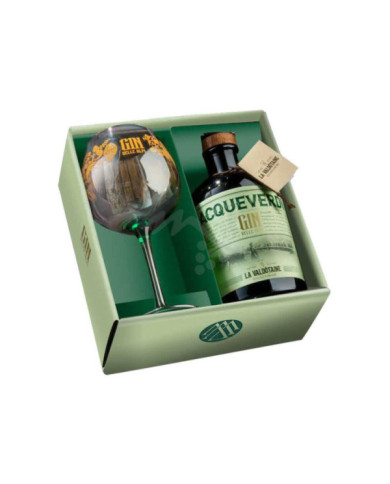
La Valdotaine Gift Box in Wood. Content:. 1 - Gin Acqueverdi 1 - Vermouth Verney 1 - Eyva Vodka 1 - Bitter dandelion 1 - Wooden box.
€66.12
SKU:
16592
Brand:
La Valdotaine
€45.14
EYVA VODKA WITH MOUNTAIN SPELLED – LA VALDÔTAINE
Spelled is the oldest "wheat" that man has ever cultivated.
€45.14
SKU:
16591
Brand:
La Valdotaine
An ideal gift for those who know how to hit the mark. The tube hides its appearance but highlights the details and anticipates what everyone will discover inside, through the elegance of a presentation that does not hide the ambition to declare its own value.
€50.63
SKU:
16590
Brand:
La Valdotaine
An ideal gift for those who know how to hit the mark. The tube hides its appearance but highlights the details and anticipates what everyone will discover inside, through the elegance of a presentation that does not hide the ambition to declare its own value.
€36.72
SKU:
16589
Brand:
La Valdotaine
An intriguing vermouth with sincere territorial expressiveness, which is told through the scents of common thyme, absinthe and mountain herbs. On the palate it is rich, generous and is amplified in the aromas.
€33.55
SKU:
16588
Brand:
La Valdotaine
Ratafià is part of the list of traditional products of the Aosta Valley ( PAT ). It is a sweet and full-bodied liqueur with an aftertaste of black cherry.
€28.99
SKU:
16587
Brand:
La Valdotaine
WOODEN GIFT BOX Contents:
Gin Acqueverdi La Valdôtaine (200 ML)
Vermouth Verney La Valdotaine (200 ML)
La Valdôtaine Artisan Bitter (200 ML)
Three RCR Tattoo Glasses
€73.81
SKU:
16586
Brand:
La Valdotaine
Blueberries are very tasty berries and rich in mineral salts and vitamins.
€28.30
SKU:
16585
Brand:
La Valdotaine
Heroic plant that grows in arid places, both on the mountains where water is scarce in winter due to the frost, and on the arid promontories of the Mediterranean.
€29.91
€29.65
SKU:
16583
Brand:
La Valdotaine
Ge'npy is the typical liqueur of the Aosta Valley tradition produced from an infusion in very pure alcohol of the small Artemisia stubbornly grown on our mountains.
€28.94
SKU:
16582
Brand:
La Valdotaine
Torrette is the Valle d'Aosta DOC wine produced in the greatest quantities and in the widest area of the valley.
€31.35
SKU:
16581
Brand:
La Valdotaine
From vineyards located on the left of the Dora Baltea in the municipality of Arvier, in a natural amphitheater of splendid beauty, terraced and in full southern exposure with a slope that exceeds 100% up to 800 meters above sea level.
€31.35
SKU:
16580
Brand:
La Valdotaine
La Valdôtaine is a small mountain distillery where the beautiful stills, in shiny hand-worked copper and with discontinuous breathing, with single batches, distill small quantities of unique spirits, made inimitable by the mineral-rich waters, sometimes with an amazing color, which give mountains tumble down to the distillery.
€67.22
SKU:
16579
Brand:
La Valdotaine
Direct steam distilled from the pomace of the Prie' Blanc vine in small discontinuous copper stills.
€31.35
SKU:
16578
Brand:
La Valdotaine
Slightly straw-coloured, the very aromatic gin gives off hints of juniper and alpine herbs, while on the palate it is dry and full, with a good balance between the resinous and floral notes of the herbs. Many of the botanicals, such as alpine rose, mallow, mountain pine, pine buds and genepy grow spontaneously in the valley where the Acqueverdi stream descends.
€143.11
SKU:
16577
Brand:
La Valdotaine
An ideal gift for those who know how to hit the mark. The tube hides its appearance but highlights the details and anticipates what everyone will discover inside, through the elegance of a presentation that does not hide the ambition to declare its own value.
€50.63
SKU:
16576
Brand:
La Valdotaine
The gin is characterized not only by its strong minerality but also by the herbaceous and floral aromatic notes given by the botanicals collected in the valley behind the distillery which are infused and then distilled in small pot stills, from which the "alpine" character of our production emerges.
€47.34
SKU:
16575
Brand:
La Valdotaine
Slightly straw-coloured, the very aromatic gin gives off hints of juniper and alpine herbs, while on the palate it is dry and full, with a good balance between the resinous and floral notes of the herbs. Many of the botanicals, such as alpine rose, mallow, mountain pine, pine buds and genepy grow spontaneously in the valley where the Acqueverdi stream descends.
€57.95
SKU:
16574
Brand:
La Valdotaine
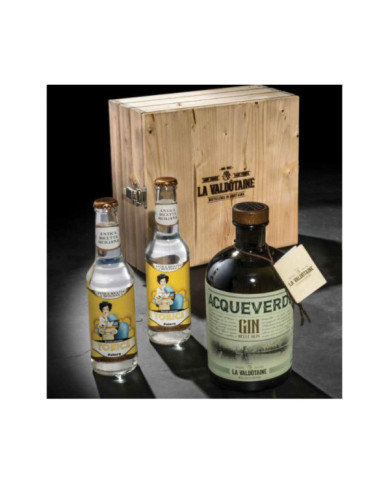
A bottle of Acqueverdi Gin, two premium Polara tonics. Everything you need to create a perfect Gin Tonic.
SKU:
16573
Brand:
La Valdotaine
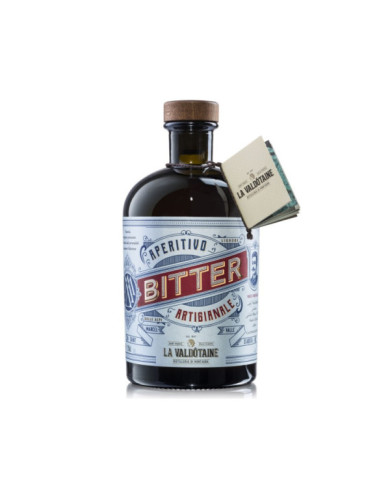
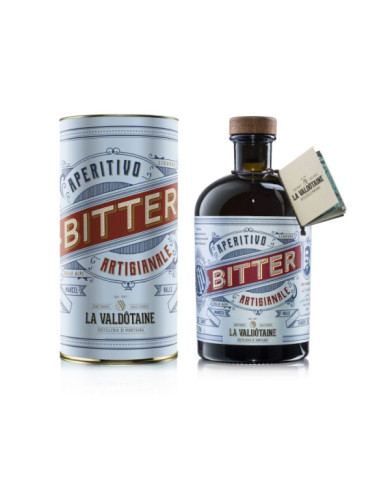
A refined artisan Bitter ideal as an aperitif. The basis are wild herbs from the Aosta Valley, such as gentian, artemisia and elderberry. Together they give life to a very balanced Bitter, between bitter and sweet. The aroma and taste are then completed with the addition of other vegetable essences, such as bitter orange peel and licorice root. An ideal trait d'union between the scents of the Alps and those of the Mediterranean.
€30.01
SKU:
16572
Brand:
La Valdotaine
An ideal gift for those who know how to hit the mark. The tube hides its appearance but highlights the details and anticipates what everyone will discover inside, through the elegance of a presentation that does not hide the ambition to declare its own value.
€32.94
SKU:
16571
Brand:
La Valdotaine
An ideal gift for those who know how to hit the mark. The tube hides its appearance but highlights the details and anticipates what everyone will discover inside, through the elegance of a presentation that does not hide the ambition to declare its own value.
€40.87
SKU:
16570
Brand:
La Valdotaine
Bright amber color in the glass. The nose reveals a broad and varied olfactory profile with notes of dandelion and mountain herbs.
€54.05
SKU:
16569
Brand:
La Valdotaine
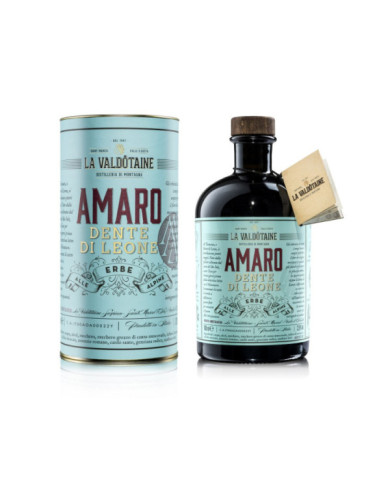
La Valdôtaine uses Dandelion as the basis for a unique and fascinating recipe. Flanked by numerous other alpine herbs and the bittering muscovado, the small mountain flower gives life to an intriguing amaro on the palate.
€131.88
SKU:
16568
Brand:
La Valdotaine
La Valdôtaine uses Dandelion as the basis for a unique and fascinating recipe. Flanked by numerous other alpine herbs and the bittering muscovado, the small mountain flower gives life to an intriguing amaro on the palate.
€37.94
SKU:
16566
Brand:
Valentino Butussi
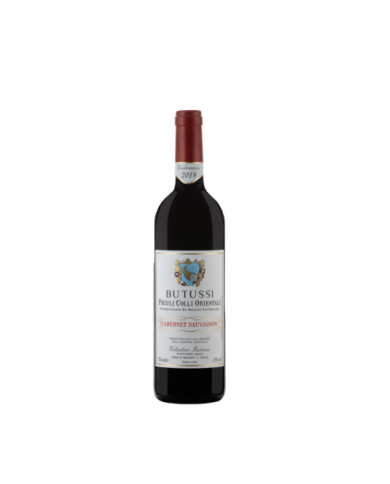
We have selected for you our Grappa, crystalline, strong, full and dry flavour. It is a source of real pleasure, sipped or sipped at the end of a meal, or at any time of the day. Taste in thin crystal glasses, with a slender and elongated stem with a tulip corolla-shaped chalice
€30.99
SKU:
16565
Brand:
Valentino Butussi
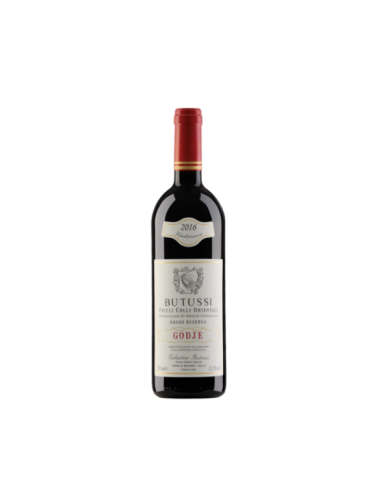
For the vinification of this wine, 30/40% of the grapes are left to dry in wooden boxes for over a month. The remaining grapes are left on the vine and are then harvested when overripe, when the berries begin to brown and dehydrate naturally. The grapes are destemmed and the must is left in contact with the skins for 24-28 hours at a temperature of 12°C to allow the wine to accentuate its varietal characteristics and to acquire the golden yellow-amber color typical of this vine . Aging takes place for 60% for 6 months in steel tanks, 40% for 6 months in 300-litre oak barrels and ends with 2-4 months in the bottle.
€31.00
SKU:
16564
Brand:
Valentino Butussi
For the vinification of this wine, 30/40% of the grapes are left to dry in wooden boxes for over a month. The remaining grapes are left on the plant and are then harvested when overripe, when the berries begin to darken and dehydrate naturally. The grapes are destemmed and the must is left in contact with the skins for 24-28 hours at a temperature of 12°C to allow the wine to accentuate its varietal characteristics and to acquire the golden yellow-amber color typical of this vine . The refinement takes place for 60% for 6 months in steel tanks, 40% 6 months in 300 liter oak barrels and ends with 2-4 months in the bottle.
€16.40
SKU:
16563
Brand:
Valentino Butussi
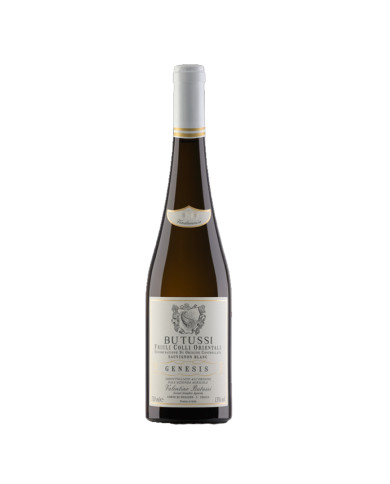
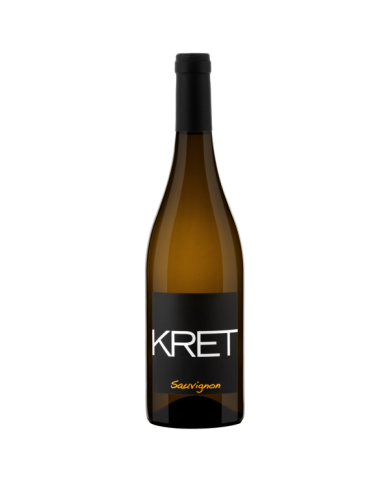
A great wine of the Friulian tradition, Sauvignon, rediscovers its origins in this "Genesis" DOC, a product that conquers nose and smell after a few moments, and which amazes for its excellent evolutionary potential. The grapes, grown in soils rich in limestone and sandstone, come from a single vineyard parcel, whose vines are around forty years old. A bottle with which the Valentino Butussi company raises the bar decisively, proposing to tell the terroir of the Colli Orientali del Friuli with the excellence of limited production, where quality reaches truly remarkable peaks. Just under two thousand bottles for a label that cannot be missing in the cellar of every enthusiast.
€45.86
SKU:
16562
Brand:
Valentino Butussi
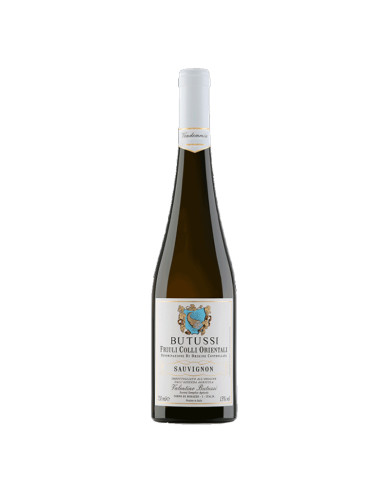
Straw yellow in colour, it has an intense aroma of green pepper, tomato leaves, passion fruit and peach. It is a wine with a fresh, lively, harmonious and velvety flavour.
€15.50
SKU:
16561
Brand:
Valentino Butussi
Harvest The harvest is hand-picked when the grapes reach optimal ripeness and takes place in several stages from the first to the second ten days of October.
Vinification The grapes are destemmed trying to keep the berry whole as much as possible and thus sending it into the barrel. Pumping over is then done until the desired color and tannins are reached and finally it is separated from the skins.
Refinement before the bottle: Matured in precious wood for 14 months and finishes the maturation with a further 4 months in steel barrels
Bottle refinement: 7 months
€19.76
SKU:
16560
Brand:
Valentino Butussi
After the destemming and crushing, the crushed grapes are cooled immediately at a temperature of 12°C and left in contact with the skins for 12 – 16 hours. In this period of time the natural enzymes of the must allow a release of the aromatic components, linked to the skin, accentuating the structure and the typical varietal characteristics of the vine. After this period, the must is delicately separated from the skins and fermented intact, without clarification, at a controlled temperature for about 14 days.
€15.50
SKU:
16559
Brand:
Valentino Butussi
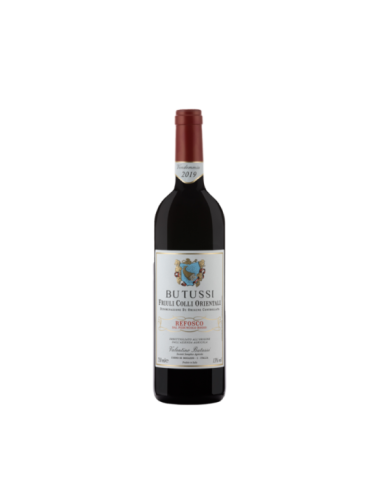
The ruby red color with purplish reflections that fade with ageing. Intense bouquet, which evokes wild blackberries, wild berries with winy and vegetable notes. Strong flavour, the tannins are integrated and the finish is pleasantly bitter. Refosco dal peduncolo rosso is an ancient Friulian vine, perhaps the best Friulian variety of red berried grapes.
€16.50
SKU:
16558
Brand:
Valentino Butussi
The ruby red color with purplish reflections that fade with ageing. Intense bouquet, which evokes wild blackberries, wild berries with winy and vegetable notes. Strong flavour, the tannins are integrated and the finish is pleasantly bitter.
Refosco dal peduncolo rosso is an ancient Friulian vine, perhaps the best Friulian variety of red berried grapes.
€33.00
SKU:
16557
Brand:
Valentino Butussi
A small part (25%) is vinified in white; a part about 40% is placed in cold maceration for 36 hours, for a greater extraction of the pink part. For both, a soft pressing and a start with indigenous fermentation then helped halfway through the addition of a small amount of selected yeast to complete the fermentation. The remaining part of the grapes is pressed, cooled to 7 degrees and left to macerate until the indigenous fermentation begins (usually 5 to 6 days). The macerated product is placed in a press and squeezed at minimum pressure, the must thus obtained continues its fermentation in traditional 2nd and 3rd passage barrels, in non-toasted oak with a capacity of 5/7 HL. One month before bottling, the three different vinifications are combined to form a single wine.
€15.50
SKU:
16556
Brand:
Valentino Butussi
At sight it has a straw yellow color, characterized by soft copper-colored reflections. The nose is typically varietal, with floral notes of acacia flowers which are embellished with touches of green apple and pear. On the palate it is full-bodied, with a savory-acidic vein that makes the sip drinkable. It ends with a finish characterized by a slightly bitter aftertaste.
€15.50
SKU:
16555
Brand:
Valentino Butussi
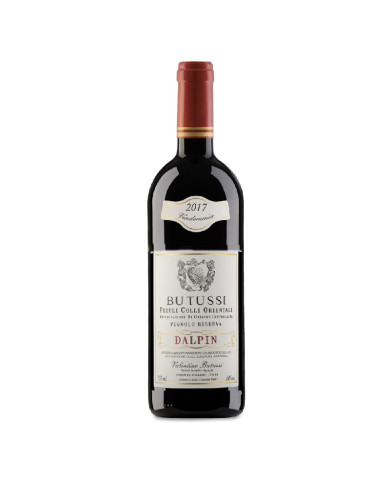
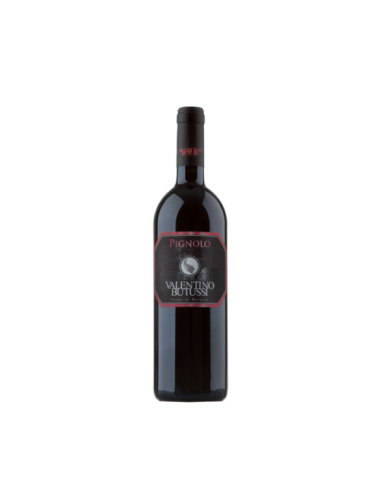
PIGNOLO BUTUSSI FRIULI VENEZIA GIULIA Grape variety: pure Pignolo Winy, tannic taste, reminiscent of raspberry. It is a wine to be discovered. Wine for meat dishes of Friulian cuisine, especially it prefers the ciàr in padiele (beef stew). Serving temperature: 16 – 18° C
SKU:
16554
Brand:
Valentino Butussi
PIGNOLO BUTUSSI FRIULI VENEZIA GIULIA Grape variety: pure Pignolo Winy, tannic taste, reminiscent of raspberry. It is a wine to be discovered. Wine for meat dishes of Friulian cuisine, especially it prefers the ciàr in padiele (beef stew). Serving temperature: 16 – 18° C
€41.00
SKU:
16553
Brand:
Valentino Butussi
This ancient vine is the pride and joy of Friuli, the grapes are harvested manually and differentiated according to maturation with twice-weekly passages and takes place throughout the month of October. For the vinification of this wine, 10% of the harvested grapes are vinified in the classic way, soft pressing, settling and controlled fermentation. The remaining 90% of the grapes are left to dry for over a month, losing about 40% of the weight. The highly concentrated must obtained is fermented in small oak barrels, where it remains until the summer. Then the two wines are blended and aged for another 4 months in steel barrels. The refinement takes 6-8 months in the bottle.
€49.19
SKU:
16552
Brand:
Valentino Butussi
Intense ruby red color, full and fragrant aroma, slightly herbaceous, reminiscent of black cherry, raspberry, blackberry, blueberry. Dry, structured, savory taste. Wine indicated for white and red meat dishes, roasts and medium-aged cheeses.
€16.50
SKU:
16551
Brand:
Valentino Butussi
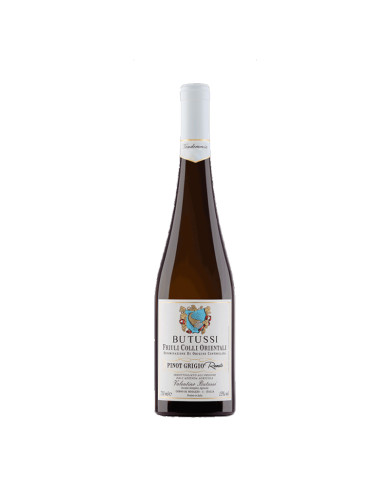
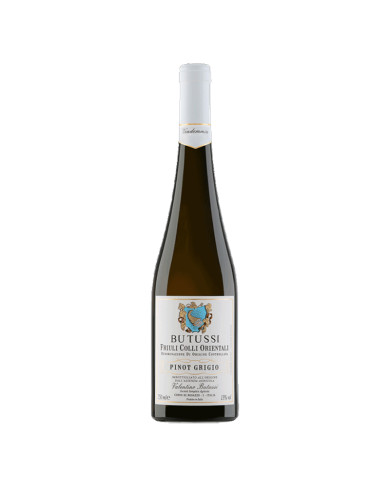
Generally Pinot Grigio ranges from straw yellow to pale gold up to coppery, depending on the time of contact with the skin. It's fresh and clean on the nose, with slight traces of green apples, coriander and fresh black pepper. There are those who find the bitter-sweetness of chives in it. This wine has good body and weight in the mouth.
€10.50
SKU:
16550
Brand:
Valentino Butussi
Intense ruby red color, full and fragrant, slightly herbaceous aroma, reminiscent of black cherry, raspberry, blackberry, blueberry. Dry, structured, savory taste. Wine indicated for white and red meat dishes, roasts and medium-aged cheeses.
€10.50
SKU:
16549
Brand:
Valentino Butussi
The color is light yellow-gold. The bouquet comes with a light saline note in the nose, accompanied by subtle aromas of wild flowers. There are those who find traces of geranium leaves or hay. The wine has a creamy structure and texture. Some discover traces of apricot on the palate
€8.88
SKU:
16548
Brand:
Valentino Butussi
The ruby color is followed by a good body, with a round aroma that fills the mouth. Slightly herbaceous when young. Its notes of green pepper, ripe black currant, red currant and black pepper become fuller and more seductive with time.
€10.50
SKU:
16547
Brand:
Valentino Butussi
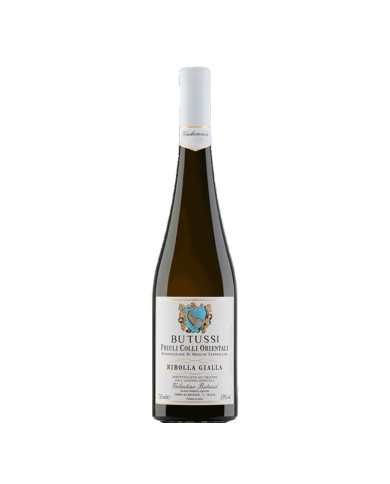
Straw yellow color tending towards greenish. Delicate and pleasant aroma reminiscent of wild flowers; it has a dry taste with a soft and velvety taste and a bitter almond aftertaste. It is excellent as an aperitif, but also goes well with appetizers in general, with eggs and asparagus and is excellent with San Daniele ham.
€15.50
SKU:
16546
Brand:
Valentino Butussi
Straw yellow color tending towards greenish. Delicate and pleasant aroma reminiscent of wild flowers; it has a dry taste with a soft and velvety taste and a bitter almond aftertaste. It is excellent as an aperitif, but also goes well with appetizers in general, with eggs and asparagus and is excellent with San Daniele ham.
€31.00
SKU:
16545
Brand:
Valentino Butussi
Intense ruby red in color with aging it develops garnet reflections. Spicy and fruity aroma with nuances of raspberry and blueberry. Body
robust, full-bodied, savory, it is an aging wine and the Prince of red wines. It is a wine for great cooking meats, for roasted red meats, excellent with
poultry, and hard cheeses.
€35.00
SKU:
16544
Brand:
Valentino Butussi
Intense ruby red in color with aging it develops garnet reflections. Spicy and fruity aroma with nuances of raspberry and blueberry. Body robust, full-bodied, savory, it is an aging wine and the Prince of red wines. It is a wine for great cooking meats, for roasted red meats, excellent with poultry, and hard cheeses.
€17.50
SKU:
16543
Brand:
Valentino Butussi
Ruby red wine tending towards purplish. Intense distinctly herbaceous and vinous aroma. Full, tannic flavour. It is a wine for red meats and roasts and also goes well with feathered game and aged cheeses.
€33.00
SKU:
16542
Brand:
Valentino Butussi
Ruby red wine tending towards purplish. Intense distinctly herbaceous and vinous aroma. Full, tannic flavour. It is a wine for red meats and roasts and also goes well with feathered game and aged cheeses.
€16.50
SKU:
16541
Brand:
Valentino Butussi
White with great structure, with sustained alcohol content and balanced acidity. Fine and elegant with aromas reminiscent of apple and toasted bread. Aged it evolves into a very pleasant bouquet. Aperitif wine, suitable for a wide range of light hors d'oeuvres, soups, egg-based dishes, fish and white poultry meat. Serving temperature: 10-12°C
€29.04
SKU:
16540
Brand:
Valentino Butussi
White with great structure, with sustained alcohol content and balanced acidity. Fine and elegant with aromas reminiscent of apple and toasted bread. Aged it evolves into a very pleasant bouquet. Aperitif wine, suitable for a wide range of light hors d'oeuvres, soups, egg-based dishes, fish and white poultry meat. Serving temperature: 10-12°C
€13.91
SKU:
16539
Brand:
Valentino Butussi
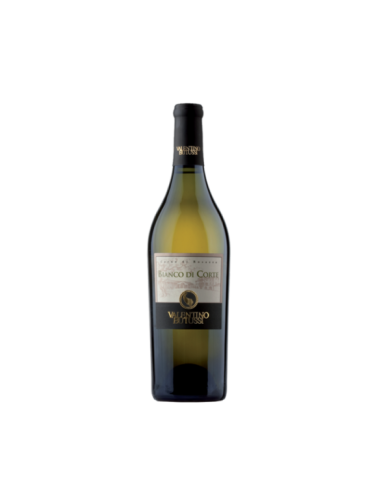
Located within the production area of the DOC Friuli Colli Orientali, in Corno di Rosazzo, the Valentino Butussi winery was born in 1910 and bears the name of its founder and progenitor of the family. Valentino Butussi is a representative company of the territory that has chosen the path of organic viticulture, obtaining the certification in 2013. In the cellar, the steel containers are intended for vintage wines, while for the selections, the use of cement is preferred and large barrels of untoasted wood (from three to sixty hectoliters), for the reserve whites the traditional Friulian seven hundred liter barrel is used.
€15.50
SKU:
16538
Brand:
Valentino Butussi
The White Angel is a Cuvè, it is aged in wooden barrels and is cared for and harvested according to the lunar tides. It is fresh, fruity and smooth to the taste. The palate shows spring flowers and a hint of caramelized citrus. At the same time, the grapes give the cuvée a beautiful minerality and volume. We can recommend this great expansion with seafood, shellfish or grilled fish.
€48.00
SKU:
16537
Brand:
Valentino Butussi
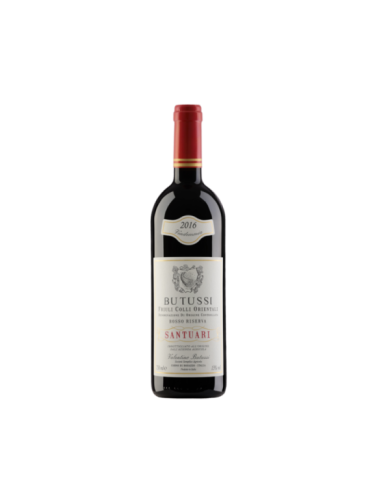
A Riserva with an austere and solemn character, which reaches the qualitative peaks of the entire range created by the Valentino Butussi farm. This "Santuari" is a Cabernet Sauvignon DOC where the balance between taste and aroma makes the sip incisive and expressive, denoting its great evolutionary potential over time. The carefully selected grapes, after harvesting, ferment in oak barrels thanks to the use of indigenous yeasts. Then we move on to the refinement, carried out for two years in oak barrels with a capacity of 300 liters; after bottling, the wine further ages in glass for 12 months. A label that interprets the Colli Orientali del Friuli terroir with a niche production, where excellence and aging capacity go hand in hand, giving us a red wine of great value.
€55.00
SKU:
16536
Brand:
Valentino Butussi
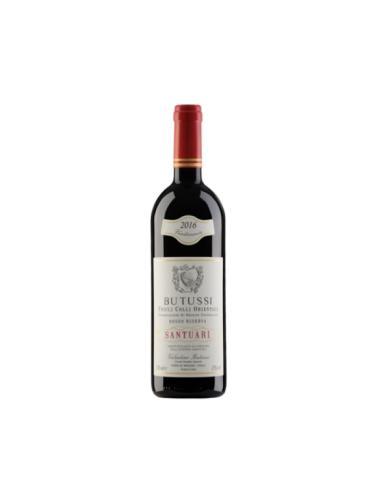
A Riserva with an austere and solemn character, which reaches the qualitative peaks of the entire range created by the Valentino Butussi farm. This "Santuari" is a Cabernet Sauvignon DOC where the balance between taste and aroma makes the sip incisive and expressive, denoting its great evolutionary potential over time. The carefully selected grapes, after harvesting, ferment in oak barrels thanks to the use of indigenous yeasts. Then we move on to the refinement, carried out for two years in oak barrels with a capacity of 300 liters; after bottling, the wine further ages in glass for 12 months. A label that interprets the Colli Orientali del Friuli terroir with a niche production, where excellence and aging capacity go hand in hand, giving us a red wine of great value.
€110.00
SKU:
16535
Brand:
Valentino Butussi
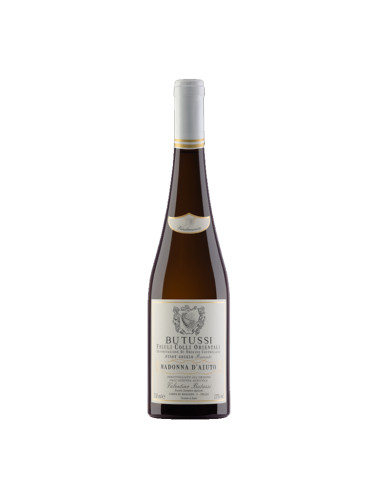
The Friuli Colli Orientali DOC "Madonna D'Aiuto - Historic Label" by Butussi comes from Pinot Grigio grapes harvested manually; spontaneously fermented and aged, then in oak for 8-10 months, it is produced only in the best years. Of clear gastronomic versatility, it is appreciated for a great balance between freshness and softness; it will also acquire complexity over time.
€55.00
€52.00
SKU:
16533
Brand:
Valentino Butussi
Intense straw yellow, bright with golden reflections. Slightly persistent perlage. Lively nose with fruity notes of ripe pears and apples and candied oranges. Light and enveloping on the palate, final citrus notes that linger.
SKU:
16532
Brand:
Valentino Butussi
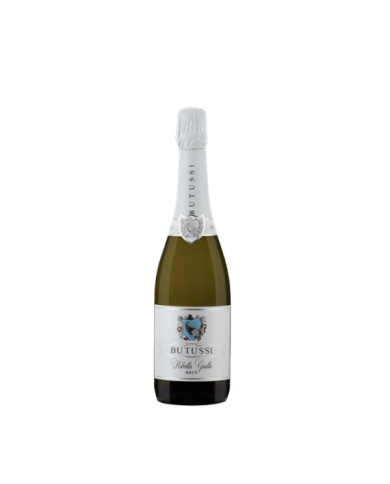
In addition to the great classics of the Friuli area, always declined with skill and refinement, the Valentino Butussi farm also delights in the production of a bubble, creating a Spumante Brut made according to the Martinotti method. Punctual in presenting subtle and light aromas, which open to a well-defined and refreshing sip, this "Ribolla Gialla" is confirmed as an excellent companion for more informal aperitifs.
€15.50
€10.50
SKU:
16530
Brand:
La Collina Dei Ciliegi
A red wine with character, obtained from the queen grapes of Valpolicella. Peratara from La Collina dei Ciliegi is ideal with rich first courses and red meats.
€42.82
SKU:
16529
Brand:
Masseria L'Astore
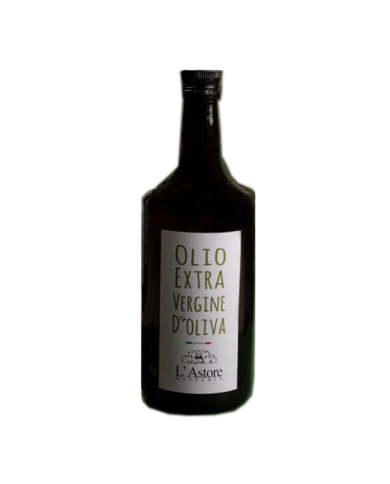
For about 8 centuries the production of oil has been a ritual for Masseria L'Astore. The chapel of San Giovanni (13th C. DC ) with its Byzantine crypt, located on our estate, is historical evidence of the work of the Basilian monks, creators of the cultivation of the olive tree in the land reclaimed from the Mediterranean maquis. Olive growing is one of the oldest activities in Salento and the underground oil mill of L'Astore, which dates back to the early 1800s, was one of the most important processing centers in the area.
€18.93
SKU:
16528
Brand:
Masseria L'Astore
For about 8 centuries the production of oil has been a ritual for Masseria L'Astore. The chapel of San Giovanni (13th C. DC ) with its Byzantine crypt, located on our estate, is historical evidence of the work of the Basilian monks, creators of the cultivation of the olive tree in the land reclaimed from the Mediterranean maquis. Olive growing is one of the oldest activities in Salento and the underground oil mill of L'Astore, which dates back to the early 1800s, was one of the most important processing centers in the area.
€13.52
SKU:
16527
Brand:
Masseria L'Astore
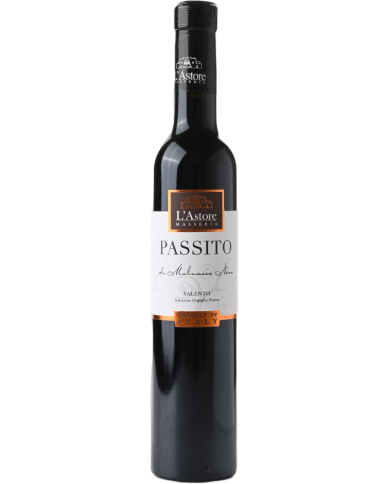
“Sweet as a moonlit night
full. Of soft and warm hugs
I crackled.
To then get lost in thoughts and words
between meditation and frivolity
starting from one ne for a new one
start."
€19.28
SKU:
16526
Brand:
Masseria L'Astore
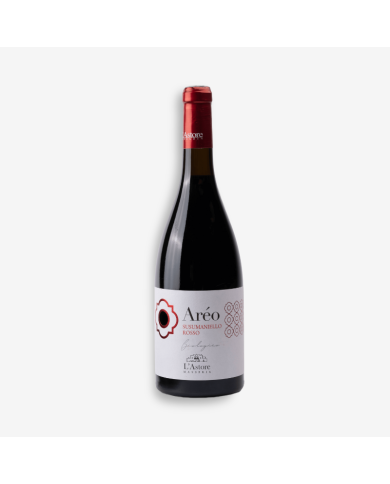
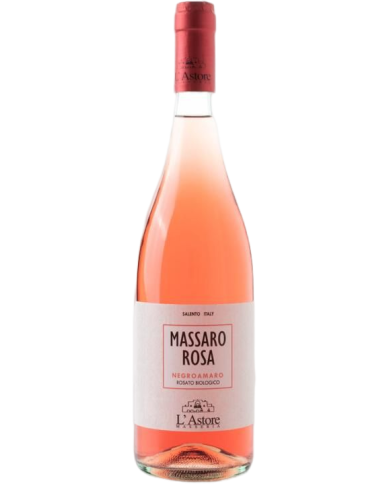
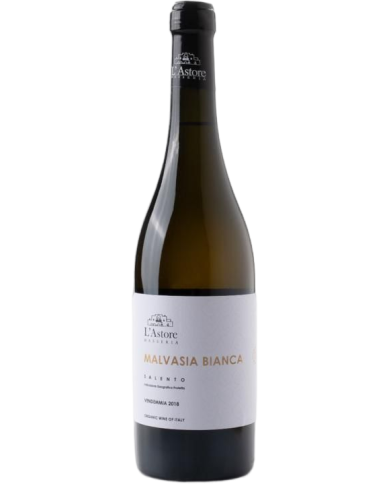
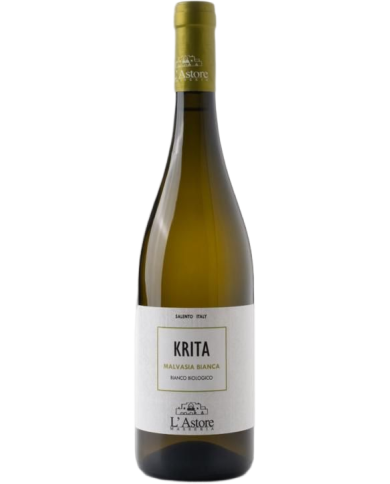
Born from clean and sustainable agriculture, respecting a landscape designed by culture and tradition, since 2010 the wines of L'Astore are certified "produced from organic grapes". Symbol of the Salento area in its rosé vocation and in the old Alberelli di Negroamaro and Primitivo; the production enhances the ancient native vines such as Negroamaro, Malvasia Nera, Malvasia Bianca Antica, Susumaniello and Primitivo.
€16.96
SKU:
16525
Brand:
Masseria L'Astore
Born from clean and sustainable agriculture, respecting a landscape designed by culture and tradition, since 2010 the wines of L'Astore are certified "produced from organic grapes". Symbol of the Salento area in its rosé vocation and in the old Alberelli di Negroamaro and Primitivo; the production enhances the ancient native vines such as Negroamaro, Malvasia Nera, Malvasia Bianca Antica, Susumaniello and Primitivo.
€10.44
SKU:
16524
Brand:
Masseria L'Astore
vinification using only the oenological products and processes authorized by regulation 203/2012 furthermore, within the limits and provisions imposed by the regulations, each certified organic producer follows his own specific conduct, using the oenological practices that are closest to the personal concept of “sustainable agriculture”.
€18.54
SKU:
16523
Brand:
Masseria L'Astore
Born from clean and sustainable agriculture, respecting a landscape designed by culture and tradition, since 2010 the wines of L'Astore are certified "produced from organic grapes". Symbol of the Salento area in its rosé vocation and in the old Alberelli di Negroamaro and Primitivo; the production enhances the ancient native vines such as Negroamaro, Malvasia Nera, Malvasia Bianca Antica, Susumaniello and Primitivo.