Italiano
 Deutsch






























There are no more items in your cart
SKU:
13971
Brand:
Agricosimo
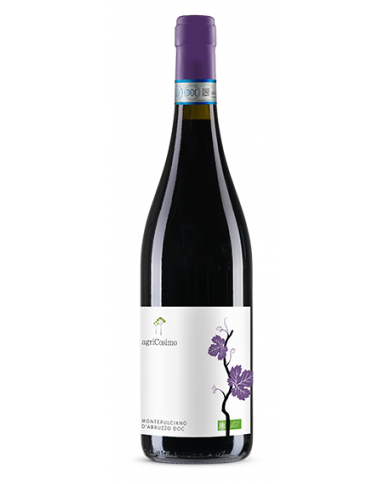
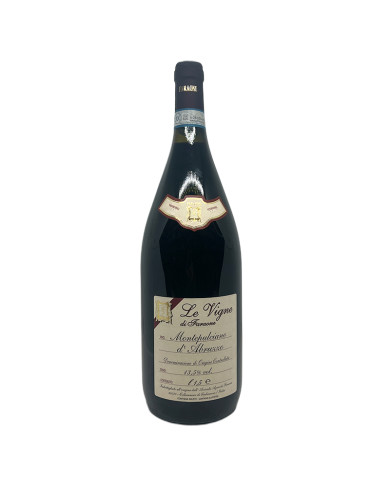
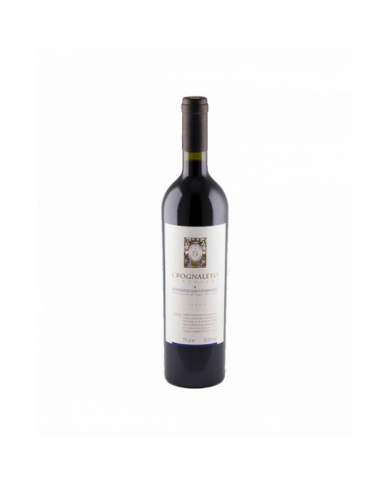
Traditional vinification, 33 days of maceration at 28°C, 12 months of aging in steel, 6 months in large barrels (2500 L), 6 months in bottle.
€12.53
SKU:
13967
Brand:
Agricosimo
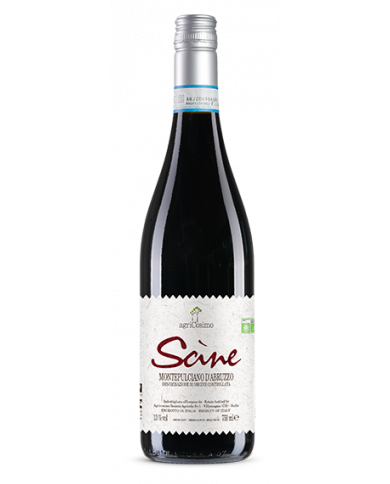
Ruby red in colour, it transmits the smell of red fruit to the nose and is soft and drinkable on the palate. Ideal with first courses, medium-bodied dishes. Excellent to accompany snacks
€6.50
SKU:
13964
Brand:
Agricosimo
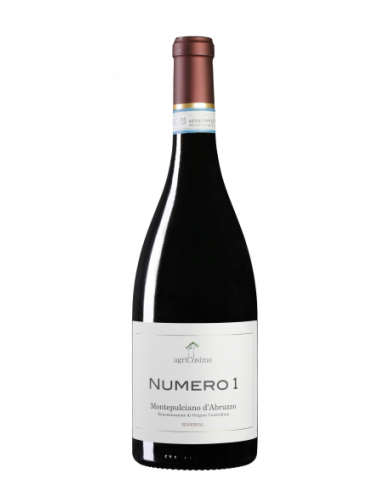
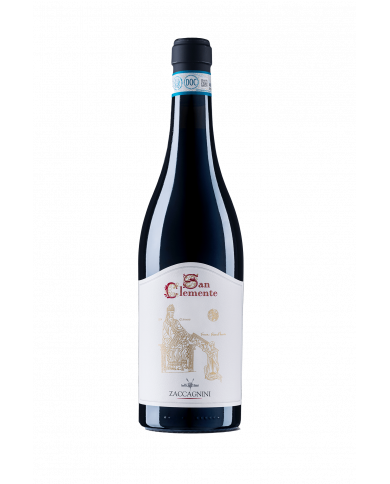
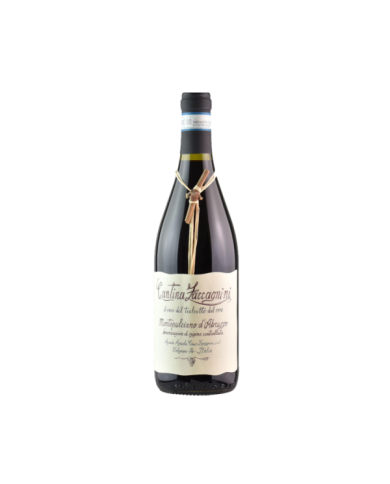
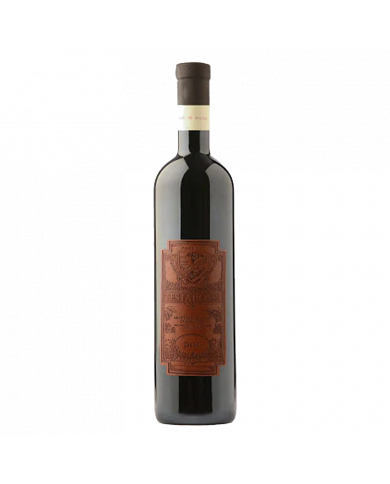
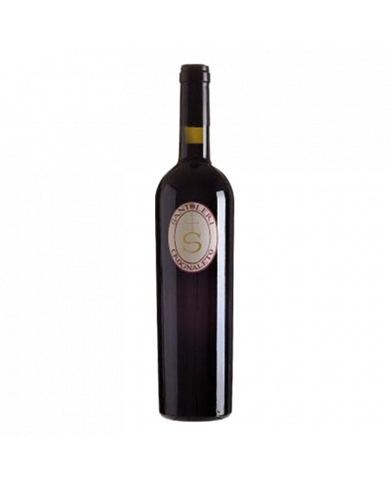
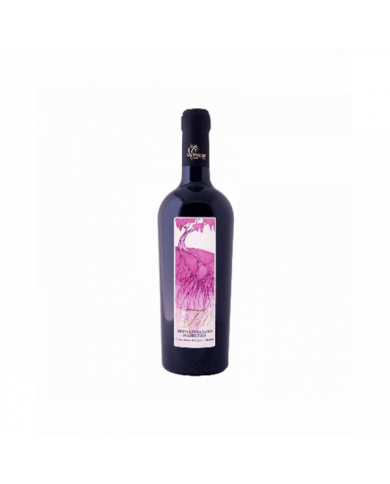
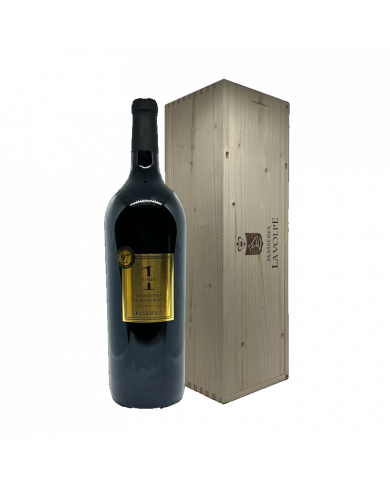
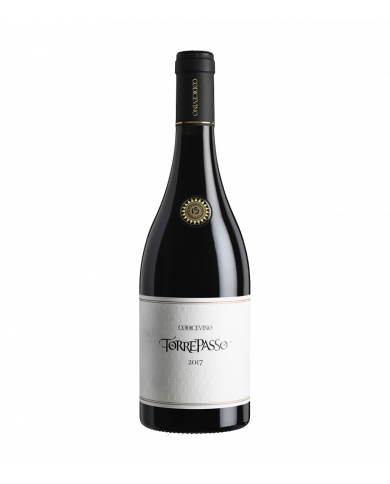
First vinification of the cellar, first passage barrique, first selection of the best grapes. The label takes up the one, written in hand block letters, of the first test bottles.
€18.95
SKU:
13963
Brand:
Agricosimo
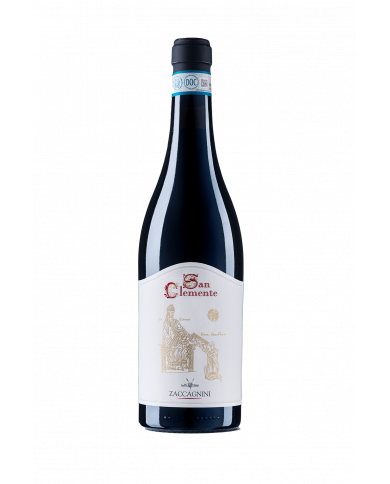
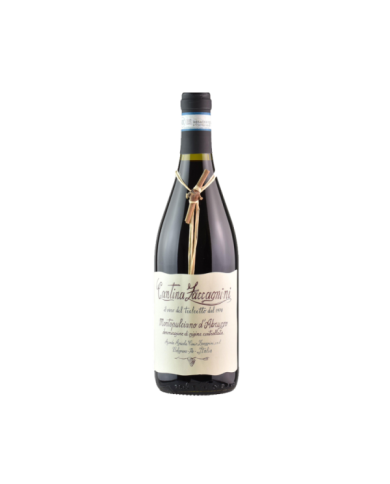
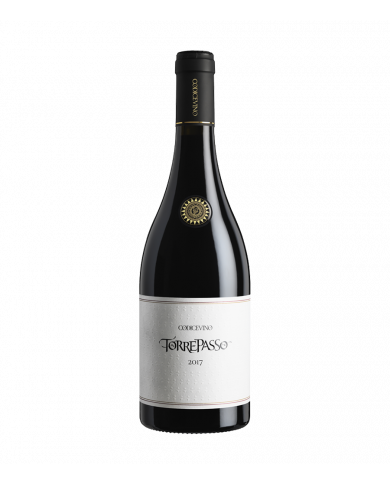
First vinification of the cellar, first passage barrique, first selection of the best grapes. The label takes up the one, written in hand block letters, of the first test bottles.
€65.79
€10.63
SKU:
13954
Brand:
Cà del Bosco
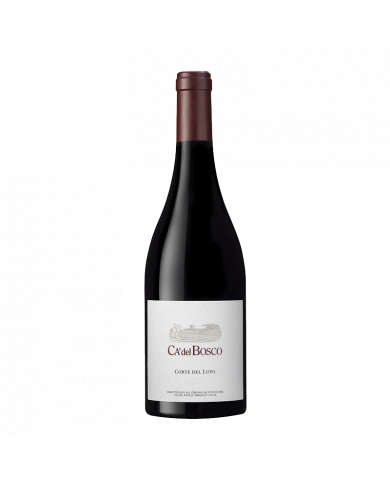
This Curtefranca Rosso DOC is an excellent wine to accompany first courses of land cuisine and white meats. Try it with polenta with mushroom sauce. The optimal serving temperature is 18 ° C and the alcohol content reached is 13.5% Vol.
€31.34
SKU:
13951
Brand:
Agriverde
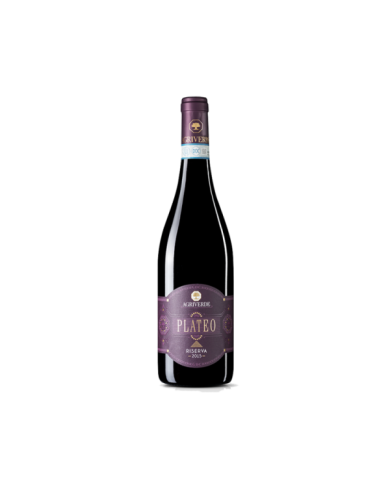
Deep ruby red with violet reflections and garnet rim. The nose is expressed with great elegance with ample aromas of ripe red fruit and fine spicy notes of cocoa, vanilla, cloves, coffee and cinnamon. On the palate it is a wine of great structure, elegance and balance and of long persistence. The tannins are refined and velvety. Food matches: Appetizers based on salami and first courses based on sauces and meat, truffles and porcini mushrooms. Ideal with roasts and game, excellent with various aged cheeses and dark chocolate.
€34.42
SKU:
13947
Brand:
A Mano Wine
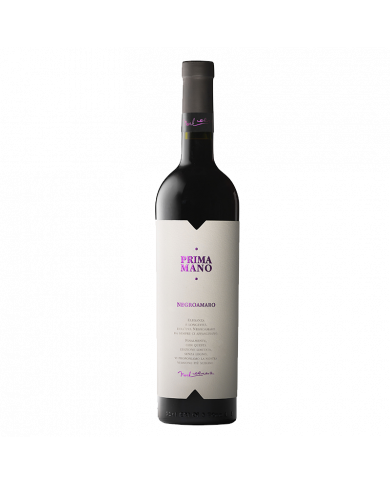
The Negroamaro grape has always fascinated us with its elegance. The longevity of a Negroamaro wine is comparable to that of the great Piedmontese or Tuscan wines. This is our most sublime version
€22.84
€36.42
SKU:
13944
Brand:
Agricole Vallone
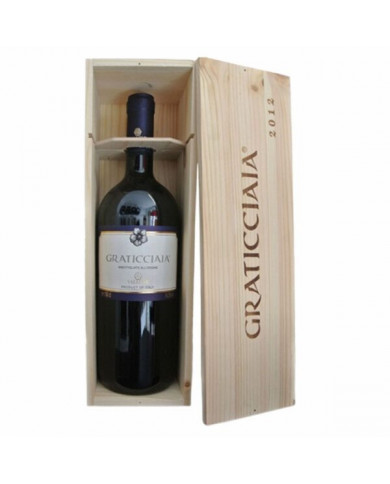
Graticciaia Agricole Vallone 2016 Magnum 1,5 lt. in wooden case: it is an Apulian red wine born from Negroamaro grapes only and aged for 26 months in steel and 12 in barrique. It manifests itself to the eye with a bright garnet red color. The scent is rich, intense and very complex with notes of blackberries, plums, dried flowers, humus and sweet spices. In the mouth it is intense, round and austere, with rich aromas, notes of licorice and vigorous tannins. PAIRINGS: red meats, game, aged cheeses. SERVING TEMPERATURE: 18-20° C.
SKU:
13942
Brand:
Agricole Vallone
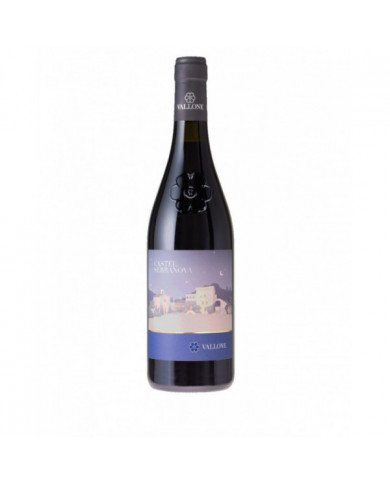
It often happens to think of the illustrious personalities who preceded us as owners of the estate; from Raimondo del Balzo Orsini, Prince of Taranto, owner of the estate from 1382 to 1407, to Queen Maria d'Enghein, Countess of Lecce, owner from 1407 to 1464. Please refer to the dedicated section for further historical notes on Serranova Castle. The intense red of the lands reveals a first clue about the oenological orientation of the wines of the estate. This is the place where you can glimpse the characterizing elements of Vallone; the noble soul of the wines, the innovative soul that led to the conception of the production technique of the Graticciaia; the soul that embraces the harmony and beauty generated by the union between the historicity of places and nature. Castel Serranova is a Cru whose grapes come from a vineyard surrounded by dry stone walls aimed at demarcating the threshold between the dynamism of the different elements of the surrounding nature reserve and the placid succession of the seasons which will lead the grapes to ripen. The vineyard, called Vigna Castello, is the origin of the most classic of the Salento blends, namely Negroamaro and Susumaniello with the predominance of the latter. Aged in dedicated French oak tonneaux for 12 months. Notes of leather, spices and Mediterranean scrub follow each other seamlessly in this long-lived wine.
€18.82
SKU:
13940
Brand:
Agricole Vallone
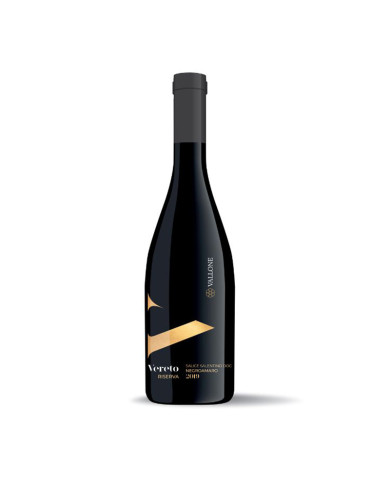
DOCR is the attention that Vallone dedicates to the two most representative denominations of controlled origin of the territory. It is a long journey; 24 months of passion. Both reserves are elevated in wood for six months. Vereto is the name of our Negroamaro vineyard located on the Iore estate in San Pancrazio Salentino. The soft and silky tannin is an unequivocal declaration of origin of the pure Negroamaro.
€14.96
SKU:
13939
Brand:
Agricole Vallone
Flaminio is the interpretation that the Vallone family gives to native vineyards. The line takes its name from the historic Flaminio vineyards from which they are produced and which stand on an ancient Messapian settlement on the outskirts of San Pietro Vernotico. It is our ever-evolving tradition. Intense colors and fruity aromas.
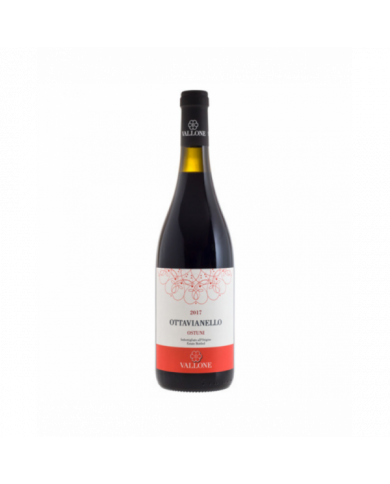
Ottavianello is a native grape typical of the upper Salento. Genetically similar to Cinsault; it has a cherry red color and an ultra-restrictive production disciplinary in the vineyard! Ideal for a summer aperitif or to combine with an outdoor barbecue after an intense day at the beach. For all of you, endowed with an unconventional spirit, our Ottavianello DOC Ostuni is also excellent cold!
€12.14
SKU:
13937
Brand:
Agricole Vallone
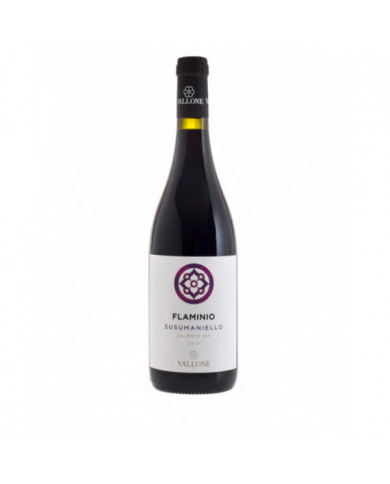
Flaminio is the interpretation that the Vallone family gives to native vineyards. The line takes its name from the historic Flaminio vineyards from which they are produced and which stand on an ancient Messapian settlement on the outskirts of San Pietro Vernotico. It is our ever-evolving tradition. Intense colors and fruity aromas. Vine as generous as it is approximate at a young age due to its productive exuberance. As it matures, the overabundance of production suddenly disappears, giving way to grapes capable of expressing olfactory complexity with notes of leather and Mediterranean scrub.
€13.99
SKU:
13936
Brand:
Agricole Vallone
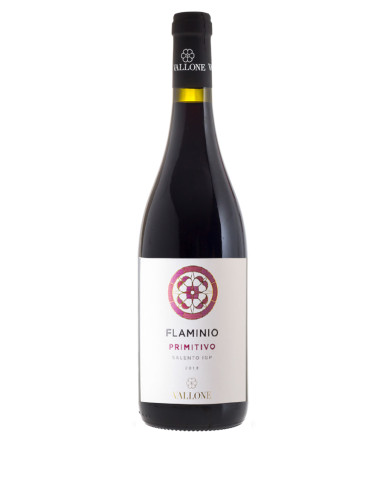
Flaminio is the interpretation that the Vallone family gives to native vineyards. The line takes its name from the historic Flaminio vineyards from which they are produced and which stand on an ancient Messapian settlement on the outskirts of San Pietro Vernotico. It is our ever-evolving tradition. Intense colors and fruity aromas.
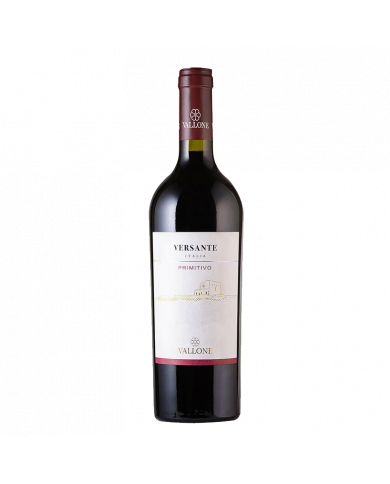
The trendiest vine of the moment, produced by us. Gentle tannins, balanced residual thickness in the mouth. In short; the primitivo of Salento Vallone.
€10.13
SKU:
13935
Brand:
Agricole Vallone
Born from an intuition that brings to light an ancient technique that links past traditions to future visions. The experiment of drying the Negroamaro grapes from the 'Caragnuli' Cru, an 80-year-old Apulian sapling vineyard located in San Pancrazio Salento, began in 1980, thanks to the insistence of the oenologist Severino Garofano who had always believed in versatility and nobility of this vine. In 1986, after 6 years of trying, the first vintage of 'Graticciaia' saw the light. The rest is a success story that gives the dignity that belongs to Negroamaro. After a careful selection of the grapes, we proceed with a light drying, followed by an aging of 12 months in French oak barriques, the last mile is covered in concrete until bottling.
€52.26
SKU:
13933
Brand:
Agricole Vallone
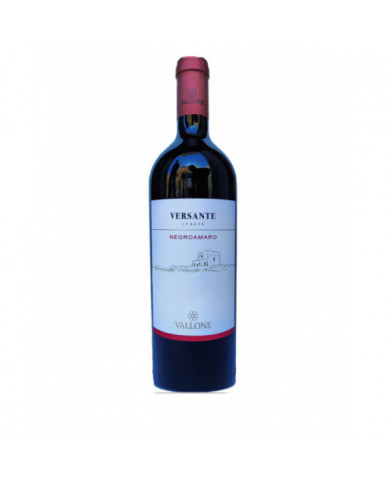
The line takes its name from the Adriatic side, where the Vallone vineyards extend. The Typical colors of the Adriatic coast composed of the intense blue of the sea and the continuous alternation of the green-gold of the olive leaves moved by the wind. Here in these few words the spirit of the Walloon slope is enclosed.
Unmistakable dark red with violet reflections, from the trendiest vine of Puglia, an enveloping wine that is easy to approach.
€6.98
SKU:
13929
Brand:
Agricole Vallone
The line takes its name from the Adriatic side, where the Vallone vineyards extend. The Typical colors of the Adriatic coast composed of the intense blue of the sea and the continuous alternation of the green-gold of the olive leaves moved by the wind. Here in these few words the spirit of the Walloon slope is enclosed. Unmistakable dark red with violet reflections, from the trendiest vine of Puglia, an enveloping wine that is easy to approach.
€8.98
SKU:
13926
Brand:
Agricole Vallone
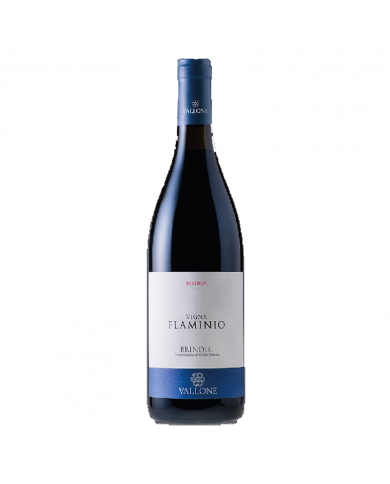
The appellative Vigna, authorized by the competent bodies, in front of the name Flaminio indicates the real correspondence of the area and therefore of the vineyard from which the grapes of our Brindisi DOC come. This is the first Brindisi DOC ever produced, it was in 1972.
€11.61
SKU:
13923
Brand:
Montevertine
Produced for the first time in the 1977 vintage, it was the first pure Sangiovese vinified in our area of Radda in Chianti. The grapes come from our historic vineyards, planted between 1968 and 1999. It ages for one year in Allier barriques and one year in Slavonian oak barrels.
€84.50
SKU:
13921
Brand:
Montevertine
It is our simplest wine and suitable for all occasions. It is produced with Sangiovese, Canaiolo and Colorino grapes from all our vineyards, it ages for a year in Slavonian oak barrels.
€39.90
SKU:
13915
Brand:
Montevertine
Produced for the first time in the 1977 vintage, it was the first pure Sangiovese vinified in our area of Radda in Chianti. The grapes come from our historic vineyards, planted between 1968 and 1999. It ages for one year in Allier barriques and one year in Slavonian oak barrels.
€337.94
SKU:
13914
Brand:
A Mano Wine
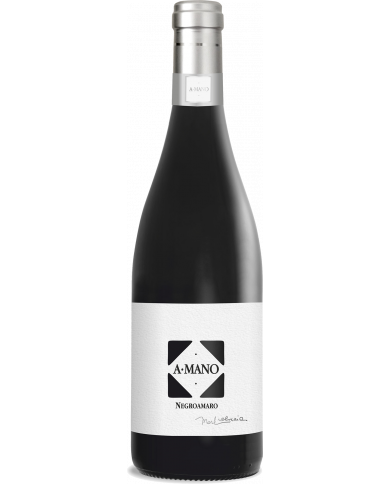
A Mano Negroamaro comes from a single vineyard in Salento. It is an old non-irrigated espalier vineyard. This grape is sensitive to sunburn and the espalier vineyard is perfect for protecting the grapes from the torrid Salento sun and contributes to the characteristic and unusual aromas.
A Mano Negroamaro is unlike any other wine you will try. On the nose you will recognize freshly picked berries, black cherries, spices and the scent of flowers.
Elegant, clean with a delicacy that envelops the palate every time you drink it. It will age beautifully for the next 15 years, developing the complexity of a mature Burgundy wine.
€10.25
SKU:
13911
Brand:
A Mano Wine
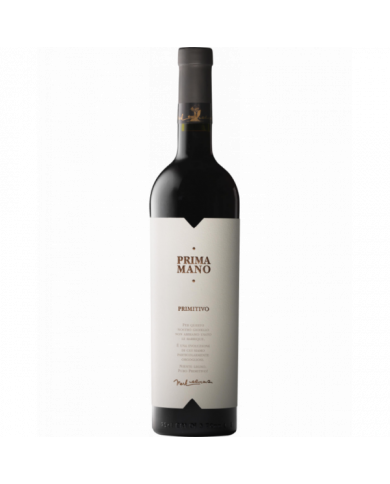
I get up very early and leave in the dark. I'm going to the vineyard. Sometimes I say where, sometimes it remains a secret. The mornings I go to Vigneto Prima Mano I want to be alone. There are sensual moments in life, for me one of these is being in the vineyard by the sea in the first moments of dawn and smelling the sea in the air together with the scent of fruit. Everything is silent. Only the vineyard speaks. He tells me to wait a couple more days. Not more. My wine is made when the vines speak to me and I know how to listen. There are very few wines in the world that are so complex, with this extract yet soft and elegant.
€23.40
SKU:
13909
Brand:
A Mano Wine
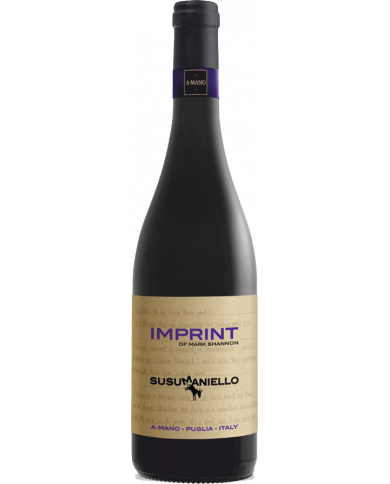
Susumaniello is an ancient and rare grape of the Salento peninsula. In Salento dialect Susumaniello means "Little Black Donkey". The old farmers say that it derives from the habit of the vineyards to load themselves with grapes, others argue it is due to the stubborn character and the reluctance to be tamed. Finally a grape and a winemaker with the same personality! This is a wine as radiant as its land, a wine that speaks the language of the people here.
€12.85
SKU:
13908
Brand:
A Mano Wine
You know when a song enters your head and you can't forget it?
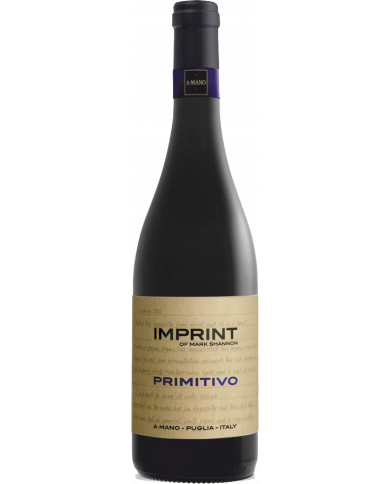
Even a wine can be like this: fun and memorable at the same time. It is the effect that Imprint Primitivo has on all those who taste it.
Imprint Primitivo is produced with all dried grapes. Part of the grapes is left to dry on the plant, part is harvested in crates and left to dry and ripen in the loft in the cellar
Round, full-bodied and fruity from the first sip, it charms you slowly, inviting you to take another sip. A great wine. A serious wine.
Once you taste it you won't be able to get it out of your head.
€12.20
SKU:
13907
Brand:
A Mano Wine
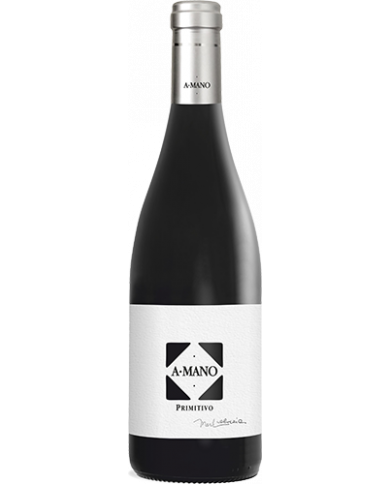
We can say that we were the first in Puglia to make primitive wine with a modern style.
What makes Primitivo such a special grape? Genetically identical to Californian Zinfandel, Primitivo is, according to Mark, “like many of the Italians I have known: generous, friendly, passionate and authentic”
A Mano Primitivo is Italian at heart: elegant, interesting, complex and with a high drinkability index!
For us, the greatest satisfaction is to think that there are thousands of people who are spending a fantastic evening thanks to our A Mano Primitivo.
To be fully enjoyed like all the little pleasures in life.
€10.25
SKU:
13906
Brand:
Emidio Pepe
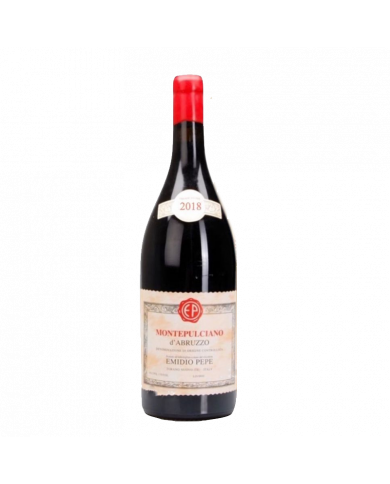
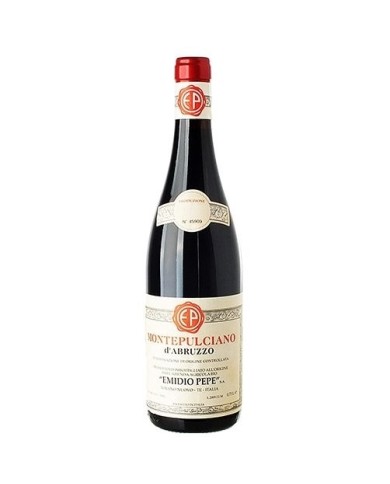
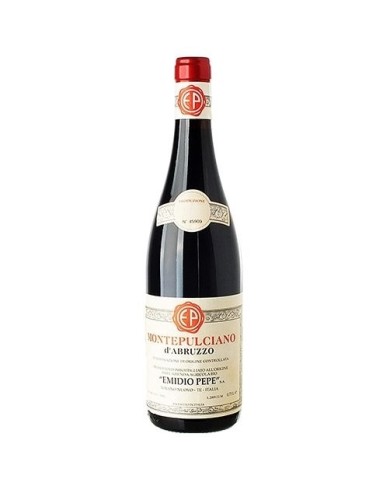
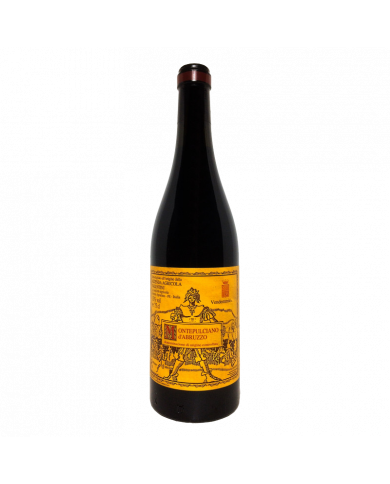
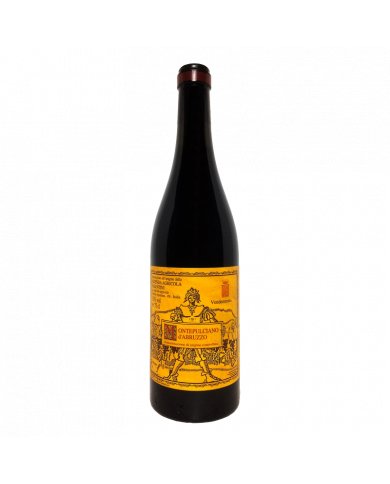
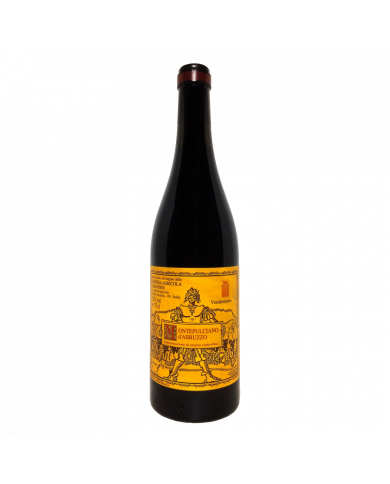
Deep ruby red. It develops hints of ripe red fruit on the nose, with a vinous and herbaceous touch. In the mouth, great mineral momentum, good tannic structure and full body. It spreads out with balance and boldness on fruity vibes. Persistent and harmonious. Deep and elegant, Emidio Pepe 's Montepulciano d'Abruzzo is a wine that goes well with main courses of meat, especially lamb-based. Excellent with the very traditional kebabs.
SKU:
13905
Brand:
Emidio Pepe
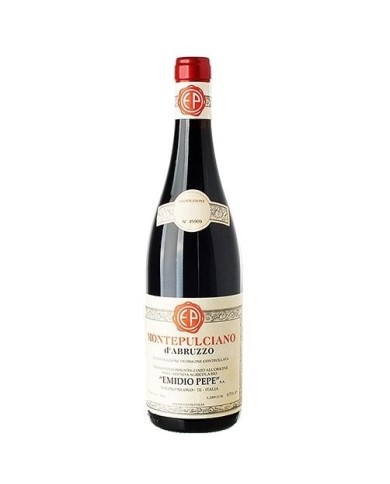
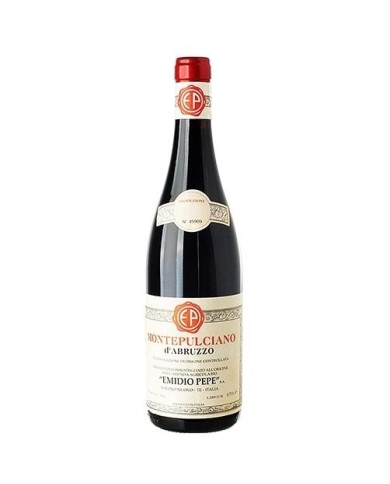
Deep ruby red. It develops hints of ripe red fruit on the nose, with a vinous and herbaceous touch. In the mouth, great mineral momentum, good tannic structure and full body. It spreads out with balance and boldness on fruity vibes. Persistent and harmonious. Deep and elegant, Emidio Pepe 's Montepulciano d'Abruzzo is a wine that goes well with main courses of meat, especially lamb-based. Excellent with the very traditional kebabs.
SKU:
13904
Brand:
Emidio Pepe
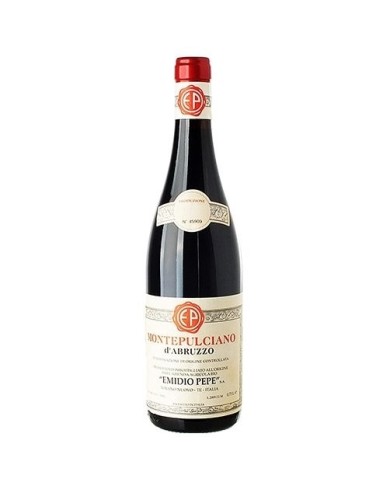
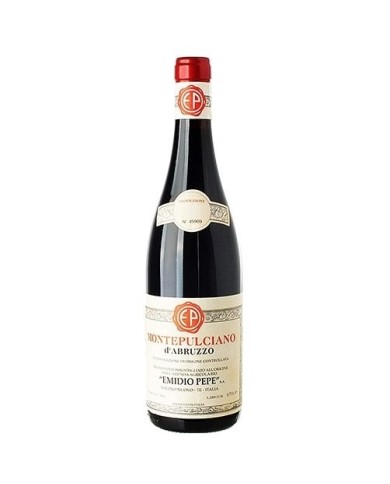
Deep ruby red. It develops hints of ripe red fruit on the nose, with a vinous and herbaceous touch. In the mouth, great mineral momentum, good tannic structure and full body. It spreads out with balance and boldness on fruity vibes. Persistent and harmonious. Deep and elegant, Emidio Pepe 's Montepulciano d'Abruzzo is a wine that goes well with main courses of meat, especially lamb-based. Excellent with the very traditional kebabs.
SKU:
13903
Brand:
Emidio Pepe
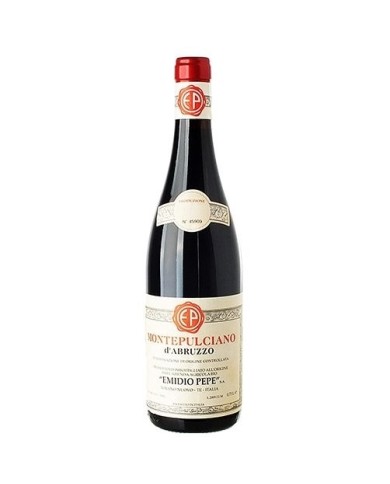
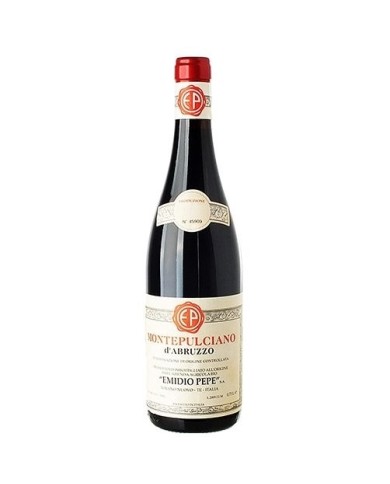
Deep ruby red. It develops hints of ripe red fruit on the nose, with a vinous and herbaceous touch. In the mouth, great mineral momentum, good tannic structure and full body. It spreads out with balance and boldness on fruity vibes. Persistent and harmonious. Deep and elegant, Emidio Pepe 's Montepulciano d'Abruzzo is a wine that goes well with main courses of meat, especially lamb-based. Excellent with the very traditional kebabs.
€169.90
SKU:
13902
Brand:
Emidio Pepe
Deep ruby red. It develops hints of ripe red fruit on the nose, with a vinous and herbaceous touch. In the mouth, great mineral momentum, good tannic structure and full body. It spreads out with balance and boldness on fruity vibes. Persistent and harmonious. Deep and elegant, Emidio Pepe 's Montepulciano d'Abruzzo is a wine that goes well with main courses of meat, especially lamb-based. Excellent with the very traditional kebabs.
SKU:
13901
Brand:
Emidio Pepe
Deep ruby red. It develops hints of ripe red fruit on the nose, with a vinous and herbaceous touch. In the mouth, great mineral momentum, good tannic structure and full body. It spreads out with balance and boldness on fruity vibes. Persistent and harmonious. Deep and elegant, Emidio Pepe 's Montepulciano d'Abruzzo is a wine that goes well with main courses of meat, especially lamb-based. Excellent with the very traditional kebabs.
€153.72
SKU:
13900
Brand:
Emidio Pepe
From a year whose continuous rains have put virtually anyone in difficulty, throughout Italy, Emidio Pepe offers a Montepulciano of great style, the perfect representation of this very complicated vintage. Garnet red, on the nose it expresses autumnal and only remotely fruity notes before opening to a balanced and elegant taste, never screamed, perfectly inserted in this so measured context. Shy, but no less expressive.
SKU:
13899
Brand:
Emidio Pepe
From a year whose continuous rains have put virtually anyone in difficulty, throughout Italy, Emidio Pepe offers a Montepulciano of great style, the perfect representation of this very complicated vintage. Garnet red, on the nose it expresses autumnal and only remotely fruity notes before opening to a balanced and elegant taste, never screamed, perfectly inserted in this so measured context. Shy, but no less expressive.
€204.96
SKU:
13898
Brand:
Emidio Pepe
From a year whose continuous rains have put virtually anyone in difficulty, throughout Italy, Emidio Pepe offers a Montepulciano of great style, the perfect representation of this very complicated vintage. Garnet red, on the nose it expresses autumnal and only remotely fruity notes before opening to a balanced and elegant taste, never screamed, perfectly inserted in this so measured context. Shy, but no less expressive.
€213.50
SKU:
13877
Brand:
Piandimare
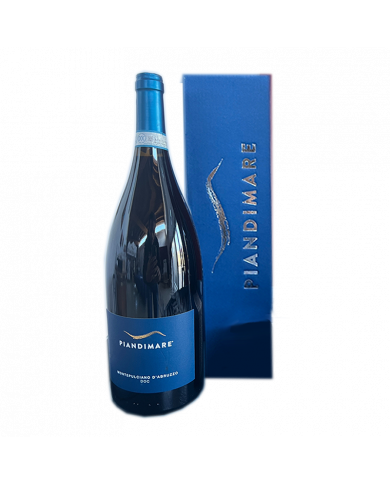
Blue like the sea that helps us in summer and winter with its climate mitigation action. And it is precisely to the sea that our label is dedicated, as a symbol of the importance that this has in the ripening cycle of Montepulciano d'Abruzzo grapes. Long fermentation on the skins. Racking and aging for at least 9 months in steel and 6 months in the bottle. A straightforward wine that does not compromise, proposing the quality and care placed in the vineyard. The varietal aromas of Montepulciano are all there, long and complex. A daily pleasure.
€20.00
SKU:
13876
Brand:
Piandimare
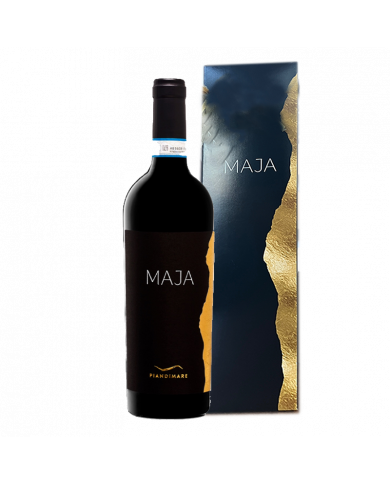
Maja is not just the wine, it is not just a label. Maja is the mountain that protects us, it is the mountain that gives us this extraordinary climate that gives us extraordinary grapes. We could only dedicate this great wine to her. She who every evening during the sunset looks at us in the cellar, turning her back to the sea. Grapes Montepulciano d'Abruzzo Piandimare from grapes harvested from mid-October. Long fermentation at controlled temperature. The tribute to our land and to the Majella could only be our spearhead. A very long and multifaceted wine, where the acidity obtained from the microclimate supports and elegantly accompanies the maturity and complexity of the fruit matured in small French wooden barrels.
€52.26
SKU:
13875
Brand:
Piandimare
It is with the arrival of the new Villamagna Doc that Cantina Piandimare expands the line of its Montepulciano d'Abruzzo from the Piandimare massale selection with a further red that wants to be the umpteenth praise to the territory and the demonstration of the potential in terms of structure and aging. through the work done by the winery with only the grapes coming from the Val di Foro, in particular from those of the territory limited to the small, but growing interest, Doc Abruzzo Villamagna.
€36.76
SKU:
13874
Brand:
Dora Sarchese
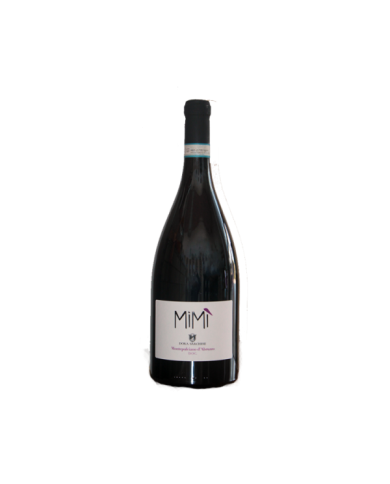
Montepulciano d'Abruzzo Doc Dora Sarchese is part of the Mimì line. The latest creation dedicated to Domenico D'Auria, patriarch of the Dora Sarchese winery who passed away in 2002. Mimì is a range that speaks of territorial identity and simplicity, which can also be found in the packaging. Minimalist label inspired by a significant reflection: "Your steps with your passion, with your hands in the earth, with your heart in the vineyard, with my father ... with Mimì". And this Montepulciano is a tribute to man and to the territory.
SKU:
13855
Brand:
Cantina Zaccagnini
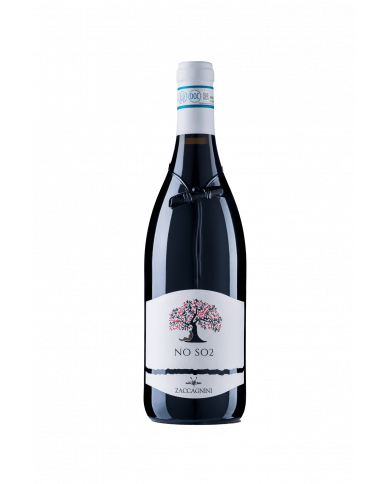
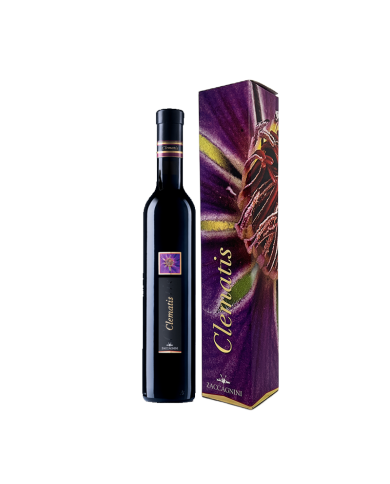
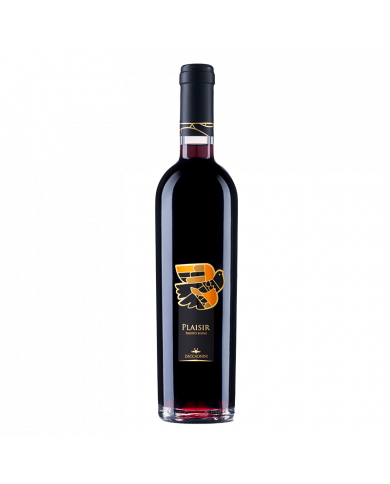
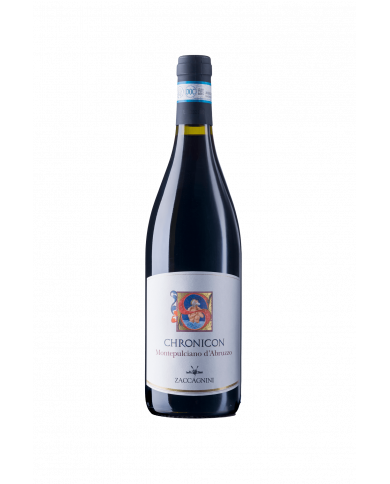
Colour: Very intense ruby red colour. Smell: Black fruit, blackberry and blueberry and plum, notes of violet and hints of freshly cut hay. Taste: It is enveloping, dynamic that plays between freshness and sweetness.
€9.80
SKU:
13854
Brand:
San Felice
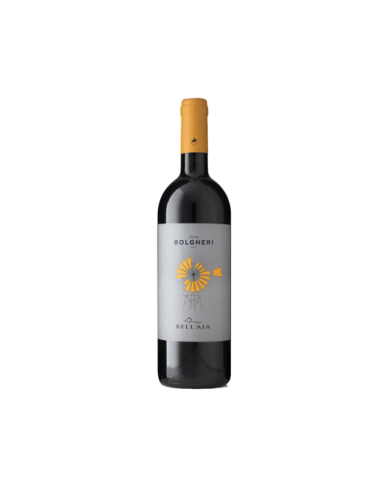
40 years after the acquisition of the Campogiovanni estate in Montalcino, San Felice 's interest has shifted to another area of Tuscan wine excellence: Bolgheri. Faithful to its philosophy of producing exclusively wines from proprietary grapes, 6 hectares of vineyards have been identified in Le Sondraie. The vines have an average age of 5 years and are planted on a silt-sandy soil typical of the area. The varieties are mainly Cabernet Sauvignon (2 ha) and Merlot (4 ha). Two wines are produced: Bolgheri and Bolgheri Superiore.
€49.17
SKU:
13849
Brand:
San Felice
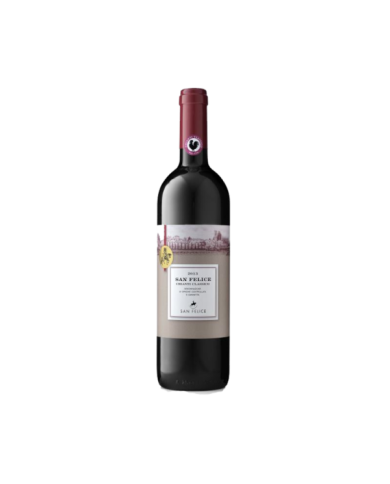
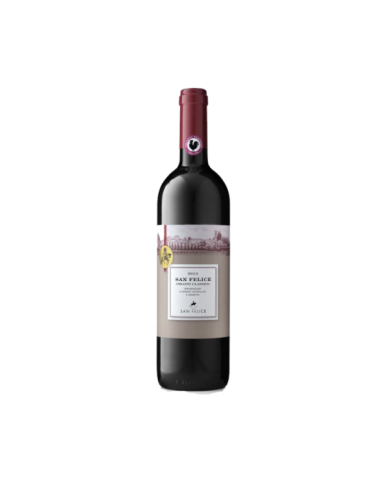
Produced entirely with native grapes, Sangiovese mainly with additions of Colorino and Pugnitello, it is a typical Chianti Classico, of medium structure, with a strong personality that stands out in particular for its elegance. The vinification takes place in the traditional way, with medium length maceration, followed by a maturation of the wine for 12 months in Slavonian oak barrels.
€64.97
SKU:
13848
Brand:
San Felice
Produced entirely with native grapes, Sangiovese mainly with additions of Colorino and Pugnitello, it is a typical Chianti Classico, of medium structure, with a strong personality that stands out in particular for its elegance. The vinification takes place in the traditional way, with medium length maceration, followed by a maturation of the wine for 12 months in Slavonian oak barrels.
€26.88
SKU:
13847
Brand:
San Felice
Produced entirely with native grapes, Sangiovese mainly with additions of Colorino and Pugnitello, it is a typical Chianti Classico, of medium structure, with a strong personality that stands out in particular for its elegance. The vinification takes place in the traditional way, with medium length maceration, followed by a maturation of the wine for 12 months in Slavonian oak barrels.
€11.86
SKU:
13846
Brand:
San Felice
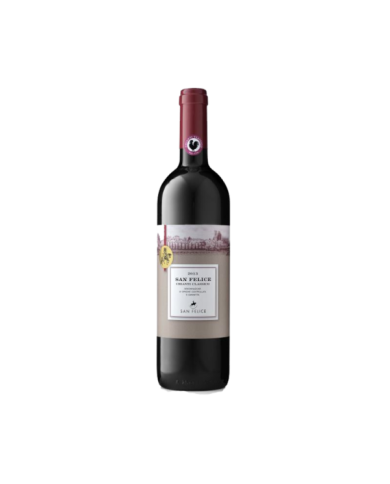
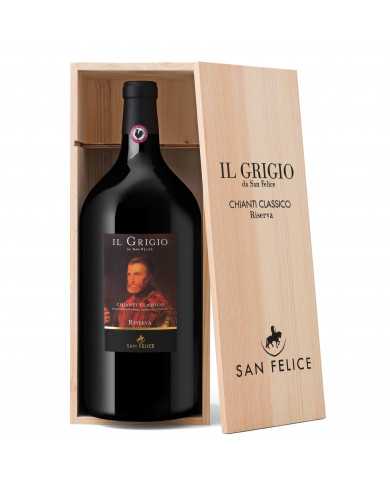
Only the best Sangiovese grapes selected in the company's Chianti Classico vineyards make up this Reserve, a valid combination of tradition and modernity. It ages for about 24 months in wood, of which a part (about 20%) in barriques, and one year in bottle. The label depicts a famous painting by Titian 'Man with armor'.
€142.74
SKU:
13840
Brand:
San Felice
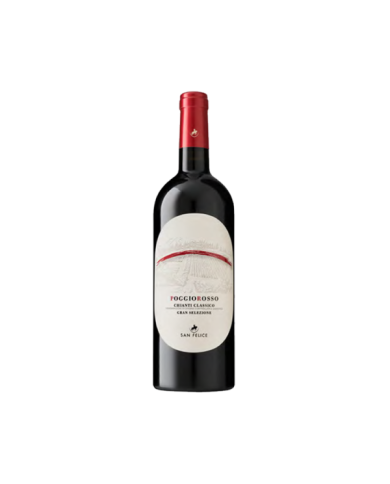
Already towards the end of the 70s, in the locality of Poggio Rosso, some selected clones of Sangiovese were planted several times. Poggio Rosso is the result of a careful selection of this grape from some plots of the vineyard of the same name and today represents the excellence of the San Felice terroir. Wine of great concentration and elegance, produced in limited quantities and, especially in the best vintages, it ages for about 20 months in 500-liter tonneaux and another 12 months in the bottle.
€53.92
SKU:
13839
Brand:
Feudo Antico
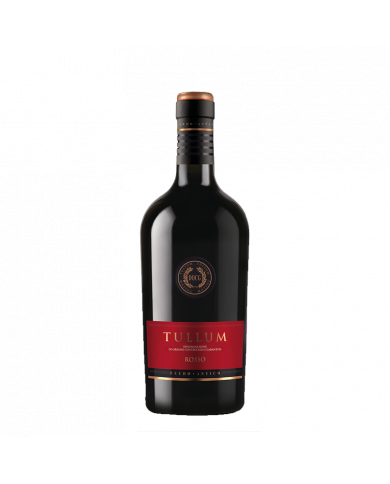
The Tullum Rosso of Feudo Antico comes from hilly land in the municipality of Tollo, in the province of Chieti. It is made from 100% Montepulciano grapes, harvested by hand in the second decade of October. Fermentation takes place in stainless steel tanks at a controlled temperature, with maceration in contact with the skins. The wine ages in glass blocks for 14 months before being bottled.
€13.58
SKU:
13838
Brand:
Mottura
Wine produced with Primitivo grapes grown in the province of Taranto. Manual harvest at the right maturation with careful selection of the grapes. Manual sorting of the bunch with selector belt. Fermentation of the must at controlled temperature, traditional maceration for 20-25 days, good use of delestage and pumping over. Carrying out of the malolactic fermentation in barriques at a controlled temperature, with the use of batonnage. 12 months of aging in French oak barriques. 2-3 months of aging in the bottle.
€13.80
SKU:
13837
Brand:
Cantina Zaccagnini
Color: Intense ruby red. Smell: The nose is elegantly austere, with hints of black fruit in alcohol and hints of licorice. Taste: On the palate it has a broad and harmonious taste, extremely persistent.
€46.36
SKU:
13836
Brand:
Cantina Zaccagnini
Color: Dark ruby red color. Smell: Bouquet of raisin flowers and red fruit in alcohol, with hints of licorice. Taste: It is persistent with sweet spices and licorice.
€20.56
SKU:
13834
Brand:
Cantina Zaccagnini
Color: Deep ruby red with violet reflections. Smell: The aromatic panorama is broad, with immediate floral scents of rose and fruity scents of berries (especially blueberry jam), followed by spicy notes of licorice, cumin, white pepper and mineral notes of graphite that range on the horizon. Taste: Decidedly material and voluminous sip, even if dynamic and endowed with a gustatory rhythm dictated by vital tannins and vibrant freshness.
€59.44
SKU:
13833
Brand:
Cantina Zaccagnini
Color: Deep ruby red with violet reflections. Smell: The aromatic panorama is broad, with immediate floral scents of rose and fruity scents of berries (especially blueberry jam), followed by spicy notes of licorice, cumin, white pepper and mineral notes of graphite that range on the horizon. Taste: Decidedly material and voluminous sip, even if dynamic and endowed with a gustatory rhythm dictated by vital tannins and vibrant freshness.
€26.23
SKU:
13831
Brand:
Cantina Zaccagnini
Color: Intense ruby red color with garnet reflections. Smell: Intense, particularly complex aroma. It expresses itself with fruity notes of black berried fruit, enriched by spicy nuances of black pepper, cinnamon and vanilla with mineral hints of graphite. Taste: In the mouth it shows a vigorous structure with tannins of impressive length and fine grain
€19.52
€71.24
SKU:
13825
Brand:
Cantina Zaccagnini
Color: Ruby red of particular consistency and brilliance with garnet reflections. Smell: Intense aroma, typical of the vine and of particular complexity and finesse. It expresses itself with floral notes of violet and fruity notes of crunchy cherry. Nuances of white pepper and vanilla emerge which spread out with tertiary hints of undergrowth. Taste: Full body and supported by fine-grained tannins well balanced with the taste of the wood.
€29.90
SKU:
13824
Brand:
Il Palagio
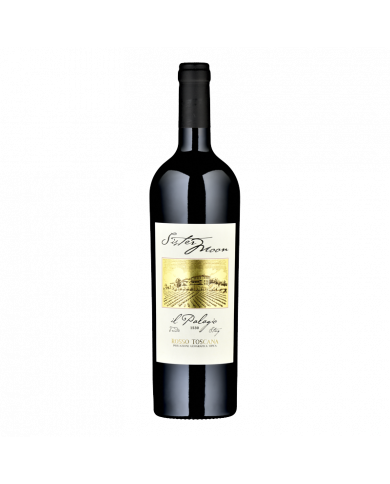
Named after Sting's song "Sister Moon", this was the first Tuscan IGT wine produced at the Palagio. With an alcohol content of 14.9% it ages for 24 months in new French barriques.
€39.65
SKU:
13823
Brand:
Il Palagio
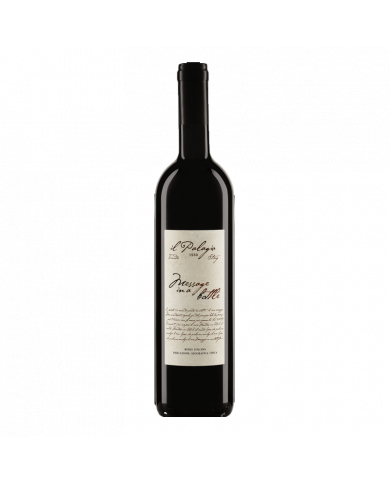
Message in a Bottle now joins our acclaimed wine portfolio. A versatile and highly drinkable Tuscan IGT wine, it goes well with many dishes. With an alcohol content of 13.2% it is aged for 12 months in French oak barrels.
€49.90
SKU:
13820
Brand:
Tenuta Iuzzolini
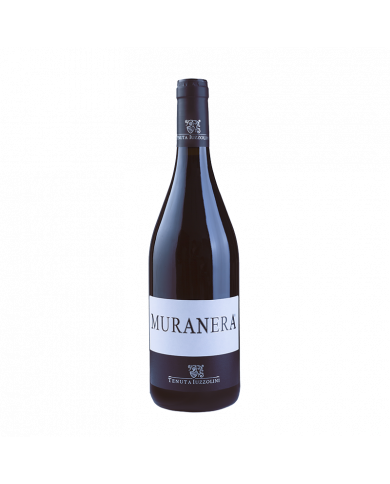
The Muranera of Tenuta Iuzzolini is a purple red wine with clear violet reflections. It has an intense aroma, with fruity, sweet and ripe scents, balsamic and floral notes of violet on a slight tobacco accent at the end. Grapes: Gaglioppo, Magliocco, Cabernet Sauvignon and Merlot.
SKU:
13819
Brand:
Cantina Zaccagnini
Color: Ruby red of particular consistency and brilliance with garnet reflections. Smell: Intense aroma, typical of the vine and of particular complexity and finesse. It expresses itself with floral notes of violet and fruity notes of crunchy cherry. Nuances of white pepper and vanilla emerge which spread out with tertiary hints of undergrowth. Taste: Full body and supported by fine-grained tannins well balanced with the taste of the wood.
€12.92
SKU:
13810
Brand:
Cantina Zaccagnini
Zaccagnini's Montepulciano d'Abruzzo "Tralcetto" is an immediate, simple, direct red wine, able to best express the fruity part of the Abruzzo red grape. We can smell aromas of ripe red fruit, cherries and undergrowth. In the mouth it is full, soft, fresh and well balanced.
€54.66
SKU:
13809
Brand:
Cantina Zaccagnini
Zaccagnini's Montepulciano d'Abruzzo "Tralcetto" is an immediate, simple, direct red wine, able to best express the fruity part of the Abruzzo red grape. We can smell aromas of ripe red fruit, cherries and undergrowth. In the mouth it is full, soft, fresh and well balanced.
€24.77
SKU:
13808
Brand:
Faraone
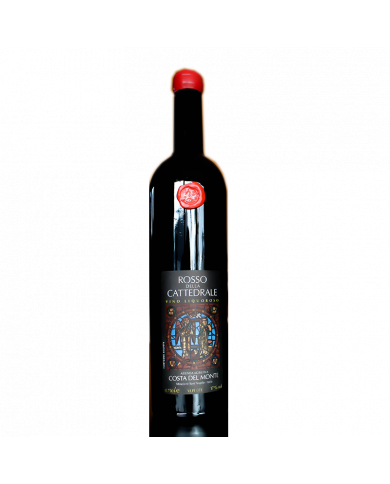
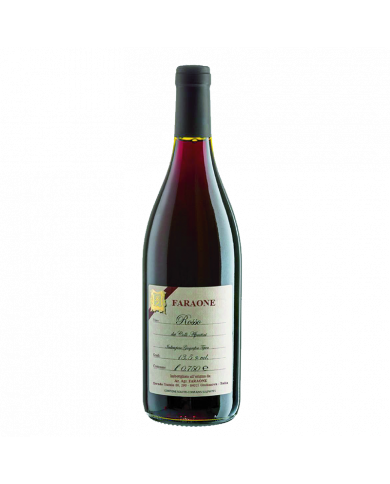
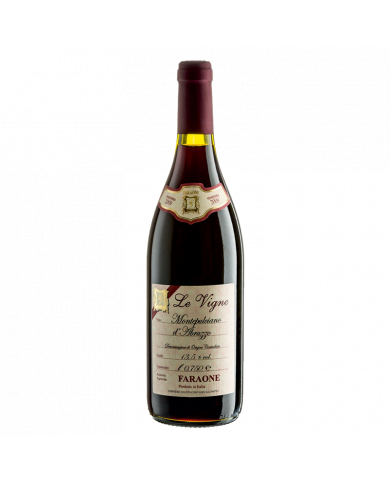
Red of the Pharaoh cathedral. Overripe Montepulciano harvested in November, when possible, aged in oak barrels and blended with different vintages, therefore always around 17 degrees and with a slight residual sugar.
€29.38
SKU:
13804
Brand:
Faraone
It is the simple "Red" wine of our territory; we are close to the Marches and therefore it is natural to have here in addition to Montepulciano also Sangiovese which is the most typical red grape of the province of Ascoli with which we border.
€11.79
SKU:
13798
Brand:
Faraone
Produced with Montepulciano grapes harvested in mid-October, it underwent more than 15 days of maceration in steel vats. It was then left to mature for 5 years in large 30 hl wooden barrels. It was bottled in the spring of 2018. One of the best vintages, its validity is estimated for over twenty years.
€57.22
SKU:
13796
Brand:
Faraone
Produced with Montepulciano grapes harvested in mid-October, it underwent more than 15 days of maceration in steel vats. It was then left to mature for 5 years in large 30 hl wooden barrels. It was bottled in the spring of 2018. One of the best vintages, its validity is estimated for over twenty years.
€27.40
€28.79
SKU:
13793
Brand:
Faraone
It is produced with Montepulciano grapes, fermented at a controlled temperature in steel vats. After fermentation it underwent refinement in large wooden barrels for a period of 24 months and was then bottled. It is wine for 15/20 year olds.
€12.85
SKU:
13790
Brand:
Cantina Lepore
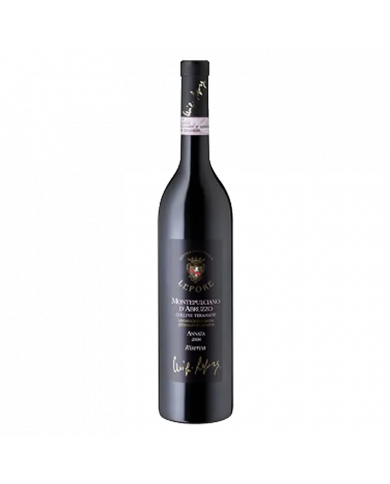
An intense garnet red wine, rich bouquet of ripe fruit with spicy notes and a pleasant hint of almond. In the mouth it is full, austere, rightly tannic, soft and balanced, with a typical final liquorice scent.
€22.06
SKU:
13785
Brand:
Cantina Lepore
An intense garnet red wine, rich bouquet of ripe fruit with spicy notes and a pleasant hint of almond. In the mouth it is full, austere, rightly tannic, soft and balanced, with a typical final liquorice scent.
€23.76
SKU:
13784
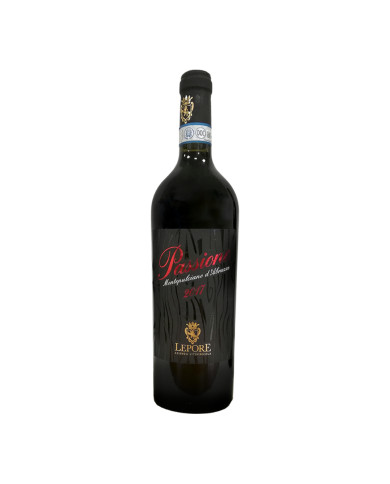
Brand:
Cantina Lepore
Ruby red color tending to garnet. Rich, complex and persistent bouquet. Warm, rightly tannic, intense and surprisingly persistent.
€11.79
SKU:
13782
Brand:
Torre dei Beati
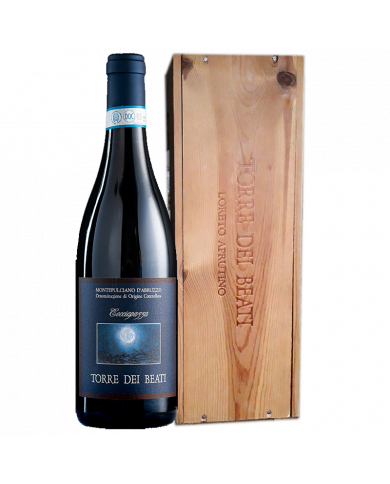
Deep ruby red color, with violet reflections. The nose is characterized by floral aromas, aromas of red fruit, spicy notes of black pepper, balsamic hints and nuances of licorice, chocolate and tobacco. On the palate it denotes decidedly important body and structure. It is warm, with a broad and persuasive bouquet, characterized by soft and evolved tannins. Long and persistent finish.
It is a wine of great structure and aromatic intensity, it goes well with main courses of important roasted or stewed red meats and with game.
€90.52
SKU:
13781
Brand:
Torre dei Beati
Deep ruby red color, with violet reflections. The nose is characterized by floral aromas, aromas of red fruit, spicy notes of black pepper, balsamic hints and nuances of licorice, chocolate and tobacco. On the palate it denotes decidedly important body and structure. It is warm, with a broad and persuasive bouquet, characterized by soft and evolved tannins. Long and persistent finish.
It is a wine of great structure and aromatic intensity, it goes well with main courses of important roasted or stewed red meats and with game.
SKU:
13780
Brand:
Torre dei Beati
Intense ruby red color, with violet reflections. The olfactory profile is characterized by aromas of ripe red fruit, spicy notes, balsamic hints and nuances of licorice, chocolate and tobacco. On the palate it has an important structure. It is ample, warm, enveloping, characterized by well-present but soft and evolved tannins. Long and persistent finish.
The Montepulciano d'Abruzzo DOC “Cocciapazza” of Torre dei Beati goes well with main courses of important roasted red meats or with game.
€79.25
SKU:
13779
Brand:
Torre dei Beati
Intense ruby red color, with violet reflections. The olfactory profile is characterized by aromas of ripe red fruit, spicy notes, balsamic hints and nuances of licorice, chocolate and tobacco. On the palate it has an important structure. It is ample, warm, enveloping, characterized by well-present but soft and evolved tannins. Long and persistent finish.
The Montepulciano d'Abruzzo DOC “Cocciapazza” of Torre dei Beati goes well with main courses of important roasted red meats or with game.
€61.49
SKU:
13778
Brand:
Torre dei Beati
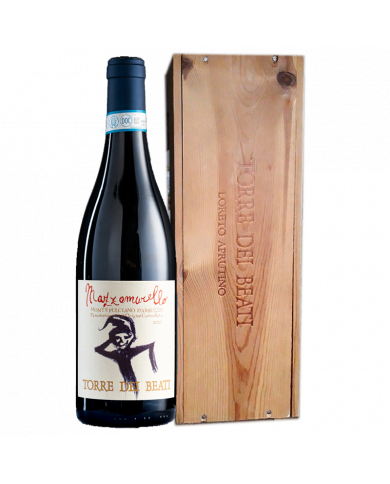
It is the first wine produced by our company. An elegant and personal interpretation of the Montepulciano of our territory, it is obtained from gradual harvests, followed by further selection on the table of choice, carried out throughout the Loreto Aprutino vineyard.
€13.83
SKU:
13772
Brand:
Dino Illuminati
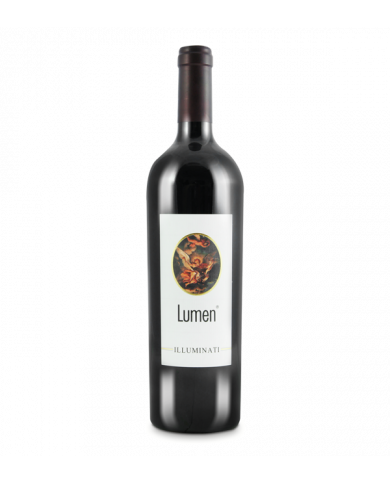
Vintage: 2017 Denomination: VQPRD Controguerra Rosso Doc Riserva Lumen Grapes: black berried Alcohol: 14.50% vol Format: 75cl Pairings: A wine of great longevity, it is produced only in the best years. It goes well with red meats, game, lamb, kid and spicy cheeses.
€33.65
SKU:
13771
Brand:
Dino Illuminati
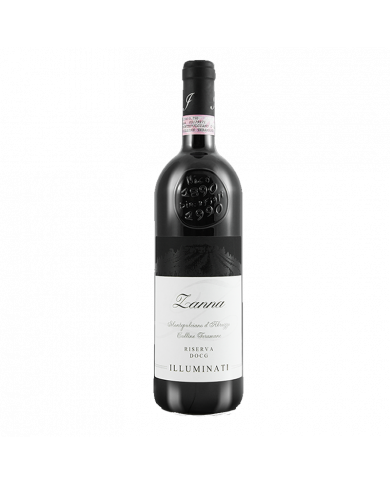
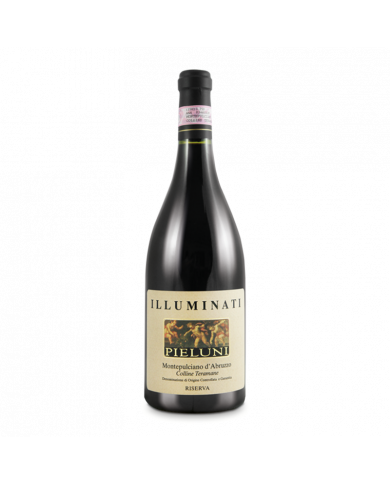
Vintage: 2017 Denomination: Montepulciano d'Abruzzo Colline Teramane DOCG Riserva Grapes: Montepulciano 100% Alcohol: 14.00% vol Format: 150cl Pairings: It is enhanced with red meats, game, truffles, mature cheeses, gorgonzola.
€27.16
SKU:
13769
Brand:
Dino Illuminati
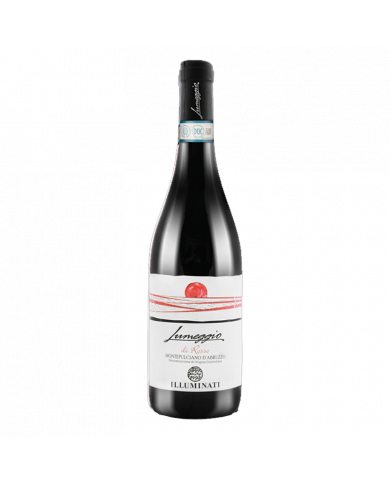
Vintage: 2020 Appellation: VQPRD Montepulciano d'Abruzzo Doc Lumeggio di Rosso. Grapes: Montepulciano 100% Alcohol: 13.50% vol Format: 75cl Pairings: It goes well with roasted red meats, braised meats, game, noble poultry, semi-mature cheeses; ideal with lamb and kid meat.
€8.70
SKU:
13766
Brand:
Dino Illuminati
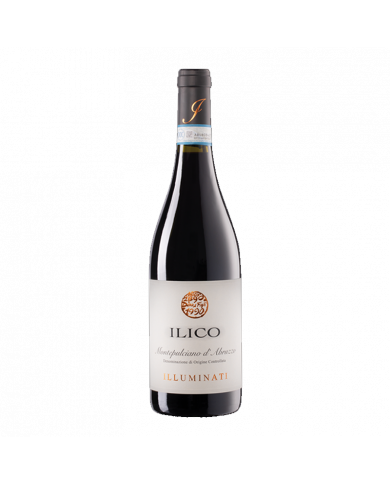
Vintage: 2019 Designation: VQPRD VQPRD psr Montepulciano d'Abruzzo Doc Ilico Grapes: Montepulciano 100% Alcohol: 13.50% vol Format: 75cl Pairings: It goes well with roasted red meats, braised meats, game, noble poultry, semi-aged cheeses; ideal with lamb and kid meat.
€11.27
SKU:
13761
Brand:
Dino Illuminati
Vintage: 2017 Denomination: Montepulciano d'Abruzzo Colline Teramane DOCG Riserva Grapes: Montepulciano 100% Alcohol: 14.00% vol Format: 150cl Pairings: It is enhanced with red meats, game, truffles, mature cheeses, gorgonzola.
€57.22
SKU:
13760
Brand:
Dino Illuminati
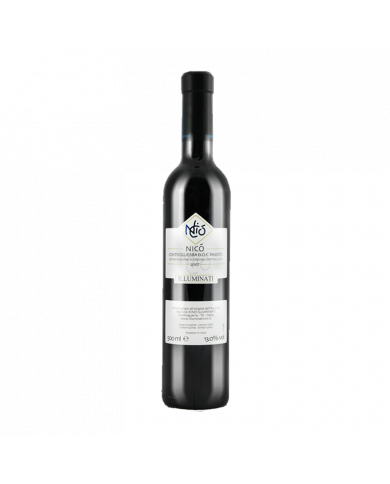
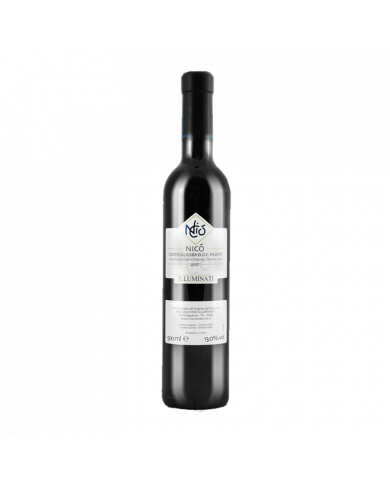
Year: 2007 Designation: VQPRD Controguerra Doc Passito Nicò Grapes: Montepulciano 100% Alcohol: 13.00% vol Format: 50cl Pairings: It goes well with dry desserts, sweet tarts, shortcrust pastry. Also suitable for aged cheese, pecorino. Excellent after a meal, meditation wine.
SKU:
13759
Brand:
Dino Illuminati
Year: 2007 Designation: VQPRD Controguerra Doc Passito Nicò Grapes: Montepulciano 100% Alcohol: 13.00% vol Format: 50cl Pairings: It goes well with dry desserts, sweet tarts, shortcrust pastry. Also suitable for aged cheese, pecorino. Excellent after a meal, meditation wine.
€28.18
€46.18
€18.96
€9.05
SKU:
13754
Brand:
Pasetti
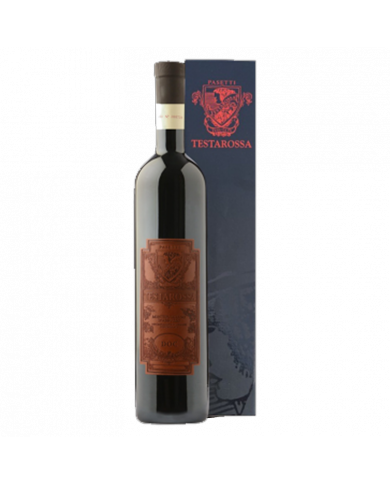
Montepulciano d'Abruzzo Pasetti '' Testarossa '' represents the company's desire to remain strongly linked to traditions and family history. The historic label was created to celebrate the superb beauty of the women of the Pasetti family, having red hair.
€111.02
SKU:
13753
Brand:
Pasetti
Montepulciano d'Abruzzo Pasetti '' Testarossa '' represents the company's desire to remain strongly linked to traditions and family history. The historic label was created to celebrate the superb beauty of the women of the Pasetti family, having red hair.
€49.00
SKU:
13751
Brand:
Valentini
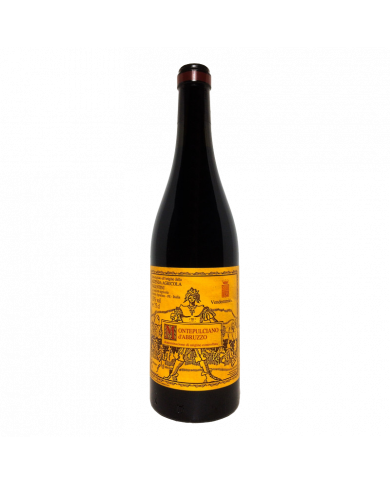
Produced only in years considered excellent and marketed when deemed ready, Montepulcicano Valentini is considered one of the best Italian reds that gives its best with long ageing.
€330.62
SKU:
13749
Brand:
Valentini
Produced only in years considered excellent and marketed when deemed ready, Montepulcicano Valentini is considered one of the best Italian reds that gives its best with long ageing.
SKU:
13748
Brand:
Valentini
Produced only in years considered excellent and marketed when deemed ready, Montepulcicano Valentini is considered one of the best Italian reds that gives its best with long ageing.
SKU:
13730
Brand:
Fattoria Felsina
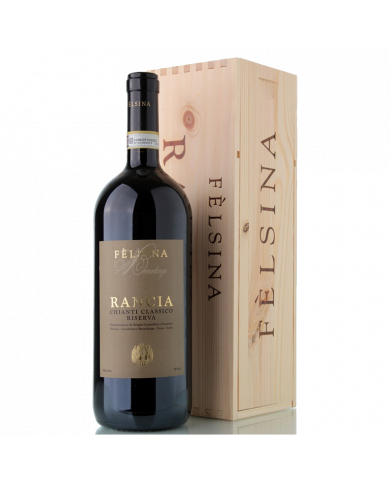
The Rancia vineyard takes its name from the ancient farm that stands next to a pre-existing Benedictine monastery.
€140.91
SKU:
13728
Brand:
Fattoria Felsina
Chianti Classico, 100% Sangiovese from Castelnuovo Berardenga, produced for the first time in 1967. Extremely heterogeneous soils, mirror of the territory, the vineyards develop with south-west exposure at about 320-420 m slm where the wind makes itself felt. The higher ground is rich above all in quartz sandstone, while the land bordering the Colli Senesi area is rich in stratiform sandstone and silt. Since the vineyards are located at different altitudes, the harvest is done at different times but in any case within the first 3 weeks of October.
€19.14
SKU:
13714
Brand:
Spadafora
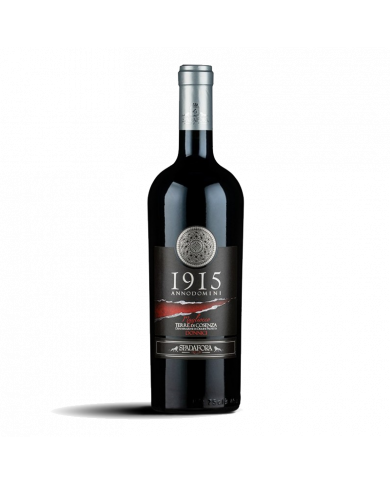
Versatile in food pairings, recommended with succulent and fatty meat dishes, elaborate first courses, sausages and local cured meats. The elegance and sumptuousness of this wine can also be combined at the end of a meal with mature cheese or dark bitter chocolate. Particularly important wine in our production, takes its name from the year in which Particularly important wine in our production, takes its name from the year in which the company was established, 1915 year of domination, when Francesco Spadafora, the company was established, 1915 annodomini, when Francesco Spadafora, four generations ago, began the adventure of our cellar. four generations ago the adventure of our cellar began.
€85.73
SKU:
13710
Brand:
Valle Martello
Ruby red wine with violet reflections and a scent of black cherry and red fruits. It goes perfectly with all the first courses of Mediterranean cuisine, cured meats, aged cheeses and roasts.
€6.75
SKU:
13709
Brand:
Frescobaldi
Witness of an environment that is still uncontaminated and unchanged over time, cradle of breathtaking landscapes, Faunae expresses the essence of Chianti Classico, respecting its territory.
€14.50
SKU:
13708
Brand:
Valle Reale
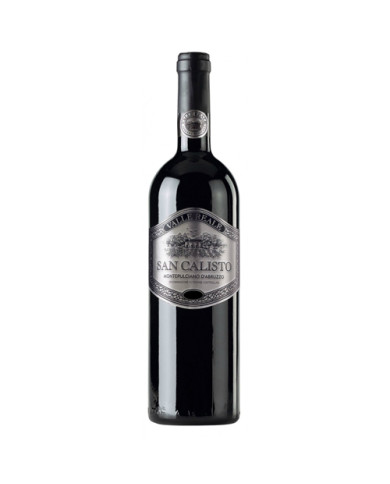
Montepulciano d'Abruzzo "San Calisto" by Valle Reale is an Abruzzo red wine of great territorial charm, with a vigorous and enveloping personality marked by a brushed sip that tells a vigorous freshness, accompanied by well-smooth tannins and intense mineral details.
€88.79
SKU:
13707
Brand:
Valle Reale
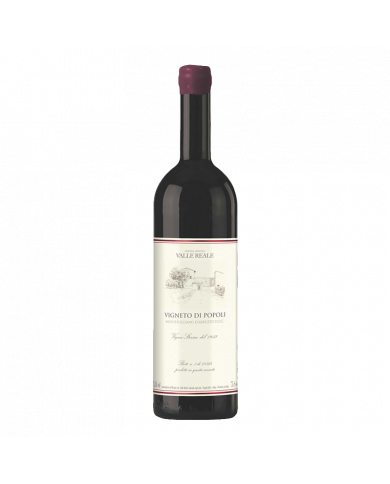
The Montepulciano d'Abruzzo "Vigneto di Popoli" is an intense and structured red wine born from a 70-year-old vineyard and aged in tonneau for 12 months. It is expressed in a deep bouquet of wild berries, black cherries, humus and toasted spices. On the palate it is intense, rich, juicy, marked by a beautiful sapidity, with well integrated tannins.
SKU:
13706
Brand:
Valle Reale
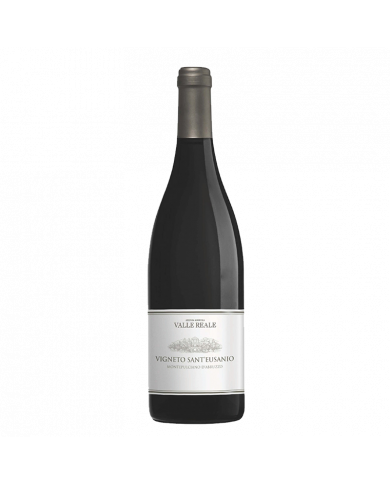
The Montepulciano d'Abruzzo “Vigneto di Sant'Eusanio” is an intense, deep and concentrated red wine, vinified only in steel tanks and has good aging potential. It gives off earthy sensations of undergrowth, moss, roots, wild berry jam and red flowers. The sip is full-bodied, intense, very tasty and with robust tannins.
€68.32
SKU:
13705
Brand:
Nicola Santoleri
Serving temperature 18-20 ° C. Serving suggestions It goes well with important meat courses such as roast, grilled and boiled meats; excellent with lamb.
€102.48
SKU:
13704
Brand:
Nicola Santoleri
Serving temperature 18-20 ° C. Serving suggestions It goes well with important meat courses such as roast, grilled and boiled meats; excellent with lamb.
€54.66
SKU:
13701
Brand:
Cantina Tramin
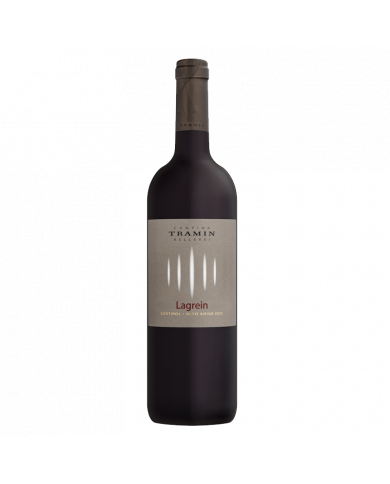
A long winter postponed the awakening of the vine to early April. A drop in temperatures after budding also delayed flowering. Subsequently, the weather remained capricious with a hot June and a humid July which laid the ideal foundations for the start of the maturation. August showed its best side with sunny weeks and exceptionally low night temperatures. Despite some brief downpours at the end of September/beginning of October, the harvest, which began with a delay of approx. ten days than usual and characterized by clearly lower than average volumes, it was marked by numerous warm days and increasingly colder nights.
SKU:
13700
Brand:
Terra D'Aligi
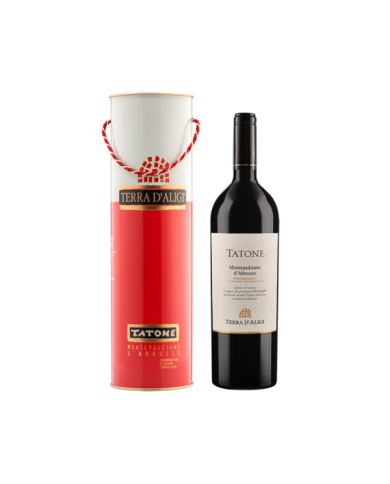
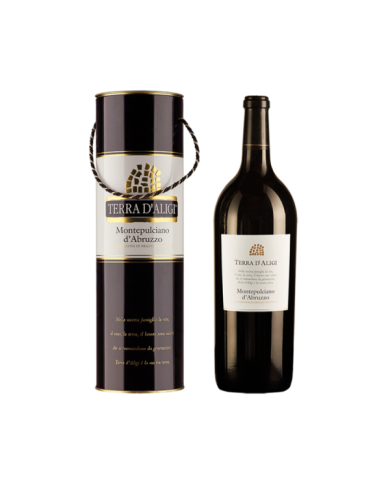
Each family in Abruzzo has its own tatone. Confidential and affectionate appellation for the grandfather, the tatone actually represents a fundamental figure in the traditional family structure, to which age and maturity confer authority, prestige and wisdom. Our Tatone is like this too: a mature and complex Montepulciano dAbruzzo, to which 24 months aging in large Slavonian oak barrels and 3 months in the bottle gives balance and elegance, with aromas of fruit and spices supported by an excellent structure and accompanied by a long persistence. A complex and at the same time authentic wine, like all tatoni tenaciously linked to its traditions and its land: this land of Abruzzo that we cultivate with love and respect, of which we work the grapes with the wisdom of generations of winemakers, using technologies more advanced to protect and enhance its qualities. Our Land of Aligi.
SKU:
13699
Brand:
Terra D'Aligi
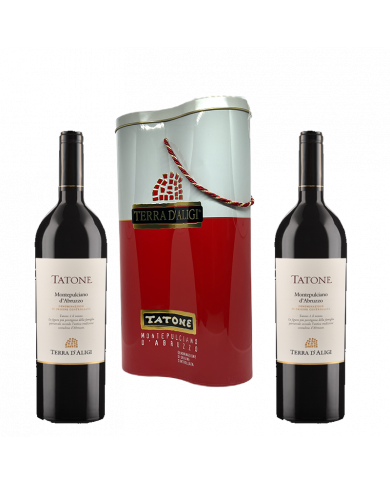
Our most awarded red accompanied by an elegant and vibrant metal case.
€18.20
SKU:
13698
Brand:
Terra D'Aligi
Our most prestigious red accompanied by an elegant metal case.
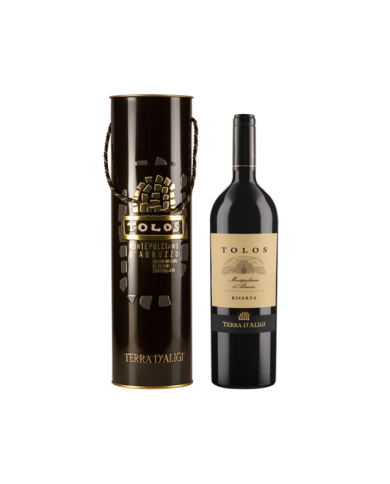
Carefully selected Montepulciano dAbruzzo grapes generate this complex and powerful cru, aged for 18 months in new barriques and for 12 in the bottle, with great structure, elegant, balanced and long persistence. The red decellence in our line of high-level wines, which already express in the name their close link with the land and traditions of Abruzzo.
€24.27
SKU:
13697
Brand:
Terra D'Aligi
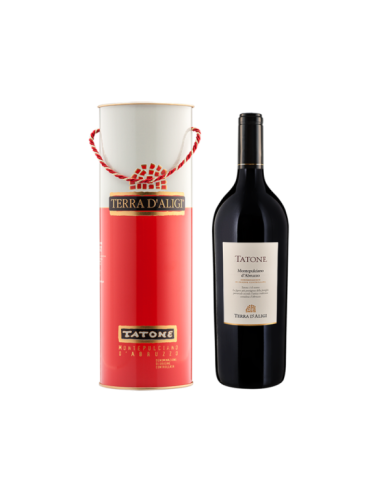
1.5 liter bottle of our most award winning red accompanied by an elegant and lively metal case. Each family in Abruzzo has its own tatone. Confidential and affectionate appellation for the grandfather, the tatone actually represents a fundamental figure in the traditional family structure, to which age and maturity confer authority, prestige and wisdom.
€25.62
SKU:
13696
Brand:
Terra D'Aligi
1.5 liter bottle of the classic Abruzzo red accompanied by an elegant metal case.
€24.77
€44.00
€35.00
€140.06
SKU:
13680
Brand:
San Felice
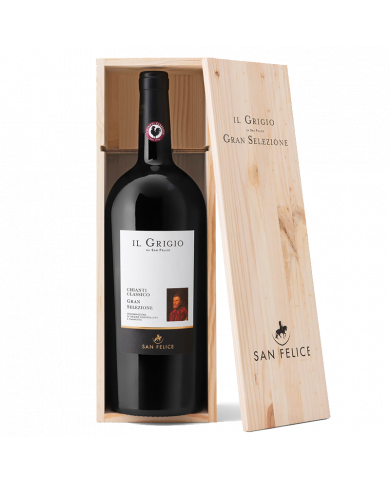
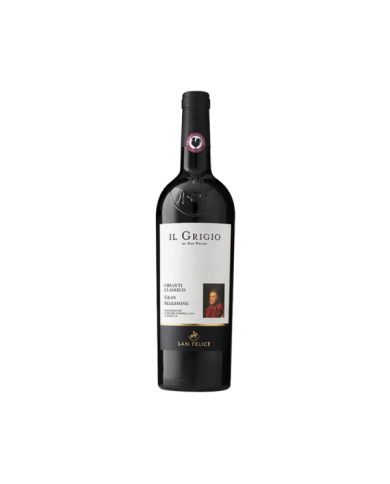
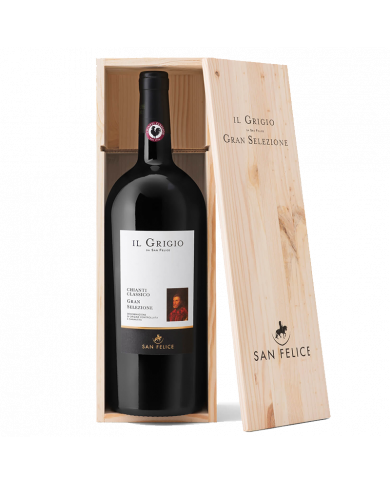
The Grigio Gran Selezione, 80% Sangiovese enriched with ancient indigenous varieties such as Abrusco, Pugnitello, Black Malvasia, Ciliegiolo and Mazzese, is born only from our most suitable soils, which contribute to the complexity of the wine, keeping intact the elegance and expression of the terroir of San Felice .
€74.16
SKU:
13679
Brand:
San Felice
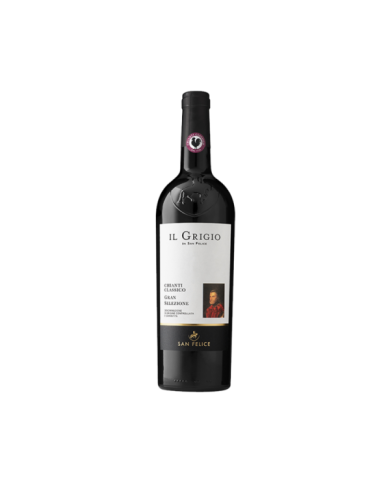
The Grigio Gran Selezione, 80% Sangiovese enriched with ancient indigenous varieties such as Abrusco, Pugnitello, Black Malvasia, Ciliegiolo and Mazzese, is born only from our most suitable soils, which contribute to the complexity of the wine, keeping intact the elegance and expression of the terroir of San Felice .
€68.66
SKU:
13671
Brand:
Antonelli San Marco
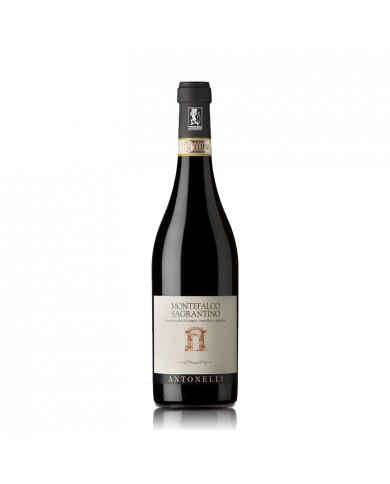
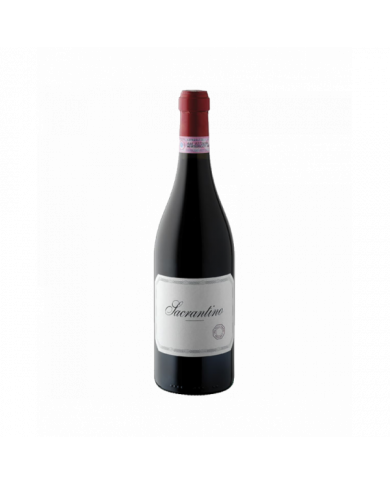
The Sagrantino vine, cultivated for centuries exclusively in Montefalco, seems to have been brought there from Asia Minor by the followers of S. Francesco.
€22.24
SKU:
13664
Brand:
Valentini
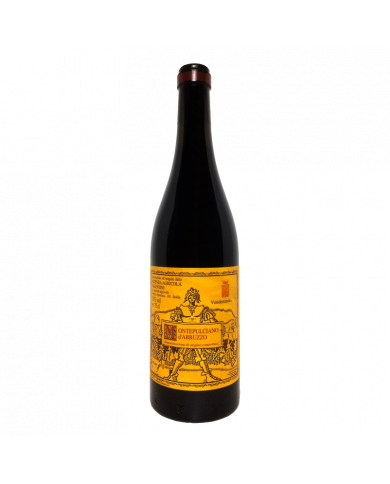
Produced only in years considered excellent and marketed when deemed ready, Montepulcicano Valentini is considered one of the best Italian reds that gives its best with long ageing.
SKU:
13658
Brand:
Valentini
Produced only in years considered excellent and marketed when deemed ready, Montepulcicano Valentini is considered one of the best Italian reds that gives its best with long ageing.
€264.90
SKU:
13657
Brand:
Palazzo Centofanti
The love and passion for cooked wine is lost in the mists of time. A faint memory comes to mind, grandfather Piacentino who at the beginning of summer prepared the oak wood to be seasoned. It was supposed to feed the fires which, under the copper pots, were supposed to slowly cook the must, obtained by pressing the bunches of Montepulciano personally selected by the grandfather. From the refinement and subsequent maturation in wooden barrels, the cooked wine would have been born after a few years from the cooked must
€10.43
SKU:
13656
Brand:
Palazzo Centofanti
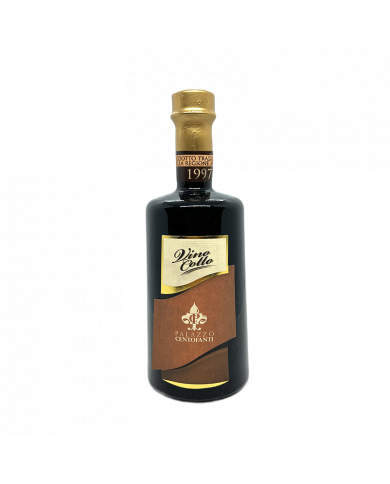
The cooked wine has an authentic taste and is rich in aromas. It comes from Montepulciano grapes, reduced by more than 70% with a boiling process, mixed according to ancient recipes with the flower must, aged 10 years in wooden barrels.
€20.50
SKU:
13655
Brand:
Palazzo Centofanti
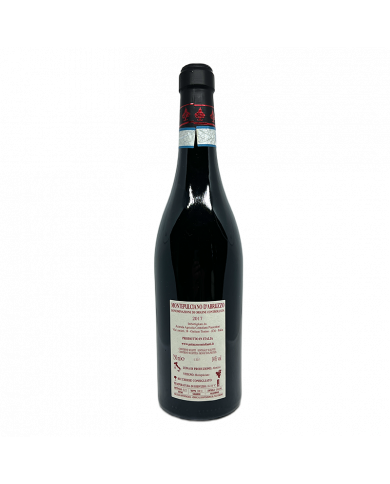
Grapes: Montepulciano 100% - Refinement: In stainless steel tanks, then for 12 months in barriques and then for 12 months in bottle - Gr. 15%
€14.59
SKU:
13652
Brand:
Palazzo Centofanti
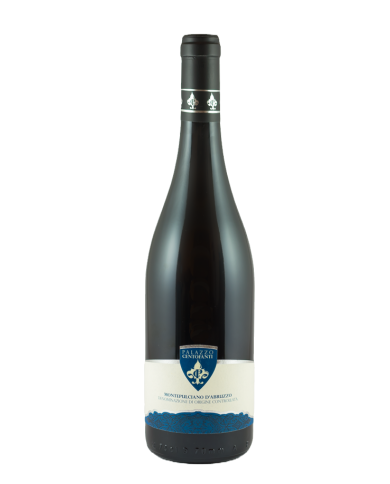
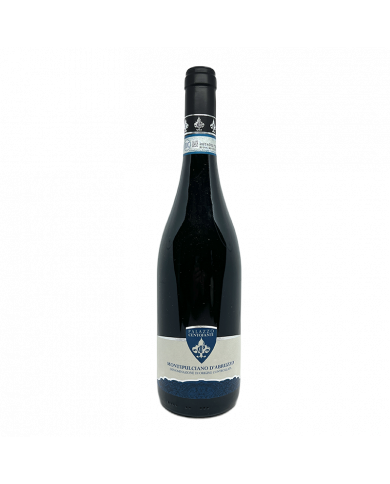
Typology: Rosso doc - Grapes: Montepulciano 100% - Refinement: 20% of the mass in barriques for 16 months, the remainder in steel tanks and then for 6 months in bottle - Gr. 14%
€9.52
€8.54
SKU:
13644
Brand:
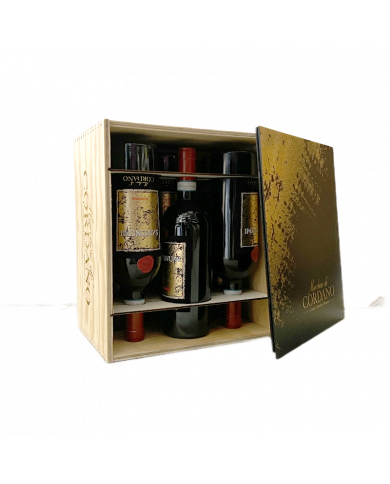
Marchesi de Cordano
€195.90
€186.10
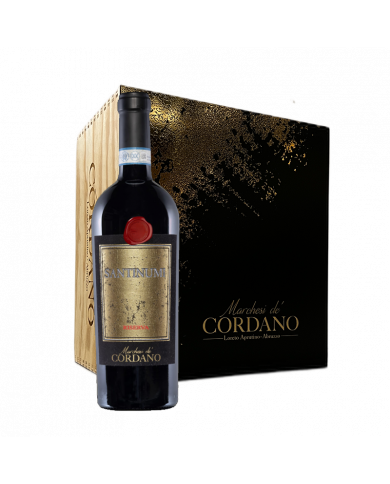
The complexity of this intense ruby red wine, sensual and enveloping, is expressed in the bouquet that immediately recalls withered flowers and red fruit jam. A pleasant spiciness of licorice, black pepper, cloves and vanilla emerges with toasted hints of coffee and tobacco. Maximum Expression: 12-15 years. Vinification: Short drying in the vineyard, permanence of 20 - 22 days on the skins with pumping over in the air, followed by static decanting in large barrels. Subsequently the wine is left to refine for 12 months in 50 hl barrels and 12 months in barriques and then rests for 12 months in the bottle.
€195.90
€186.10
SKU:
13642
Brand:
Fausto Falcone
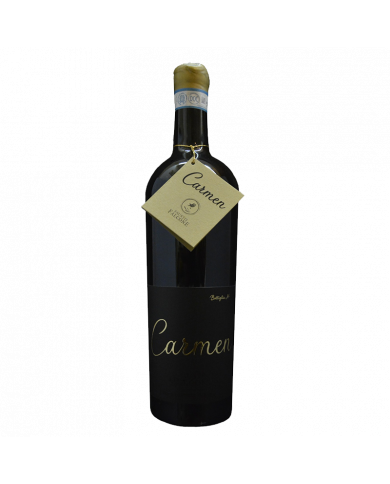
Carmen is a wine that represents the exclusive bond.
meticulous hand-picking of the Montepulciano bunches. Thermo-guided fermentation.
€39.90
SKU:
13640
Brand:
Valle Reale
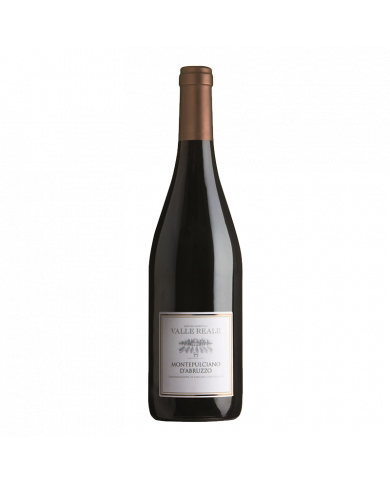
Valle Reale's Montepulciano d'Abruzzo is a deep and juicy red wine endowed with vital energy, produced with vinification only in steel tanks. It is expressed in an aromatic kit of red flowers, berries, bark, roots, humus and undergrowth. On the palate it is rich and vibrant, with freshness and a long savory trail.
€49.60
€68.66
€33.73
SKU:
13627
Brand:
Cantina Orsogna
VIEW Intense ruby red with slight purple hues, tendency to garnet with aging. SMELL Aromas of red fruits, spices, intense, ethereal. TASTE Full, dry, harmonious, rightly tannic.
€9.15
€24.58
€19.47
€12.49
SKU:
13622
Brand:
Cantina Herero
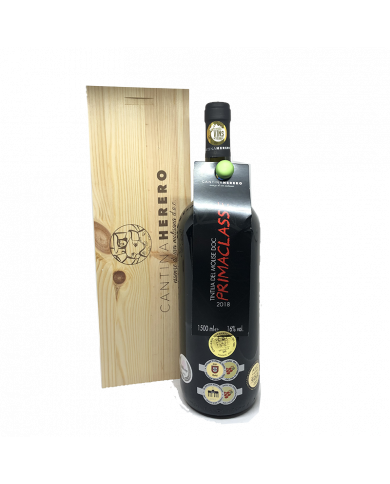
This wine produced exclusively in Molise, in a limited edition in particular favorable vintages, unique for alcohol content, comes from a careful collection and manual selection in the vineyard of very ripe grapes grown at 550 meters above sea level It is obtained from the native grape of the region: the Tintilia , recently revalued variety. It is a fine and elegant wine that is best expressed with “important” dishes, braised meats, game, red meats, sausages and aged cheeses. Even drunk alone it is a worthy ending to an evening meal or it can be the companion of a pleasant meditation.
€76.86
SKU:
13620
Brand:
De Fermo
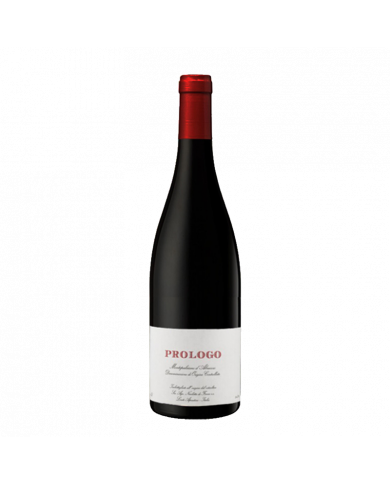
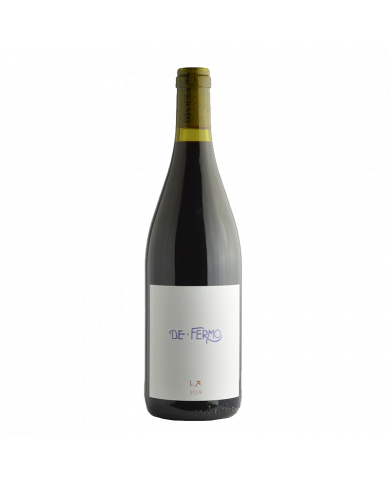
De Fermo's "Prologue" is a Montepulciano d'Abruzzo that comes from a unique and singular terroir: between the Adriatic Sea and the Gran Sasso, between flavor and freshness, between fertility and evolutionary potential.
€34.16
SKU:
13617
Brand:
Cascina del Colle
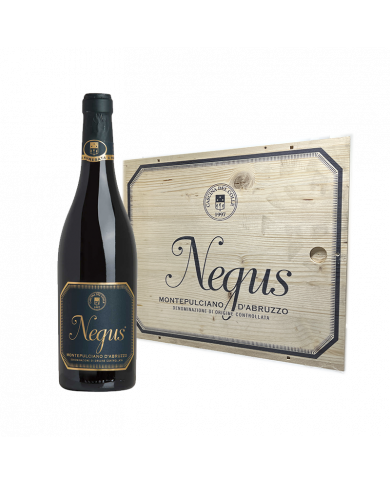
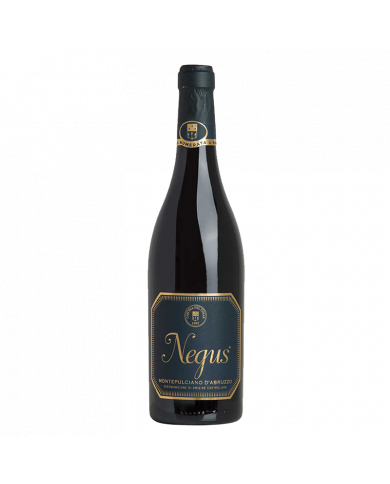
The Negus red wine from the Cascina del Colle winery is a wine that arouses impressions, evokes memories and pleasant sensations of harmony and peace. The name Negus recalls the sovereign figure of the family grandparents.
€272.44
SKU:
13614
Brand:
Carpineto
€5.98
€4.78
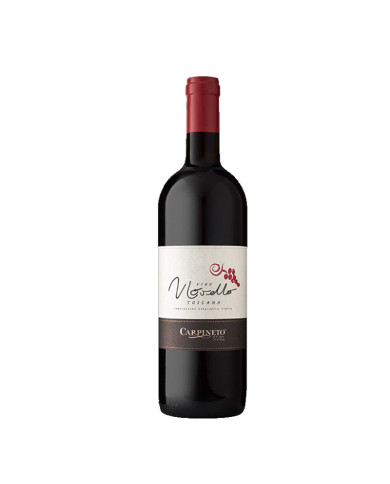
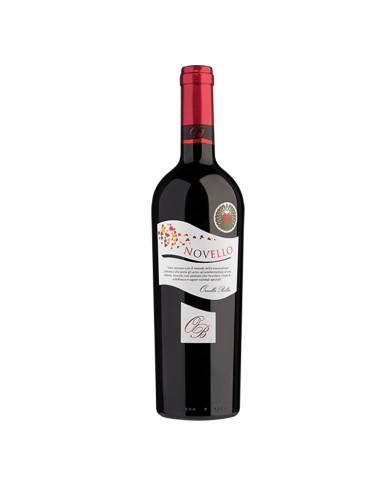
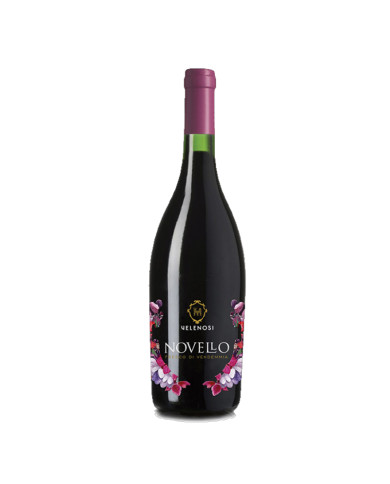
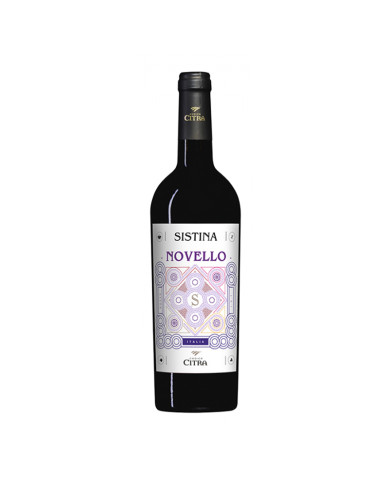
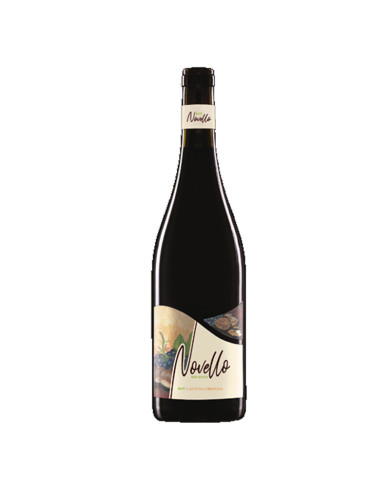
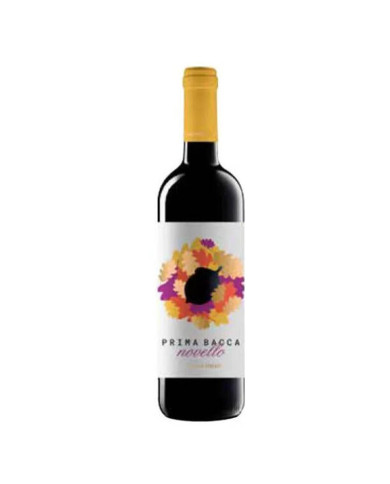
Novello wine is the first product to be consumed from the harvest. However, by novello we do not mean only the new wine of the vintage, but the wine produced with particular techniques, designed to give those peculiar aromas and those characteristics of softness and roundness that make it suitable for immediate consumption.
SKU:
13613
Brand:
Azienda Agricola Zeni
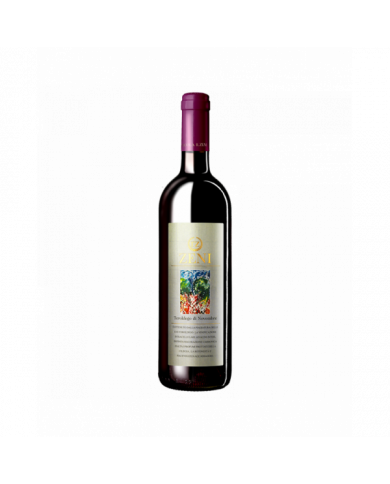
Intense ruby red colour. The nose is fragrant with an overflowing fruitiness of ripe cherries. On the palate it is warm and intriguing, with a pleasant sensation of softness. Serving temperature 12°-14°C.
SKU:
13609
Brand:
Casalbordino
The new OTTOBRATA is ready to be tasted, in combination now typical with roasted chestnuts, a real cuddle during the autumn
SKU:
13608
Brand:
Pieropan
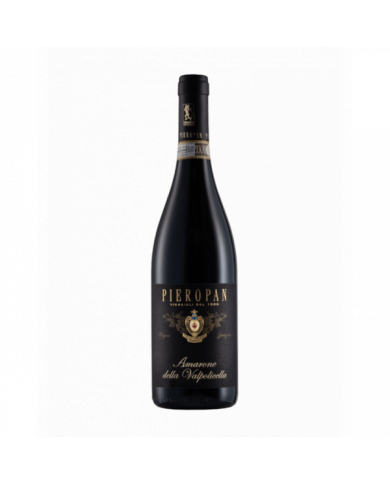
Amarone is the symbolic wine of Valpolicella and represents an exciting challenge for the Pieropan company. This wine was born from the family's desire to compete with the unique territory of Valpolicella, in Cellore di Illasi. Amarone realizes the dream of an important wine, rich and structured, but also elegant and refined, a distinctive element of the wines of the Pieropan company.
€62.77
Disponibile dal 31 ott 2022
SKU:
13607
Brand:
Codice Citra
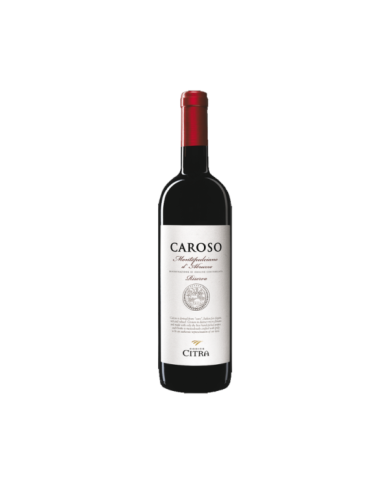
With an intense and deep red color, with a complex bouquet, in which hints of red fruit and spices stand out, after aging in steel and barrique. The flavor is full, dry, harmonious and pleasantly tannic. It goes very well with red meats, game and aged cheeses.
€5.69
SKU:
13606
Brand:
Fantini Farnese
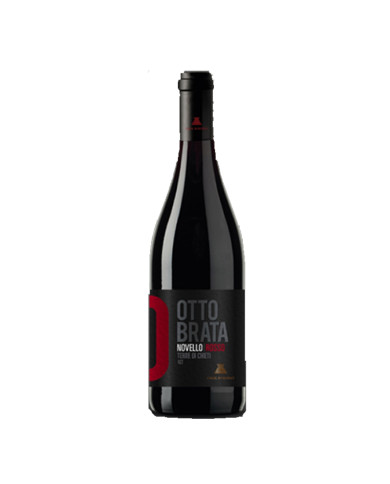
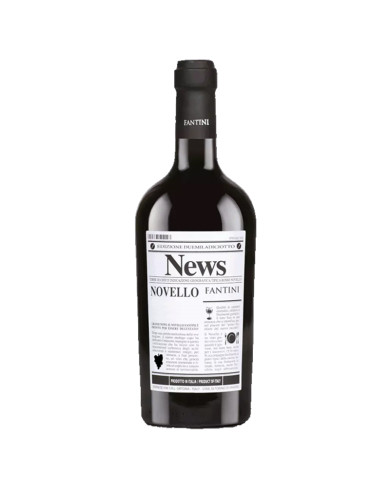
Novello Fantini Terre di Chieti Farnese, a first-class red wine comes into the glass. It has a wonderfully brilliant ruby red colour. The perfume inspires notes of black currants, black cherries, morello cherries and plums. It is precisely its fruity nature that makes this wine so special.
SKU:
13605
Brand:
Torri Cantine
Wine obtained from a carbonic maceration of the grapes. With a fresh and light taste, ready to sip with tasty meats and roasted chestnuts.
€9.44
spedizioni dal 31 ottobre 2022
SKU:
13604
Brand:
Fattoria le Pupille
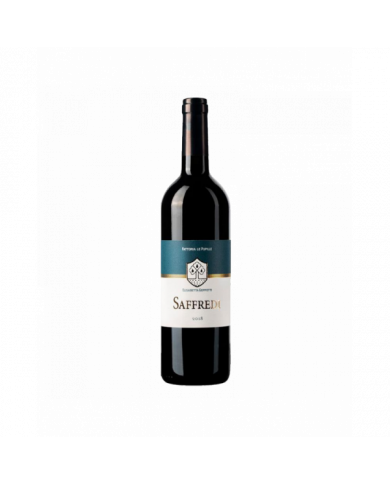
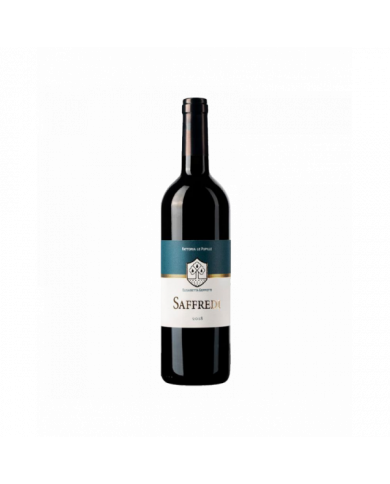
Saffredi is a robust, rich and complex Supertuscan, produced with a Bordeaux blend and aged in barriques for 18 months. Ample and intense hints of berries, spices and balsamic herbs emerge from a round and velvety texture, of great balance and persistence: an exuberant expression of the Tuscan Maremma
€89.67
€25.62
30 Novembre 2022
SKU:
13600
Brand:
Scacciadiavoli
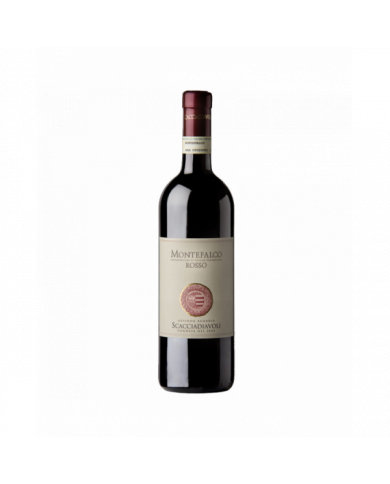
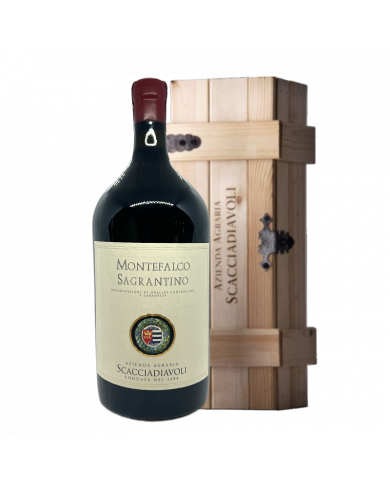
Excellent wine. Intense ruby red color, full, elegant bouquet with hints of cherry, soft and voluminous flavor. In the ancient tradition of the Montefalco area, after having selected the grapes for the production of Montefalco Sagrantino, all the other red varieties were picked for the composition of a fresher and easy-to-match wine. Scacciadiavoli is inspired by this tradition and perfects it by adding that touch that makes this wine even more lovable.
€10.72
dal 1 maggio 2022
SKU:
13599
Brand:
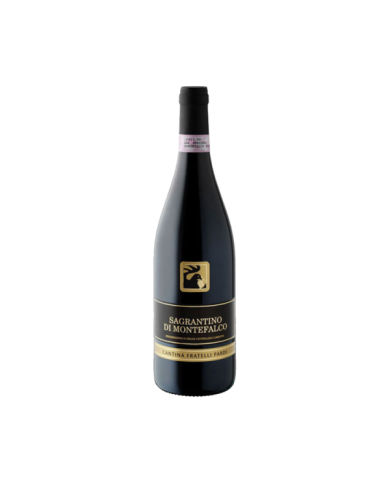
Cantina Fratelli Pardi
Alcoholic and malolactic fermentation in stainless steel.
Aging in 26 hl French and Slovenian oak barrels for 18 months followed by 9 months in steel.
€18.65
dal 1 giugno 2022
SKU:
13598
Brand:
Fattoria le Pupille
Saffredi is a robust, rich and complex Supertuscan, produced with a Bordeaux blend and aged in barriques for 18 months. Ample and intense hints of berries, spices and balsamic herbs emerge from a round and velvety texture, of great balance and persistence: an exuberant expression of the Tuscan Maremma
€93.12
SKU:
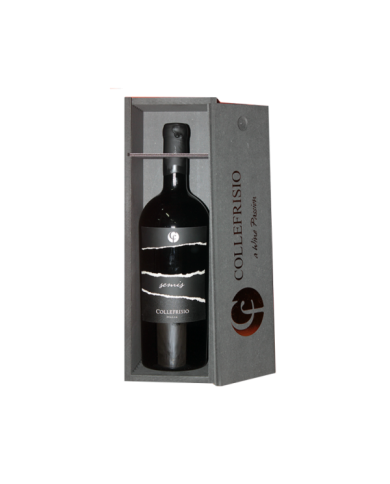
13595
Brand:
Collefrisio
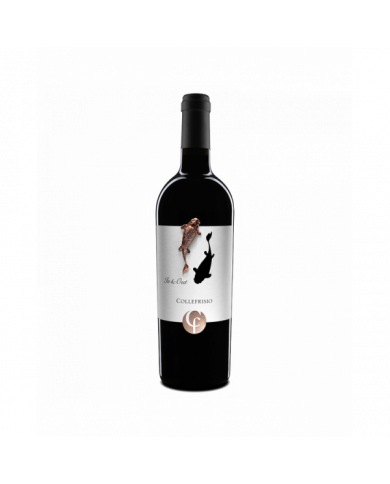
100% Montepulciano d'Abruzzo, it has a dark garnet red color with violet reflections. The nose welcomes us with hints of berries, pomegranate, violet, black truffle, but also spicy notes of pepper. Soft and velvety in the mouth, a wine of great elegance and persistence.
€28.94
€6.38
SKU:
13591
Brand:
Cantina Fratelli Pardi
Ruby red in the glass, with important garnet reflections. The nose, ripe and fruity, recalls sunsweet plums, dark cherries in jam and sour cherries in alcohol, before veering towards notes of camphor, dark chocolate, maple syrup and lavender. Intense in the mouth, characterized by a well-present tannic texture but of excellent quality. Full-bodied, warm and long in persistence. Perfect with venison or venison, it should be tried together with leg of roe deer with aromatic herbs.
€31.96
dal 1 giugno 2023
SKU:
13587
Brand:
De Fermo
The "Concrete" is a red wine with a juicy and fresh profile, produced by the De Fermo winery, an artisan reality located in the prestigious terroir of Loreto Aprutino, between the Gran Sasso and the Adriatic Sea.
€16.23
€17.35
€41.50
€23.14
€20.67
SKU:
13572
Brand:
Praesidium
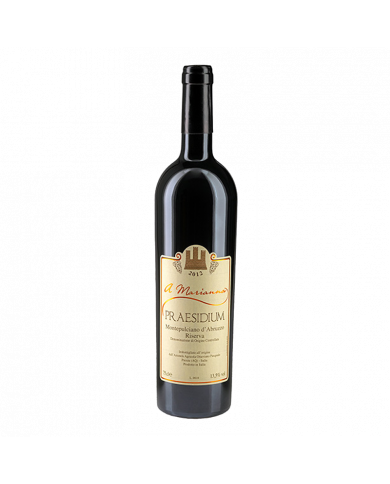
From the grapes of our oldest vineyards, which are now over half a century old, and from a prolonged maturation in oak, Montepulciano Riserva A Marianna is born. Rich in body and structure, it goes well with red meats and long-aged cheeses of the Abruzzo culinary tradition. It is also perfect as a meditation wine.
€45.36
SKU:
13570
Brand:
Praesidium
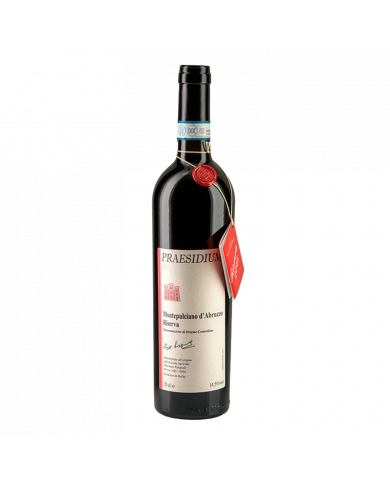
From the maceration in contact with the skins of the Montepulciano d'Abruzzo grapes and from the long period of maturation, the Reserves are born, long-lived and complex reds. A wide selection of Reserves is available starting with the 1990 vintage. They go wonderfully with lamb, kid, pecorino cheese, game and all the traditional dishes of the Abruzzo hinterland
€25.69
SKU:
13569
Brand:
Villa Medoro
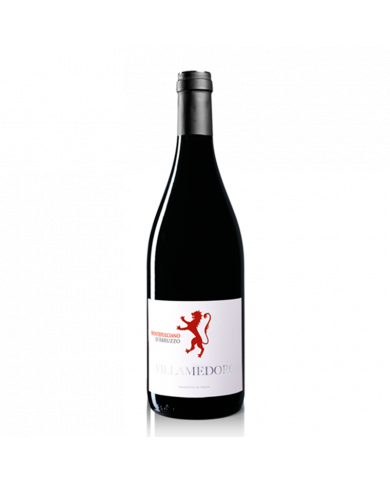
Montepulciano d Abruzzo Villa Medoro presents itself to the eye with a ruby red color with orange reflections, from the glass it releases a wide range of aromas, from wild black cherry to floral nuances of dried violet, aromatic herbs, locust beans and chocolate. In the mouth it glides powerful and warm, rightly tannic, with a pleasantly almondy finish.
€8.10
SKU:
13568
Brand:
Villa Medoro
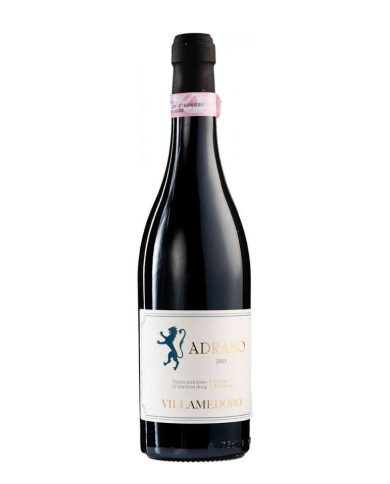
Montepulciano d'Abruzzo "Adrano" was born on the Teramo hills and expresses the Abruzzo terroir with elegant complexity. It is a full-bodied red aged in new barriques for 12 months. The bouquet is broad, with notes of black cherries, orange and licorice; the warm, powerful and structured sip
€19.03
SKU:
13567
Brand:
Villa Medoro
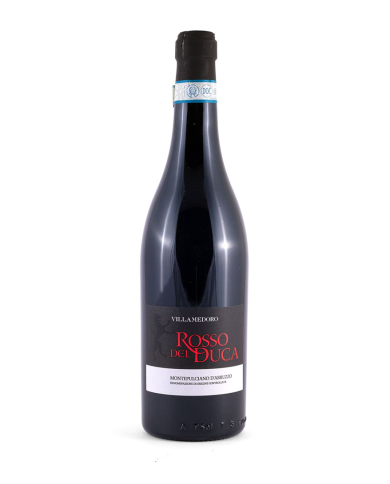
The Montepulciano d'Abruzzo Rosso del Duca produced by the renowned Abruzzo winery Villa Medoro is an excellent wine, which comes from grapes harvested in a vineyard cultivated in the countryside of Atri, in an area with the Montepulciano d'Abruzzo DOC denomination.
€14.79
SKU:
13565
Brand:
Orlandi Contucci Ponno
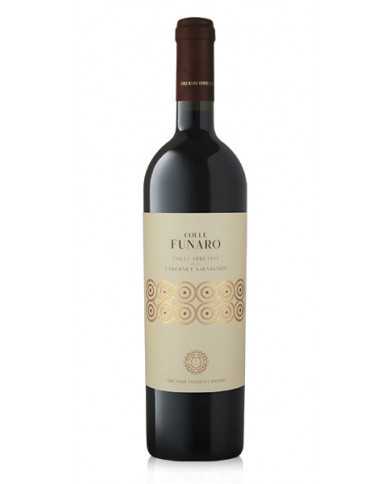
It comes from the Colle Funaro vineyards, perfectly exposed to the south and to the evening breezes coming from the Gran Sasso. The hilly soil with a mixture similar to the graves of Bordeaux: calcareous clay with a gravelly background is the most suitable for the production of this vine
€15.74
SKU:
13549
Brand:
Fattoria Italiana Martelli
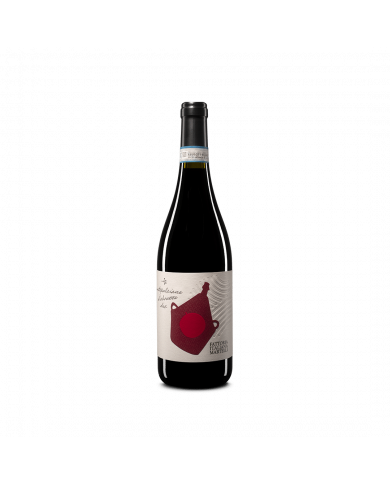
Organoleptic characteristics: View: intense dark red with violet reflections Smell: fruity with hints of plum jam, blackberries and black cherries Taste: full harmonious with long persistence.
€6.19
€5.57
€44.84
€8.20
SKU:
13536
Brand:
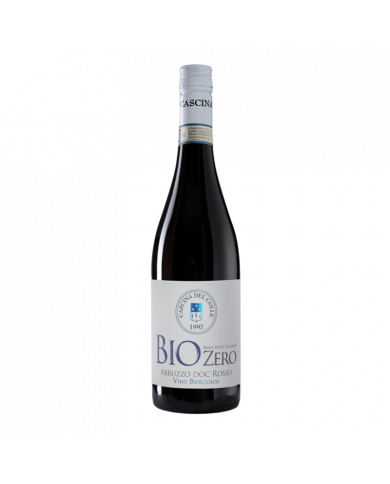
Cascina del Colle
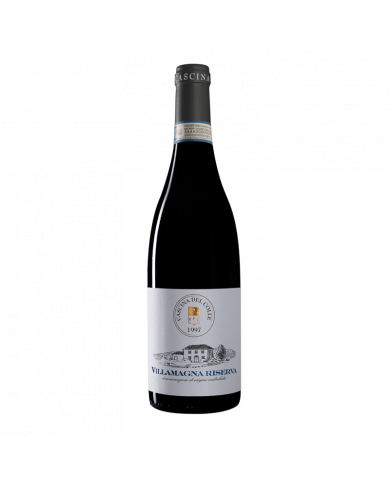
Villamagna DOC is a red wine from Abruzzo with a great structure. Produced with 100% Montepulciano grapes. Maceration in contact with the skins for 15/20 days, followed by aging in concrete for 12 months. The characteristics of this red wine The color is ruby red with violet reflections. The scent is fruity and floral with notes of violet and cherry. On the palate it is fruity, pleasantly tannic and velvety with good aromatic persistence. Recommended pairings while tasting this red wine Excellent with dishes based on red meats, even structured ones. To be opened at least 1 hour before serving; serve at a temperature of 18°C in a large wine glass.
€12.08
SKU:
13535
Brand:
Cascina del Colle
Generations of Villamagna DOC
The Villamagna Riserva DOC Invasione is a red wine from Abruzzo with a great structure. Produced with 100% Montepulciano grapes. Maceration on the skins for 15/20 days in steel tanks followed by refinement in second passage barriques for 6/8 months.
€17.20
SKU:
13533
Brand:
Cascina del Colle
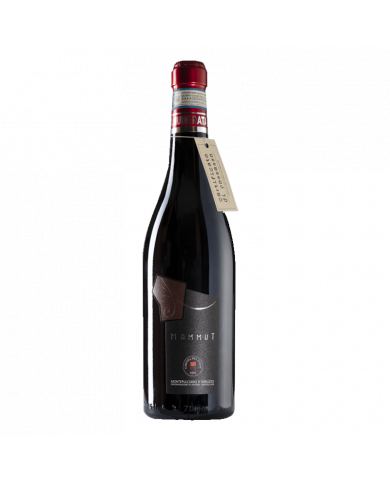
Why Mammut From the archaeological discovery of a Mammut tusk in the second half of the 1960s at the point where the current company "La Cascina del Colle " was built. Hence the idea of a lively, powerful and majestic wine
€21.23
SKU:
13532
Brand:
Marchesi de Cordano
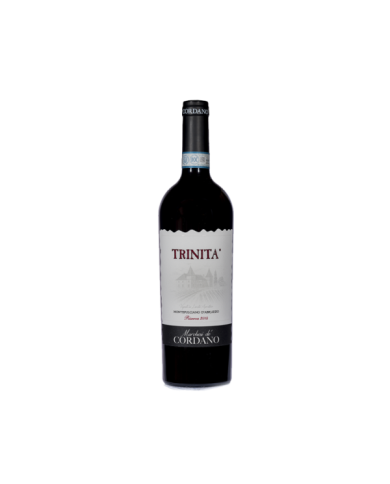
Intense and complex, at the first approach it is naturally expressed with ripe red fruit but then strikes for the intensity of the tertiaries: green pepper, coffee, licorice and nutmeg. A full-bodied and rightly tannic wine with a long persistence and great elegance. Maximum Expression: 8-10 years. Vinification: Permanence of 18 days on the skins with pumping over in the air, followed by static decantation in large barrels. The wine is aged for 12 months in barriques and then rests for 12 months in the bottle
€17.69
SKU:
13498
Brand:
Ferrari
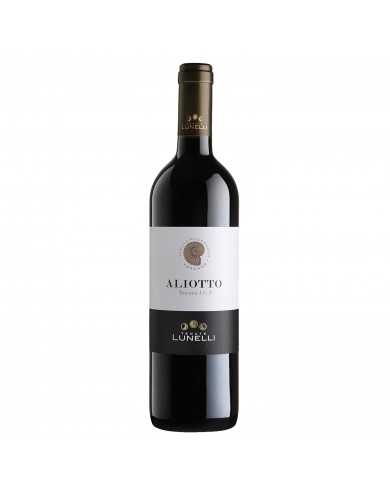
The Toscana Rosso Aliotto of Tenute Lunelli was born in vineyards located in the Podernovo estate, in the municipality of Terricciola, in the extraordinary terroir of the Pisan hills.
€10.31
SKU:
13495
Brand:
Scacciadiavoli
The color is deep, the bouquet is sensual and the body is vigorous. Wine whose refinement is appreciated when young, when fruit and spices blend with the taste of wood, in which Sagrantino has been elevated. But it is after a few years that its success is fully appreciated, when balsamic notes intervene and the tannins soften: thus we discover a wine with a great personality. Montefalco Sagrantino DOCG is suitable for long aging: 20 and more years. Rich in polyphenols which have antioxidant and therefore beneficial properties. The presence of deposits in the bottom of the bottle is natural. Sagrantino Di Montefalco Scacciadiavoli
€120.90
€87.62
€45.26
SKU:
13464
Brand:
Giulia Negri
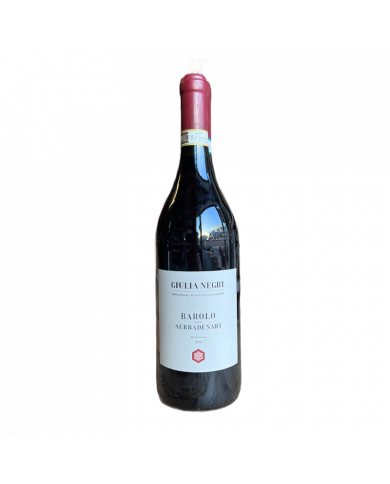
We are at Morra, Serradenari, on soils from the Messinian period with a sandy loam texture with a strong presence of calcareous marl. At about 480m with a south-west exposure, the pure Nebbiolo grapes are vinified with spontaneous fermentation in truncated cone-shaped vats, macerating for about 40 days. The wine then ages for 30 months in 25-hectolitre Slavonian oak barrels.
€228.38
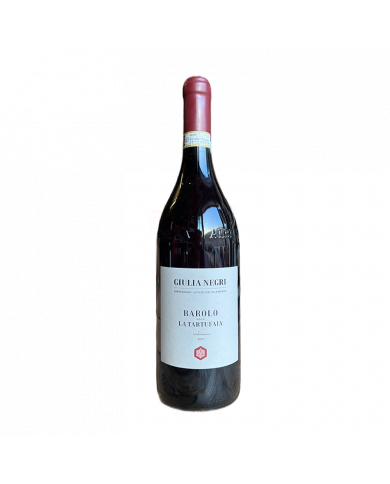
SKU:
13463
Brand:
Giulia Negri
Giulia Negri 's Barolo "La Tartufaia" is the producer's personal vision of the "La Morra" area who skilfully transforms the Nebbiolo grapes into an important and elegant red wine, with a deep and fine taste. On the nose the aromas are of red fruit, berries with notes of tobacco and licorice. On the palate it is full-bodied, enveloping with silky tannins and earthy and bloody sensations that close the sip.
€162.50
€77.06
€36.11
€16.91
€62.62
€29.69
SKU:
13441
Brand:
Velenosi
The “Brecciarolo” Rosso Piceno Superiore is made by the Velenosi winery starting from 70% Montepulciano to which is added 30% Sangiovese. The vines of these two varieties grow in the vineyards located near the towns of Offida and Ascoli Piceno, at about 200-300 meters above sea level.
€10.15
SKU:
13439
Brand:
Quintarelli
Rosso Ca del Merlo is an unusual blend of international and autochthonous blends composed mostly of corvina, corvinone and rondinella, to which is added a 15% of cabernet franc, cabernet sauvignon, sangiovese, nebbiolo and croatina. A spatial blend, an international journey in a suggestive and dynamic sip. The red of Valpolicella is produced with the famous ripasso technique. After the selected harvest, the must macerates for 3-4 days on the skins, where the marcs of the blend undergo a first initial alcoholic fermentation, and then do another on the amarone marcs.
€84.90
SKU:
13434
Brand:
Il Feuduccio
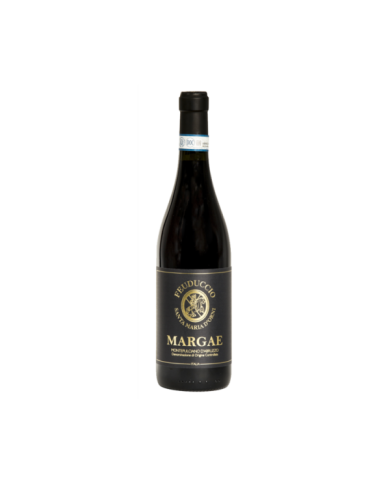
Margae is the marriage of two names - Maria and Gaetano, founders of the Feuduccio. It is the result of a selection of the best grapes from the best vineyards, only in the best vintages. The care taken in the cellar, simple but rich in experience, guarantees its excellence.
€33.31
SKU:
13432
Brand:
Cantine di Mogoro
Vignaruja DOC is a cannonau from Sardinia, winner of the bronze medal at the IWSC (International Wine & Spirit Competition) 2016, held in London. Composed of 90% Cannonau grapes and 10% of bovale type grapes, this wine from the Cantina di Mogoro is the essence of red, which gathers in its warmth and intensity the chromatic notes of a strong and lively. Fruity and flowery scents swirl in complex vortexes of taste, in the center of which the island sails.
€9.83
SKU:
13431
Brand:
Codice Citra
Aging in large barrels and barriques. Elegant flavor, with a rich tannic texture.
€74.05
SKU:
13430
Brand:
Di Ubaldo
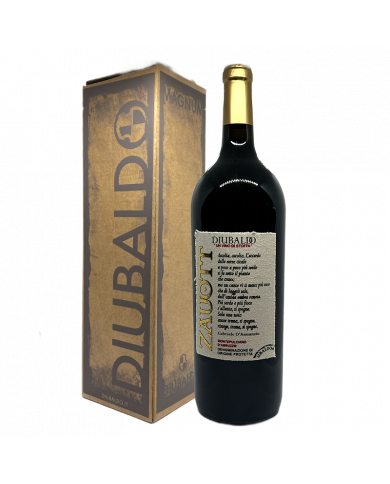
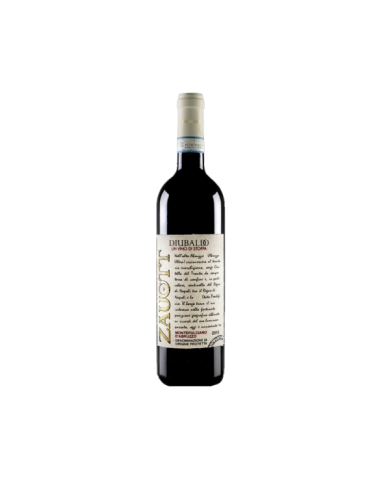
It is a wine of great character, complex. Proud and potential, as in life a boy called in our territory is, precisely Zauott, a young man, who manages to withstand the evolution of the years, also demonstrating the best. "ZAUOTT" is obtained from grapes produced from the oldest vineyards, with an average yield of 80/90 quintals per hectare.
€41.24
SKU:
13429
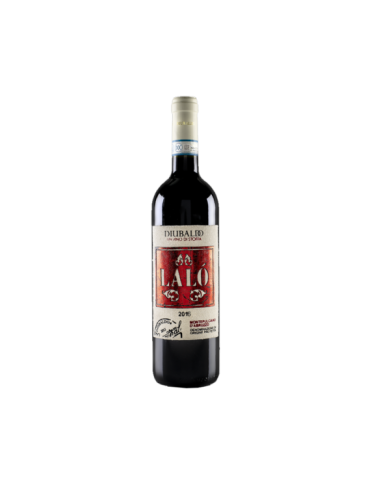
Brand:
Di Ubaldo
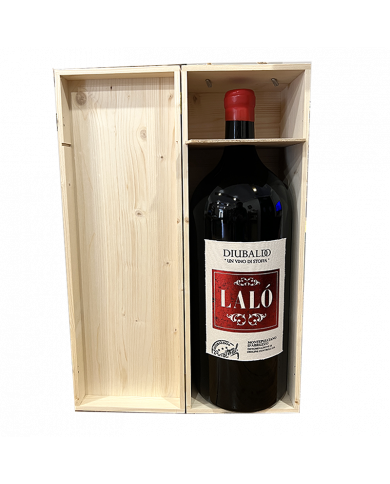
Produced exclusively in the best vintages, it is an elegant wine, with great evolutionary potential, obtained from Montepulciano grapes. Each family in Abruzzo has its own LALÓ. Confidential and affectionate name for the grandfather, the Lalò actually represents a fundamental figure in the traditional family structure, to which age and maturity confer authority, prestige and wisdom. It is a mature, wise and virtuous red wine, as is a man with knowledge and experience of life.
€81.98
€64.90
SKU:
13422
Brand:
La Guardiense
The land of the ancient Samnites favors the vine. A population of winemakers, united by a pact of solidarity, has sought dialogue with scientific knowledge, to defend an identity by conquering excellence
€13.25
SKU:
13414
Brand:
Cantina Orsogna
The gems are called by the winemakers the "eyes of the vine". Just as vine gems are precious for winemakers, so are Spiritus Terrae – LE GEMME wines for Cantina Orsogna 1964. Each Spiritus Terrae – LE GEMME wine is unique and unrepeatable, the expression of an irreproducible combination of factors (vine variety, climate, soil) in a given year. These wines are born from the separate vinification of the grapes of the most suitable vineyards of Cantina Orsogna 1964 and of these only the best vinifications become Spiritus Terrae – LE GEMME.
€17.29
SKU:
13399
Brand:
Viticoltori dei Colli Cimini
The maceration on the pomace at a controlled temperature takes place separately for the two vines. In the following spring, once the blending has been completed, the wine ages in steel containers. It has a deep red color with light violet reflections, an intense, pleasant aroma with spicy and licorice notes. In the mouth, the good acidity and soft tannins make it warm, full-bodied, long and persistent. It must be served at a temperature of 18° C. It goes very well with red meats, roasts and well-aged cheeses.
€5.34
SKU:
13398
Brand:
Viticoltori dei Colli Cimini
Intense, complex bouquet with hints of undergrowth fruits and herbaceous notes. Warm, full-bodied and persistent taste with hints of ripe red fruit.
€13.36
SKU:
13396
Brand:
Viticoltori dei Colli Cimini
The wine is obtained with maceration at a controlled temperature. It has an intense ruby color, a delicate and vinous bouquet, a persistent and moderately tannic taste. It must be served at room temperature (18º C). It goes very well with roasts and meats in general, also suitable to accompany cereal and legume soups.
€2.78
SKU:
13393
Brand:
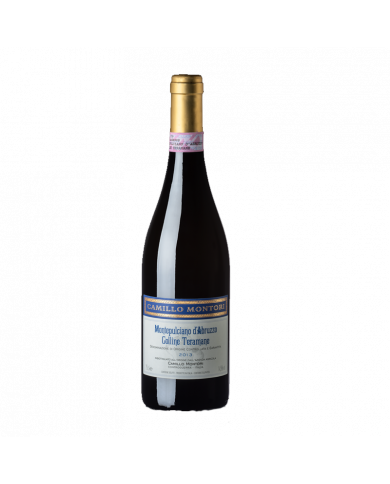
Camillo Montori
Very intense ruby red colour. Intense and persistent bouquet, characteristic of the vine of origin with a note of good wood mixed with licorice and vanilla. Full and round taste on the palate thanks to its exceptional structure. Typical bitter almond aftertaste. It goes well with game, braised meats, red meats and roasts.
€35.01
SKU:
13392
Brand:
Camillo Montori
Very intense ruby red colour. Intense and persistent bouquet, characteristic of the vine of origin with a note of good wood mixed with licorice and vanilla. Full and round taste on the palate thanks to its exceptional structure. Typical bitter almond aftertaste. It goes well with game, braised meats, red meats and roasts.
€17.51
SKU:
13389
Brand:
Cantine Due Palme
Intense ruby red wine with amaranth reflections. The nose presents captivating fruits of cherry jam and dates, notes of vanilla and licorice. The palate is marked by hints of small red fruits, juicy and ripe, and by the sweet nuances of wood. Warm and with a good fragrance, with gritty and pleasant tannins. Perfect as a meditation and… conversation wine!
€23.77
€10.78
THE BEST ITALIAN RED WINES
In this section of our online wine shop Clickwine You can find the best Italian and foreign red wines for sale, ideal for accompanying everyday dinners or important events with style and elegance. Clickwine has selected the most famous reds on the wine scene, including the best denominations as well as some niche products and some Abruzzo wines that will amaze the most curious enthusiasts. Among the best wines, Abruzzo red wines cannot be missed.
One of the best Italian wines is undoubtedly Montepulciano d'Abruzzo DOC, which is one of the best-known Italian red wines in the United States.
Montepulciano is the most widespread red grape variety in the Marche and Abruzzo regions, where rich and expressive red wines are produced, ideal for sharing with those who love tasty home cooking, and is also perfect for a barbecue with friends.
THE PRODUCTION OF RED WINE
Red wine is obtained from red grapes, thanks to a production process called "red vinification". This process involves contact between the pomace (peels and seed residues) and must during the fermentation phase
One of the first steps in producing a red wine is choosing the harvest period. The grapes are harvested when the sugar content reached is what the winemaker deems necessary to produce the desired alcohol content.
After harvesting, the bunches arrive in the cellar where the stalks are removed (destemming) before the grapes are pressed to obtain the must.
Maceration releases polyphenols, particularly anthocyanins, from the skins, which give the must its red color. Tannins are produced from the grape seeds. Maceration lasts approximately 10-15 days.
Meanwhile, alcoholic fermentation begins, triggered by yeasts present in the skins or by added yeasts. This natural process is favored by an increase in temperature, which, however, must be maintained between 25 and 30°C so as not to affect the quality of the wine.
During this process, the pomace may form a surface layer that prevents contact with the liquid, potentially leading to the development of acetic acid. However, several techniques are available to winemakers to address this problem.
After alcoholic fermentation, malolactic fermentation occurs, which involves the transformation of malic acid into lactic acid. This is a crucial step in the vinification of red wines because it enhances their smoothness and smoothes out any rough edges and harshness.
The must has now transformed into wine, but it must be racked, that is, the removal of residues, which can be accomplished through filtration or static decantation. This latter, less invasive method involves lowering the temperature in the tanks so that the substances to be eliminated settle to the bottom.
Once “cleaned”, the wine is ready for refinement,whose minimum duration is established by the DOC specifications, This can take place in steel tanks, concrete vats, large barrels, or small barrels or barriques. Once the maturation process is complete, bottling takes place: the wine begins its maturation in the bottle and, after a possible further aging period in the cellar, is released for sale.
RED WINE: PROPERTIES AND BENEFITS
Is red wine good for your health? Many people ask this question, to which numerous studies have yet to provide a definitive answer. Many studies affirm certain properties, while others deny them. Below we list the most common beliefs about the properties and benefits of red wine, which, as mentioned, are not fully certified by the medical community. You can believe them or not.
- Natural antioxidant: The polyphenols contained in red wine are antioxidant substances that slow down the aging of some cells
- It aids digestion: it would protect the intestinal flora
- Increase endorphins: in small doses it helps the brain release endorphins and would make us feel more relaxed
- Prevents cardiovascular diseases: thanks to resveratrol which is said to promote blood circulation
- Many authoritative studies affirm that the substances contained in red wine have these properties and benefits, but they are present in such small doses that they are absolutely irrelevant for the body.
HOW MUCH DOES RED WINE COST?
The prices of red wines can fluctuate based on several factors, including the value of the bottle, the production area, and demand. The online wine shop Clickwine offers a wide selection of Italian red wine. Our online wine shop offers not only the most famous names but also more affordable labels suitable for everyday use.So forget about running from one store to another, and save time for what's truly important: enjoying a glass of excellent red wine. Browse our products to find the best red wines at the best price.
PAIRINGS WITH RED WINE
By browsing the individual product pages in our online wine shop, you'll discover suggested pairings for each red wine: white and red meats, game, braised and grilled meats, risottos, traditional Italian first courses, as well as platters of cured meats and cheeses, vegetables, sauces, and rich dishes.
What should a good red wine be like?
A good red wine should be balanced, with good acidity and a tannic structure that makes it smooth and pleasant to drink. It should also have an intense and complex bouquet, with hints of ripe fruit, spices, wood, and other aromas. Furthermore, the wine should be well-aged, with good aging potential, making it suitable for storage for several years. Naturally, all of this depends on the type of grape and the terroir from which the wine originates, so every red wine will be unique.
How long can a red wine last?
The shelf life of a red wine depends on several factors, such as the type of grape used, the production method, and the wine's acidity. Generally, younger red wines can be consumed within one to two years of harvest, while high-quality red wines can be stored for several years, even up to 10 or 15 years or more, depending on their characteristics. However, it's important to note that red wines tend to change over time, developing new aromas and flavor nuances, so it's always advisable to taste the wine before drinking to ensure it's still in good condition.
How can red wine be?
Red wines can be very different from one another, depending on the type of grape used, the production method, and the terroir from which they originate. Generally speaking, red wines can be described as intense, complex, and structured, with aromas of ripe fruit, spice, wood, and other flavors that vary depending on the wine's characteristics. They can be dry or sweet, light or full-bodied, with an alcohol content that can range from low to high. Furthermore, red wines can be served at different temperatures, depending on their type and personal preference. In any case, a good red wine should be balanced and pleasant to drink.
Why shouldn't red wine be put in the fridge?
Red wine should not be refrigerated because too cold a temperature can alter its flavor and bouquet. Red wines should be stored in a cool, dark place, at a temperature around 12-15°C (54-59°F). Refrigeration can cause wine to lose some of its organoleptic characteristics, becoming bland and less complex. Furthermore, the cold can bring out the wine's acidity, making it less pleasant to drink. Therefore, to best preserve red wine, it's best to keep it out of the refrigerator.
Why is drinking red wine good for you?
Drinking red wine is beneficial because it contains health-promoting substances, such as polyphenols, which have antioxidant properties and can help protect the body from oxidative stress. Furthermore, red wine contains resveratrol, a substance that can help reduce the risk of cardiovascular disease and some types of cancer. However, it's important to remember that red wine should always be consumed in moderation to avoid negative health effects. Excessive alcohol consumption can increase the risk of addiction, liver damage, and other complications.
Who can't drink wine?
There are some people who shouldn't drink wine, or who should limit their alcohol consumption in general. These include:
- Pregnant or breastfeeding women, because alcohol can pass through the placenta and into breast milk, putting the health of the fetus or newborn at risk.
- People who suffer from alcohol addiction or have alcoholism problems, because drinking wine can worsen their health.
- People taking medications that can interact with alcohol, such as antidepressants, sedatives, or heart medications, because alcohol can increase the side effects of the medications.
- People with existing health problems, such as liver disease or gastritis, because alcohol can worsen symptoms and worsen health conditions.
In any case, it is always advisable to ask your doctor or pharmacist for advice before consuming wine or other alcoholic beverages.
Why does red wine make you sleepy?
Red wine can cause drowsiness because it contains alcohol, a substance that can act as a natural sedative. Alcohol can increase the production of serotonin, a neurotransmitter that can induce a state of relaxation and promote sleep. However, excessive alcohol consumption can also cause disturbed and unrefreshing sleep, so it's important to drink red wine in moderation to avoid these negative effects. Furthermore, red wine can also cause drowsiness for other reasons, such as fatigue or digestion, so it's always best to listen to your body and avoid drinking too much wine if you want to maintain healthy and restful sleep.
What happens if you drink wine every day?
Drinking wine every day can pose some health risks, such as an increased risk of alcohol dependence and liver damage. Alcohol can cause fat accumulation in the liver, which can lead to fatty liver disease, a benign condition that can be reversed if you stop drinking. If you continue drinking, however, steatosis can develop into steatohepatitis, a more serious condition that can lead to liver cirrhosis and even more serious complications. Furthermore, excessive alcohol consumption can increase the risk of cardiovascular disease, cancer, and other conditions. Therefore, it's important to drink wine in moderation and not every day to avoid these health risks.
Related posts